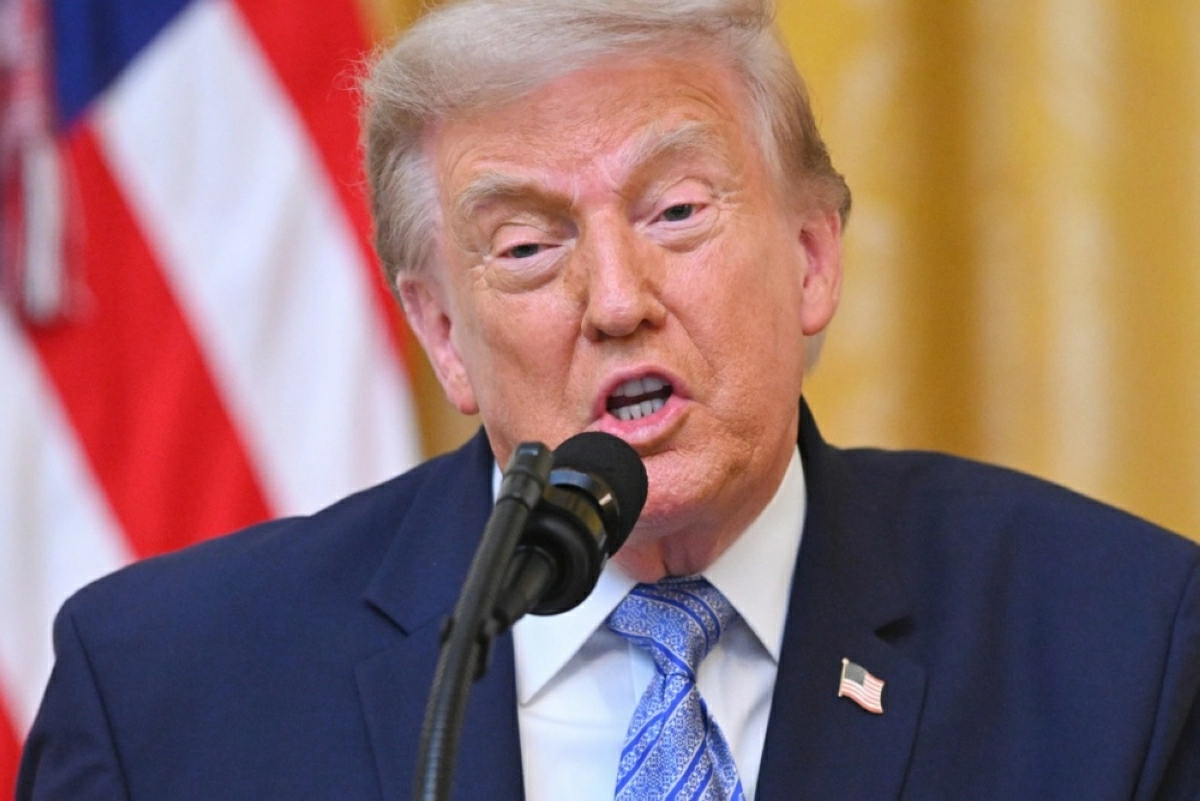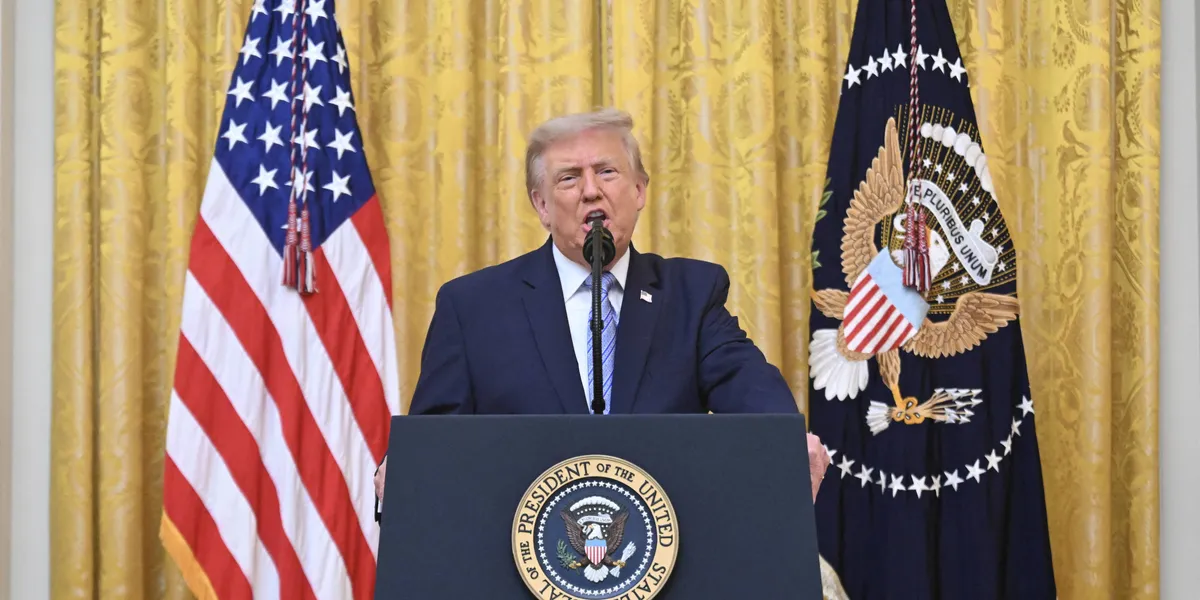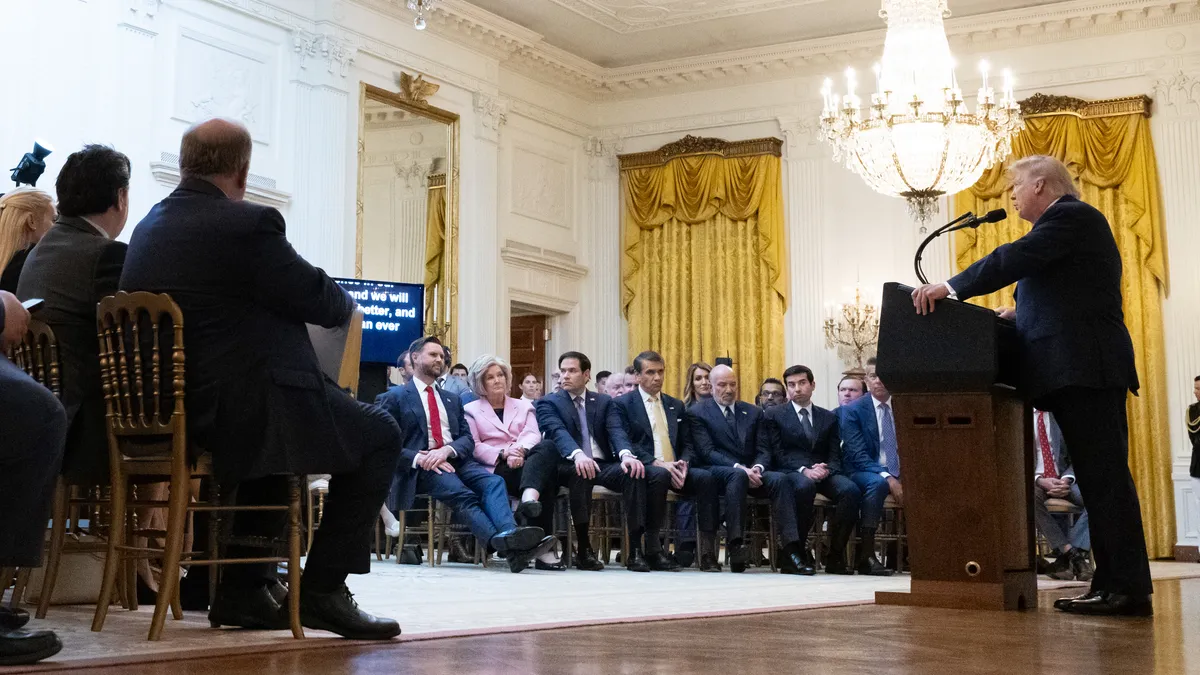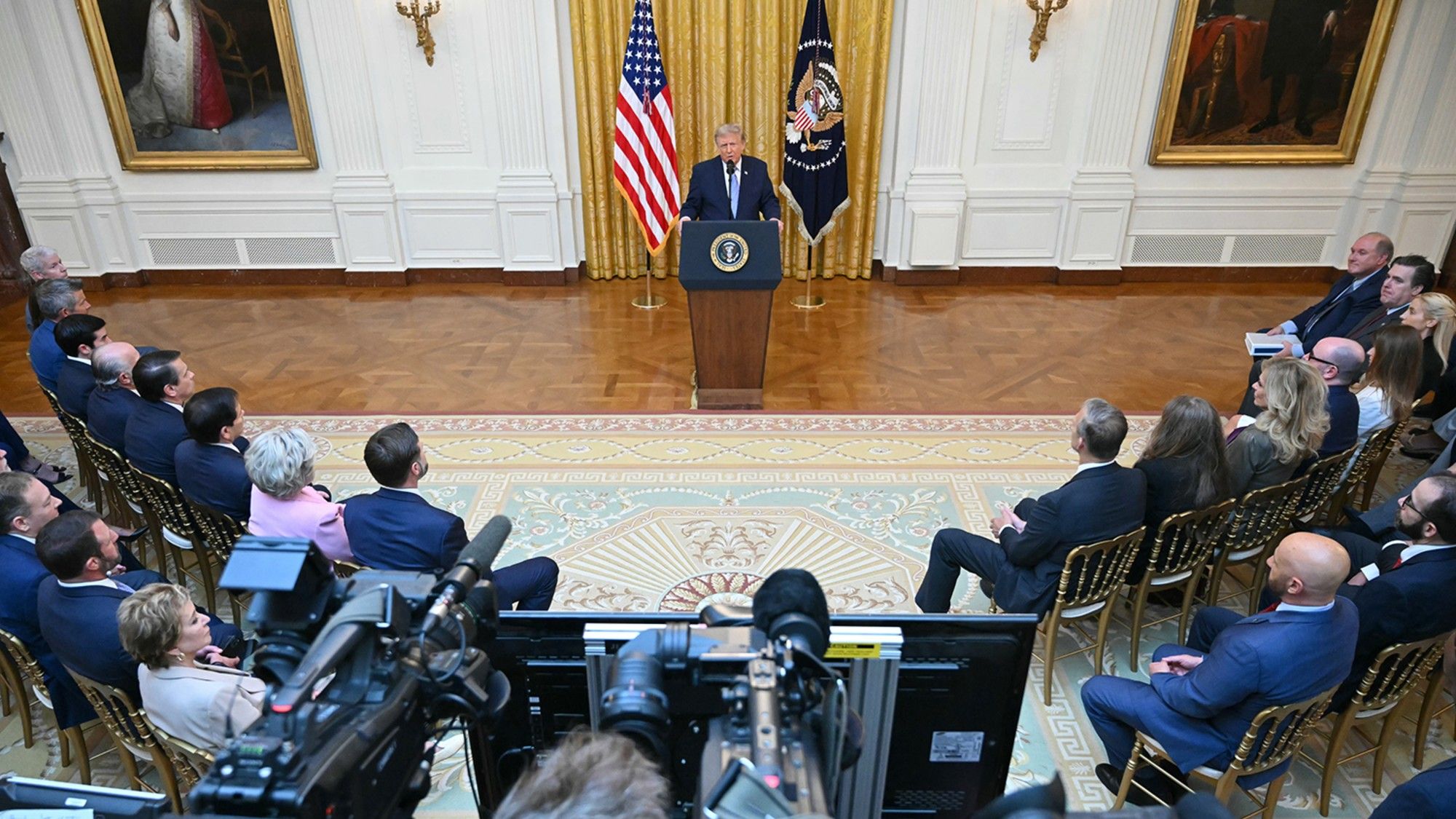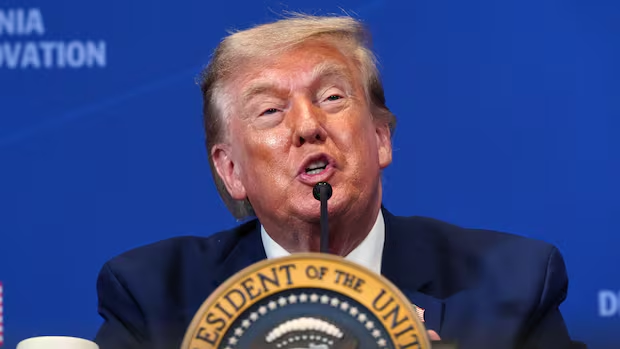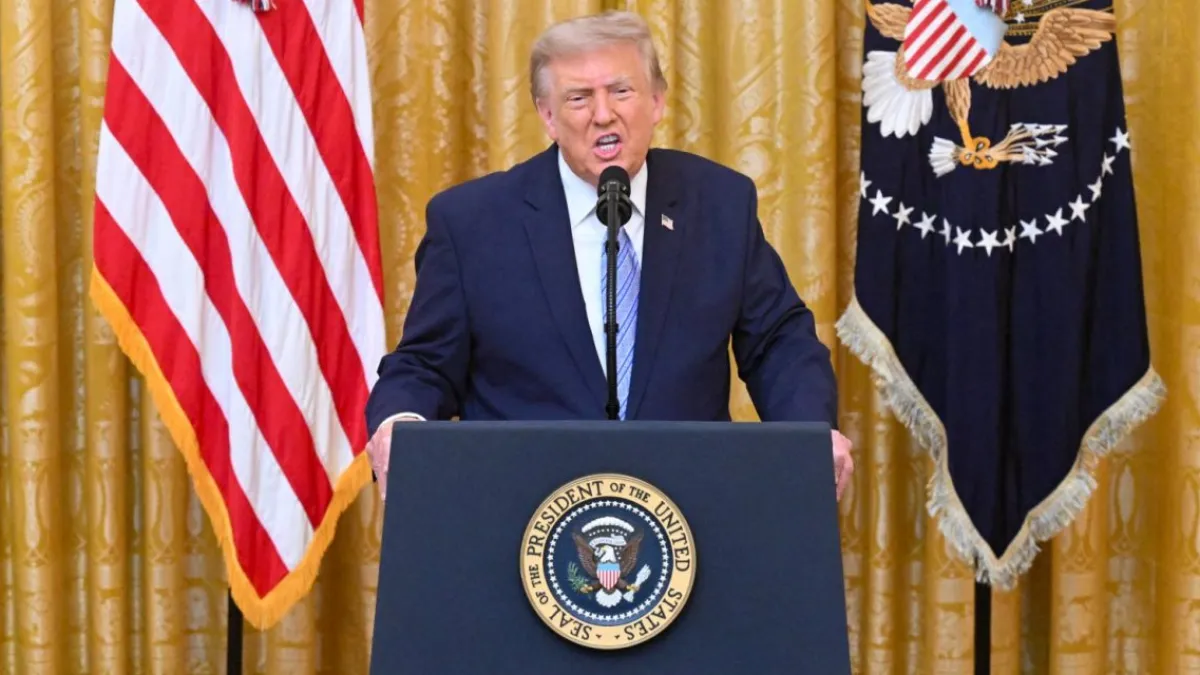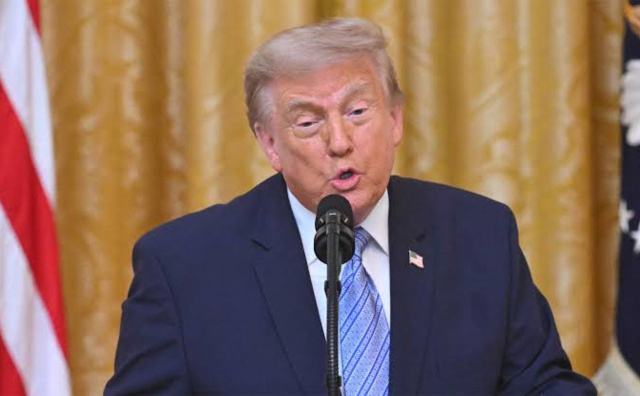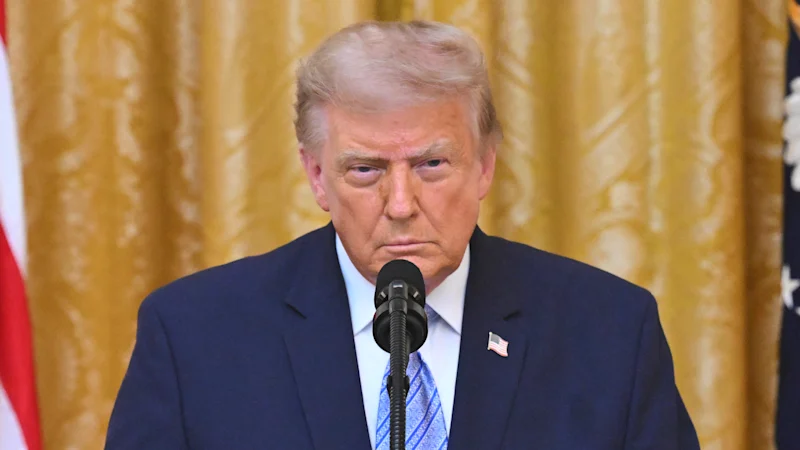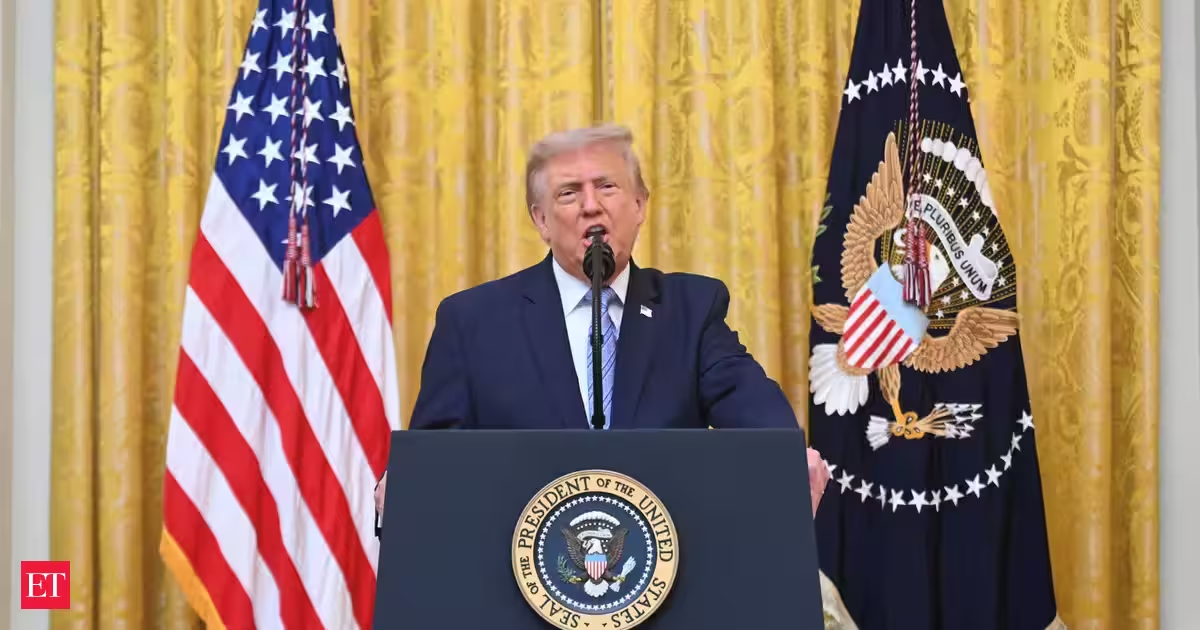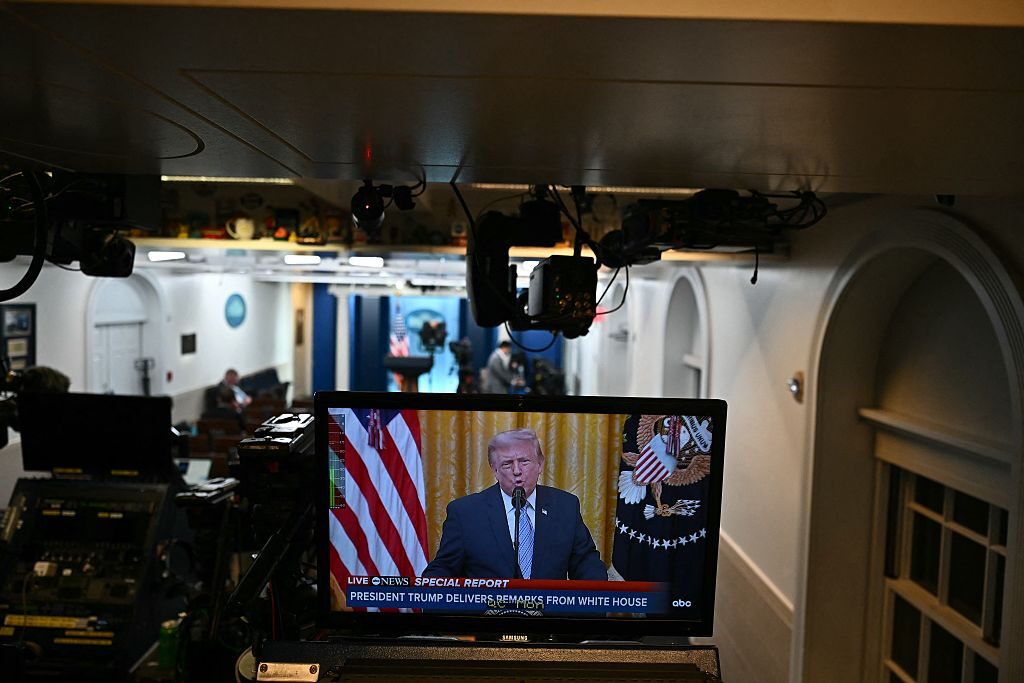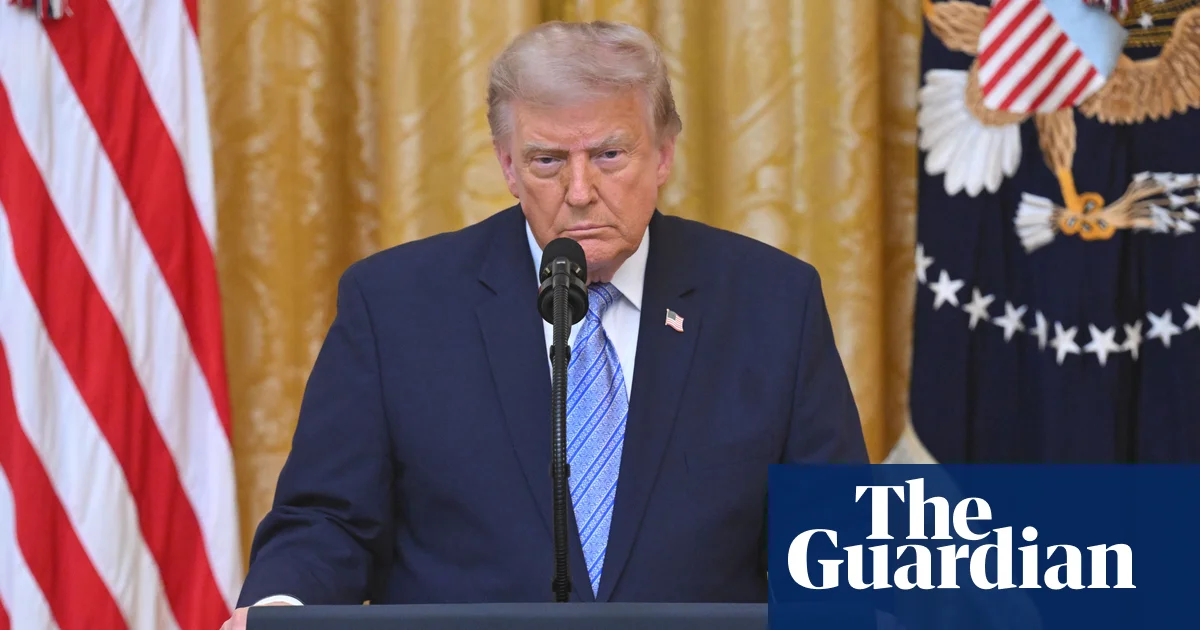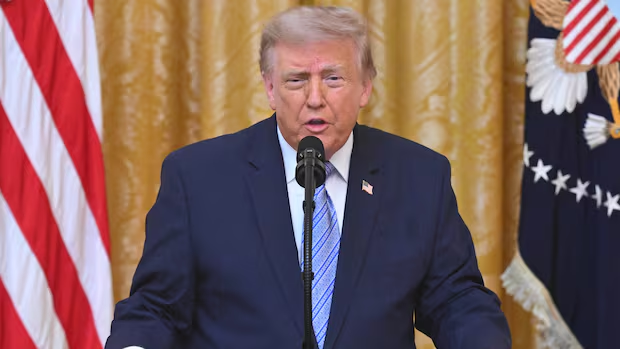
World·AnalysisNear the start of his address to the nation Thursday night, U.S. President Donald Trump solemnly insisted that his aim was not to undermine confidence in the country's elections. He then did pretty much everything he could during his 27 minutes of airtime to make Americans believe the voting system in the world's oldest modern democracy is rigged.U.S. president uses prime-time address to try to make Americans believe the voting system is riggedMike Crawley · CBC News · Posted: Jul 17, 2026 4:00 AM EDT | Last Updated: 32 minutes agoListen to this articleEstimated 6 minutesThe audio version of this article is generated by AI-based technology. Mispronunciations can occur. We are working with our partners to continually review and improve the results.Trump accuses China of U.S. election meddling in national addressJuly 16|Duration 2:40In a national address, U.S. President Donald Trump accused China of election interference, including in the 2020 U.S. election he continues to claim he won. Trump says the White House will release proof that China hacked voter files and that intelligence agencies covered it up.Near the start of his address to the nation Thursday night, U.S. President Donald Trump solemnly insisted that his aim was not to undermine confidence in the country's elections. He then did pretty much everything he could during his 27 minutes of airtime to make Americans believe the voting system in the world's oldest modern democracy is rigged. "There's no third world country that has elections like we have," Trump said at one point.Trump made sensational claims, depicting an election system riddled with vulnerabilities from hacking, foreign interference, non-citizens voting and mail-in ballot fraud, all covered up by what he called the "deep state" of intelligence officials. "Our purpose in disclosing this information is not to weaken confidence in elections, but to earn that confidence by confronting vulnerabilities and correcting them very, very quickly," he said early in the speech. While some observers expected Trump's main goal would be to prove his oft-repeated lie that the 2020 election was stolen from him, the message seemed more directed at making Americans fear for the integrity of the vote right now — just in time for the crucial 2026 midterms. Trump delivered his Thursday evening address to the nation from the East Room of the White House, as members of his cabinet and top staff looked on. (Saul Loeb/Pool/Agence France-Presse)Polling suggests the Republicans are poised to lose their slim majority in the House, which could put the Democrats in position to launch impeachment proceedings against Trump, and are potentially at risk of losing control of the Senate. Senate Democrat Leader Chuck Schumer predicted before Trump's address that it would be "about undermining the 2026 election before a single vote has been cast." That prediction seemed to be borne out the longer Trump's address went on. U.S. election system 'falls catastrophically short' "Every American deserves to know that when they cast their vote, that vote will be counted accurately, in a system ... where cheating and interference are not just difficult, but virtually impossible," Trump said. "Unfortunately, the system we have today falls catastrophically short of that standard," he added.Trump made five key claims in his address. China obtained voter files containing personal information on 270 million Americans. China tried "undermining domestic confidence" in Trump ahead of the 2020 election.Voting machines and tabulating systems are exposed to hacking and manipulation. Hundreds of thousands of dead people and non-citizens are registered to vote.The U.S. intelligence community hid evidence of fraud from Trump. "Put together, these disclosures reveal an election system so broken and so vulnerable that no one can possibly defend it," said Trump. Among the unproven claims Trump made during his address were that U.S. voting machines and tabulating systems are vulnerable to hacking and manipulation and that hundreds of thousands of dead people and non-citizens are registered to vote. (Mark Duncan/The Associated Press)But dig a little into each claim, and there's nothing to suggest that any of them actually affected the results of any U.S. election. Foreign attempts to influence U.S. elections are nothing new, said Sue Gordon, who served as principal deputy director of national intelligence during Trump's first term. 'It does the work of our adversaries'Gordon says Trump did not reveal any evidence that China's meddling had an impact on the outcome of the 2020 vote. "I think this was a dangerous speech about an incredibly important topic," Gordon told CNN on Thursday night. "It does the work of our adversaries," she said. "See, they don't have to interfere. They just have to convince us to not trust our democracy." Issue One, a bipartisan non-profit organization that advocates for democracy, said Trump's address was "riddled with tired, debunked lies and distortions" in an attempt to exert presidential power over elections. "Americans shouldn’t lose sight of what's happening," said Issue One's co-founder and CEO Nick Penniman. "This isn't about the 2020 elections – this is about 2026 and 2028."WATCH | Two strategists dissect Trump's 'election interference' claims:Political consultants break down Trump's speech12 hours ago|Duration 5:48Democratic strategist Laura Fink and former Republican strategist Ally Sammarco discuss U.S. President Donald Trump's national address about election interference with the CBC's Ian Hanomansing.Trump's proposed solution to the alleged fragility of the U.S. electoral system is the Safeguard American Voter Eligibility Act, or the SAVE Act, a bill that's been floundering on Capitol Hill for months, with too few senators willing to back it. He pleaded with Americans to call their members of Congress to urge them to pass the bill. Yet it's anything but clear how the SAVE Act would deal with the foreign interference and voting machine vulnerabilities that Trump claimed to be plaguing the election system. It would force all voters to provide documentary proof of citizenship — such as a birth certificate or passport — in person to register to vote.White House posts declassified documents During Trump's address, the White House posted on its website the declassified documents that the president said provided the evidence for his allegations. The documents do not consistently appear to back up Trump's claims. Fact-checking Donald Trump's national address on U.S. election integrity"We assess that Beijing has taken some low-level, exploratory steps to denigrate the President and shape voter perceptions ahead of the election," says one email, dated Oct. 5, 2020, from what appears to be an intelligence official whose name is redacted. Trump turned that into a claim that China wanted to make Americans think "your president wasn't so hot, when actually your president has done a great job, and they did everything possible to do exactly that." Still, there's no doubt this is not the last you'll hear from Trump about election integrity in the three-plus months until the midterms. For the better part of a year, the Democrats and pro-democracy activists have been expressing growing concern over what they see as a pattern of the Trump administration attempting to wrest control of election management away from the states and to make Americans doubt the security of the ballot. Democratic Sen. Chris Coons of Delaware says Trump made "lots of dark and sinister allegations" of vulnerabilities in the U.S. election system during his address, as part of an ongoing effort to avoid Republican losses in the upcoming midterms. "I heard no concrete evidence or even allegations that foreign actors actually changed the results of American elections," Coons told CNN after the address. "There is only one person involved in this who we know for sure tried to meddle in the 2020 elections, and that is Donald J. Trump." CorrectionsAn earlier version of this story said Chuck Schumer is the House Democrat leader. In fact, he is the Senate Democrat leader.Jul 17, 2026 9:20 AM EDTABOUT THE AUTHORMike Crawley is a correspondent for CBC News, based in Washington. He began his career as a newspaper reporter in B.C., spent six years as a freelance journalist in various parts of Africa, then joined the CBC in 2005. Mike reported on Ontario politics for 15 years. He was born and raised in Saint John, N.B.Follow Mike Crawley on X
ANALYSIS | Trump is attacking the integrity of U.S. elections. The midterms are coming | CBC News
Near the start of his address to the nation Thursday night, U.S. President Donald Trump solemnly insisted that his aim was not to undermine confidence in the country's elections. He then did pretty much everything he could during his 27 minutes of airtime to make Americans believe the voting system in the world's oldest modern democracy is rigged.
1,347 words~6 min read