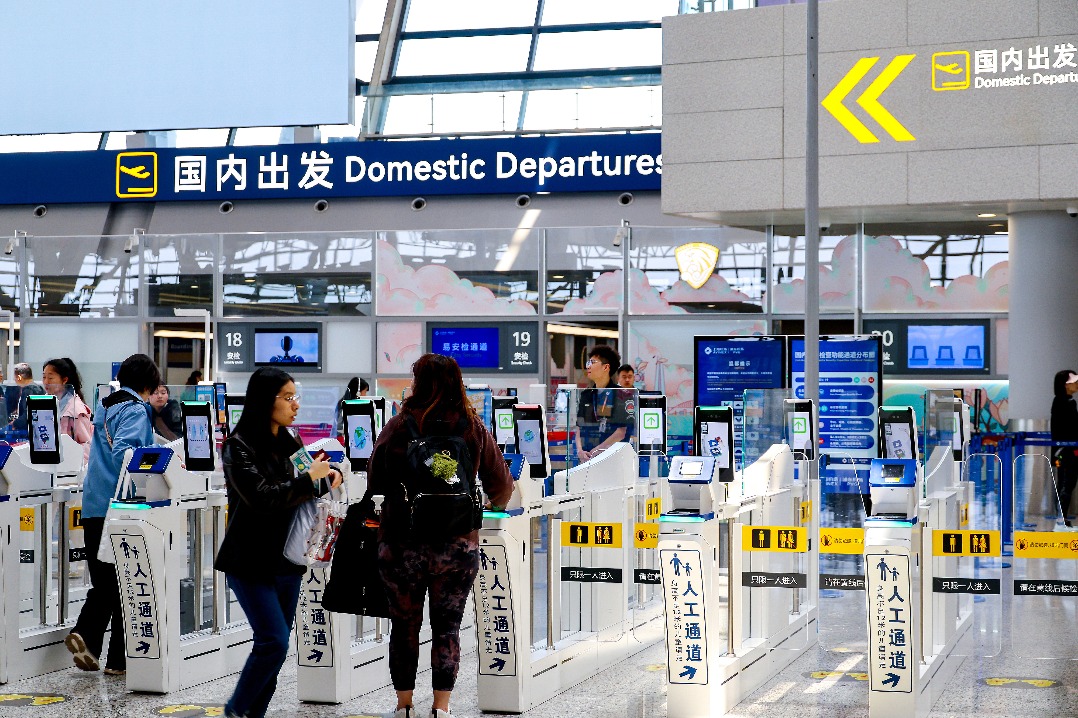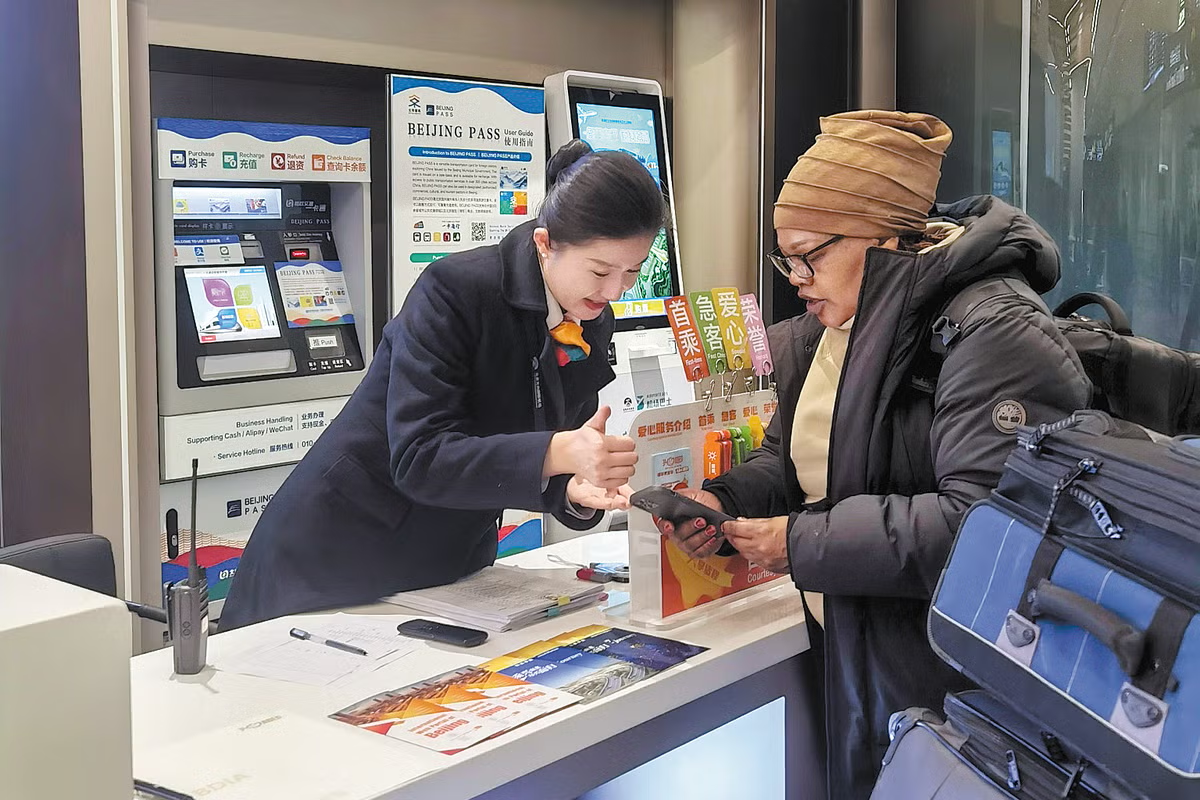
Minutes after stepping off an international flight at Beijing Daxing International Airport, overseas visitors can buy a local SIM card, link a foreign bank card to the mobile payment app Alipay, pick up a public transport pass and ask for directions in their own language.Such services are about much more than convenience, said Wang Qiang, deputy general manager of the airport’s aviation business department.“We want tourists to experience Chinese and Beijing culture the moment they land. The key is to help them feel comfortable and informed from the start, so they want to come back.”Increasingly, airports are no longer being viewed solely as transportation infrastructure. They are becoming the first chapter of the travel experience.That idea was at the heart of a discussion on aviation-tourism integration during the Beijing Fragrant Hills Tourism Summit of the World Tourism Cities Federation in June at which industry leaders from China and abroad explored how airlines, airports and tourism operators can work together to create a more seamless journey for international visitors.A staff member helps international visitors at the airport (PROVIDED TO CHINA DAILY)China welcomed 82 million international visitors last year, 26.4 per cent more than in 2024, says the Chinese Academy of International Trade and Economic Cooperation, part of the Ministry of Commerce. The shift also reflects a broader national strategy.In December the Ministry of Culture and Tourism and the Civil Aviation Administration of China jointly issued a plan calling for deeper integration between aviation and tourism. The aim is to significantly improve travel services by 2027 and create a more connected experience for international and domestic travellers alike.The role of airports has fundamentally changed, Wang said.“Airports used to be defined as transportation infrastructure: getting passengers from one place to another, safely and on time. That’s it. But now the airport has become the traveller’s first impression of the city, and sometimes the last.”Daxing, the starfish-shaped airport that opened in 2019, has steadily expanded its tourism-oriented services.In January last year it opened its Beijing Service counter in the international arrivals area, offering more than 20 services ranging from SIM card registration and transportation cards to mobile payment assistance for overseas travellers.The airport has also introduced AI-powered visual translation devices capable of real-time interpretation in eight languages and expanded its three-way call language service, which connects frontline staff members with translation students from Beijing Foreign Studies University.For travellers with time to spare, Beijing Capital International Airport in the northeast of the city now offers complimentary half-day city tours for certain transit passengers.Wang also points to efforts aimed at showcasing culture rather than simply facilitating movement. Daxing’s international departure area features the China Garden, inspired by classical Suzhou landscaping, alongside rotating exhibitions from the National Museum of China and an annual airport carnival celebrating its anniversary.“The question is no longer how to move passengers efficiently through a terminal,” Wang says. “It’s how to help them begin exploring the destination before they even leave the airport.”Liu Li, chief representative for public affairs and aviation cooperation in China for Finland’s flag carrier Finnair, says the airline has increasingly focused on turning flights themselves into part of the travel experience.Recently Finnair commissioned the Finnish musician Lauri Porra to compose an album titled Matkantekija: Music for Travellers, performed on the traditional Finnish string instrument the kantele. The music accompanies passengers through different stages of the journey, from the business-class lounge and boarding process to in-flight service and landing.The airline’s long-haul business-class cabins also feature textiles from the Finnish design house Marimekko, including classic patterns inspired by the country’s landscape.Robert Lang, chairman of the China Ready Initiative of the Edinburgh Tourism Action Group, compares aviation and tourism to a relay race.“You might have the best individual runners, but if you drop the baton in the exchange you lose.”That baton represents data, coordination and consistency, he said.
A starfish that welcomes you with open arms
THE ARTICLES ON THESE PAGES ARE PRODUCED BY CHINA DAILY, WHICH TAKES SOLE RESPONSIBILITY FOR THE CONTENTS
636 words~3 min read