Most of us left the university with a degree and a vague idea of what might come next. Norah Kimathi, a graduate of informatics and computer science from Strathmore University, Kenya, is leaving with a company, a growing list of awards, and robots that could change how deaf students learn science.
When we spoke over a video call, she was between university deadlines and startup meetings, slipping effortlessly from discussions about artificial intelligence to stories of dismantling household electronics as a child. Instead, she spoke with the matter-of-fact certainty of someone who has spent years solving problems that most of us never notice.
The conversation kept circling back to one moment. During her mentoring of young people in STEM, she met deaf students struggling through STEM classes because qualified sign language interpreters were scarce. It struck her as an engineering problem as much as an educational one. If technology could automate factories, navigate roads, and diagnose disease, why couldn’t it bridge one of education’s oldest accessibility gaps?
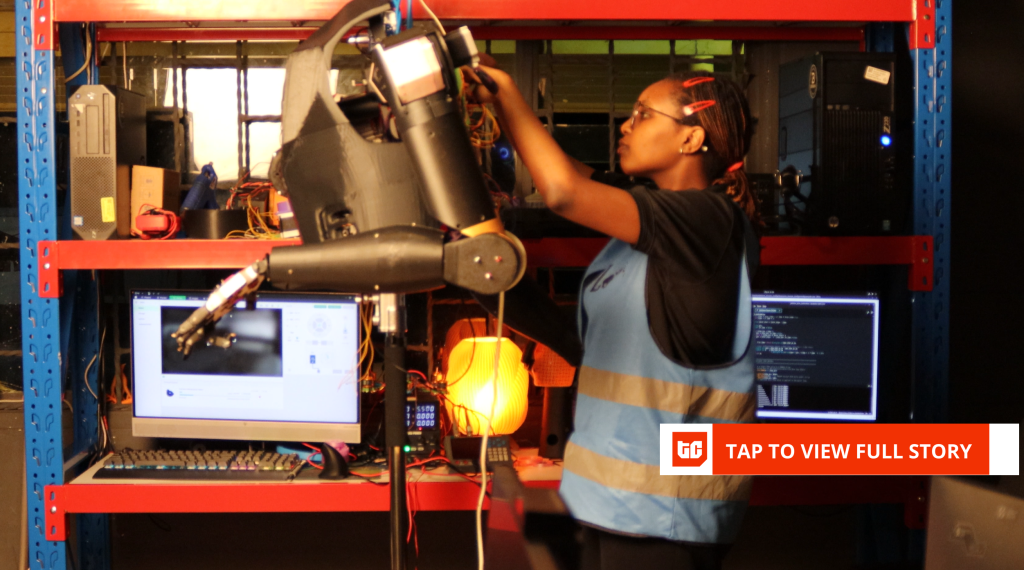
That question became ZeroBionic, the startup she co-founded in 2021. What began as a robotic hand assembled from recycled plastic inside a university workshop has evolved into AI-powered humanoid robots capable of translating spoken language into sign language in real time, technology that could soon find its way into every classroom.