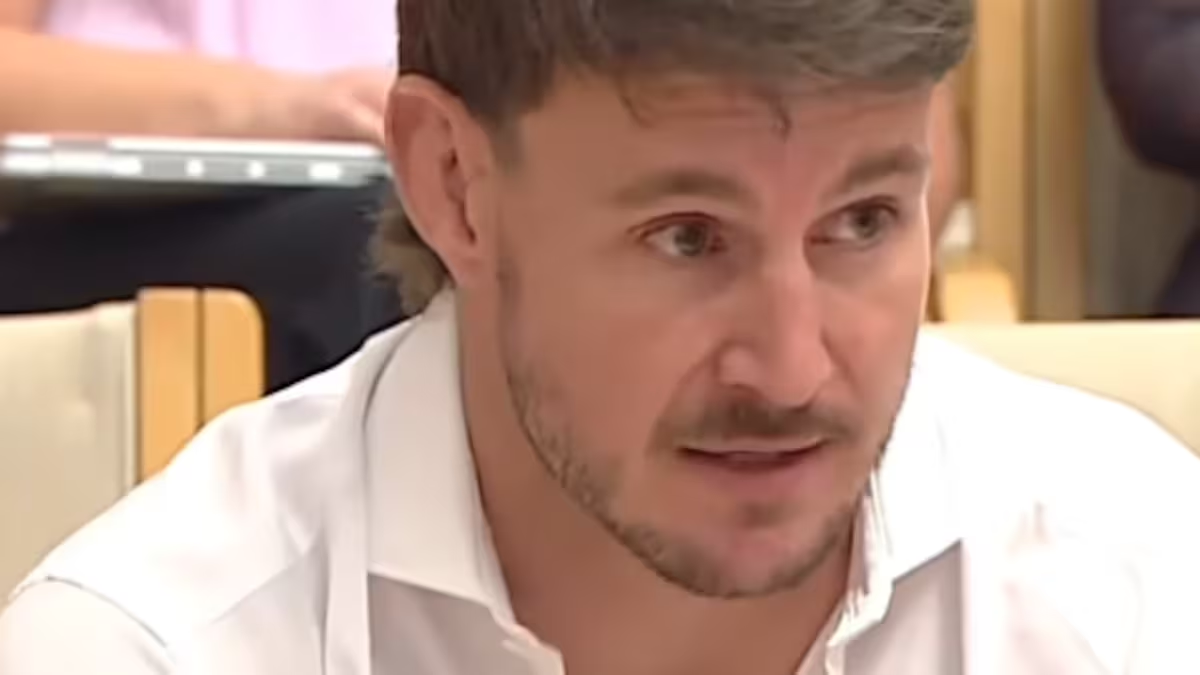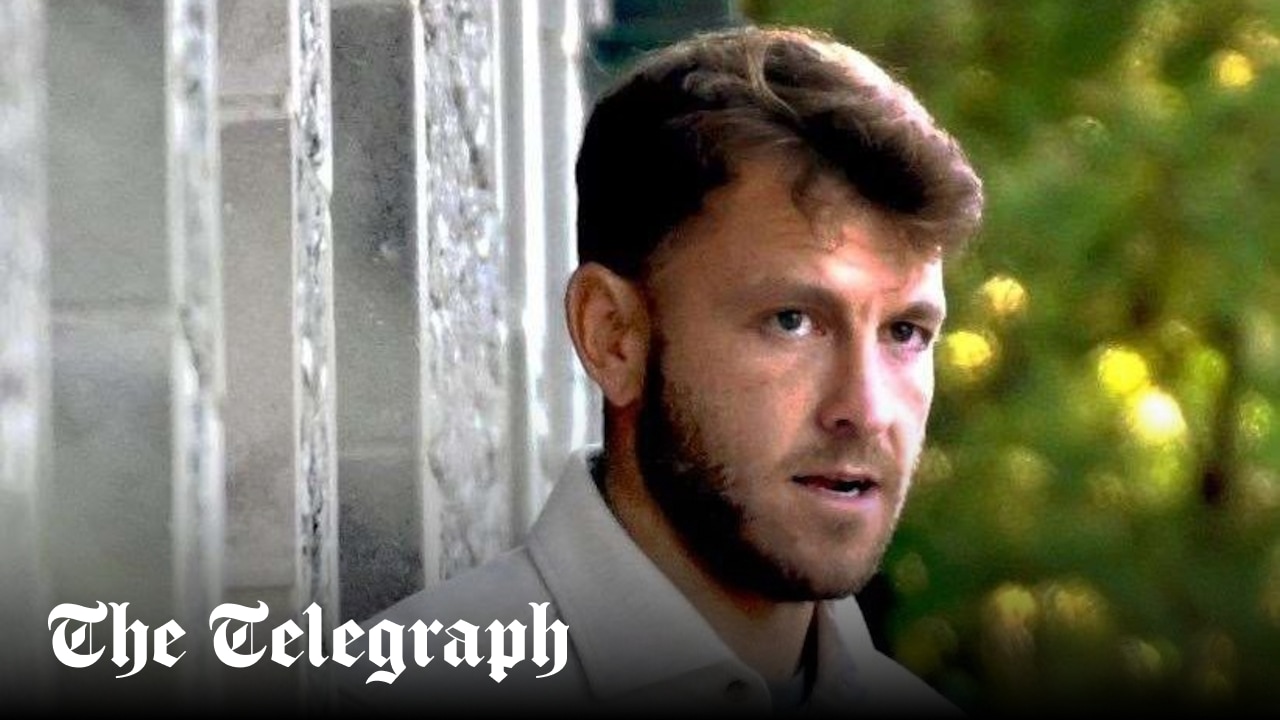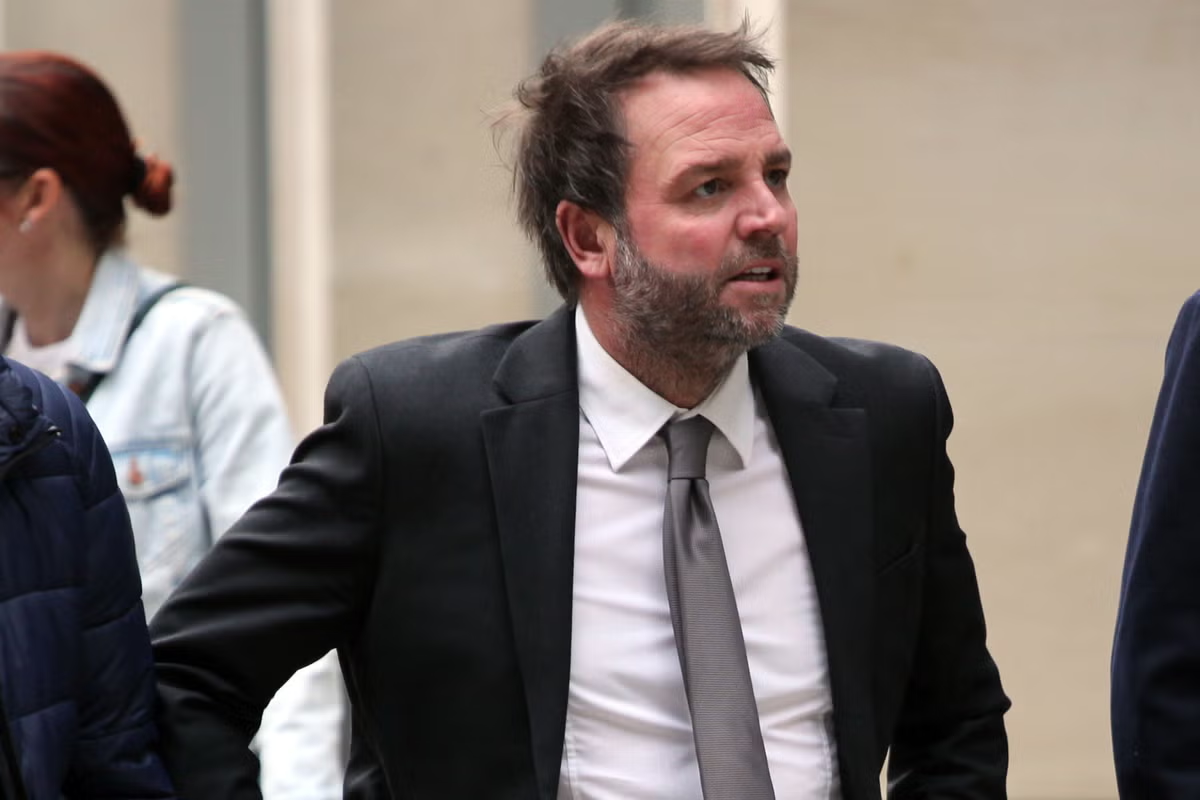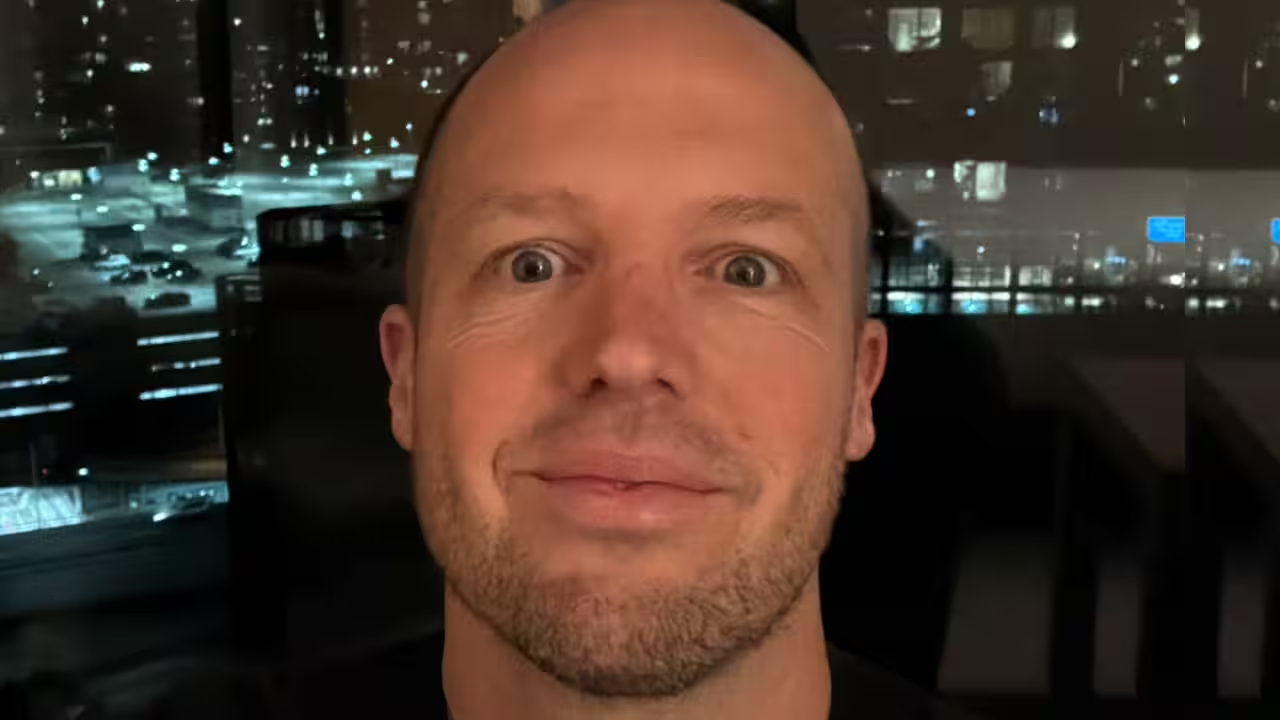
When Grant Davies went for lunch with a couple of his high-flying friends in 2009, he thought he was going to enjoy a leisurely few hours catching up.But what he didn’t know was their conversation would spark a gambling addiction that lasted 15 years.Grant’s friends piqued his interest when they talked about a currency trade they had made that banked them hundreds of pounds. He wondered if he could do the same.Grant, then in his early 30s and working in financial services, went home and created an account with IG, an online trading platform.IG is the UK’s largest trading website which allows users to buy and sell investments such as funds and shares. It also provides access to complex financial trading tools.That night, Grant, now 48 and a married father of two, made a £300 spread-betting trade on the S&P 500 – an index that tracks the shares of 500 of the biggest US firms – and made £600 in just five minutes. He says: ‘I saw how easy it was to make money, just as my friends had said.’Spread betting is a high-risk way of speculating on whether the price of an asset will move up or down, without actually owning it.It is riskier than conventional trading – it is considered gambling under tax laws – because it typically involves using leverage.Traders put down just a fraction of the value of the total trade, which can magnify their gains and, of course, their losses.Say you wanted to open a position worth £100. With spread betting, rather than putting down the full £100 you could put down, say, 20 per cent of it – so £20 – to execute the trade. If your trade is right and you make a 50 per cent gain, you would make it on the full £100 – so £50, just from putting down £20. But if you lose, you would be down £50. Grant got hooked on spread betting, a high-risk way of speculating on whether the price of an asset will move up or down, without actually owning it (picture posed by model) IG is the UK’s largest trading website which allows users to buy and sell investments such as funds and shares. It also provides access to complex financial trading toolsIG has a warning on its website that spread bets and Contracts For Difference or CFDs (another type of high-risk trading) are ‘complex instruments’, and that they come with a high risk of losing money rapidly due to leverage. It adds that 69 per cent of retail investor accounts lose money when trading spread bets and CFDs with IG.After that initial trade, Grant gradually fell into the grip of addiction, especially when he started to suffer losses.‘There were periods where I would lose money and I fell into the trap of thinking that I needed to make it back. So I just carried on,’ he says.‘I didn’t know it at the time, but I was falling into an addictive cycle. I kept it all to myself and tried desperately to find more money to try to win back my losses.’Grant, who lives in north London, had never really gambled before, apart from the odd flutter at work or an occasional sweepstake.The product that really cemented his addiction was a trade called ‘binary options’, a type of financial contract that allows investors to make ‘yes’ or ‘no’ wagers on price changes or events.For example, you could wager that the price of the pound against the dollar will be higher in one hour than it is right now. Binary option trading was banned in 2019 by the Financial Conduct Authority, the city regulator, which gave a damning verdict that these tools were ‘gambling products dressed up as financial instruments’. ‘I didn’t know it at the time, but I was falling into an addictive cycle. I kept it all to myself and tried desperately to find more money to try to win back my losses,’ says Grant (picture posed by model)But in 2010, years before the ban, Grant was sucked in. ‘I could make a bet that the German stock market, the DAX, would be higher or lower in five minutes than it is now.’ Grant says that the effect was like handing him a stick of dynamite.Grant would add £100 to his account and trade until it was completely gone. But then he’d add another £100… and another. By the end of the week, Grant was often a couple of thousand pounds down.He says: ‘I had this misguided belief that I could make the equivalent of a monthly salary out of my wins.’As his losses mounted, Grant started to miss important bill payments and rack up credit card debts.‘I would miss payments for my lease car,’ he says. ‘There were phone and electricity bills that didn’t get paid, and council tax that went into arrears because I didn’t have the cash. I was clearly in trouble.’Grant stopped making regular trades for a few years when his second child was born in 2017.He says it’s likely that he would have never traded again had it not been for an email he received from IG in 2018. Grant was offered the chance to apply for a professional account. These are meant only for experienced traders, as crucial protections for retail investors are removed.There are several criteria you need to meet to gain access to this type of account, including at least two of the following: a portfolio of more than 500,000 euros; to be working in the finance sector for one year in a position where trading knowledge is required; having carried out ten significant transactions a quarter over the previous year.The broker must undertake an assessment of the trader’s expertise, and the trader also needs to understand what it may mean for their wealth if they lose retail protections.Traders with these accounts are offered access to higher leverage ratios – in other words, they can make larger bets.The email was sent by IG before new rules came into force in 2018 that restricted the amount of leverage brokers could offer retail investors.Grant would later argue that he didn’t meet two of the key criteria needed to open this account. He clicked ‘apply’ – and was approved in just three hours. He says the application process was simple, took around five minutes and was a series of tick boxes.Looking back, Grant says this offer furthered his obsession.‘It was like a firework going off, because suddenly I could trade relatively small amounts of money, but get potentially enormous returns.‘It exposed me to horrific losses almost from day one.’With access to his new professional account, Grant’s addiction took hold once more.Over the next six years he would lose £120,000.It plunged Grant, who now works in marketing technology, into £45,000 of debt via loans and credit cards, which he used to pay his bills when he’d spent his salary on trading. Sometimes he even used credit to fund his trading account.‘I was convinced that it was an intellectual pursuit. It is dressed up as morally superior to gambling because it doesn’t involve you hanging around in the bookies with pieces of paper and pens, and with beer and cigarettes.’Grant’s wife, Melissa, knew he had an interest in trading. But he had been careful to keep his out-of-control habit hidden from her, as well as his friends and family.‘Some alcoholics hide vodka in water bottles and I was basically doing the same. I managed to conceal most of the trading by moving from one source of debt to another and paying the minimum payments on debts.’Every once in a while, it would emerge that Grant had lost some money trading, and there would be an ‘explosion’ between the couple, who have been together for 20 years.Then in June 2024, Grant missed a mortgage payment. ‘I had lost almost all my salary that month, so the mortgage bounced,’ he says. ‘Melissa saw and the game was up. The whole world just kind of fell out from beneath my feet.‘I was under so much stress and I must have looked like death. I really don’t know how I maintained my job.’At this point Grant didn’t dare to look at his total losses, but they were £175,000 – of which £120,000 he had lost since he was offered the professional account.Melissa told Grant he had to ‘sort his life out’ and asked him to go to rehab for one month in summer 2024, an experience that he describes as ‘pretty traumatising’.He says: ‘I was there with alcoholics and drug addicts who looked physically awful and had the same kind of addiction features that I had, but I wasn’t from that world. There was no one in there who was like me.‘You’re forced to confront who you are and what you’ve done – and it was pretty awful.’While in rehab, Grant began to think ‘if only I hadn’t taken out that professional account’. While trying to think about how to recover from the ordeal, he began researching online.And he found out that he should never have had access to a professional trading account as they are not designed for traders like him.He began hunting for a way to get redress, and was introduced to Red Mist, a corporate intelligence agency headed by Seth Freedman and former Barings Bank rogue trader Nick Leeson, by a mutual acquaintance.They took Grant’s case to IG, but it was ‘rubbished’ by the trading giant.Grant then took his complaint to the Financial Ombudsman Service (FOS), but IG continued to fight back.He says: ‘IG was waiting until the last possible moment to reply, replying late, giving incomplete information – and then claimed that my complaint wasn’t valid anymore as I was out of time.’Grant pushed back and the FOS continued to look into the case. ‘IG treated me with so much contempt.’And finally in May the FOS ruled in his favour – that the professional account should never have been approved and it was not ‘an appropriate course of action’.It said Grant did not sufficiently meet the criteria to be given the account – and that minimal work from IG’s part at the time of the application could have avoided subsequent loss.It ordered IG to pay Grant three-quarters of the £120,000 he lost since 2018 – more than £90,000. It took almost two years since Grant left rehab to finally get this closure.It only awarded Grant three-quarters of the losses in redress as the declarations made by Grant when he opened the account ‘contributed to the losses he suffered’. No interest was awarded, but it did order IG to pay £500 compensation for distress and inconvenience.But to make matters worse, IG paid this sum into Grant’s original trading account. ‘It’s just disgusting. You might as well give an alcoholic a bottle of unlimited vodka.’Fortunately, Grant no longer considers himself an addict – and his account was suspended by IG, so he couldn’t make any trades.Grant, with the backing of Red Mist, is thinking of claiming for psychological damage and harm to his relationships.Grant has used the money to pay off all his debts, set money aside for his mortgage and put money into his children’s savings accounts.He says: ‘I’m still rebuilding relationships, but the financial reset has been incredible. I’m living like a normal person.’A spokesman for IG says: ‘As a matter of policy, we do not comment publicly on the affairs of individual clients or on matters that are the subject of legal proceedings. ‘Accordingly, it would not be appropriate for us to comment on selective characterisations of correspondence relating to an individual case.‘IG is an FCA-regulated business with more than 50 years’ experience, and we take our regulatory obligations and our responsibilities to clients very seriously. Applications for professional client status are assessed against the eligibility criteria set out in applicable regulation and on the information provided at the time of application.’Grant’s name has been changed
I blew £120,000 on risky trading bets. This is how I kept it secret
When Grant Davies went for lunch with a couple of his high-flying friends in 2009, he thought he was going to enjoy a leisurely few hours catching up.
1,987 words~9 min read