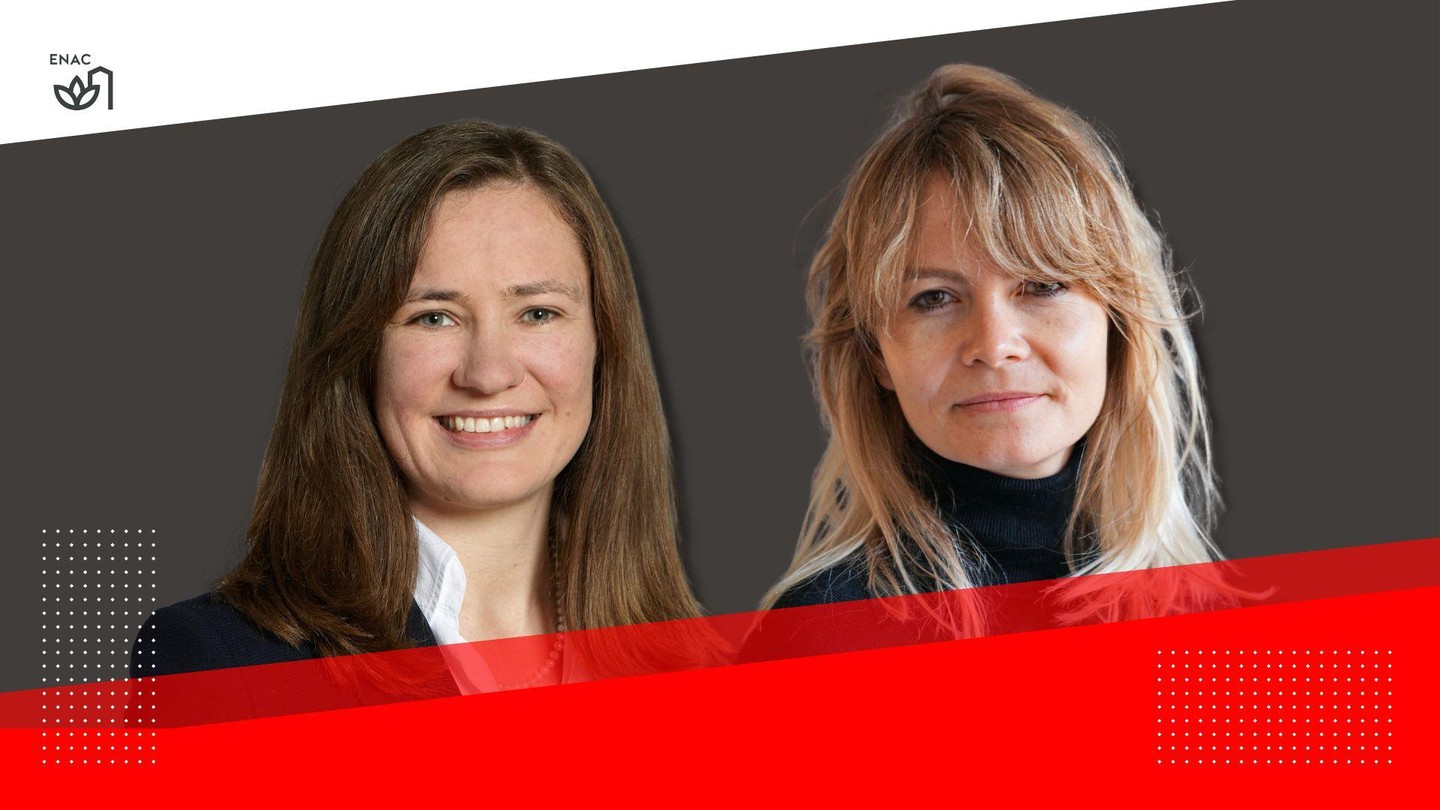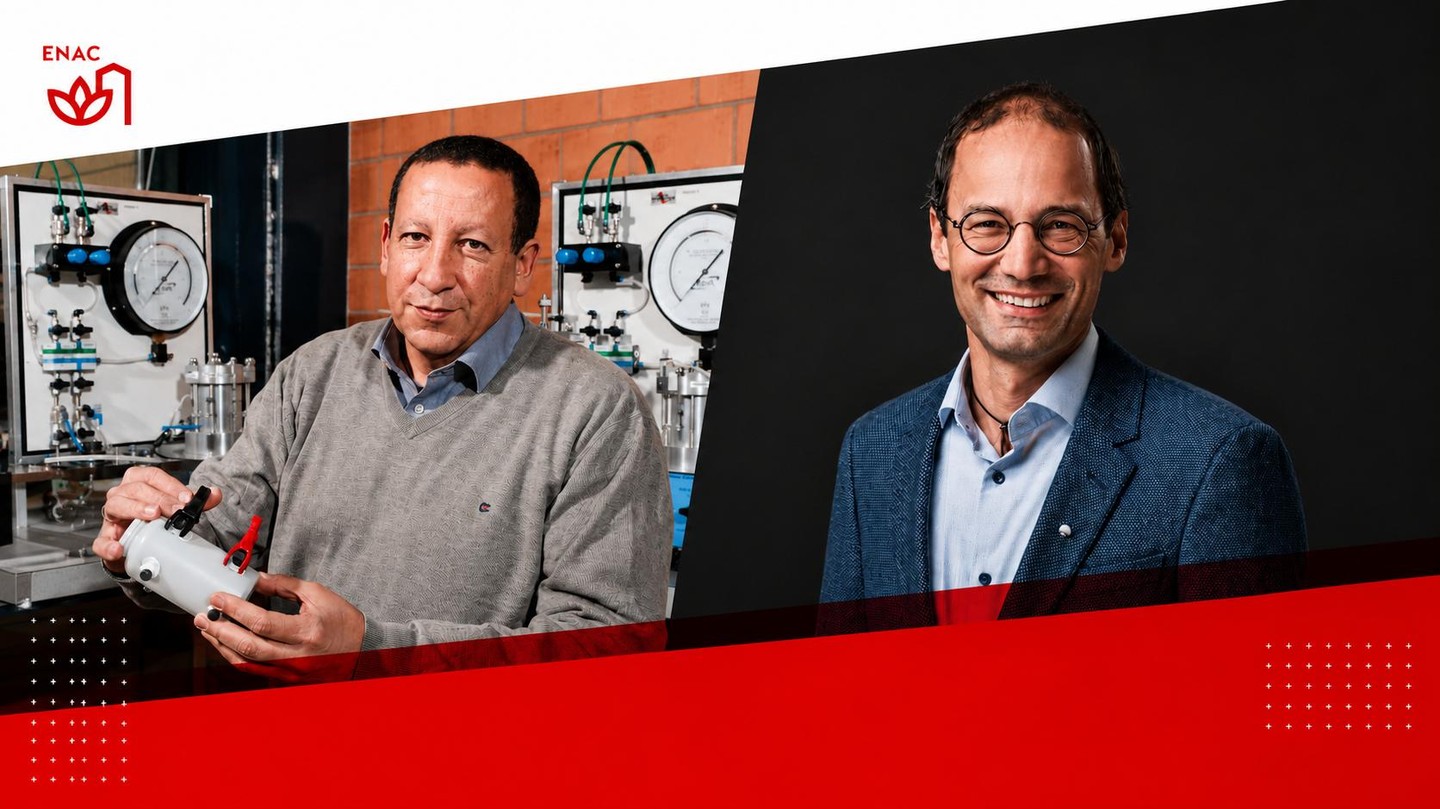
The ETH Board has announced new faculty appointments and promotions at EPFL, including two within the ENAC School: Professors Olga Fink and Charlotte Grossiord. We would like to extend our sincere congratulations to them.Professor Olga Fink, currently Tenure Track Assistant Professor at EPFL, as Associate Professor of Civil Engineering in the School of Architecture, Civil and Environmental Engineering (ENAC)Olga Fink is an expert on deep learning and hybrid algorithms for intelligent maintenance systems. Her interdisciplinary research takes place at the intersection between machine learning and engineering and has already found applications in a variety of systems, including in rail transport, tunnel boring machinery, smart grids, manufacturing, power plants and aviation. Her goal is to solve practical problems in areas such as ageing infrastructure – motorways and railway systems, for example. By promoting Olga Fink, EPFL is retaining a scientist who is highly dedicated to research and teaching and has exceeded expectations.What direction do you see your research taking in the coming years? Are there any key topics or themes you plan to focus on?My research will focus on pushing the boundaries of Physical AI by exploring new ways to integrate physics, scientific knowledge, and machine learning. The goal is to create AI systems that understand physical processes, accelerate scientific discovery, and enable trustworthy autonomous decision-making for complex engineered systems.Your research includes an ERC grant; could you tell us more about it?The HEROES project, starting in September, will develop novel physics-informed machine learning methods to enhance the longevity and reliability of complex systems and systems of systems. Rather than focusing solely on short-term fault detection, HEROES will model long-term degradation processes and the interdependencies that shape asset health over extended time horizons.Building on these developments, the project will introduce interpretable decision support tools, including multi-agent reinforcement learning for health-aware control that aims to extend asset lifetimes, counterfactual reasoning to explore long-term “what-if” scenarios, and data-driven approaches to improve the design for maintenance and operations based on operational feedback.Wind turbines, ranging from individual components to entire fleets, will serve as a demonstration case study to validate the approach. Ultimately, HEROES will support improved sustainability, reliability, and long-term performance across large-scale interdependent systems.What does earning tenure mean to you, and how would it shape your future research?For me, tenure provides the freedom to pursue ambitious, long-term research together with a talented interdisciplinary research team while building a research environment where curiosity, collaboration, and scientific excellence thrive. I am excited to explore new ways of combining AI, physics, and engineering to shape the future of Physical AI and enable more intelligent, resilient, and trustworthy engineered systems.Professor Charlotte Grossiord, currently Tenure Track Assistant Professor at EPFL, as Associate Professor of Terrestrial Ecology in the School of Architecture, Civil and Environmental Engineering (ENAC)Charlotte Grossiord conducts research at the interface of forest ecology, ecophysiology and climate change biology. Her work delivers fundamental insights into how plants and ecosystems function during climate change and supports strategies for strengthening the resilience and adaptability of forests – areas of high relevance for public policy. Charlotte Grossiord simultaneously leads the Functional Plant Ecology group at the Lausanne antenna of the Swiss Federal Institute for Forest, Snow and Landscape Research (WSL). In this capacity, she strengthens the cooperation between WSL and EPFL. In Charlotte Grossiord, EPFL is retaining a committed researcher, lecturer and mentor.What will you do with it, what direction will your research take? Tenure gives me the stability and freedom to develop a long-term research program on how forests respond to climate change, particularly to hotter and drier atmospheric conditions.In the coming years, I would like to strengthen the link between mechanistic plant physiology and large-scale ecosystem responses. This means moving from detailed measurements of tree function to better predictions of forest growth, water use, and mortality across landscapes. We will also continue to work on applied questions, including how forest management and urban greening strategies can increase resilience to climate extremes.Your research includes an ERC grant; could you tell us more about it?The recent ERC Consolidator grant is an important part of this vision, as it will allow us to test how vapor pressure deficit and heat affect tree physiology in mature forests. But my research goes beyond this project.More broadly, my group will continue to combine field experiments, physiological measurements, remote sensing and modelling to understand when and why trees reach their limits, and how this can help improve predictions of forest vulnerability under future climates.What does earning tenure mean to you, and how would it shape your future research?For me, tenure is both a recognition and a responsibility. It gives me the opportunity to build a long-term research vision with my group, to take scientific risks, and to address some of the most urgent questions about the future of forests under climate change. I am especially grateful because it allows us to continue developing ambitious experimental approaches that require time, trust, and continuity.
Promotions at ENAC
The ETH Board has announced new faculty appointments and promotions at EPFL, including two within the ENAC School: Professors Olga Fink and Charlotte Grossiord. We would like to extend our sincere congratulations to them.
816 words~4 min read