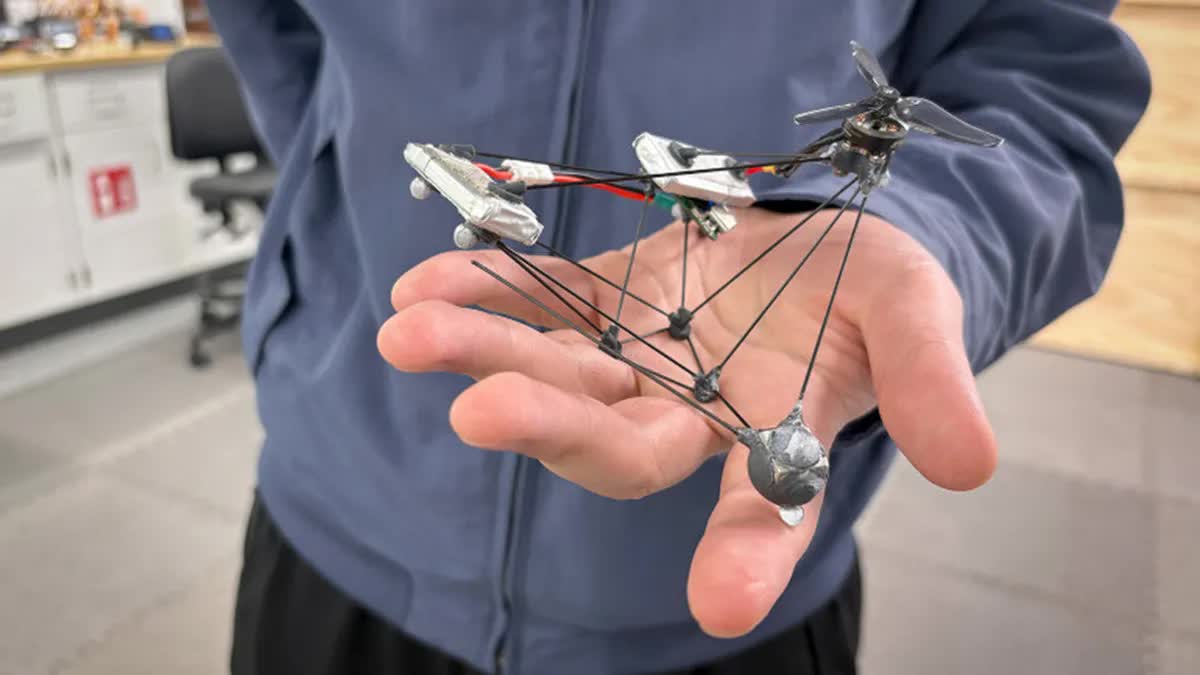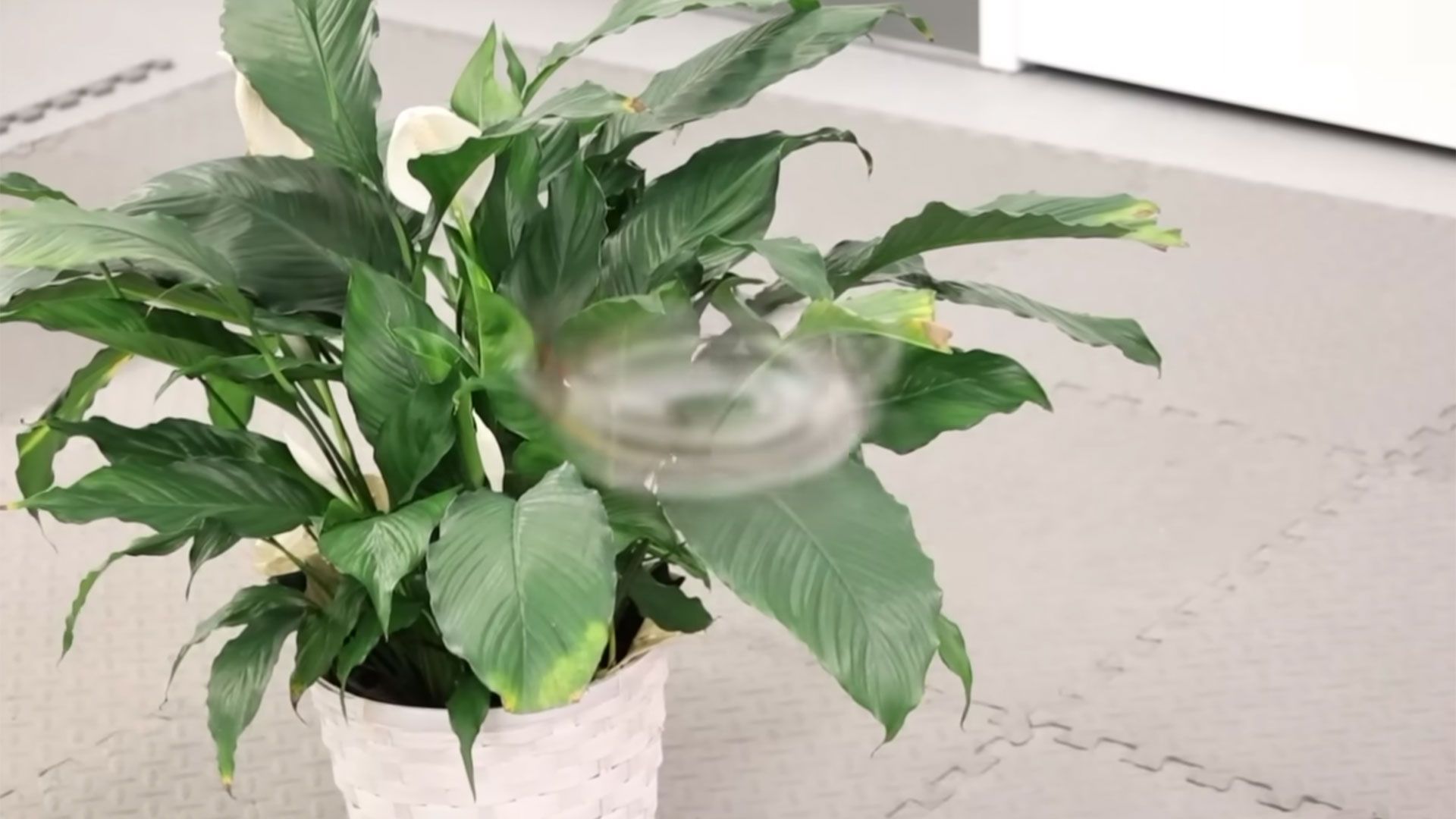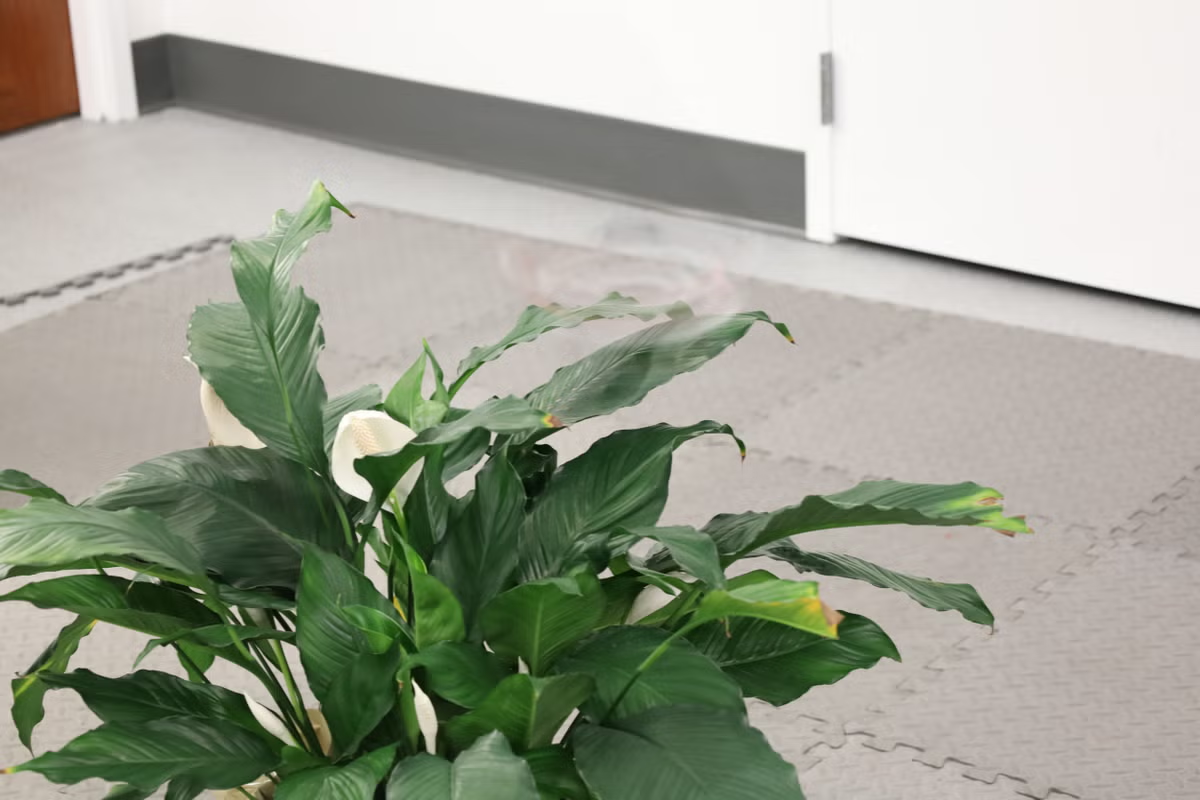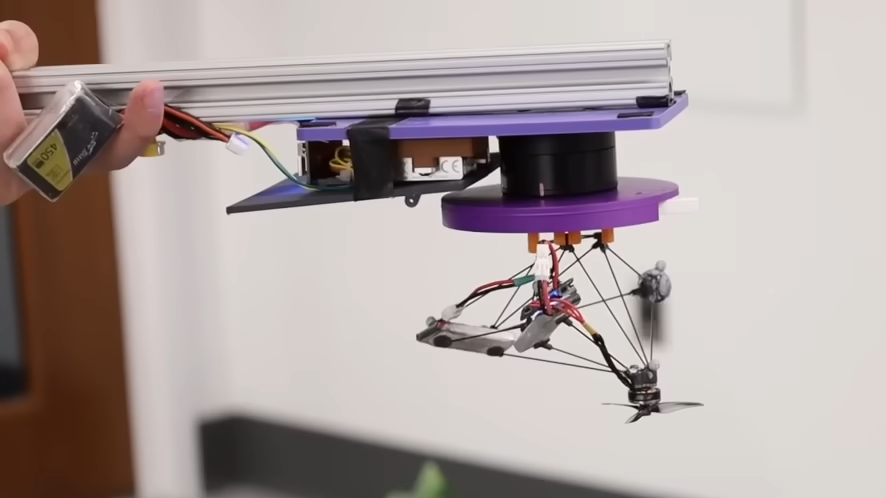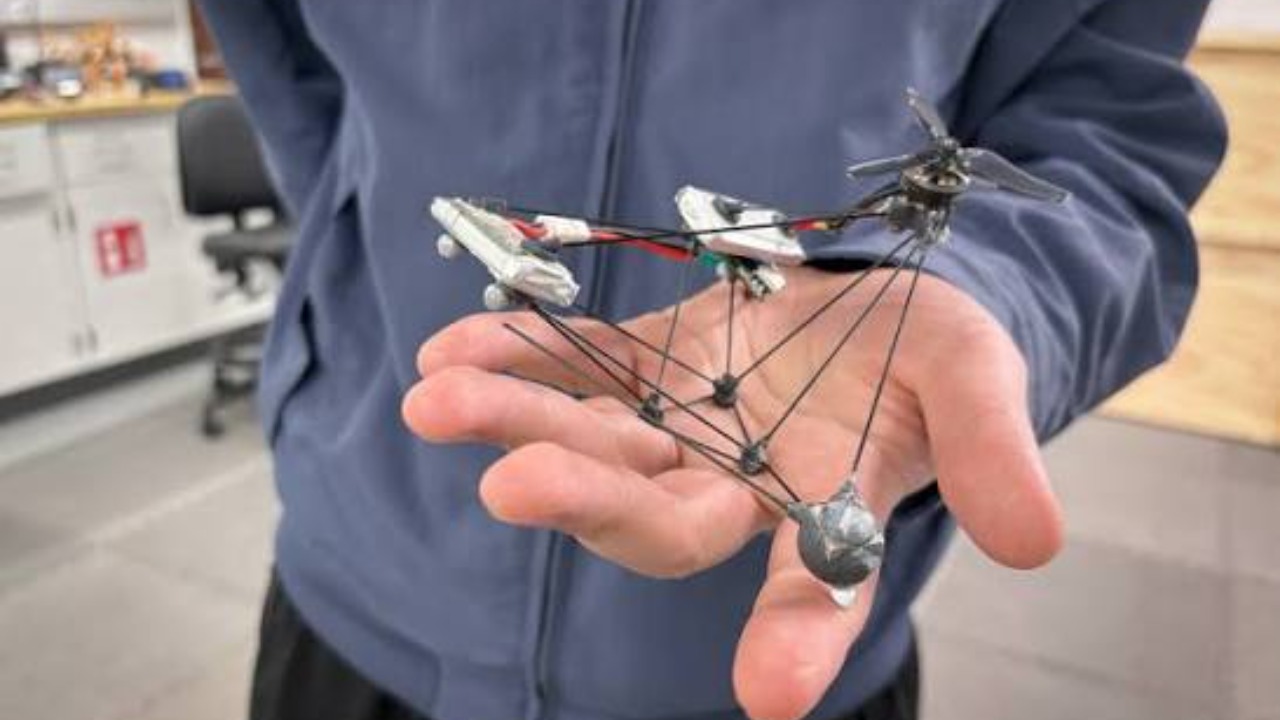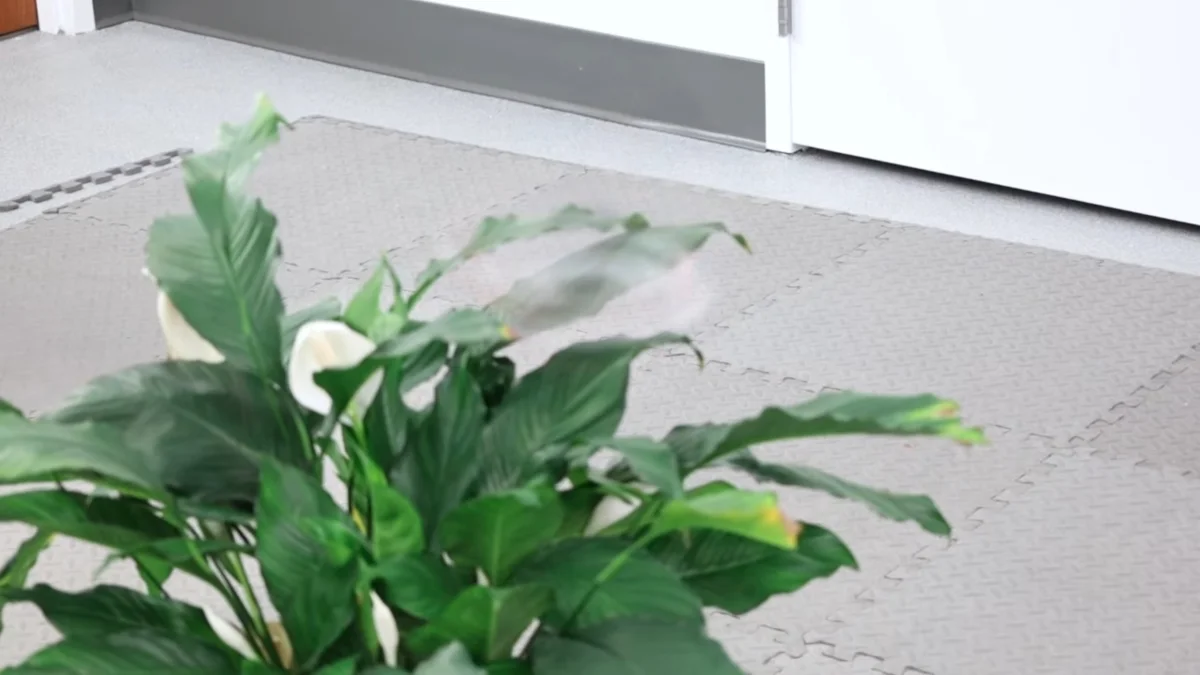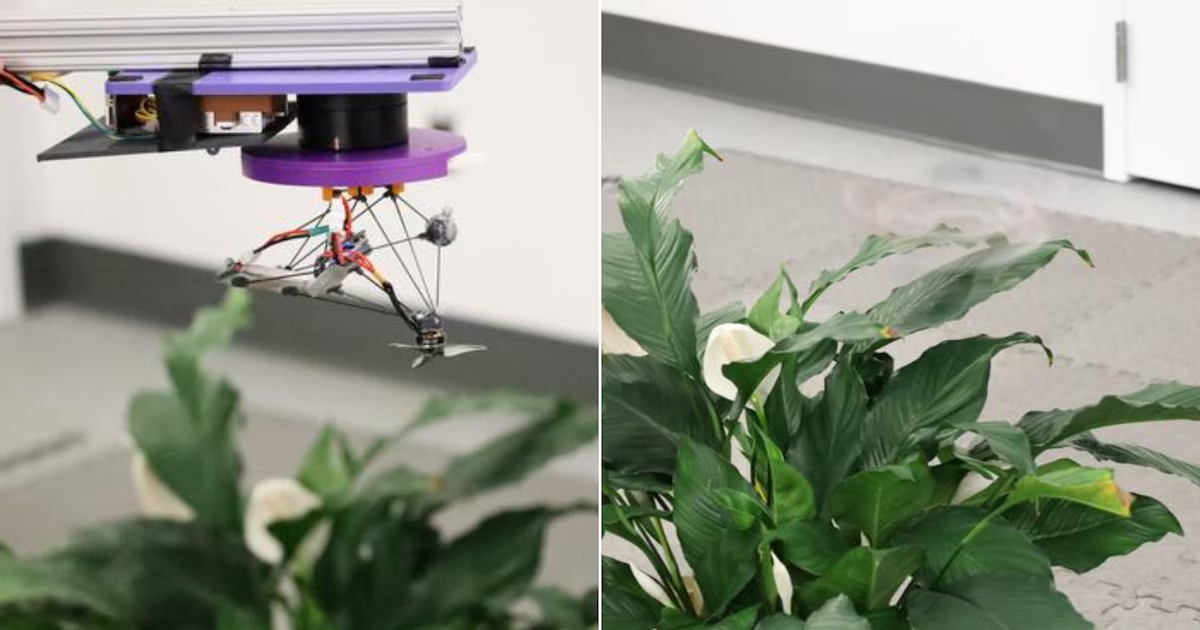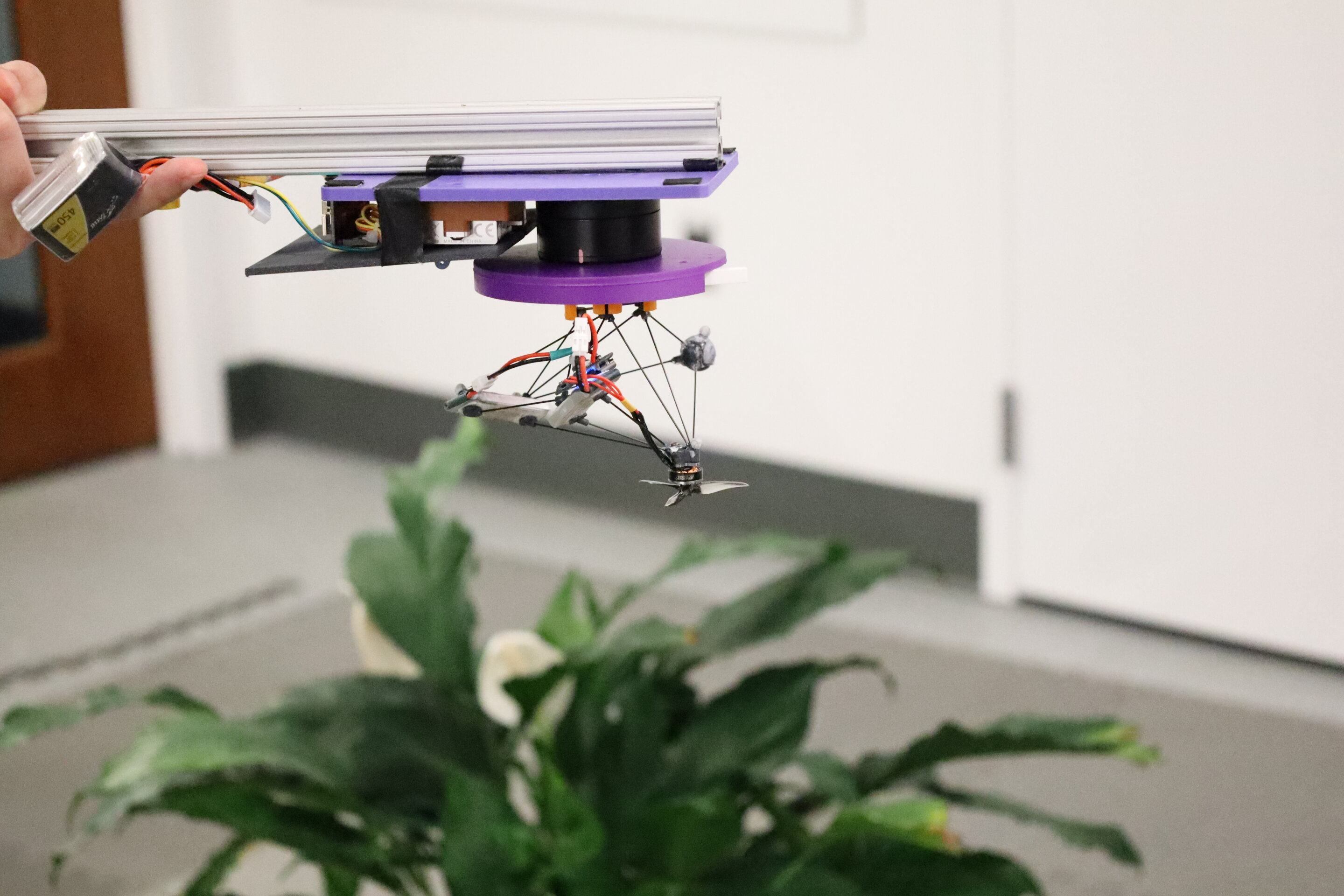
Components are spread around the drone—at different heights and different angles with lots of space in between—to prevent them from visually overlapping when spinning. So, when everything blurs together, the drone becomes a faint, semi-transparent cloud rather than a distinct shape. Credit: Northwestern University
By exploiting the quirks of human vision, Northwestern University engineers have designed a drone that nearly disappears before the eyes. For years, researchers have tried to design invisible drones and robots using camouflage, transparent materials or light-bending optical systems. But the Northwestern team instead used a concept called "motion blur"—the same effect that makes fast-spinning fans and propellers seem to disappear.
Called the "Phantom Twist," the drone spins up to 25 times per second, which is too fast for the human eye to see clearly. While it isn't completely invisible, it morphs into a ghostly smudge that seamlessly blends into the background. The work eventually could lead to drones that monitor wildlife, survey the environment and inspect infrastructure with less visual disruption.
The Northwestern team presented this work at Robotics: Science and Systems 2026 in Sydney, Australia. The talk, "Computational Design of a Low-Visibility UAV Using Human-Aligned Perceptual Metric," is part of the session "Robot & Sensor Design."