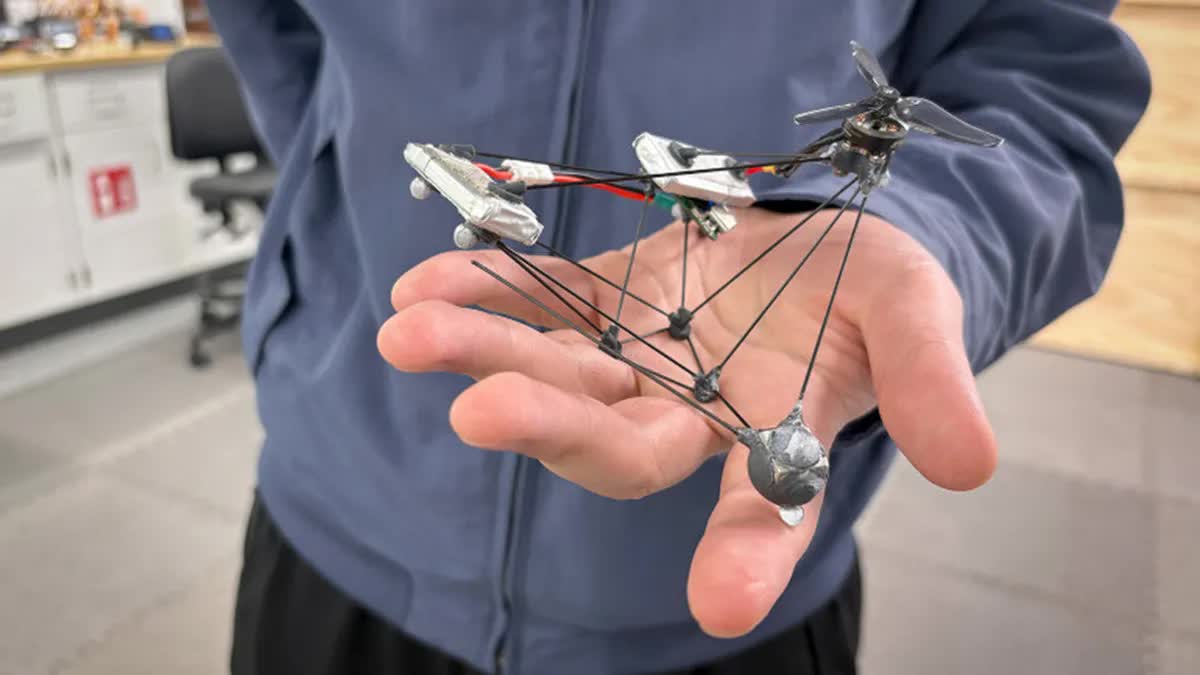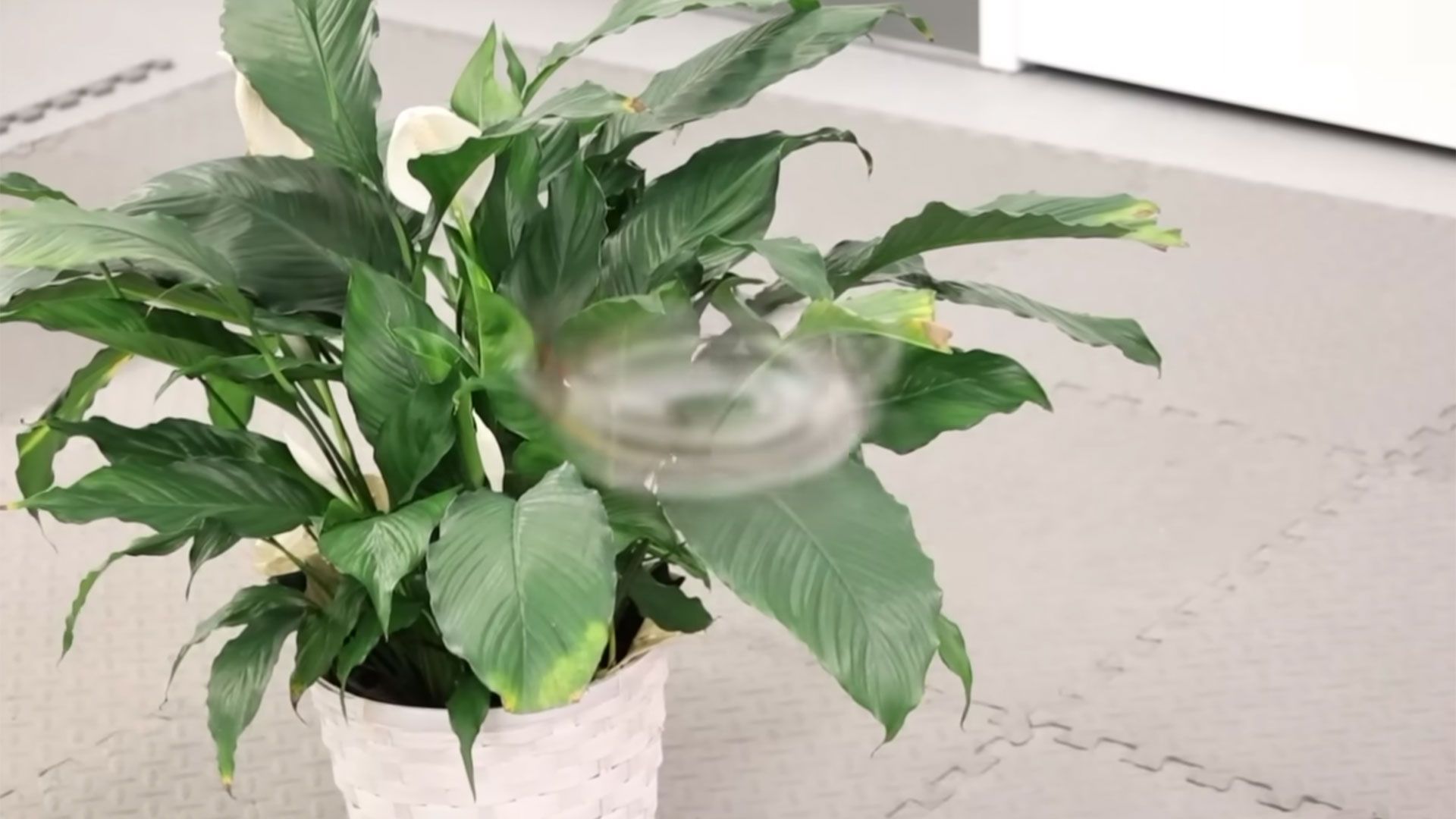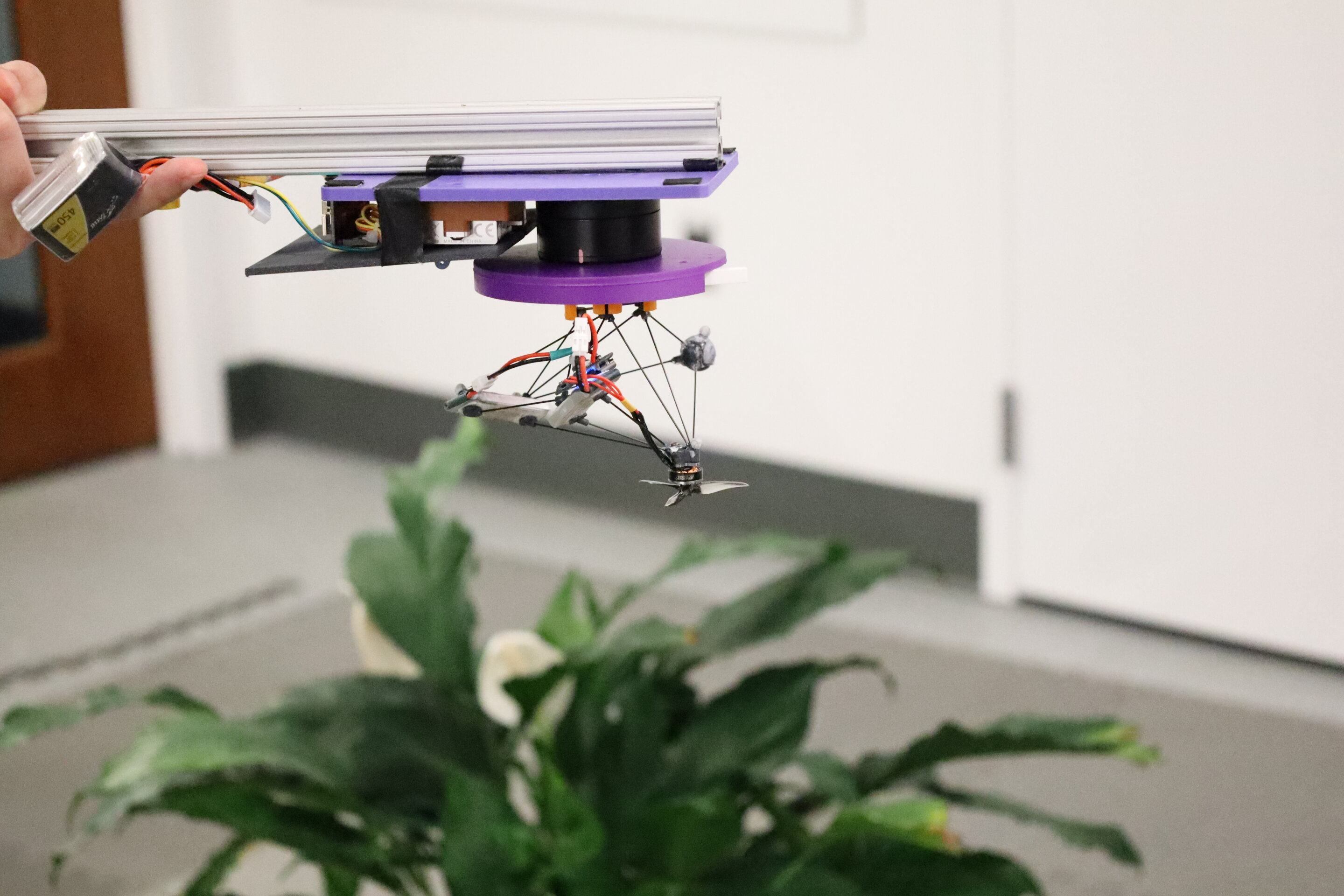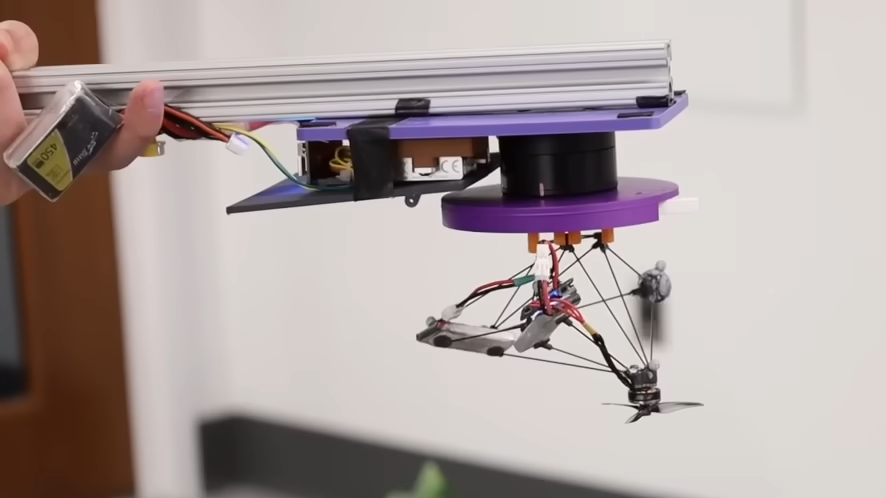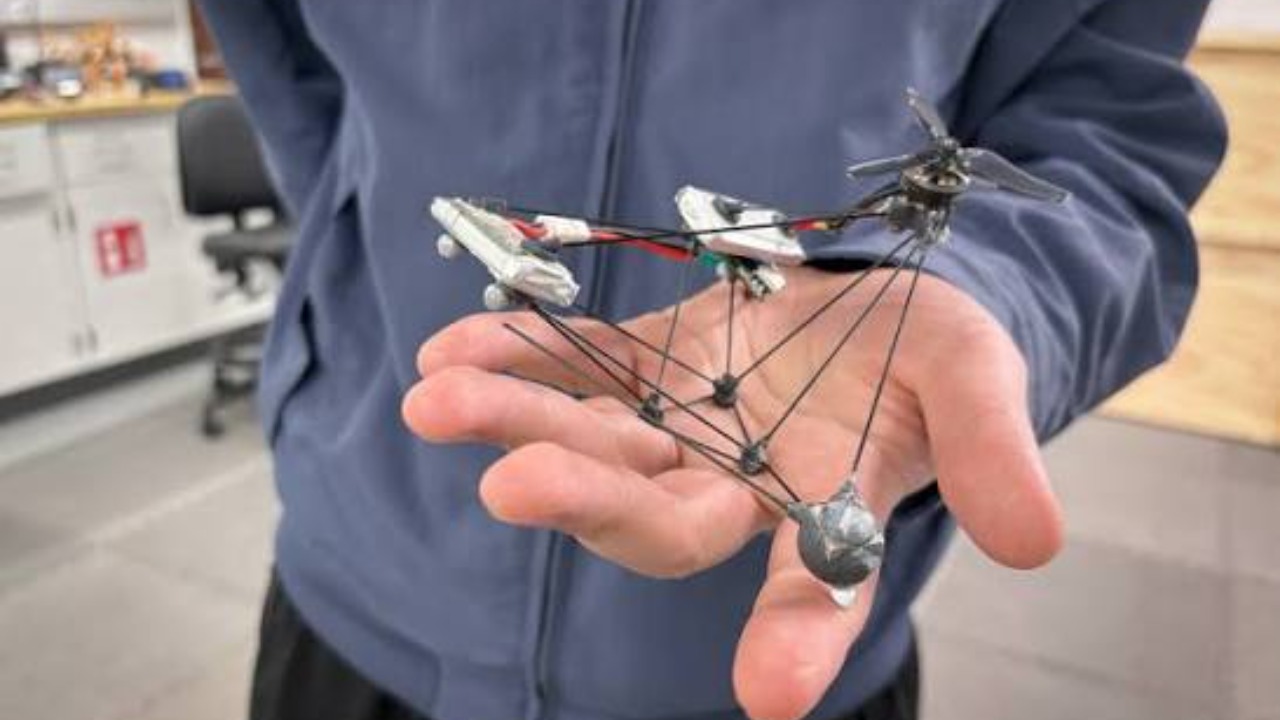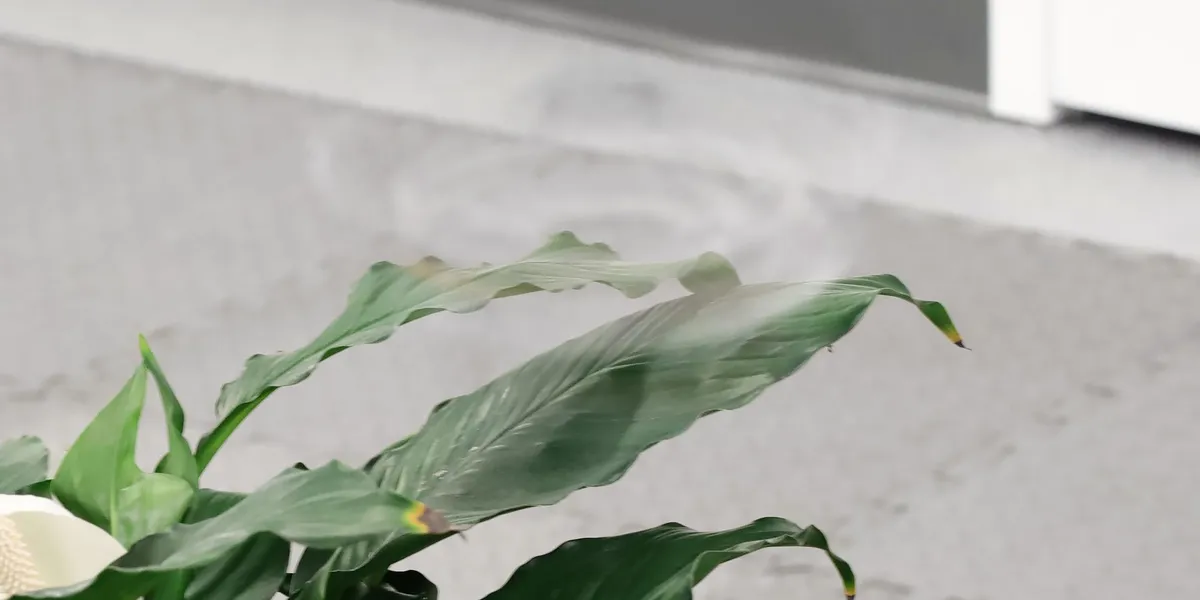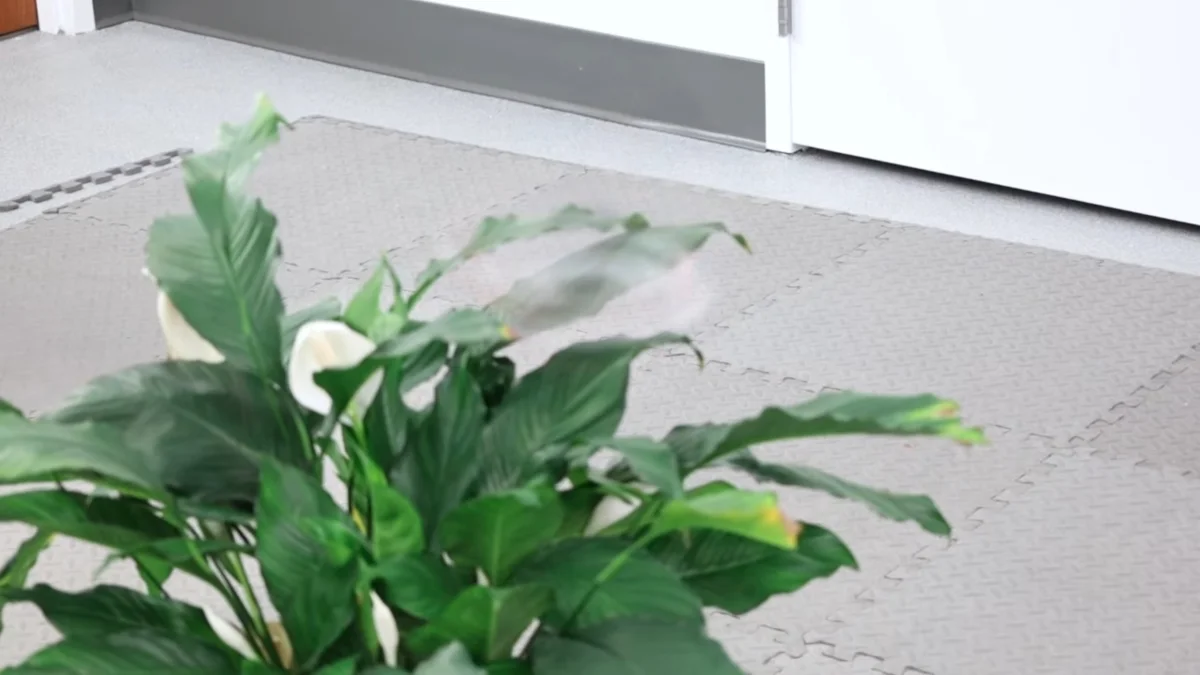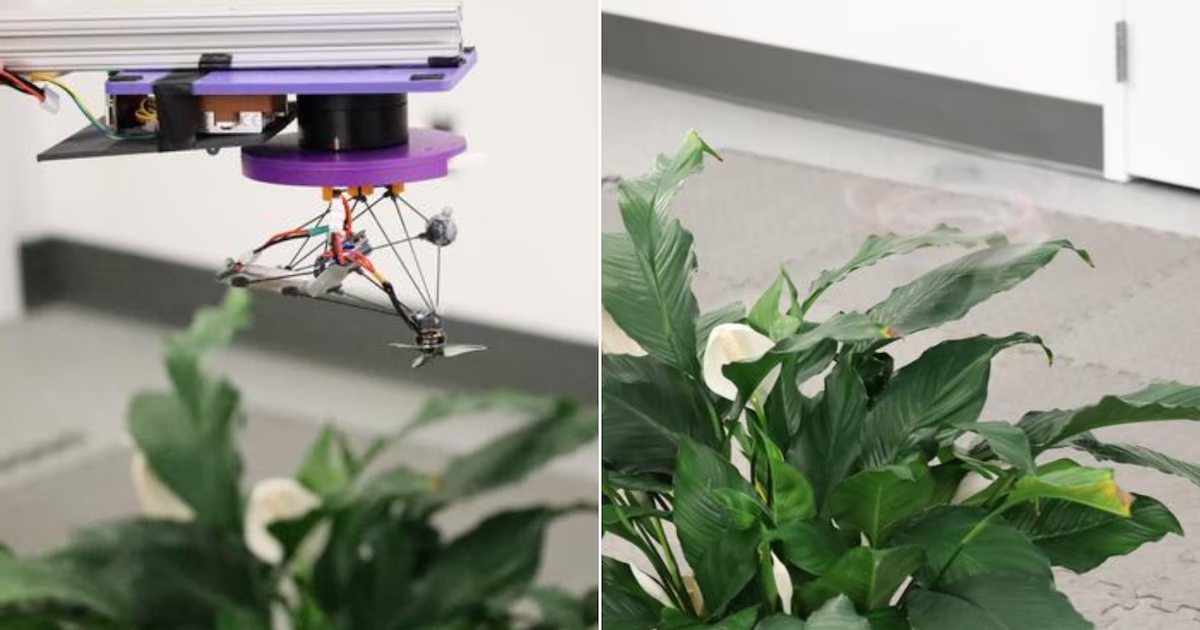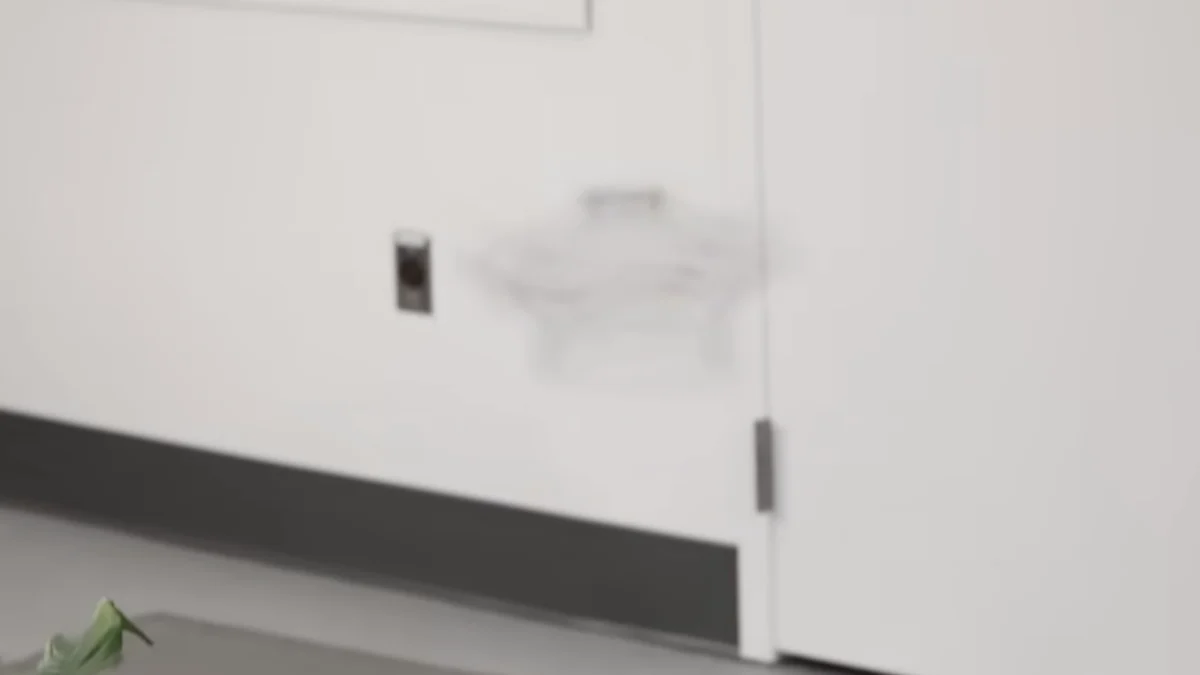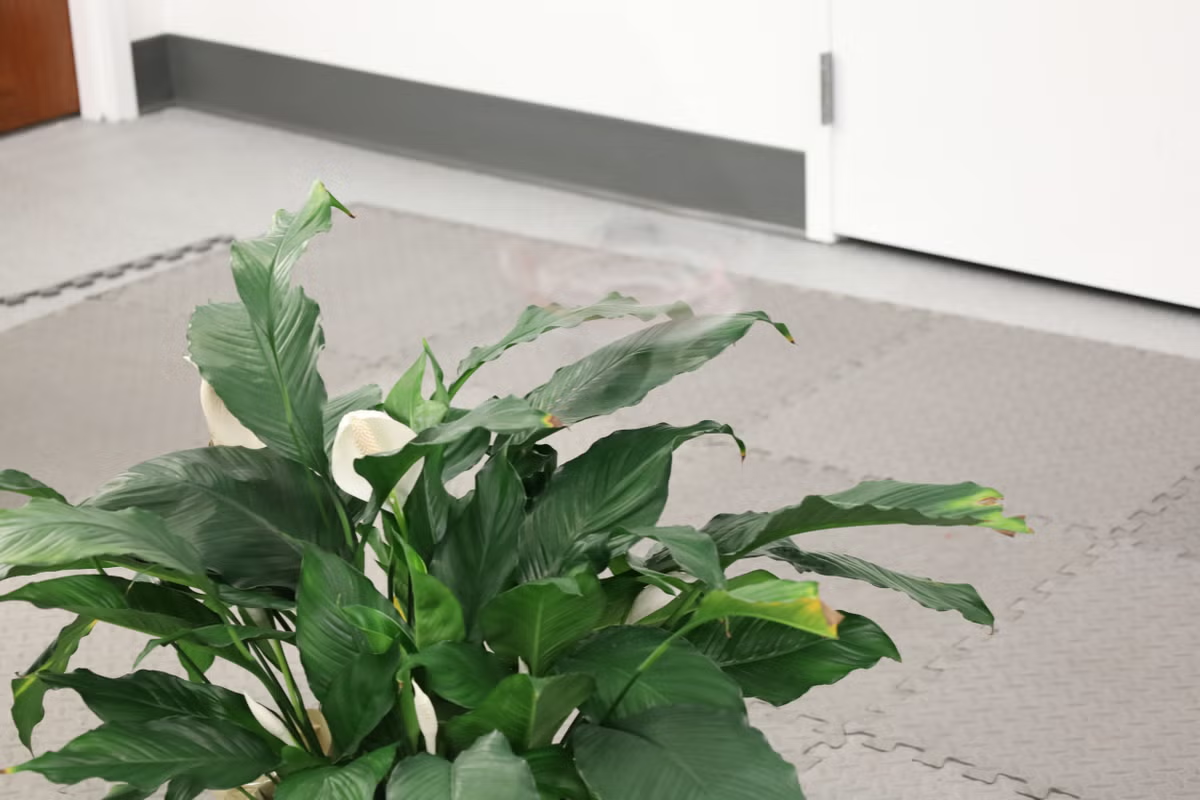
Scientists have invented a drone that almost completely disappears.The “Phantom Twist” spins up to 25 times per second – fast enough that it cannot be seen with the human eye.For years, researchers have been trying to build drones and robots that are able to disappear, with the hope of using them for everything from wildlife monitoring to warfare. Most of those efforts have focused on machines that blend into their background, either by using transparent materials or bending light around themselves.The new machine takes a different approach, by moving so quickly that it cannot be seen. Because of its spinning, it turns into a spectral smudge that blends into its background.“Most efforts to hide drones focus on making them look like their surroundings,” said Michael Rubenstein, from Northwestern University, who led the work. “Instead, we asked whether we could design the drone itself around the way humans perceive motion. This idea of low visibility through persistent motion is something few people have explored.”Researchers hope that the invention could be used to build drones that are able to monitor wildlife or inspect the environment without being visually obvious. In many of those examples – as well as in military uses – the visibility of drones is a problem because the animals or people being monitored behave differently when they see it, and the monitoring is less useful.The work required using a computational model and AI to generate and then test versions of the drone that were both able to fly stably as well as disappear into their background.They then simulated the most promising candidates and flew them in front of 100 real-world backgrounds. A model that simulated human vision was able to determine whether they would disappear into those backgrounds in reality.Once they had found the simulated drone that best met the criteria, they built a real one – and found that it really did seem to almost entirely disappear.“The human eye takes time to accumulate signals, roughly analogous to the exposure time of a camera,” said Emma Alexander, a colleague of Professor Rubenstein and an expert in computer vision. “When an object spins quickly, we perceive it as blurring out and losing distinct features.“Because this new drone is almost entirely transparent, its few opaque components are visually averaged with the background for an overall appearance of a slight haze.”The new drone still has a range of problems, including the fact that it makes an audible noise. Researchers hope to make new versions that could cut out those problems, using quieter propulsion for the sound and transparent components to get rid of the bits that remain slightly visible.
Scientists invent drone that almost completely disappears
‘Phantom Twist’ drone spins so fast the human eye can’t see it
437 words~2 min read