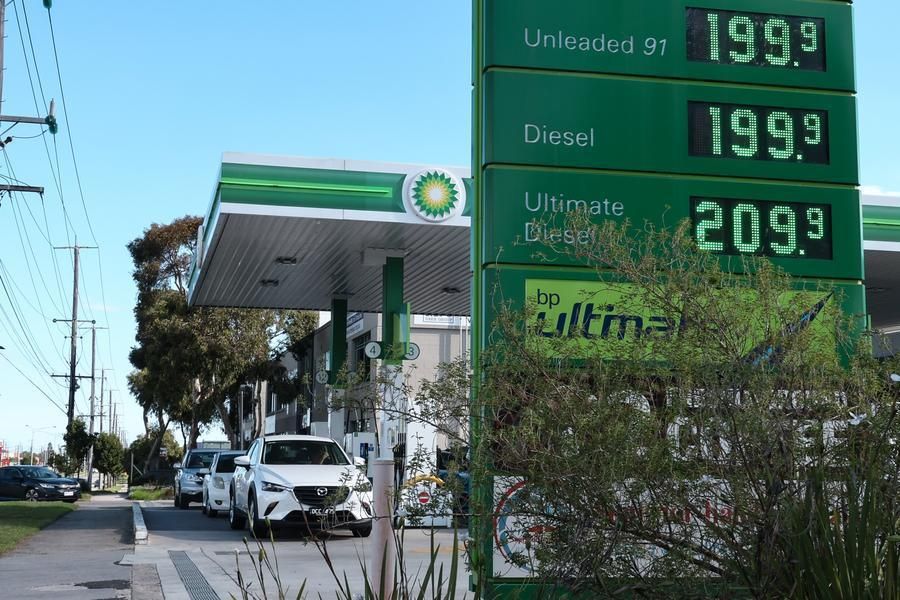
People queue to fuel their vehicles in Melbourne, Australia, on March 9, 2026. The strikes launched by the United States and Israel against Iran have triggered a sharp spike in global oil prices.
If you'd shown an energy trader in June the price chart for July, they'd have assumed something had gone badly wrong. Brent crude went from grinding toward $70 a barrel, its lowest level since before Iran and the US started trading strikes back in February, to jumping nearly 7% in a single session after Washington resumed bombing runs on Iranian targets just weeks after signing a memorandum of understanding meant to end exactly that conflict. Briefly, Brent topped $80. Then it drifted back down again. This is what an oil market looks like when it genuinely cannot decide whether the crisis is over or just paused.
That whiplash matters more than any single price point, because it's exposing something structural: crude supply and refined product supply are no longer telling the same story. Global crude looks comfortable, even oversupplied, inventories rose in June for the first time in four months, and forecasters are penciling in a surplus by year's end if shipping through the Strait of Hormuz stays open. But refining capacity hasn't caught up. Middle East export refineries that went offline during the conflict still haven't fully restarted, Russian throughput remains constrained by ongoing attacks on its facilities, and Asian refiners are still running below normal. The result is refining margins at four-year highs even as crude itself gets cheaper, diesel and gasoline crack spreads widening because there simply isn't enough refining capacity to turn abundant crude into the fuel people actually need.