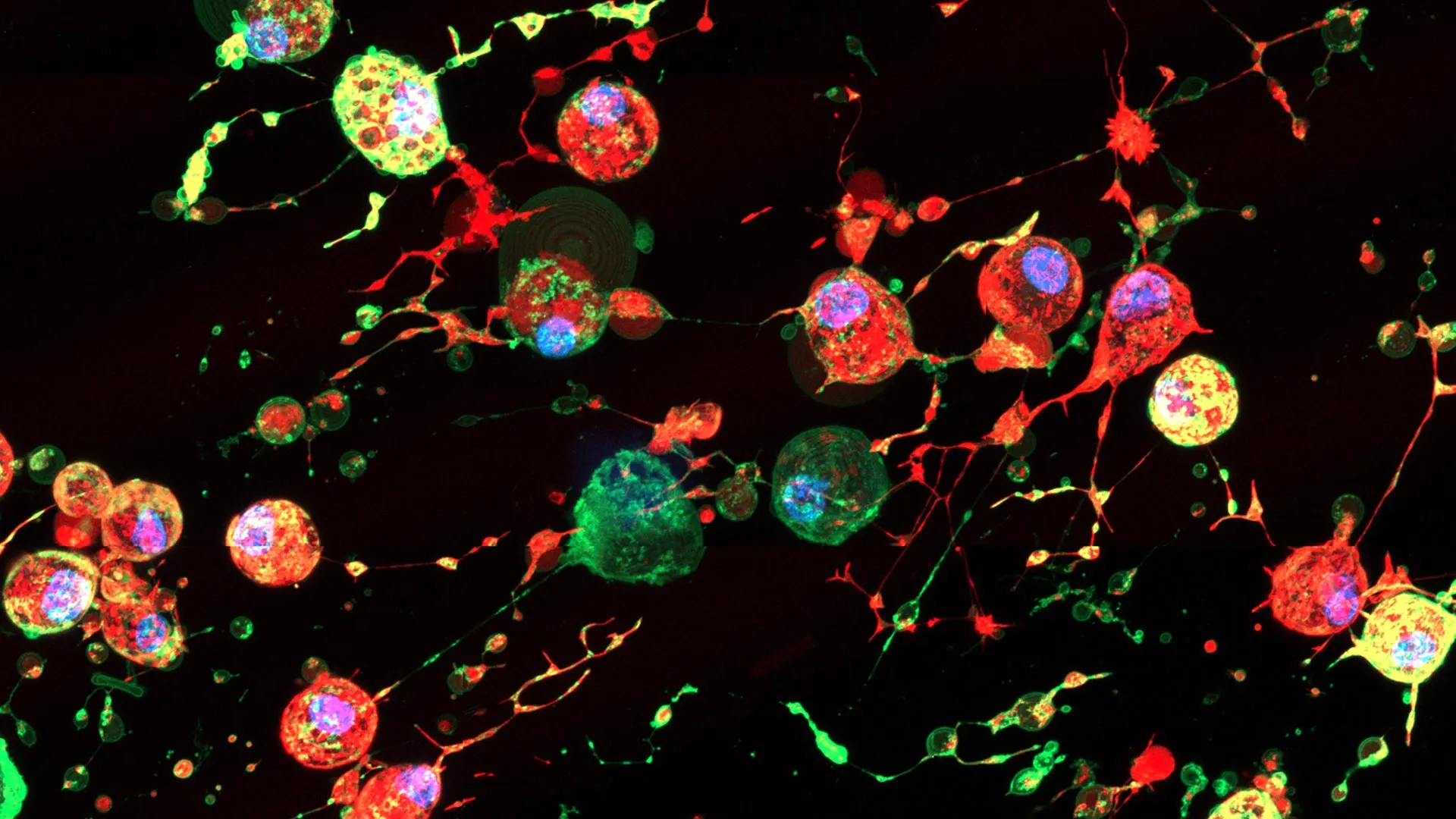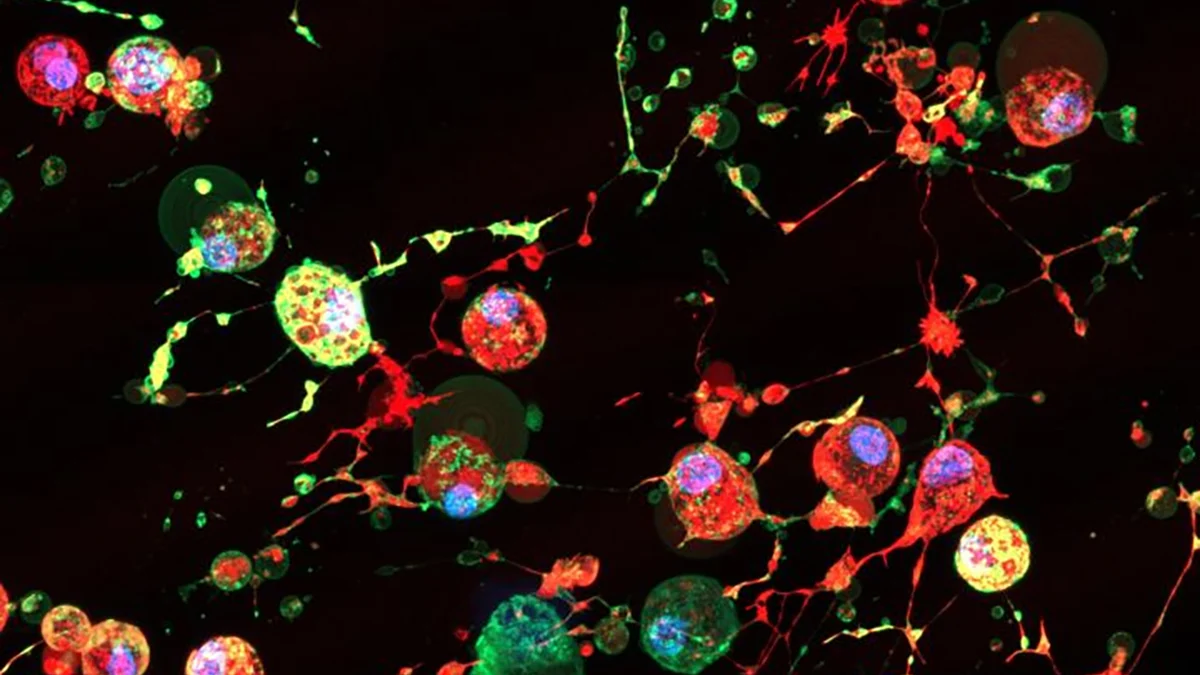
Dead cells after self-destructing, with the small green circles showing the F-ApoEVs left behind. (La Trobe University)
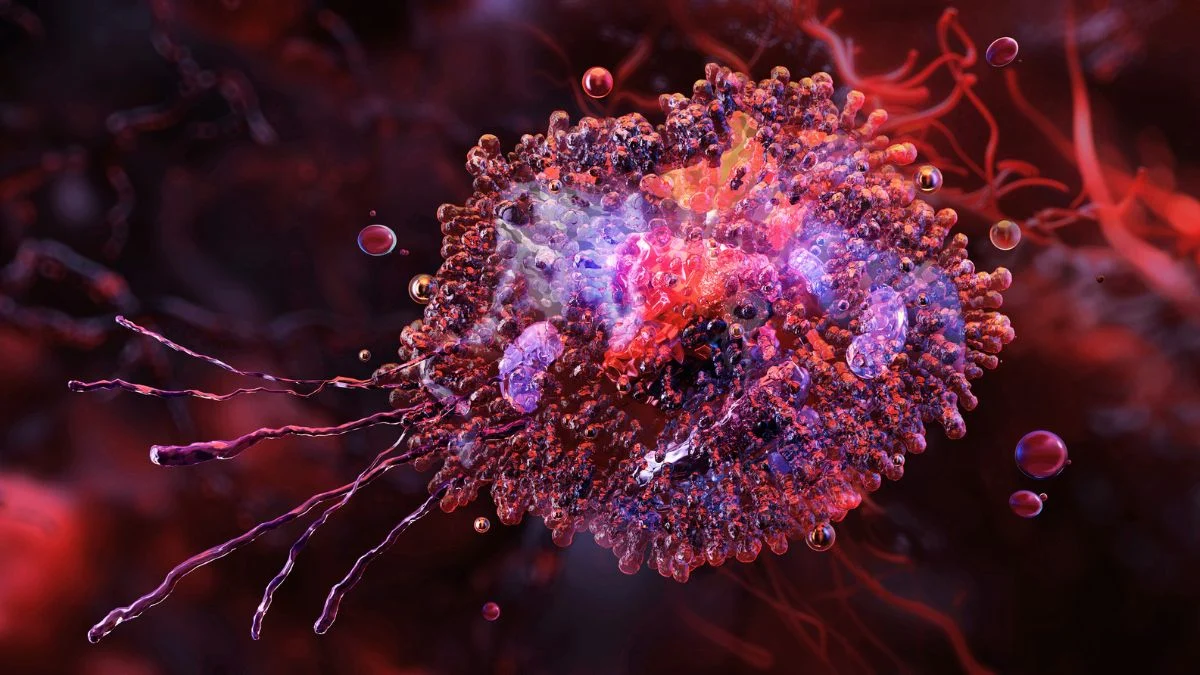
The cell churn that goes on inside our bodies is vast, with hundreds of billions of cells dying off and being replaced every day. Keeping that constant biological overhaul running smoothly is crucial in maintaining good health.Researchers have now identified a new 'footprint of death' that cells leave behind as they die to guide the immune system in its waste-removal role.It seems this process can also be hijacked by viruses to spread themselves further.The discoveries, published in a recent study in Nature Communications led by a team from La Trobe University in Australia, have implications for understanding how programmed cell death and renewal keep us healthy.Illustration showing how the 'footprints of death' (smaller pink blobs) are left behind by dying cells. (Rutter et al., Nat. Commun., 2026)Further down the line, it may also be possible to develop drug treatments that make use of these death footprints – and prevent them from being infiltrated by viruses."Billions of cells are programmed to die each day as a part of normal turnover and disease progression, and until now, it was believed that the cell fragmentation process during cell death was random and fairly simple," says biochemist Ivan Poon, from the La Trobe Institute for Molecular Science (LIMS)."Our findings demonstrate the complexity of this process and highlight how each step in the process is actually critical to help the dying cell break down efficiently and to be cleared away by the immune system."A process called apoptosis is often used to schedule cell death in the body, taking out cells that are no longer needed, damaged, or potentially harmful. It was this process that the new study took a closer look at.Using 3D timelapse imagery to analyze different types of cells as they died, the researchers identified the proteins left behind by apoptosis, and the way the immune system subsequently interacted with them.