Beyond Logs: Why Observability's Next Era Is Comprehension
Ask most engineers to debug a production incident and watch what they reach for first. Nine times out of ten, it's logs. grep a request ID, tail a pod, scroll through a dashboard full of raw text. Logs are comfortable. They're the first signal most of us learned, and they read like a story — one line at a time, in the order things happened.
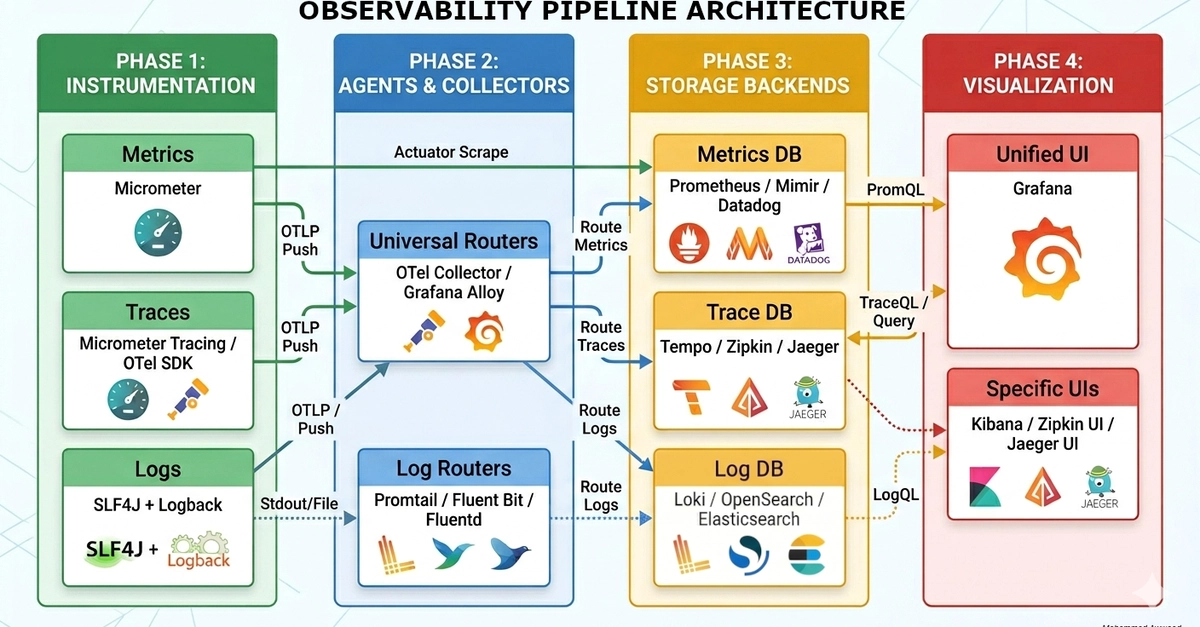
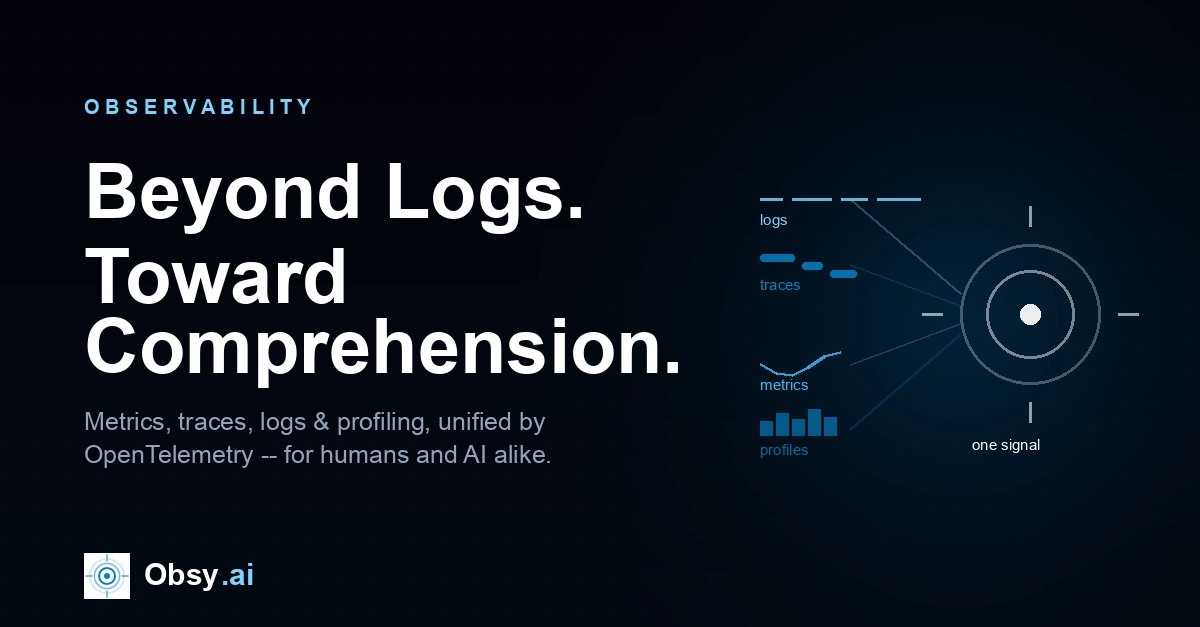
That comfort is also the problem. Logs are the least structured, least efficient, and most expensive-at-scale of the four observability signals, and yet they're still treated as the default lens for everything — including questions logs were never built to answer. The modern approach isn't "logs, plus some metrics and traces on the side." It's using metrics, traces, logs, and profiling together, each doing the job it's actually good at, correlated through a common data model instead of duct-taped together after the fact.
This post is our point of view on how to get there — and where we think observability is heading next.
The pattern that needs to die: mining metrics out of logs