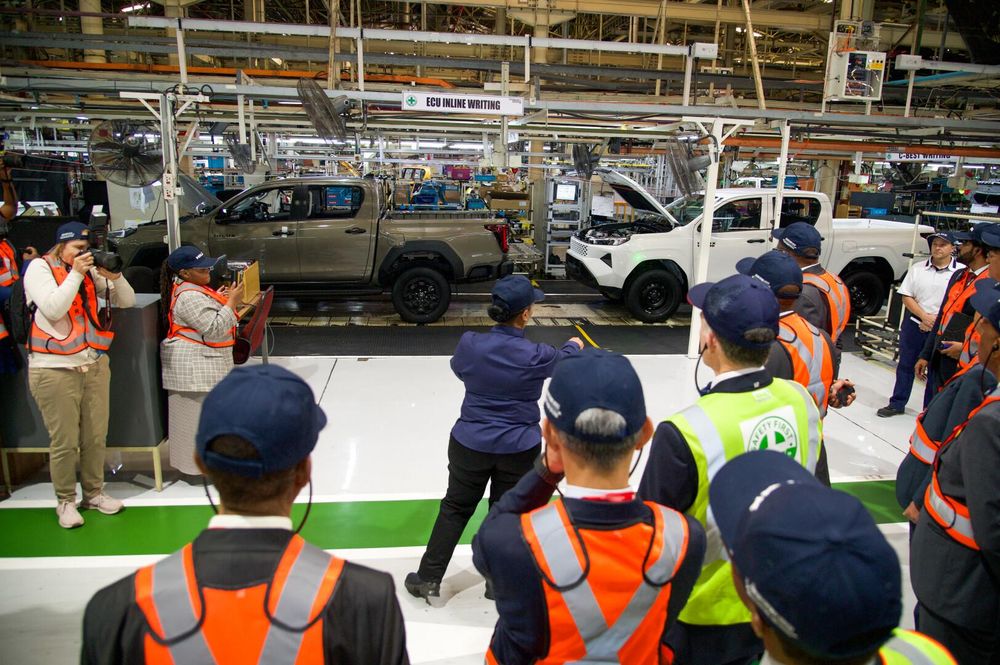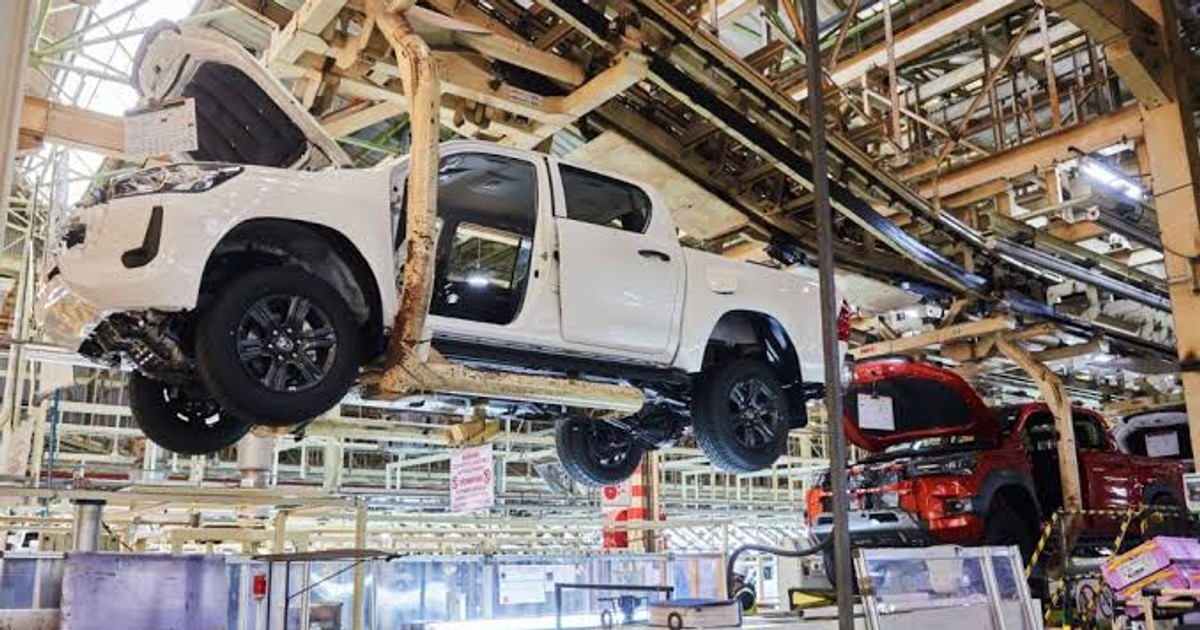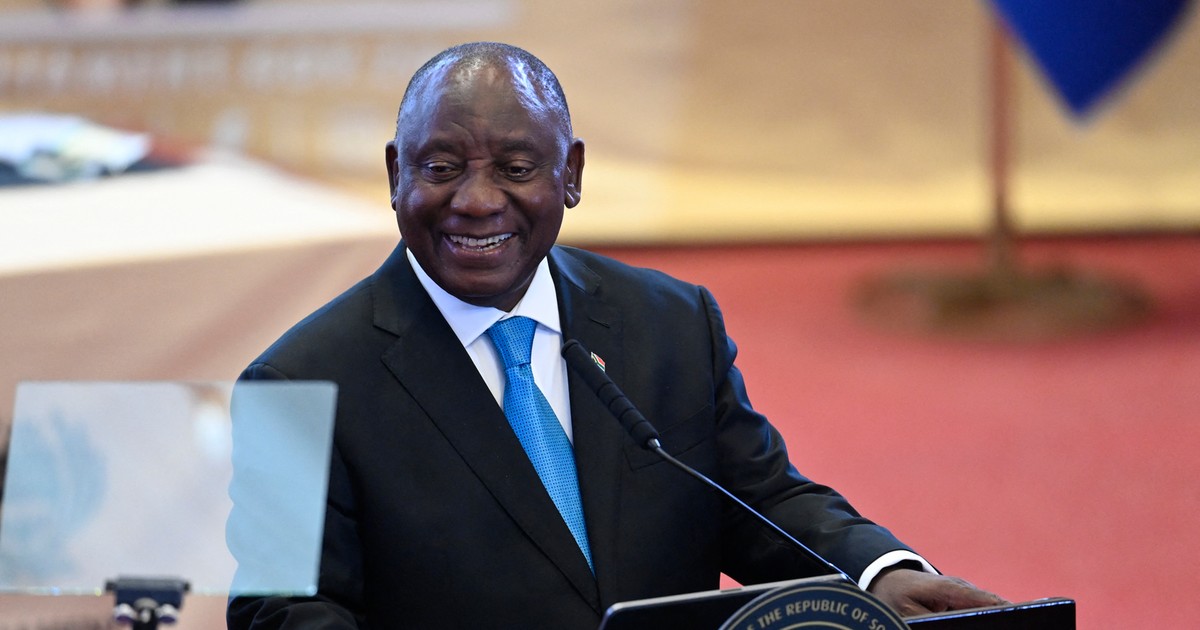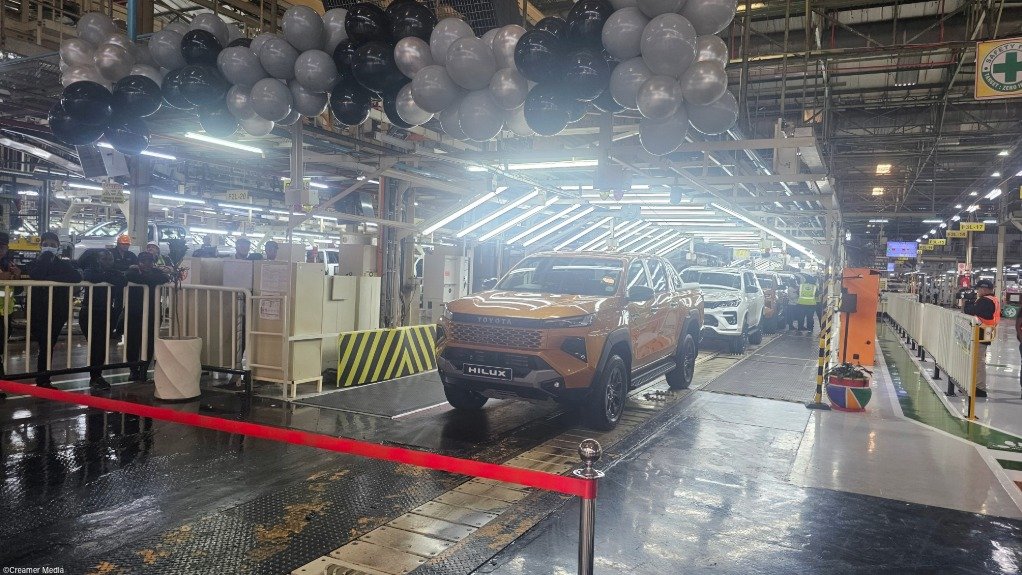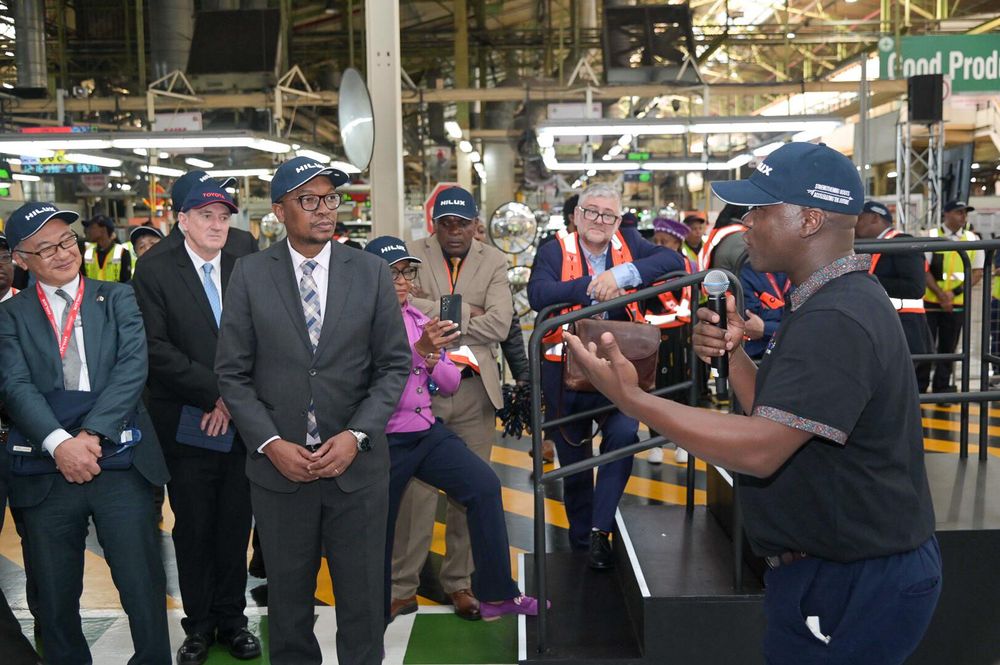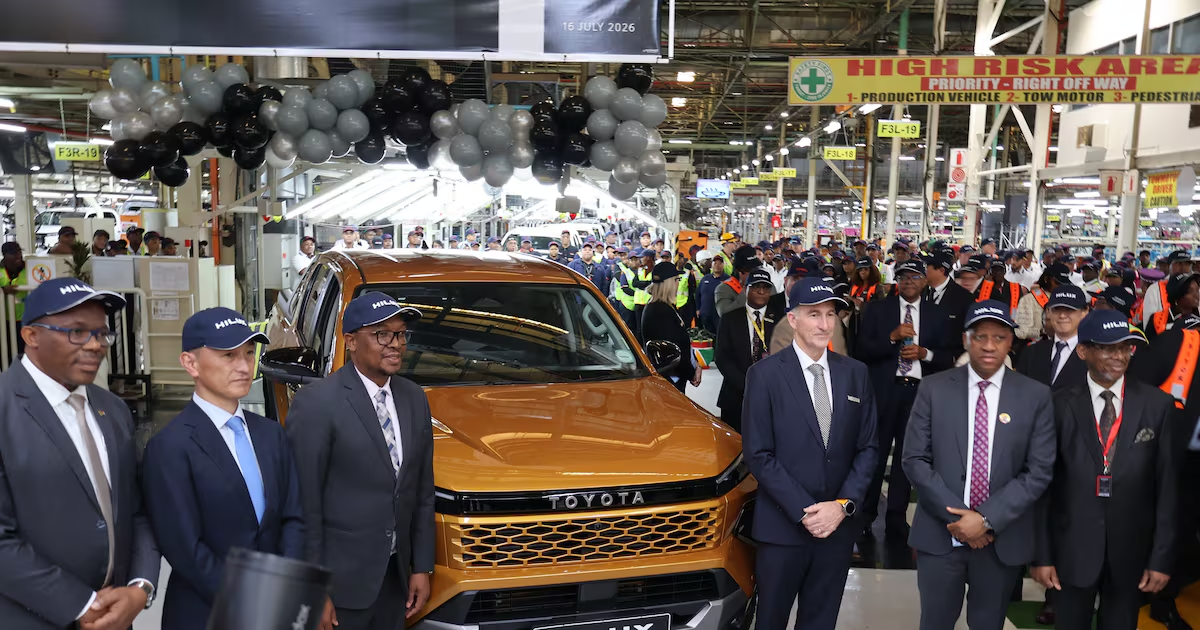
Toyota is spending R10.4bn to produce the ninth-generation Hilux in South Africa, the largest single product investment in the history of Toyota South Africa Motors (TSAM). The investment reinforces the Japanese automaker’s long-term commitment to the country during one of the most disruptive times in the motor industry, said the carmaker at the ceremonial line-off of the new Hilux at its Prospecton manufacturing plant in Durban on Thursday.Speaking at the event, TSAM president and CEO Andrew Kirby said the investment bolsters South Africa’s position within Toyota’s international production network even as the country becomes less competitive as a global manufacturing base due to the costs of labour, taxes and logistics having increased significantly over the past 10 years.Kirby said new players in the market, particularly low-priced imports from China, were another big change point in the motor industry and urgent government policy was required to achieve a better balance between imports and local production. Kirby said he is not recommending blunt instruments, such as hiked import duties, but a refined approach to many small levers that can enhance the country’s position as a strong manufacturing hub. Toyota said it has capacity to build 140,000 Hiluxes a year in Prospection for the local market and export to more than 70 destinations“We’re at risk as an industry and need to move forward, which includes accelerating the transition to locally manufacturing new-energy vehicles (NEVs),” he said.Kirby reiterated his call for a clear government policy that would encourage the local manufacture of hybrid and electric cars to meet changing demand in export markets. More than two-thirds of South Africa’s output from seven car manufacturers goes overseas, primarily to the EU and the UK which aim to greatly reduce sales of new internal combustion engine (ICE) vehicles from 2035 onwards. He said the industry had a detailed engagement on automotive policy last week with trade and industry minister Parks Tau, who attended Thursday’s ceremony.Elaborating on the latest Hilux investment, Toyota said the one tonner had more than 50% local content, the highest of any locally-manufactured vehicle, but getting to the 60% target set by the South African Automotive Masterplan by 2035 would be very difficult without policy changes.Trade and industry minister Parks Tau and Toyota South Africa Motors CEO Andrew Kirby drive a ninth-generation Hilux off the Prospecton production line. (DENIS DROPPA) Toyota said it has capacity to build 140,000 Hiluxes a year in Prospection for the local market and export to more than 70 destinations across Europe, Africa and Latin America after it phases out production of the existing eighth-generation Hilux model.The programme for the ninth-generation Hilux at Prospecton includes a new 29,300m² logistics centre, a state-of-the-art chassis frame coating facility and a new chassis frame welding facility, scheduled for completion in June 2027.About R3.2bn of the investment was directed towards local supplier development, supporting domestic value chains and localisation objectives.The 56-year-old Prospecton facility is the oldest Toyota factory outside of Japan and has produced more than 2.9-million Hiluxes with exports reaching 74 international markets across Africa and EuropeBeyond the new manufacturing facilities, Toyota invested a further R7.2bn in production preparation for the Hilux, including advanced manufacturing technologies, production equipment and supplier tooling. Toyota’s supplier partners have also invested an additional R2bn in their own facilities, tooling and capability development.The 56-year-old Prospecton facility is the oldest Toyota factory outside of Japan and has produced more than 2.9-million Hiluxes with exports reaching 74 international markets across Africa and Europe. Apart from the Hilux, South Africa’s best-selling vehicle, it produces the Corolla Cross, Fortuner and Hiace. In a keynote address sent by video, President Cyril Ramaphosa said Toyota’s investment extended beyond infrastructure and production, and had driven significant skills development with scores of employees participating in global training programmes. Toyota employs more than 8,500 people across its operations in South Africa and supports thousands more through its supplier, logistics and dealer networks.Toyota said the ninth-generation Hilux introduces a modernised design and advancements in safety, technology and ride quality, while maintaining the toughness, durability and reliability that have made it South Africa’s best selling vehicle.It is being introduced progressively across local and export markets through a phased rollout strategy. It is initially available locally in a seven-model range comprising double cabs and Xtra cabs, all powered by Toyota’s familiar 2.8l turbo diesel engine.In 2027 the range will be bolstered by 2.4l turbo diesel variants. The Hilux is also available in a fully electric model in selected markets, though at present there are no plans to sell it in South Africa.Business Day
Toyota’s R10.4bn Hilux bet comes with warning for government
Toyota is spending R10.4bn to produce the ninth-generation Hilux in South Africa, the largest single product investment in the history of Toyota South Africa Motors.
754 words~3 min read