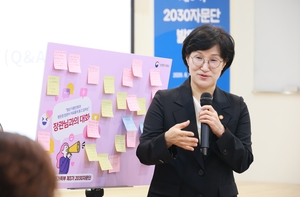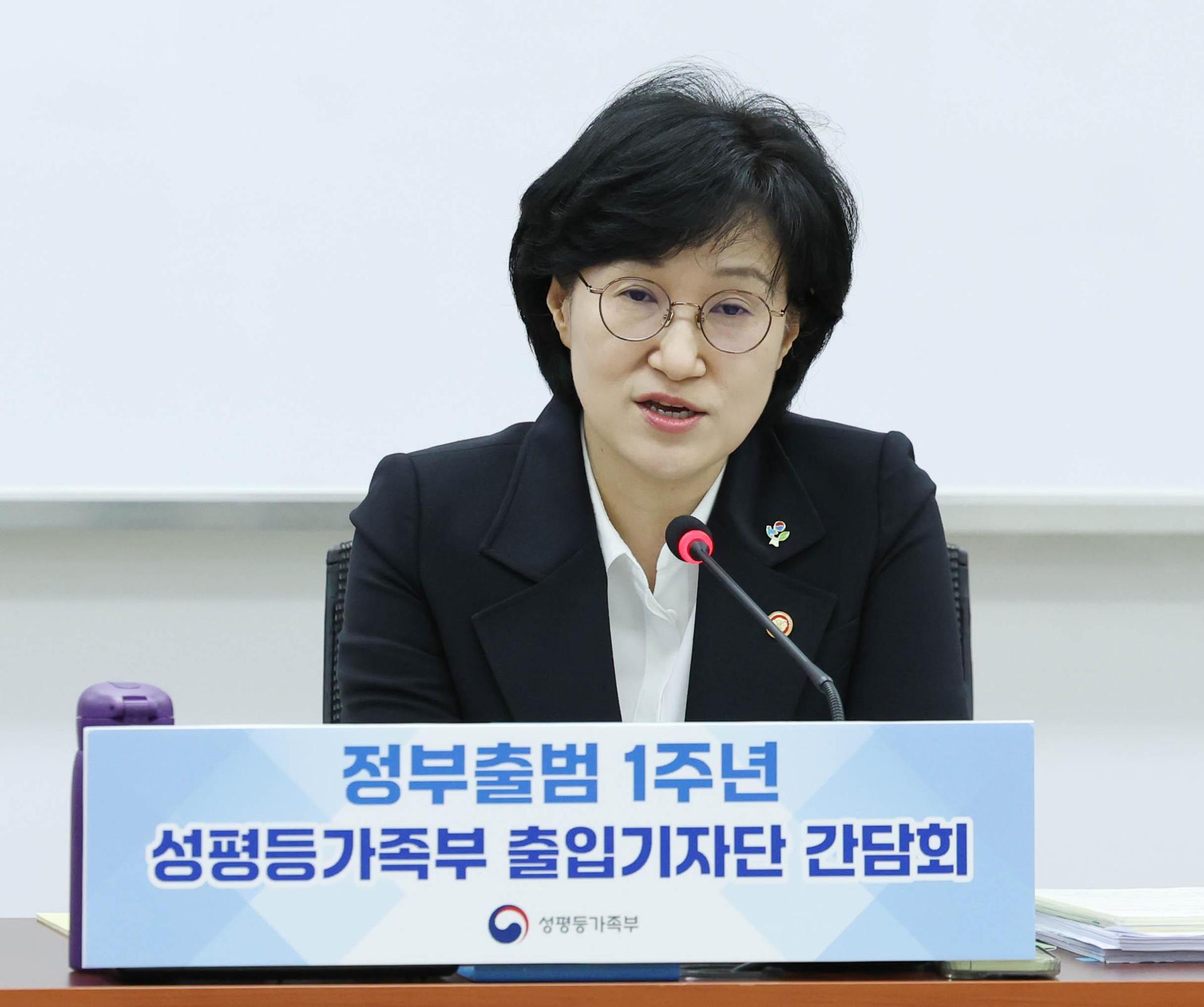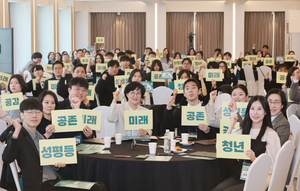
Gender Equality and Family Minister Won Min-kyong (center) poses with members of a ministry committee formed to promote coexistence and mutual understanding between young men and women in Seoul in March. (Ministry of Gender Equality and Family) The South Korean government is considering creating a citizen body to define gender-based hate speech online and build public consensus on how to respond to it, local media reported Friday.According to Newsis, the Ministry of Gender Equality and Family is reviewing measures to address the longstanding social problem through a citizen body tasked with building public consensus on what constitutes hate speech and how it should be handled.The proposal also calls for greater self-regulation by online platforms and an assessment and certification system evaluating their efforts to curb hate speech.The idea was proposed by a 150-member ministry committee comprising people aged 19-39. Formed to promote coexistence and mutual understanding between young men and women, the committee discusses a range of gender-related issues affecting younger people.Since beginning activities in March, the committee has produced 20 policy proposals, including the recommendation on online gender-based hate.“We will identify policy measures the government can pursue based on the committee’s proposals, while also considering public suggestions submitted online and through consultations in the field,” a ministry official was quoted as saying by Newsis.“The proposals will be reflected in a policy plan on gender balance and equality, which is expected to be announced later this year.”The move comes amid deepening gender hostility, particularly in online communities where derogatory memes and hostile rhetoric have become increasingly common.According to a Hankook Research survey conducted last year, 81 percent of men and 83 percent of women in their 20s said gender conflict in South Korea was severe. The perception was also widespread among respondents in their 30s, with 56 percent of men and 73 percent of women expressing similar views.The survey, however, found a sharp divide between men and women over what they believed was driving the conflict, suggesting limited opportunities for dialogue and mutual understanding.Another survey conducted in 2023 found that about 70 percent of both men and women in their 20s believed they had experienced gender-based discrimination.
Korea weighs citizen-led rules on online gender hate
The South Korean government is considering creating a citizen body to define gender-based hate speech online and build public consensus on how to respond to it,
358 words~2 min read