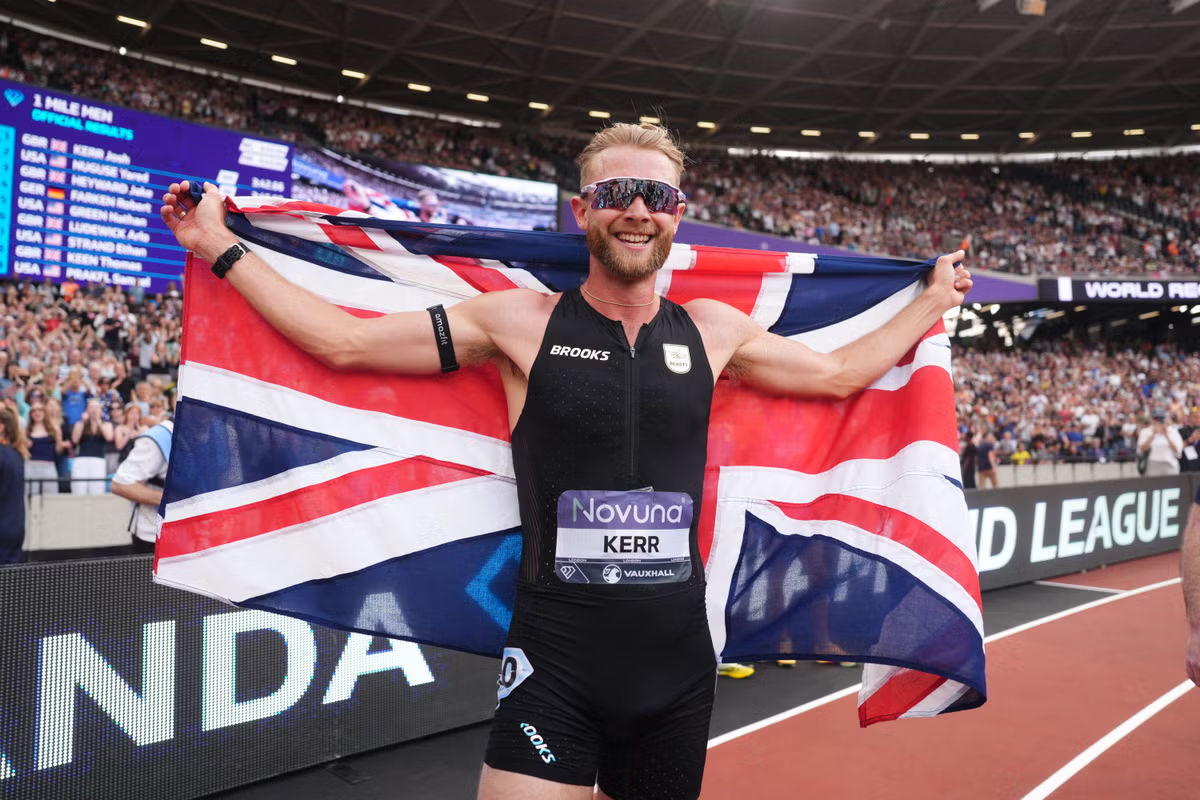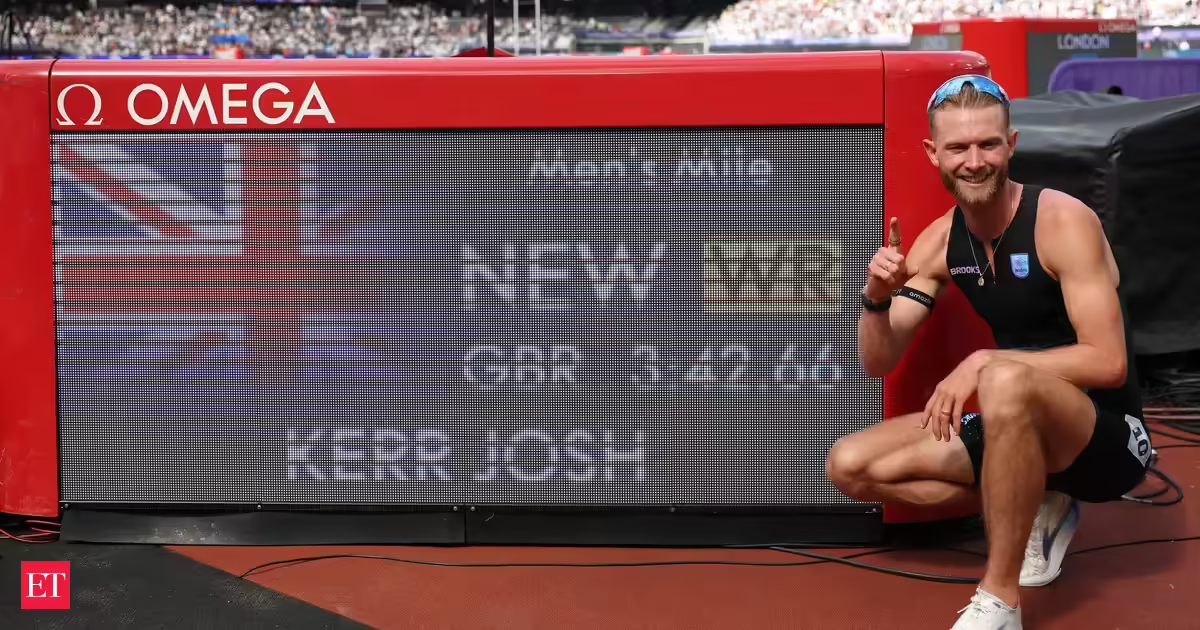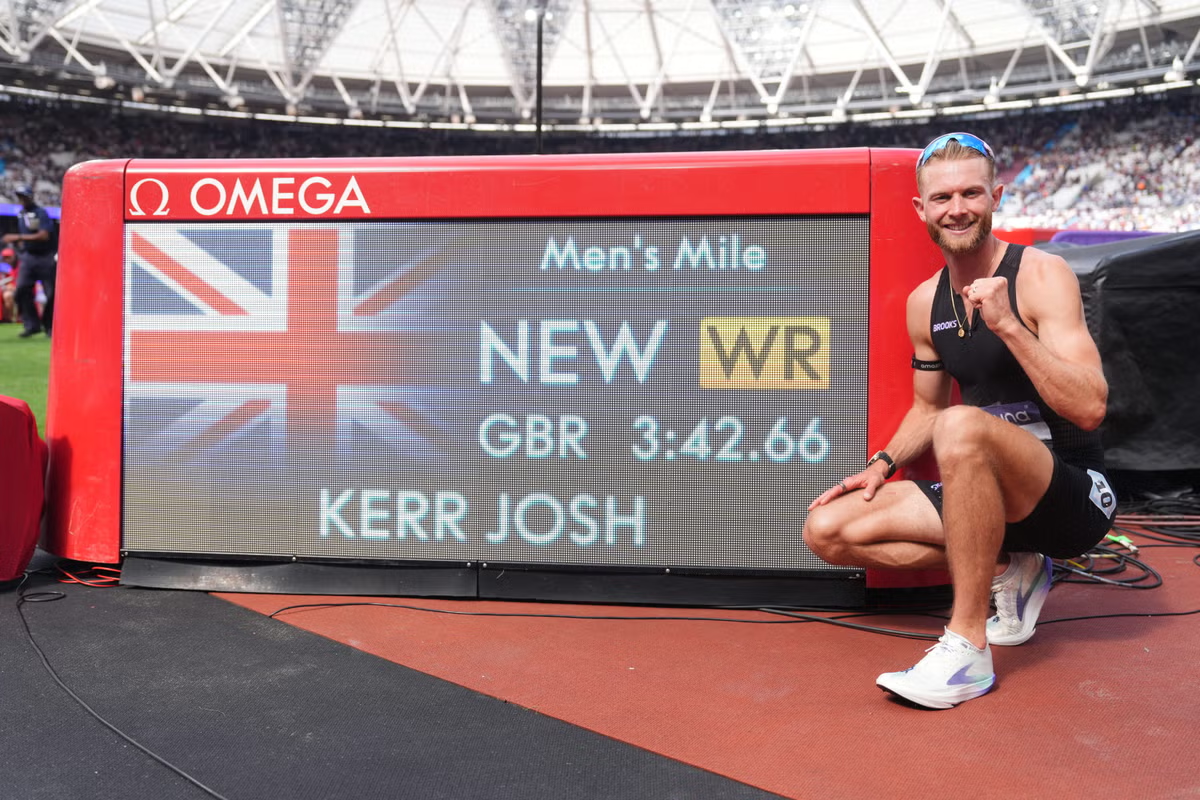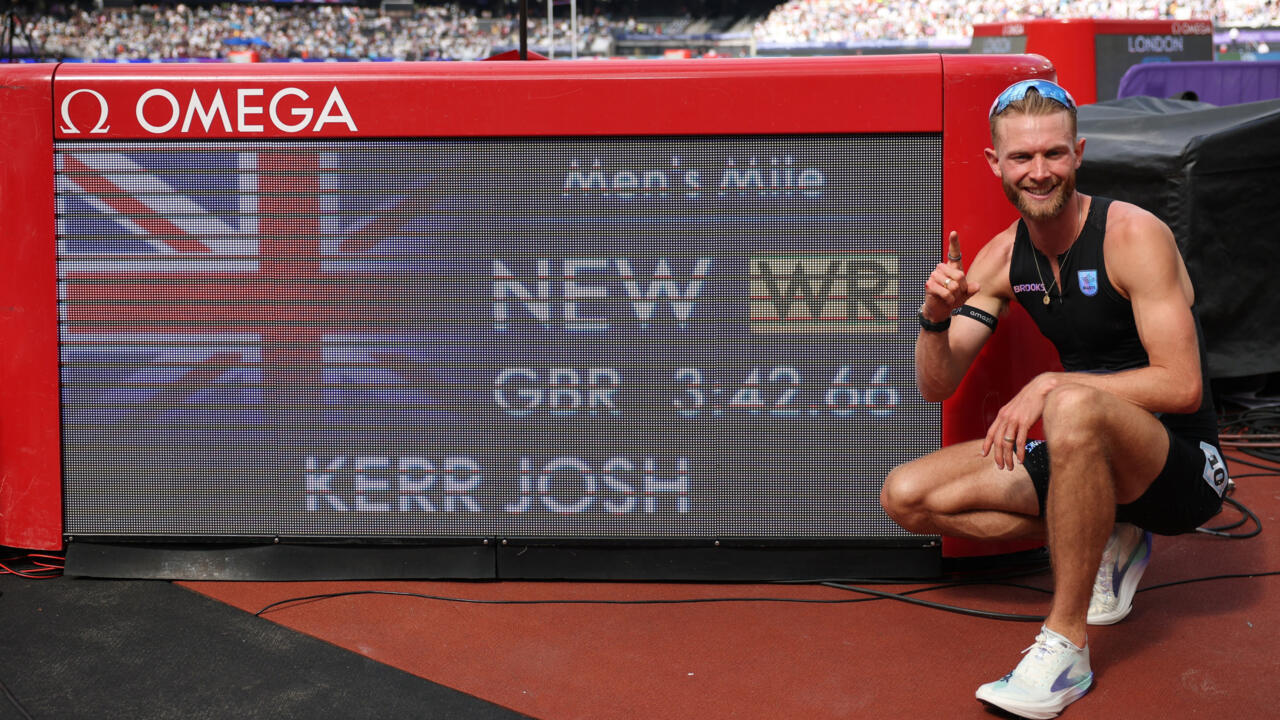
“The problem is it’s so fast,” Danny Mackey says with a nervous laugh.Mackey has spent the last eight months building up Olympic 1500-metre silver medalist Josh Kerr for his mile world-record attempt at the London Diamond League this Saturday.“What’s weird is that he called it and is doing it in an actual race,” Mackey, who has coached the Briton since he turned professional in 2018, adds. “That’s not something that happens.”Kerr is using the rare opportunity of a year without a global championship — the last off-season was the Covid-affected 2020, and there won’t be another until 2030 — to try and beat the three minutes, 43.13 seconds run by Hicham El Guerrouj in 1999, a time that has stood longer than any previous men’s mile world record.‘Project 222’ is how this record attempt has been billed, and it is based on the number of seconds the 28-year-old wants to run the mile (equating to 3:42s). To support the Briton, there has been plenty of research, testing and product development.The Athletic spoke to multiple people to understand the science behind Kerr’s world record attempt:“We’ve got to deliver just as much as Josh,” says Orr, who spent 15 years at New Balance before he joined Brooks last June. Just five months later, Kerr pitched his record-breaking idea.Since foregoing his final year of NCAA eligibility and turning professional, Kerr has been a Brooks athlete, allowing the brand to build nearly a decade of data explaining how he runs.Kerr has won Olympic and world championship medals running in non-personalised Brooks spikes. For Saturday’s attempt, the approach has been different.Orr explains their thought process: “There are opportunities to make marginal gains: put a new (foam) formula, change the plate or the pins. But we’re building something from the ground up, reinventing the way we think about this type of product and trying to be led by Josh and the data.”The process? A lot of computational modelling, in-the-lab and on-the-track testing, and multiple prototypes.The result? A one-of-one spike built for Kerr and his biomechanics, which Orr says is “optimised” for this race. It is built to go at 55.5 seconds per 400m, the speed that Kerr needs to hold for four laps to knock at least 2.22 seconds off his PB and beat El Guerrouj.The appropriately named Hyperion 222 spike has little foam in the heel, a lot in the mid-foot, and an aggressive taper that cuts sharply to the toes. It’s designed to act as a rocker, propelling Kerr forwards. Brooks say it “breaks all previous (design) moulds” and the titanium pins are not available on the mass market. The parts, including a carbon-fibre plate, provide “maximum stiffness”.One key detail is Kerr’s size. At 6ft 2in (187cm), he’s tall for his sport. “He’s bigger than most on the start line, his feet are generally bigger too,” Orr says.That means more force and more potential energy to return. “He’s got a specific view of what locking his foot onto the (spike) platform looks like, so we’ve taken his feedback there,” he adds.In the main, they have asked Kerr for his full trust. “He won’t mind me saying this — in some ways, we’ve scared him a little bit,” Orr smiles. “The prototypes were very rough. As we got into the second one, he could start to see the vision.”How does Kerr find the spikes? “You feel like you can’t slow down,” he told The Athletic in a recent interview. “They’ve taken the brakes off. It’s aggressive. They can run 55s (per lap), and, if it’s time to slow down, then those spikes aren’t going to let you. You might fall flat on your face.”
Inside Josh Kerr’s mile world-record attempt: Bespoke spikes, speed suits and 800m races
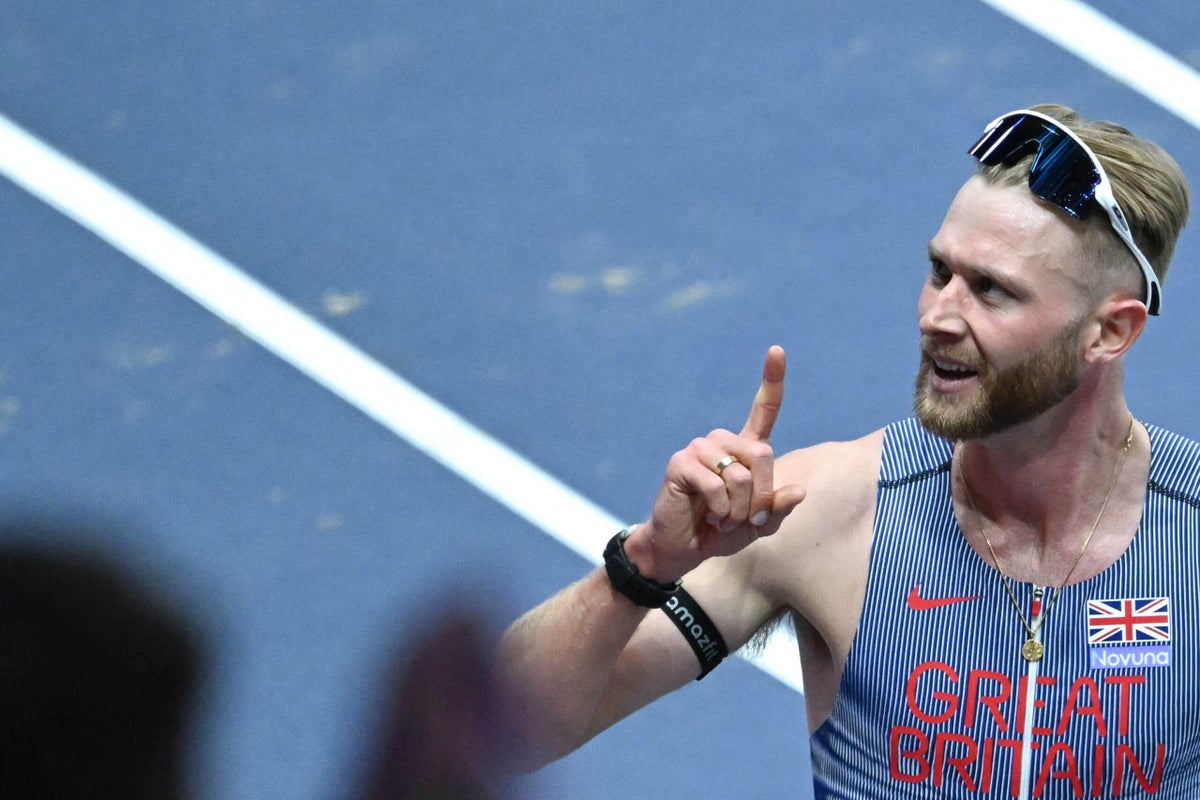
To support Kerr's attempt to break the men's mile world record, there's been plenty of research, testing and product development
2,226 words~10 min read