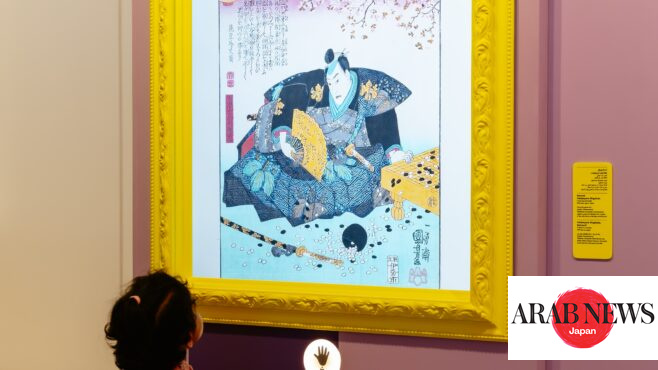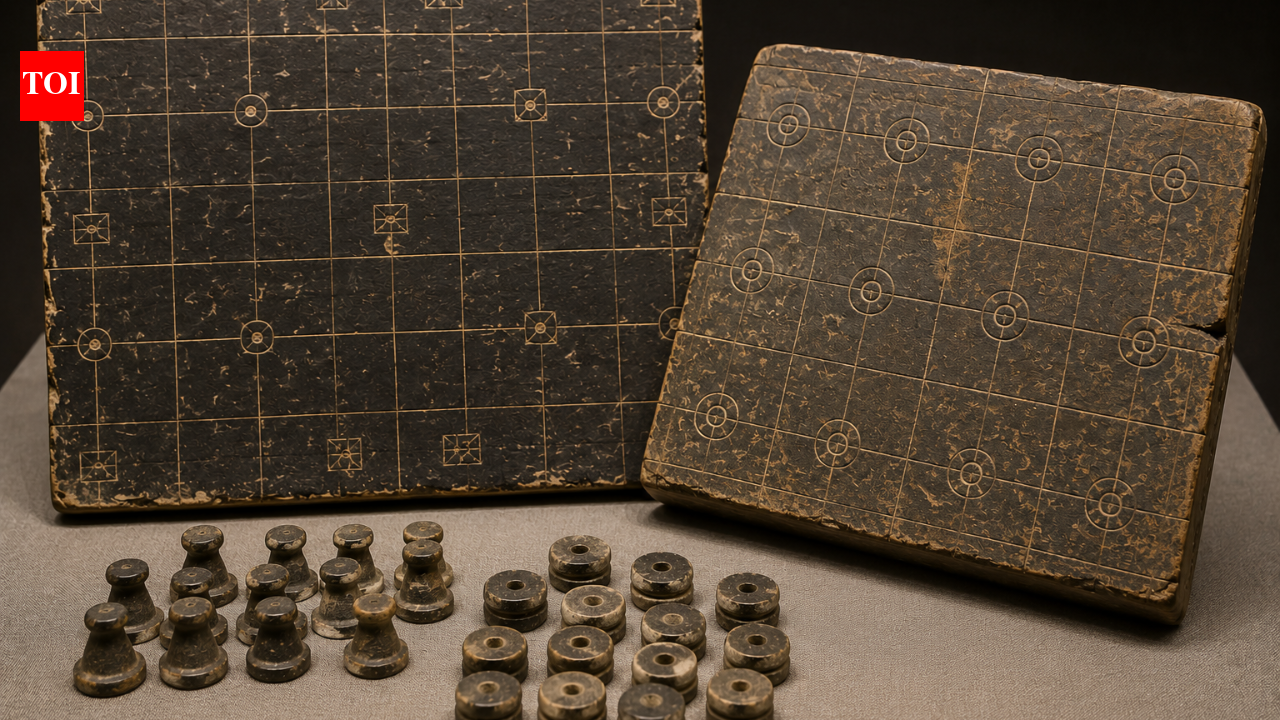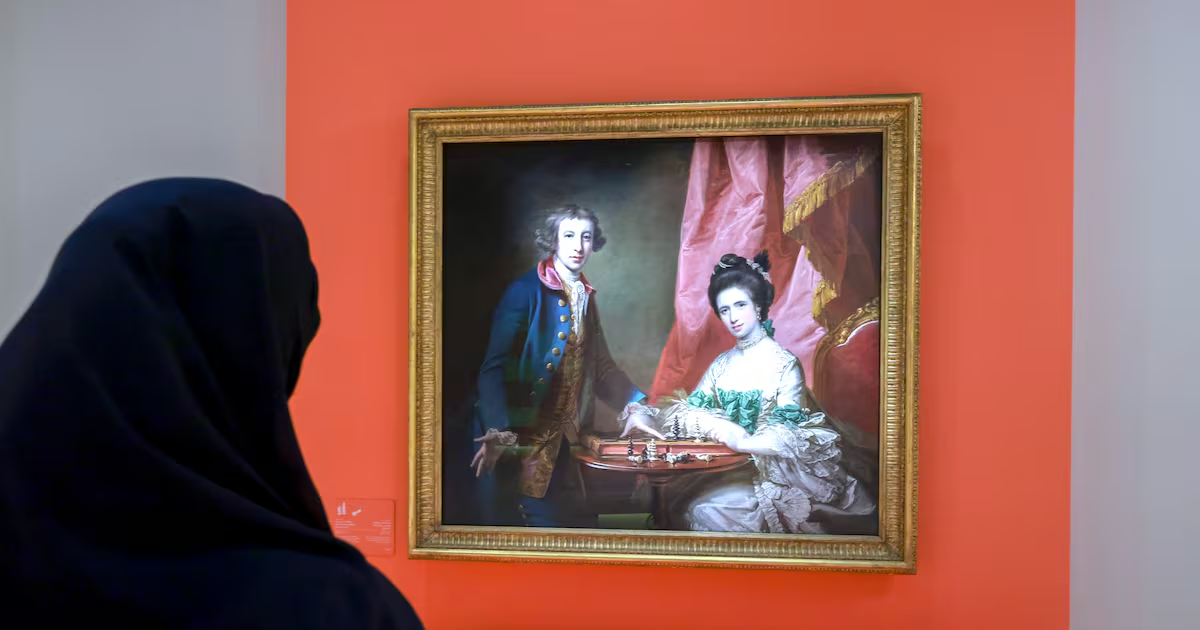
Before there were screens, controllers or virtual reality headsets, there were stones, seeds, carved figures and hand-marked dice.For thousands of years, people have gathered around boards to test their luck, plan strategies and spend time together. The materials and rules have changed, but the instinct behind them has endured.That continuity is explored in A Board Game Adventure, an exhibition at Louvre Abu Dhabi’s Children’s Museum. Opening on July 18 and running until April 25, it follows games across more than 5,000 years of history, from ancient Egypt and Mesopotamia to a custom-created artificial intelligence player.The exhibition brings together 24 objects from Louvre Abu Dhabi’s collection as well as international lenders, alongside immersive environments and digital challenges. Chess, mancala, Ludo and carrom are among the games used to show how play has crossed continents and adapted to cultures.“The exhibitions at the Children’s Museum rely on two pillars,” Amine Kharchach, interpretation and creative content section head at Louvre Abu Dhabi, tells The National.“The first is to design the most accessible and engaging experience for our target audience: families with children between four and 12 years old.”The second, he says, is to address subjects that reflect Louvre Abu Dhabi’s universal approach to history, and highlight exchanges between cultures and civilisations.Games that outlived their worldsPachisi, a centuries-old Indian race game that inspired Ludo, is among the games featured in A Board Game Adventure. Victor Besa / The NationalInfoAmong the earliest examples is Mehen, also known as the Game of the Snake, which was played in ancient Egypt between 4,000 and 5,000 years ago. Its spiral board took the form of a coiled serpent, with pieces moving towards its head.Although the rules have been lost, the exhibition connects its design to later spiral race games, including the Game of the Goose.A 58-hole board, also known as Hounds and Jackals, dates from about 3,000 years ago. Players moved animal-headed pins through rows of holes, with specially marked spaces sending them forwards or backwards.Pachisi, an Indian race game dating back about 450 years, offers a clearer link to games still played today. Four players move pieces around a cross-shaped board before returning them to the centre, akin to Ludo, which Pachisi inspired.The exhibition also includes Ban-sugoroku, a Japanese member of the backgammon family. Born in the Middle East, the game travelled through China before reaching Japan, showing how rules could move between societies and take on new forms.“We consider play to be one of the most widely shared human experiences,” Kharchach says.“We wanted our young audience to explore iconic board games that we still play today and to see how these games were conceived, how they travelled across continents, how they adapted to new contexts and, more importantly, how they connected people.”More than entertainmentAmine Kharchach, interpretation and creative content section head at Louvre Abu Dhabi. Victor Besa / The NationalInfoThe exhibition presents board games as tools for learning, imagination and social connection.“We all play to have fun, but it goes beyond that,” Kharchach says.“We try to show how games, and board games specifically, can be used as tools for learning, can be used to trigger imagination and creativity, and enhance social connection.”A folding board from Turkey or Syria, made about 200 years ago, combines chess on one side with backgammon on the other.A chess treatise written about 500 years ago by Ahmad ibn Abi Al-Himsani shows the game as a subject of serious study, with diagrams illustrating opening and closing positions.Other objects demonstrate the artistry and status attached to play. Rock-crystal chess pieces from Egypt, Iraq or eastern Iran were carved from a precious material once reserved for royal courts.An ivory chess piece from India depicts an elephant carrying two figures, one of them a drummer. The exhibition explains that chess figures became more abstract as the game reached the Arab world, making the piece a rare example of an earlier figurative style.A backgammon piece engraved in Iran about 1,000 years ago carries an Arabic inscription meaning “blessing to the owner”.The evolution of playVisitors can test their strategy on a giant chessboard in the exhibition’s interactive play area. Victor Besa / The NationalInfoDigital technology is used throughout the exhibition to direct visitors back towards the historical objects.Interactive games are presented as visual challenges that cannot be completed without closely examining the artefacts inside the display cases.“The only way for them to get the answers is to go back to the original artefacts,” Kharchach says.“They cannot solve the visual challenge unless they look closely at the piece or the artefact on display. This is the start of everything.”He says this helps children build visual literacy while encouraging conversation between generations. “This is what creates engagement and gets the family discussing and having quality time.”What kind of player are you?A 1,000-year-old six-sided dice from Iran show how the game piece has changed remarkably little over the centuries. Victor Besa / The NationalInfoThe final section shifts attention from the games to the people who play them.Historical and fictional figures are presented as gaming personalities, each with a favourite game, a defining quality and a weakness. The profiles encourage children to consider whether they are patient, daring, fast, focused or strategic.Nefertari, Queen of Egypt, is paired with Senet. Her strength is sharp observation, while her weakness is that she may wait an eternity before making her move.Greek warrior Achilles favours Pente Grammai, or the Five Lines game. His defining quality is his focus, although he becomes so absorbed that he forgets everything around him, even the battlefield.The Japanese samurai Hatakeyama Shigetada is associated with perseverance. His weakness is an inability to abandon a game, even one already lost.Leonardo da Cutri, an Italian chess master who lived about 500 years ago, represents audacity. The exhibition notes that his play against rival Ruy Lopez was so daring that he lost more games than he won.The timeline then reaches Aria, an AI character whose favourite game is every game. Her quality is speed, but that same speed may send her in the wrong direction.As such, each figure invites children to complete a challenge based on a quality such as focus, audacity or emotional management. “We all have different profiles,” Kharchach says. “Every quality, if pushed to the maximum, can become a downside.
Louvre Abu Dhabi traces 5,000 years of board games in new exhibition | The National
From ancient Egypt to AI, A Board Game Adventure brings together rare objects and hands-on challenges to explore why humans play
1,038 words~5 min read