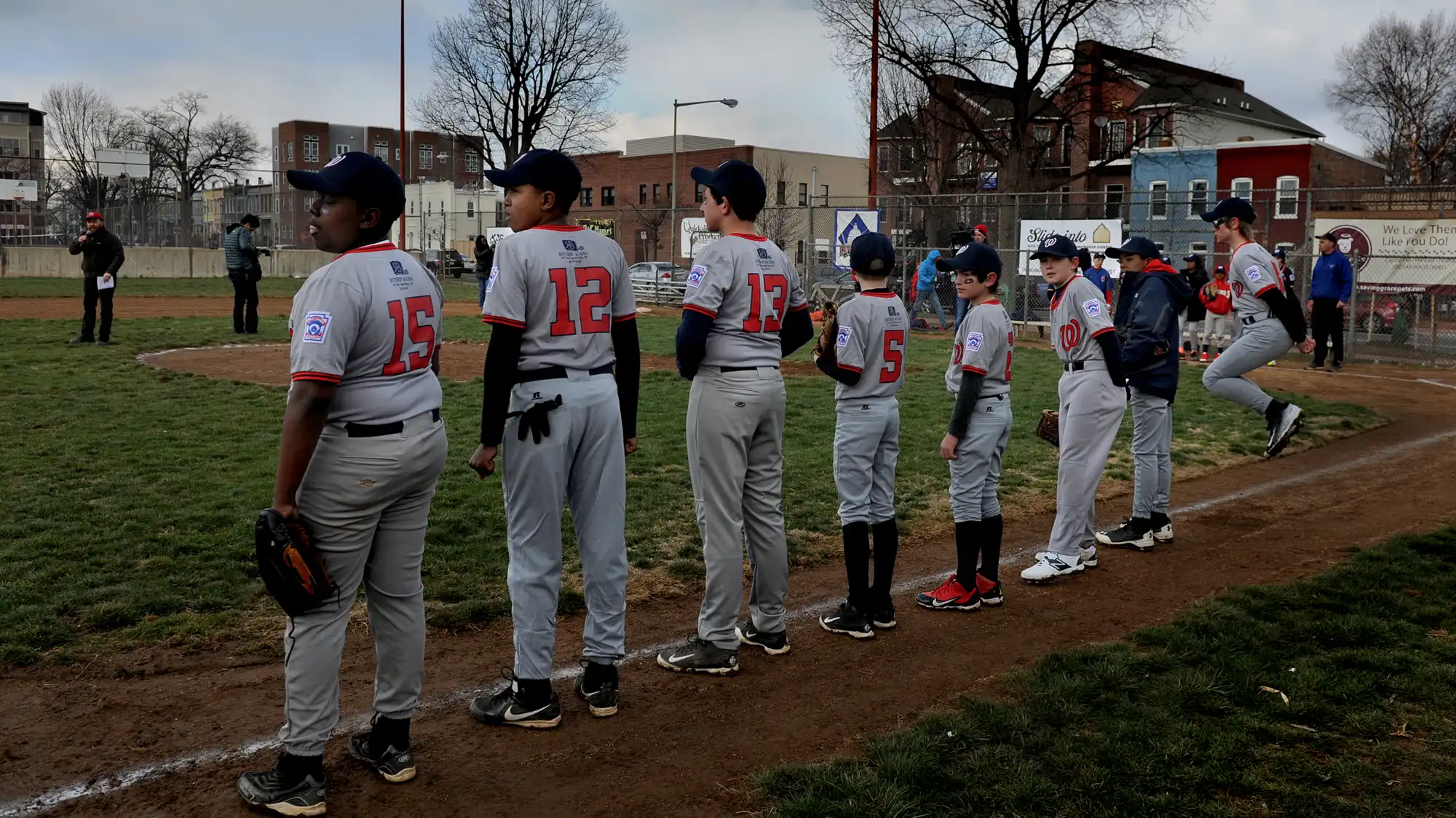
When the FIFA Men’s and Women’s World Cups come around, they remind viewers that becoming a professional athlete requires years of practice. But unlike in parts of Europe and Latin America, putting a child through a youth sports program in the U.S. is an expensive proposition — even for parents whose kids harbor no illusions about going pro. And it’s getting worse: According to the Aspen Institute’s Project Play, the cost of getting kids involved in organized sports rose by almost 50% between 2019 and 2024. Peg Eynon was a multisport athlete when she was younger, playing softball, basketball, rugby, and soccer. Today, she’s a single mother raising three high-school-aged sons who play at a nonprofit soccer academy in New York State. She said it’s important for her kids to play sports not because of professional dreams or Name, Image, and Likeness deals, but because of the values it imparts to each of them. “One thing I wanted for my kids was consistency, and then I wanted to make sure that they were going to have excellent role models,” she explained. “I've seen my kids turn into great students, great friends, [and] leaders on their team.”Cost is still a factor. Tournament fees and uniforms can be $70 and $500, respectively. One of her sons plays goalie, and the special gloves he has to wear cost up to $120 a pair and must be replaced every three to four months.Travel is another cost burden. For Eynon, that might mean a drive to Virginia or a flight to Missouri. The biggest trip she’s had to plan for was Portugal, though she herself did not go.To afford this, Eynon does get help from generous relatives. But she also shares expenses with other parents when possible, and engages in fundraising, like selling candy bars outside of grocery stores. And while she says the intrinsic benefits that sports provide are absolutely worth it, she does understand the lingering burdens of such an expense. “It's always been a struggle for me. When I look back, they might be all out of my home, they might all be in college, and I might be working seven days a week to pay off my debts,” she said. “So that's kind of scary.” Even at local and recreational levels, the days of affordable and competitive sports are increasingly a thing of the past. Linda Flanagan wrote a book on the privatization of youth sports called “Take Back the Game: How Money and Mania Are Ruining Kids' Sports — and Why It Matters.” She explained that as public funding declined for athletic programs, a number of other entities, including private equity firms, stepped in to turn a profit. “There's money to be made in youth sports because, in large measure, parents will not skimp on their kids' development, especially athletics,” she said.By consolidating leagues and the necessary infrastructure to play, these companies can easily hike up tournament fees — or even those for simply participating. One group backed by private equity charges up to $440 per year for parents just to access footage of their kids’ hockey games. Another has run youth leagues and has been buying up flag football fields and baseball facilities — including one in Cooperstown, New York, the spiritual home of baseball.An additional side effect is kids are getting elite coaching at younger ages, and if they don’t play in these elite systems from a young age, they may have to sit out of competitive sports in their teenage years. “The privatization has the effect of shutting out kids on the public school teams too,” said Flanagan. “You're not gonna be able to just join as a ninth grader.”Some parents who want to ensure their kids play competitively, despite these high costs, have to think outside the box. Chinyere Vann is one such parent.Vann is a mother of three: Two daughters play tennis, and her son plays basketball. She knows well the intangible benefits sports provide, including leadership, discipline, and sense of self — in college, she was a point guard at University of Iowa and Fordham University. But unlike the days when the biggest expenses for her sport might have been a pair of basketball sneakers, the financial expectations of today are vastly different. For her son’s participation, Vann estimates a cost of $10,000 per year, not including an additional $2,000 for travel costs. But “estimates” is a key word here, because Vann knew she had to get creative to figure out a way to keep up with these athletic programs.Vann found a way to trade her time and leadership talents for discounts and financial relief. Since committing to her children’s athletic lives, Vann has formed league parent associations, and organized fundraisers and workshops. Given her history as a high-level player, she can even step in to help coach the kids herself. Her connection to community and efforts with her kids’ organizations means she helps bring more parents — and kids — in the door. Now, she’s helping to turn one of her son’s basketball leagues into a nonprofit. One of her goals is to import a financial relief technique she picked up from one of her daughter’s tennis organizations. Families could go to the program director and say, “Listen, I'm going to be short a couple of hundred dollars,” she explained. “‘How can you help me with this burden, and how can I still keep my kid in this program?’” More often than not, the league gives parents financial relief. That “couple hundred bucks”? In this sporting world, in this economy, it can make a noticeable difference.
Youth sports have turned into a five-figure-a-year commitment for many parents
But they’re willing to make sacrifices — and deals — to keep their kids playing
933 words~4 min read