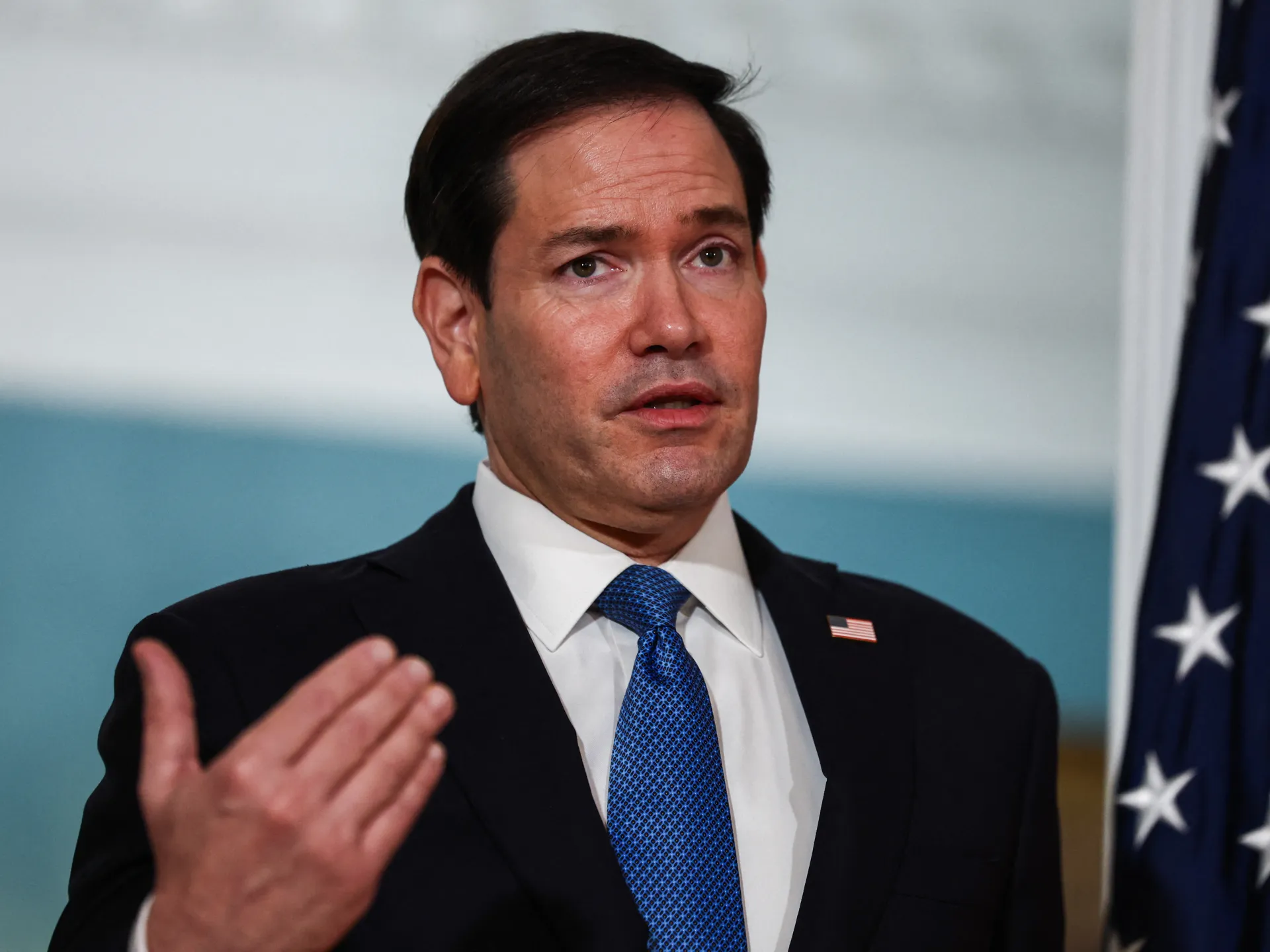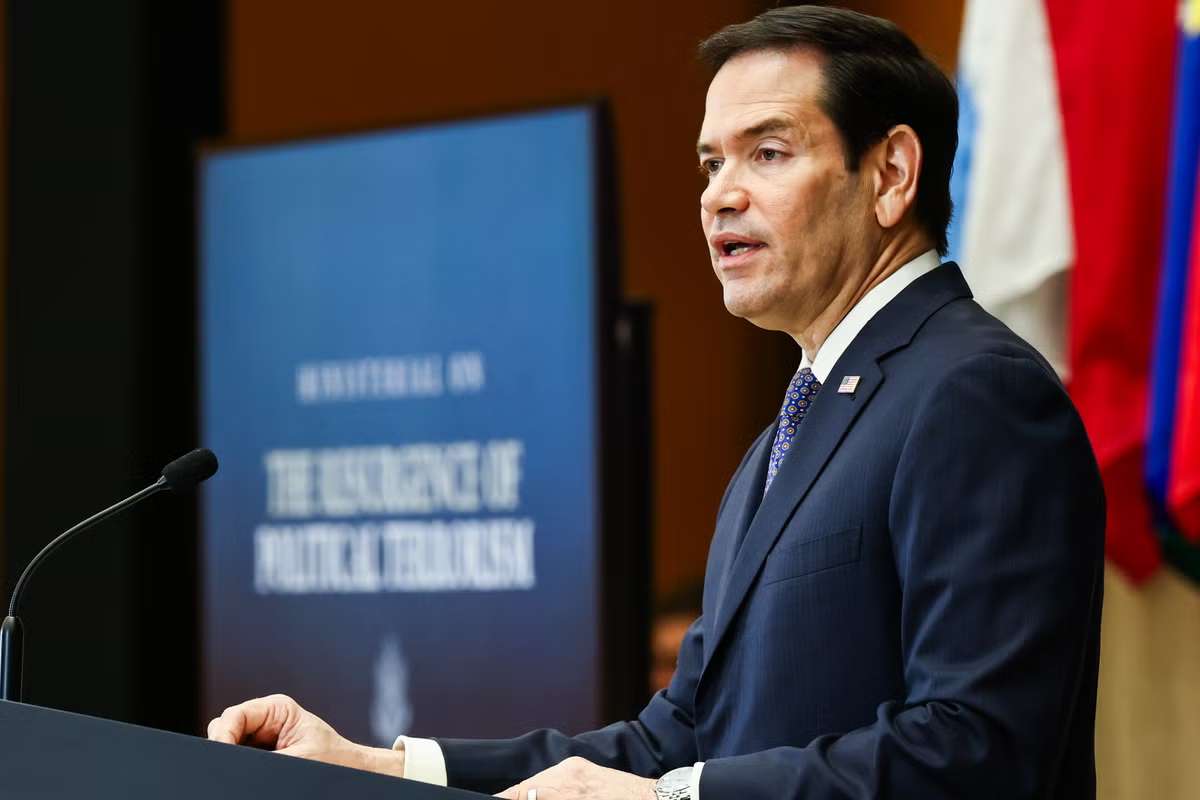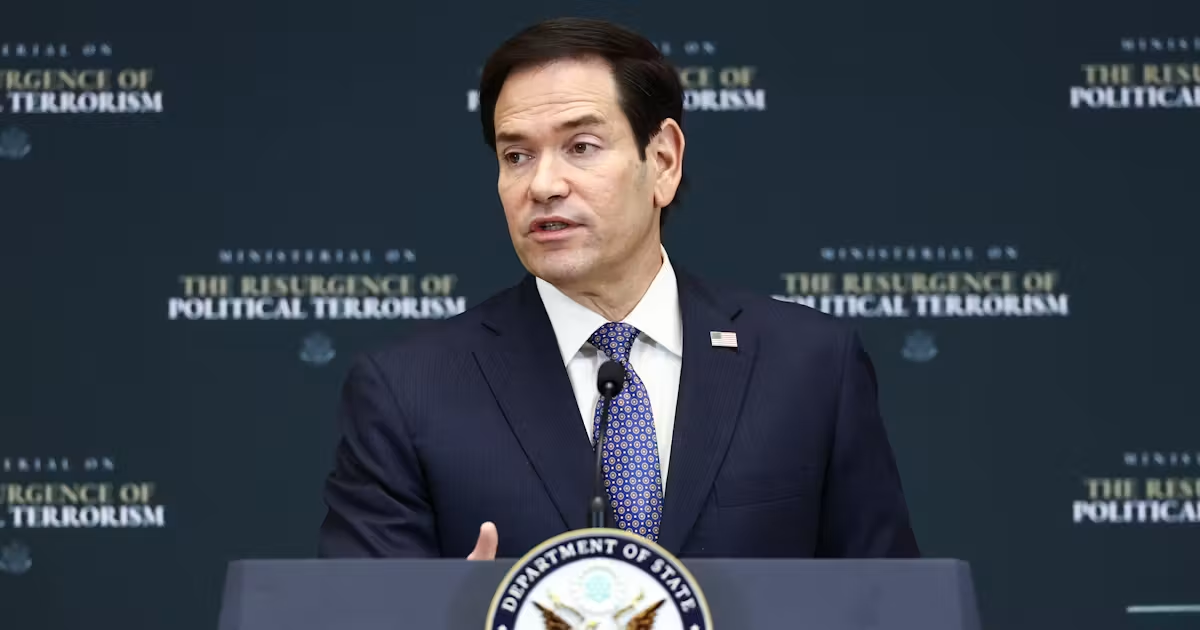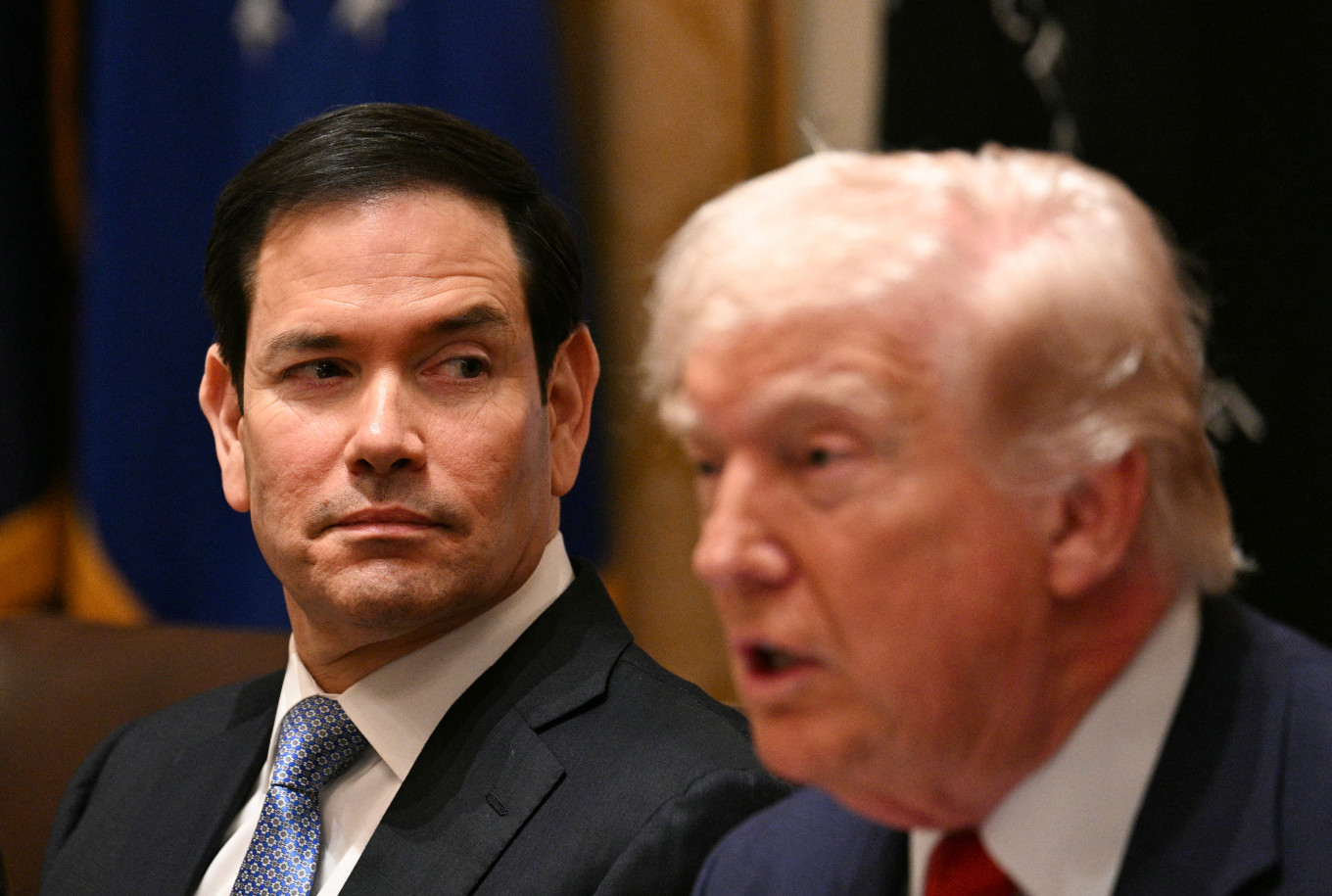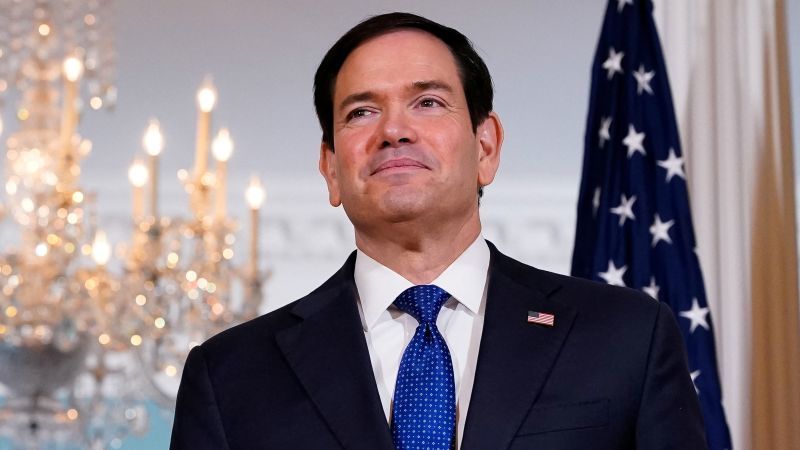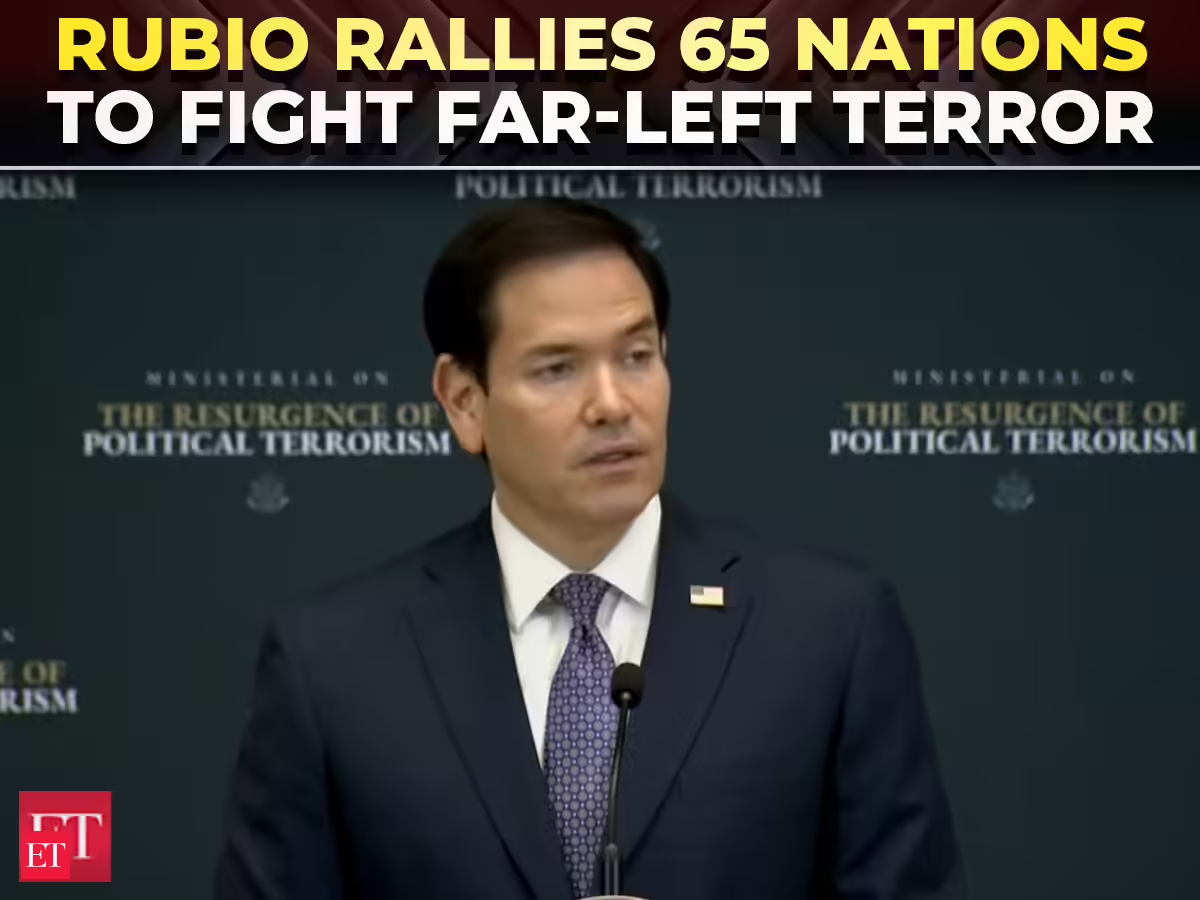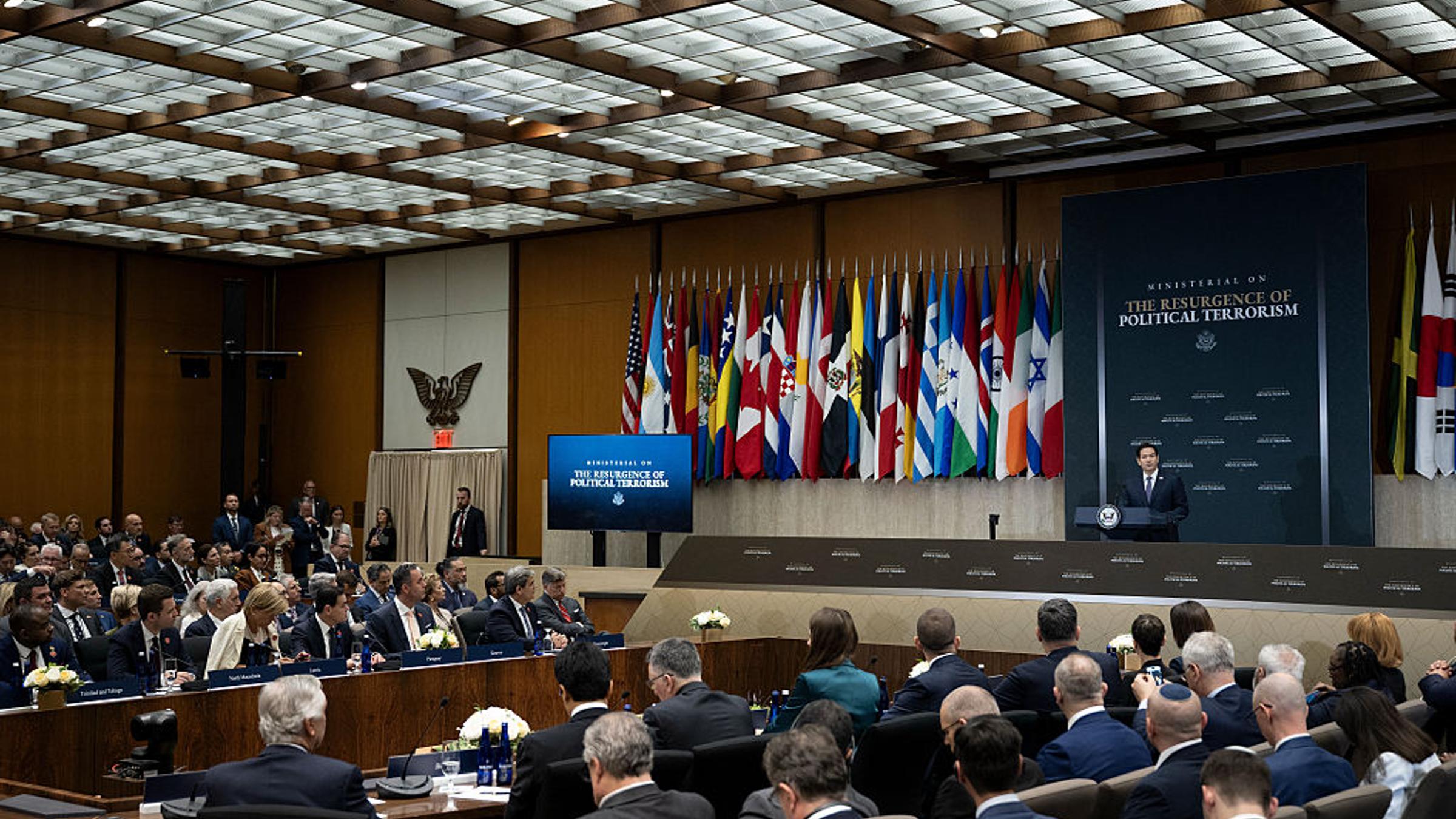
Secretary of State Marco Rubio hosted a conference on “far-left terrorism” on Thursday with representatives from dozens of countries in attendance.The meeting was aimed at garnering international support to combat what the State Department described as “the resurgent threat” of such terrorism. “This is a distinctive and unique evil. It has always been driven by a hatred above all else, a hatred for civilization itself. It is a revolt of the worst against the best, a revolt of the weak and the cowardly against the strong and the good,” Rubio said in his opening remarks.“This is an international conference because we are facing an international—we are facing a transnational threat,” he went on, adding, “We have no choice but to confront this menace together. We will either cooperate across our borders or the terrorists will continue to exploit the gaps between them.”Thursday’s conference comes as the Trump Administration has repeatedly blamed left-wing groups for rising political violence in the U.S. and made them a focus of its counterterrorism efforts in a reversal of past policy under the Biden Administration, even as data shows that right-wing extremists have been responsible for a greater share of deadly attacks.Here’s what to know about Thursday’s conference, and the facts about the ideologies driving political violence around the U.S.Which countries were represented at the conference?In attendance at Thursday’s event were 66 nations, according to a State Department spokesperson, who provided the list of attendants to TIME. The countries with officials present were Albania, Argentina, Australia, Austria, Belgium, Belize, Bolivia, Bosnia and Herzegovina, Bulgaria, Canada, Chile, Costa Rica, Croatia, Cyprus, Czechia, Denmark, Dominican Republic, Ecuador, Estonia, Finland, France, Georgia, Germany, Greece, Guatemala, Honduras, Hungary, Iceland, India, Indonesia, Ireland, Israel, Italy, Jamaica, Japan, Korea, Kosovo, Latvia, Lithuania, Luxembourg, Malaysia, Malta, Moldova, Montenegro, Netherlands, New Zealand, North Macedonia, Norway, Panama, Paraguay, Peru, Philippines, Poland, Portugal, Romania, Serbia, Slovakia, Slovenia, Spain, Sweden, Switzerland, Trinidad and Tobago, Türkiye, Ukraine, United Kingdom, and Uruguay.What Trump Administration officials saidIn his opening remarks, Rubio contended that left-wing extremism has been the subject of a “blind spot” and “extraordinary ideological prejudice” in the study and discussion of political violence.He claimed that this has led to “acts of violence and even terrorism” tied to “left-wing causes” being treated as legitimate forms of political outcry by U.S. officials, pointing in particular to the Black Lives Matter protests that broke out in the wake of George Floyd’s killing by a Minneapolis police officer in 2020.“This was something worse than a double standard. Left-wing violence was not just excused, it was treated as sacrosanct, a protected class unto itself,” he said. “That era has to end.” He argued that the international community must come together and rebuild its counterterrorism infrastructure to combat such violence like it did to counter “radical Islamist extremism” earlier in the 21st century.White House Deputy Chief of Staff Stephen Miller, who spoke after Rubio, similarly characterized left-wing extremism as a growing threat aimed at “the overthrow of our system and form of government” that officials previously failed to sufficiently address. “We must stay the course and be completely unflinching in the pursuit of justice against these enemies of civilization. If the left is allowed to use the real or actual threat of violence to destabilize our institutions, then those institutions cannot and will not succeed,” he said. Treasury Secretary Scott Bessent closed out the remarks from the Administration, referencing “quieter” forms of left-wing terrorism, such as “campaigns to suppress speech, intimidate political opposition, and sabotage our national institutions,” as well as more overt acts of violence.The White House touted the conference in a press release on Thursday.“Today, the Trump Administration convened senior officials from governments around the world to launch an unprecedented global offensive against the transnational threat of Radical Left terrorism,” the White House said. “Under the leadership of President Donald J. Trump, far-left extremism will be treated with the same seriousness and ferocity the world has long reserved for jihadist terrorism.”Data show right-wing extremists commit more deadly attacks—though left-wing incidents are risingThe Trump Administration officials’ remarks on Thursday echo prior comments from President Donald Trump and his allies placing blame on left-wing extremists for increasing political violence in the U.S. But data show that political violence committed by right-wing groups accounts for a greater number of deaths.A September 2025 study from the libertarian think tank the Cato Institute found that in the last five years, 81 people had been killed due to political violence in the U.S. and right-wing terrorists were responsible for 54% of those deaths. Islamists were responsible for another 21% of the deaths, per the study, and left-wing terrorists for 22%.Over a longer time-frame, since 1975, 391 people have been killed in right-wing terror attacks in the U.S. and 65 have been killed in left-wing attacks, according to the study. Researchers categorized left-wing attacks as those motivated by ideologies such as communism, anti-white ideologies, or “anti-police sentiment,” among others. The attacks categorized as right-wing in the study were associated with ideologies including white supremacy and anti-abortion beliefs. An analysis published in the journal of the National Institute of Justice, the Justice Department’s research agency, in 2024 similarly found that based on the agency’s studies, far-right extremists had committed “far more ideologically motivated homicides than far-left or radical Islamist extremists” since 1990, including 520 deaths across 227 incidents, while far-left extremists were responsible for 78 deaths across 42 attacks during the same period. Another 2025 study from the nonpartisan Center for Strategic and International Studies (CSIS) found that from 2016-2025, left-wing attacks killed 13 people, compared to 82 deaths from right-wing attacks. That study also found, however, that left-wing attacks have been rising in the U.S. in recent years—and that in 2025, for the first time in its data, there were more left-wing incidents than those associated with the right-wing.
U.S. Hosts Conference on 'Far-Left Terrorism': What to Know
Representatives from over 66 countries were in attendance at the event.
970 words~4 min read