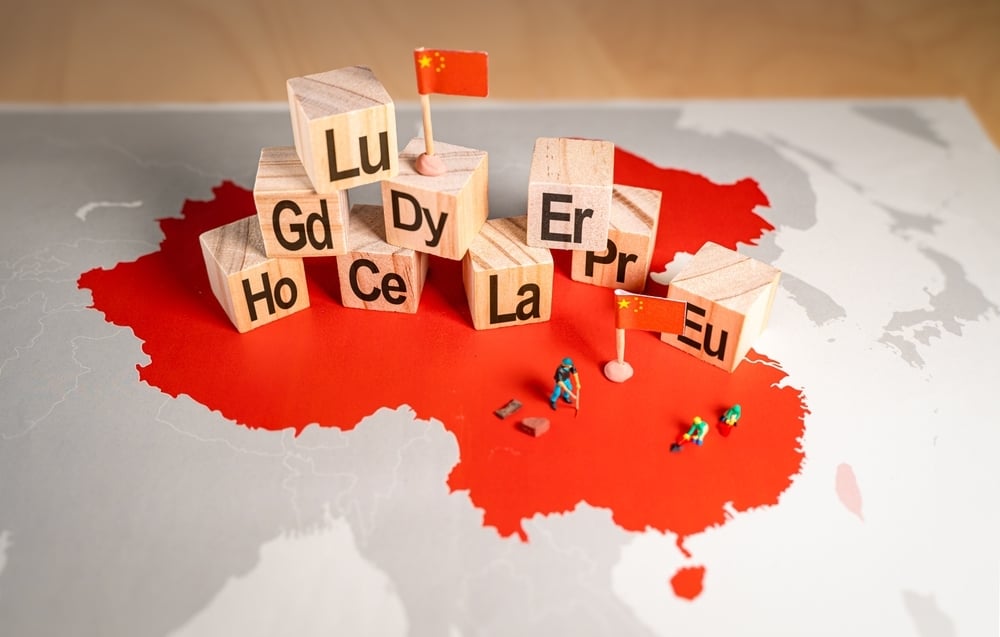
China's rare earth export curbs could put $6.5 trillion of downstream production outside the country at risk each year if fully implemented, the International Energy Agency warned in a report on rare earths and critical minerals.To address those weaknesses, the report argues that countries should work multilaterally to stockpile 11 "high-risk" materials. That would require an initial purchase of $9.2 billion and with a net annual cost of $900 million, the agency said. While the figures are "significant," they are "quickly dwarfed" by the potential impact of supply disruptions, it said.Export curbs by countries including China, the Democratic Republic of Congo and Zimbabwe have turned the risks of supply chain concentration into reality, the IEA said."Vast amounts of economic value depend on relatively small volumes of critical minerals, whose supply chains remain highly concentrated and are therefore vulnerable," IEA Director Fatih Birol said in a press release. "While diversified supply can come at a higher cost, this can be viewed as a mineral security premium in a time of geopolitical uncertainty - a form of economic insurance against major supply risks.
China's rare earth curbs put $6.5 trillion of global output at risk
China's rare earth export curbs could endanger trillions in global production. The International Energy Agency suggests multilateral stockpiling of high-risk materials. This strategy requires significant initial and annual financial investment. Supply chain concentration risks have become a reality due to export restrictions. Diversified supply offers mineral security and economic insurance against disruptions.
181 words~1 min read