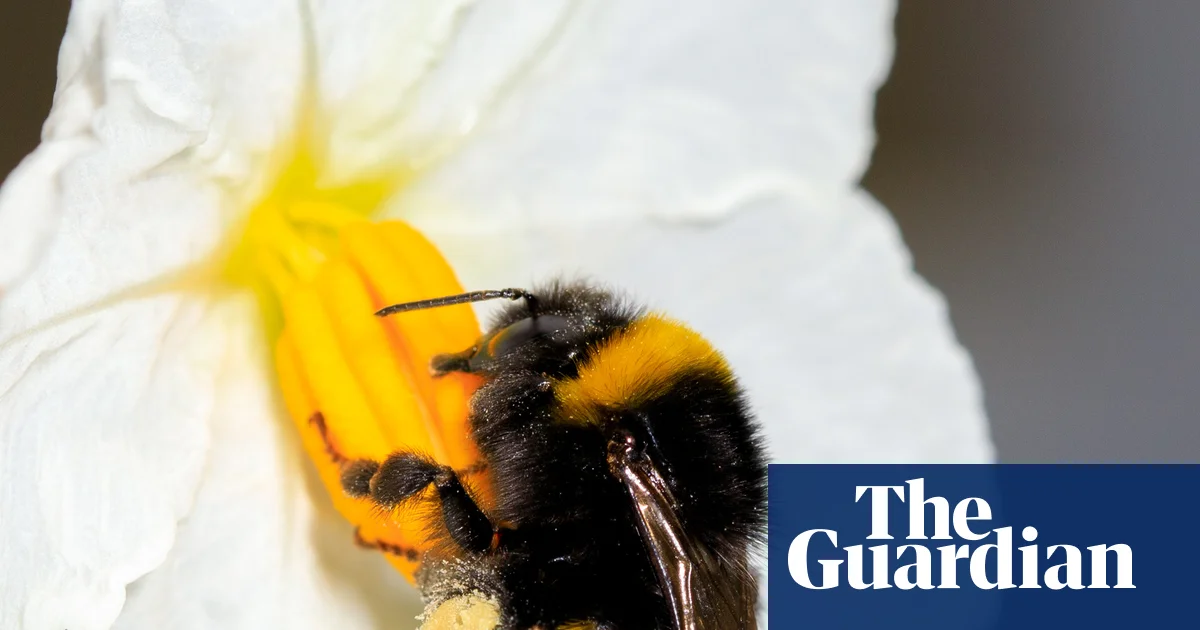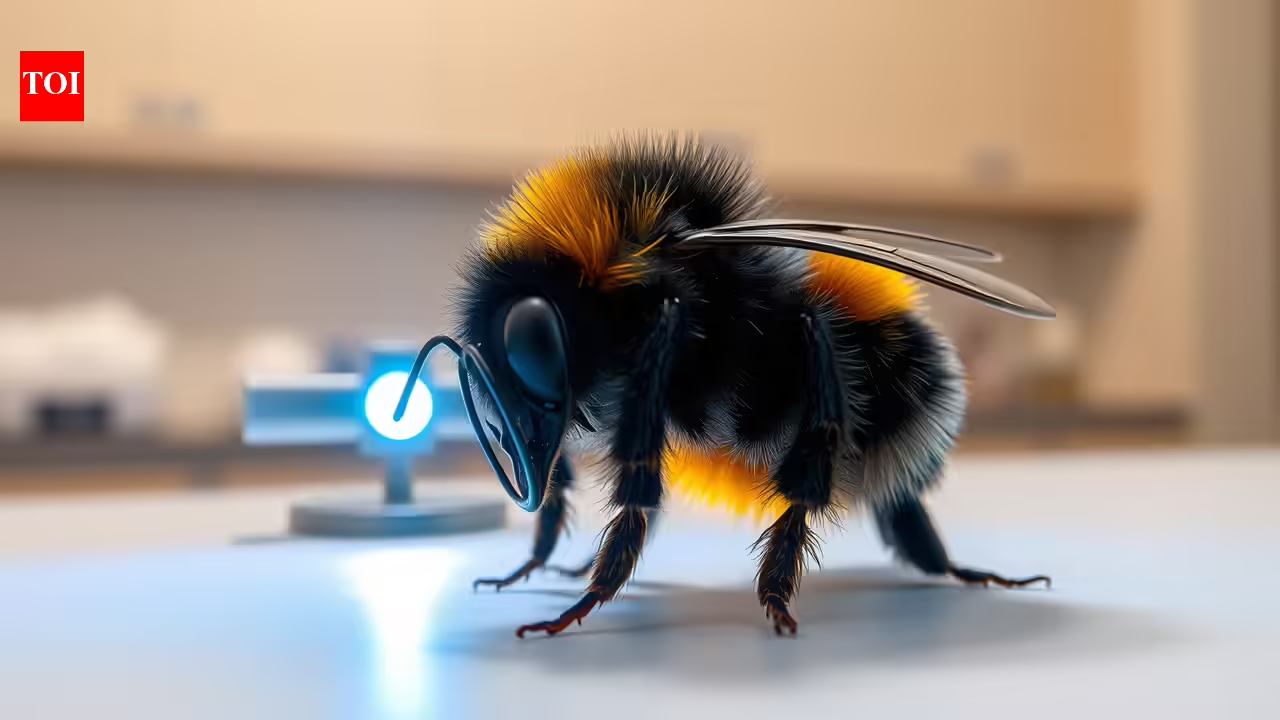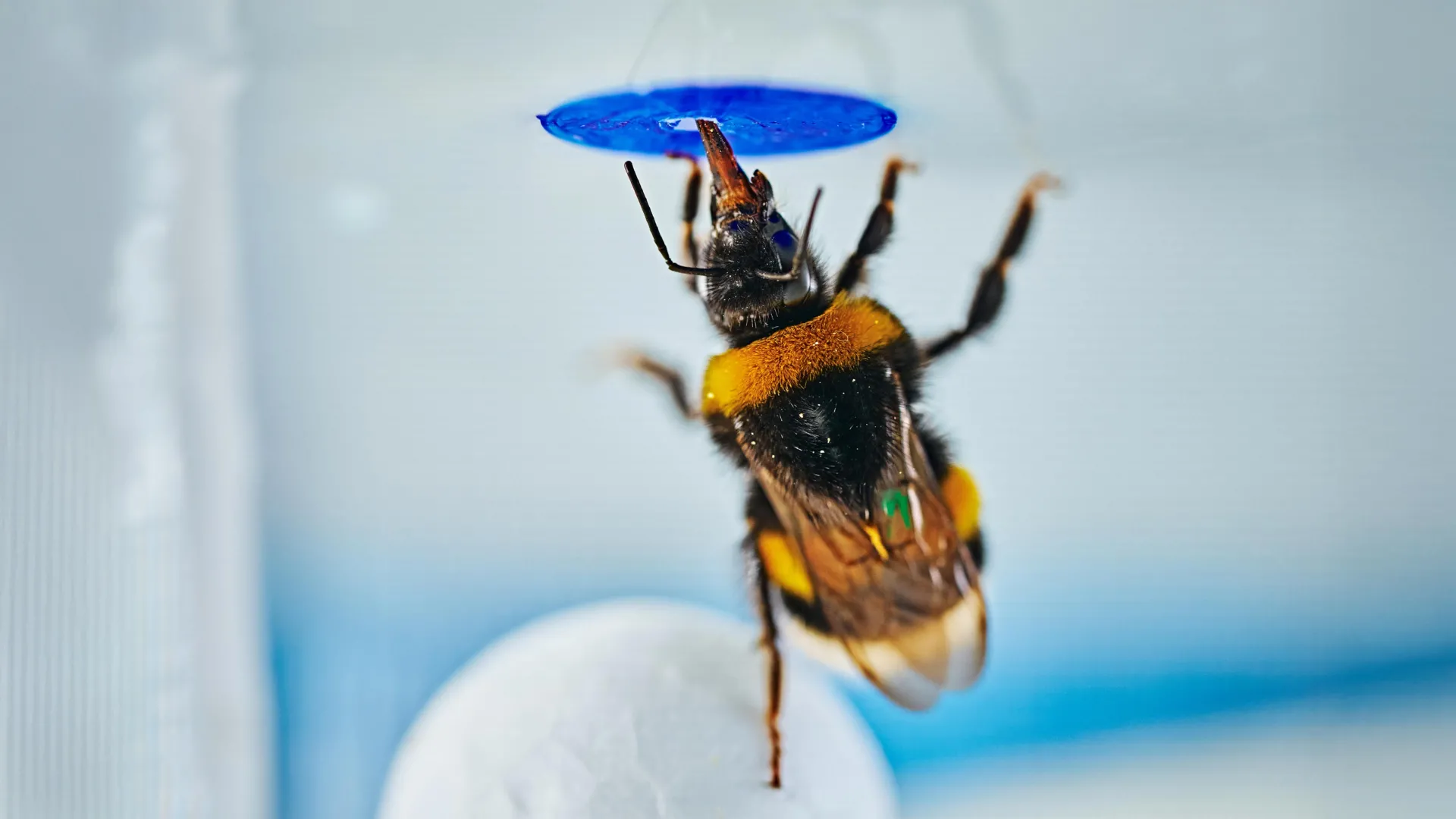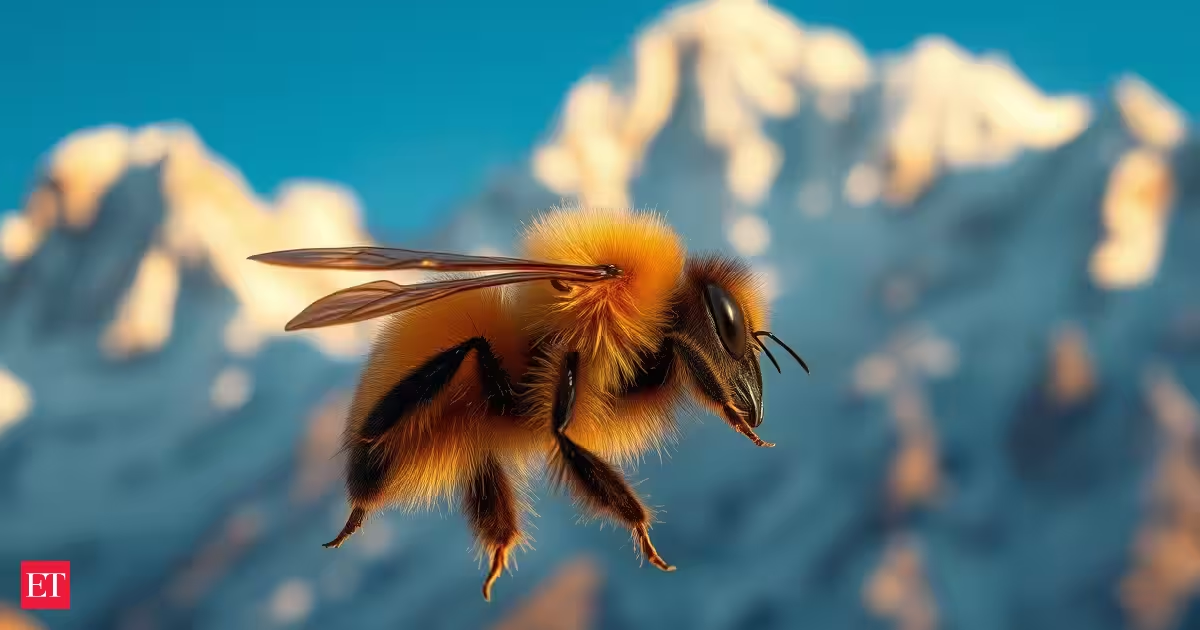
Bumblebees are often thought of as slow, heavy insects, but new research suggests they are capable of something extraordinary. Scientists have found that alpine bumblebees can hover at simulated altitudes higher than the summit of Mount Everest. The findings reveal remarkable flight abilities and offer fresh insight into how these insects overcome the challenges of thin air, as per a report by PMC NCBI.These alpine bumblebees can fly higher than Mount EverestBumblebees may have a reputation for being clumsy fliers, but research published in Proceedings of the Royal Society B tells a very different story. Scientists have discovered that alpine bumblebees are capable of hovering at simulated altitudes exceeding 9,000 metres, higher than the peak of Mount Everest.The discovery challenges long-held assumptions about the physical limits of insect flight and highlights just how well these mountain insects have adapted to life in extreme conditions.You Might Also Like:How can bumblebees fly so high?Flying at high altitude is no easy task. As elevation increases, both air density and oxygen levels decrease, making it much harder for animals to stay airborne. Thin air produces less lift, while reduced oxygen can limit the energy needed for sustained flight.Despite these obstacles, some insects naturally live above 4,000 metres. Alpine bumblebees are among them, regularly foraging in mountainous regions where flowers are scattered across steep terrain.You Might Also Like:To better understand their capabilities, researchers captured male Bombus impetuosus near Rilong in Sichuan, China, at an elevation of about 3,250 metres. Each bee was placed inside a sealed flight chamber where air pressure was gradually reduced, simulating increasingly higher elevations.The scientists observed whether the bees could continue hovering as conditions became more demanding. Successful flights were recorded at progressively lower air pressures until each insect reached its limit.The results were remarkable. On average, the bees successfully hovered at simulated altitudes above 8,000 metres. Even more impressive, two individuals remained airborne at pressure levels equivalent to more than 9,000 metres, effectively surpassing the height of Mount Everest, as per a report by PMC NCBI.You Might Also Like:What helps them survive thin mountain air?Using video recordings and acoustic analysis, the research team carefully examined how the insects maintained flight under these challenging conditions.Rather than increasing how fast their wings beat, the bees relied on a different strategy. They dramatically increased the angle through which their wings moved during each stroke. This larger wing movement generated greater wing speed and produced enough lift to compensate for the thinner air.Wingbeat frequency changed very little throughout the experiments. Instead, the increased stroke amplitude allowed the insects to generate the additional aerodynamic force needed to remain airborne.The researchers also found that bees capable of reaching the greatest simulated heights tended to make the largest increases in wing movement. Those individuals also had slightly larger thoraxes relative to their body size, suggesting stronger flight muscles may contribute to exceptional performance.Why did this discovery surprise scientists?Previous studies had shown that many insects lose their ability to fly as altitude increases because of reduced air density, lower oxygen availability and colder temperatures. Most free-flying insects are rarely observed above 5,000 metres, although a handful of species have occasionally been recorded near 6,000 metres in the Himalayas.The new findings reveal that alpine bumblebees possess far greater aerodynamic reserves than scientists expected. Researchers estimate that increasing wing stroke amplitude boosted wing angular velocity enough to generate substantially more aerodynamic force, helping offset the reduced lift available in thin air.The study suggests this reserve capacity may not be needed during everyday foraging alone. Instead, it could provide an important advantage when bees must rapidly climb across mountain landscapes, escape predators or perform demanding behaviours such as mating flights.The experiments focused only on male bumblebees, leaving open the question of whether female workers possess similar high-altitude capabilities. Since females generally have smaller wings relative to body size, researchers note that additional studies are needed to determine whether they can achieve comparable performance.Even so, the study demonstrates that hovering flight should not necessarily be viewed as the upper limit of insect performance. These alpine bumblebees have shown that, under the right conditions, they can fly at simulated elevations that exceed the world's highest mountain, revealing an extraordinary ability hidden behind their familiar appearance.FAQsCan bumblebees really fly higher than Mount Everest?Yes. In laboratory simulations, some alpine bumblebees successfully hovered at pressure levels equivalent to elevations above 9,000 metres.How do they manage such extreme flight?They increase the angle of their wing strokes instead of flapping faster, allowing them to generate more lift in thin air.You Might Also Like:
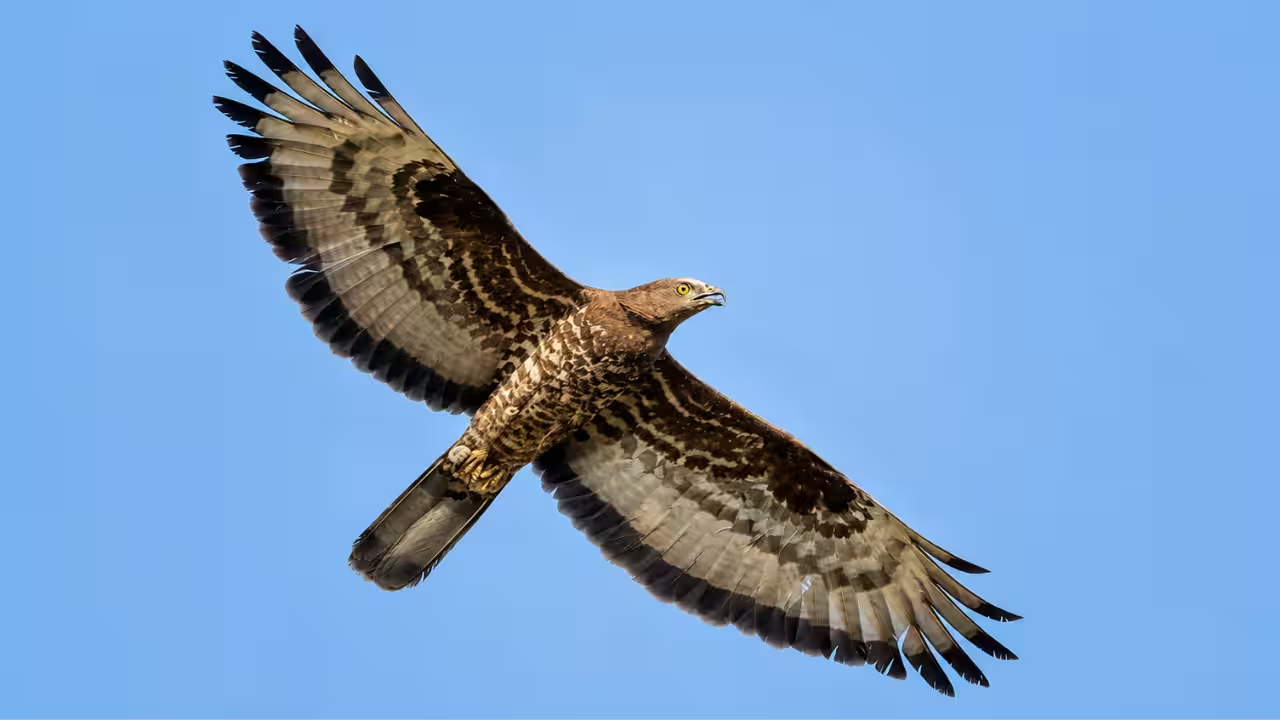
Tiny wings. Almost no oxygen. Somehow, it still flies. The world's highest flyer isn't an eagle
Alpine bumble-bees can fly at simulated altitudes over nine thousand meters. These insects achieve this by increasing wing motion amplitude, not frequency. This remarkable ability surpasses the height of Mount Everest, challenging previous assumptions. Such extreme flight performance suggests intermittent behavioral demands beyond routine foraging. This capacity highlights the surprising aerodynamic reserves present in these high-altitude insects.
755 words~3 min read