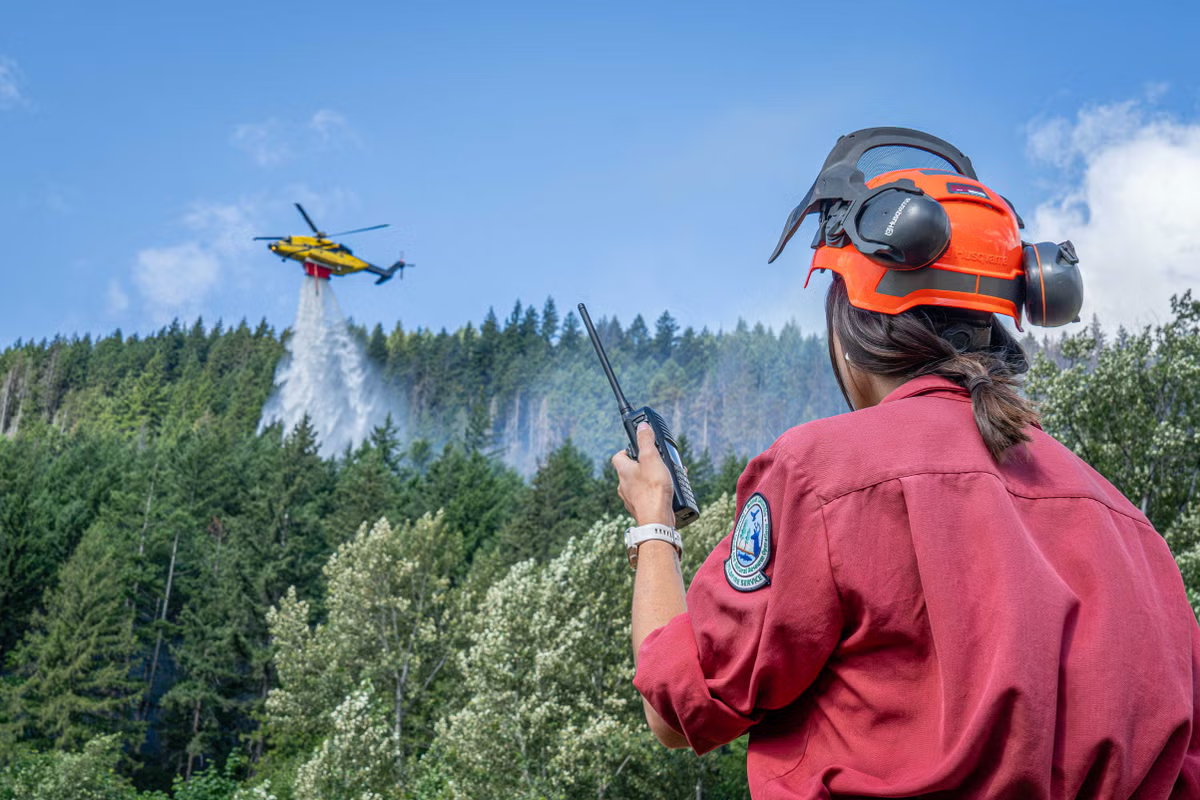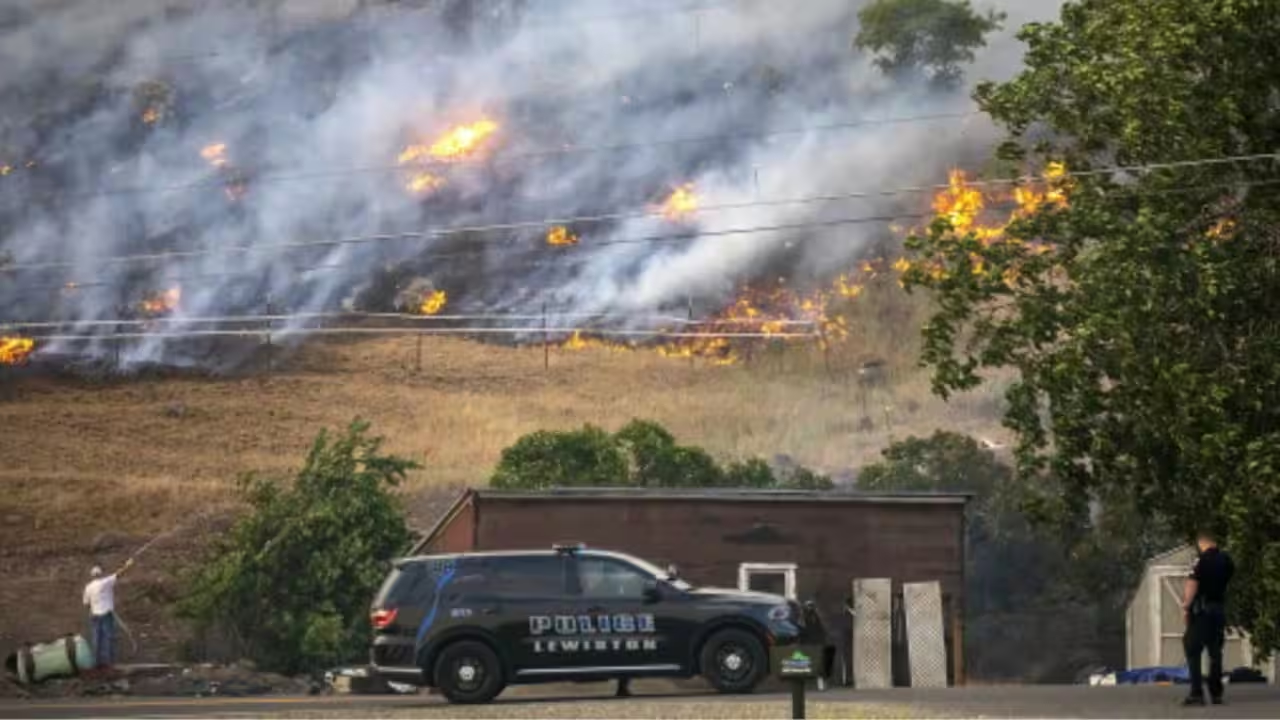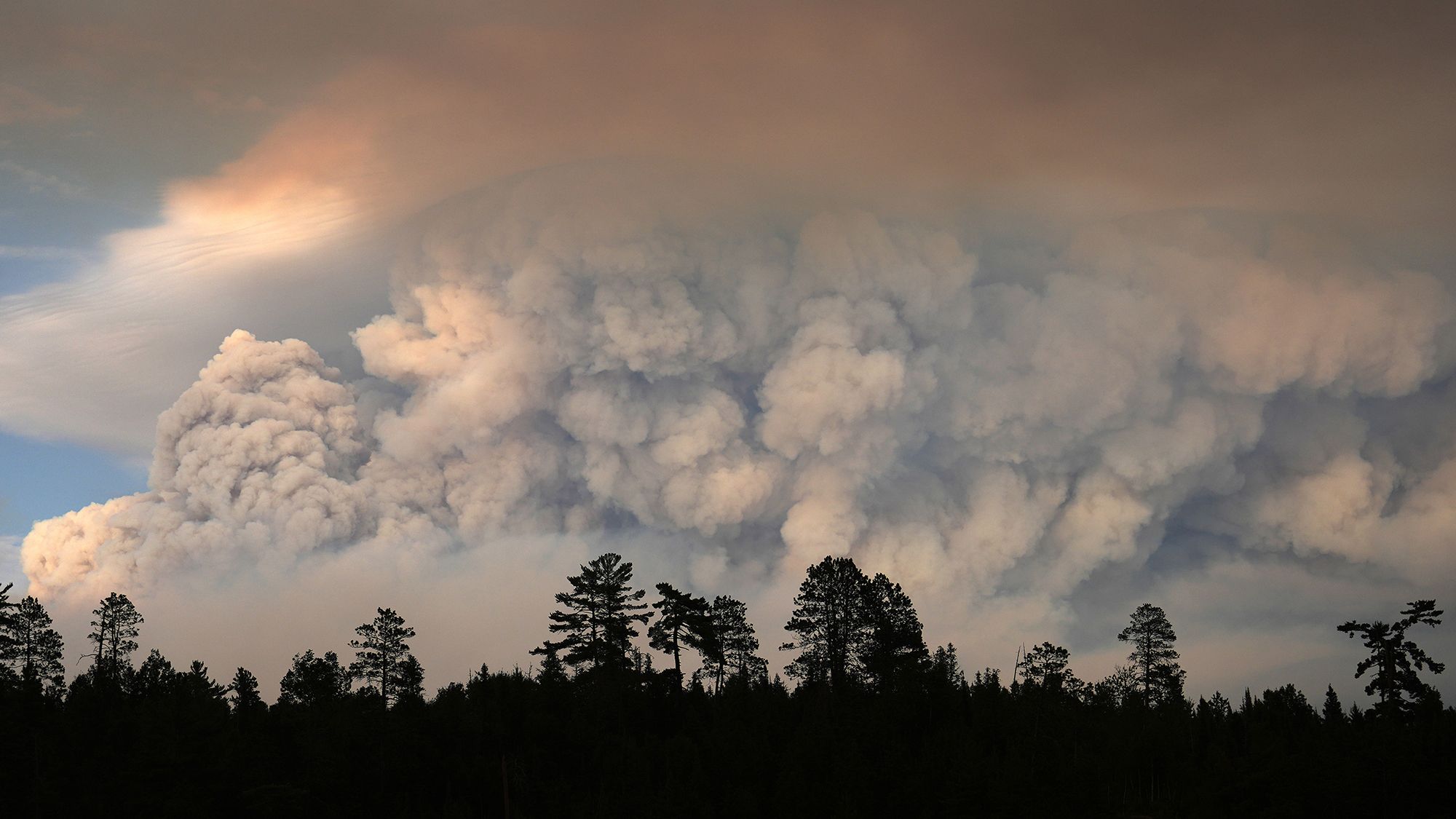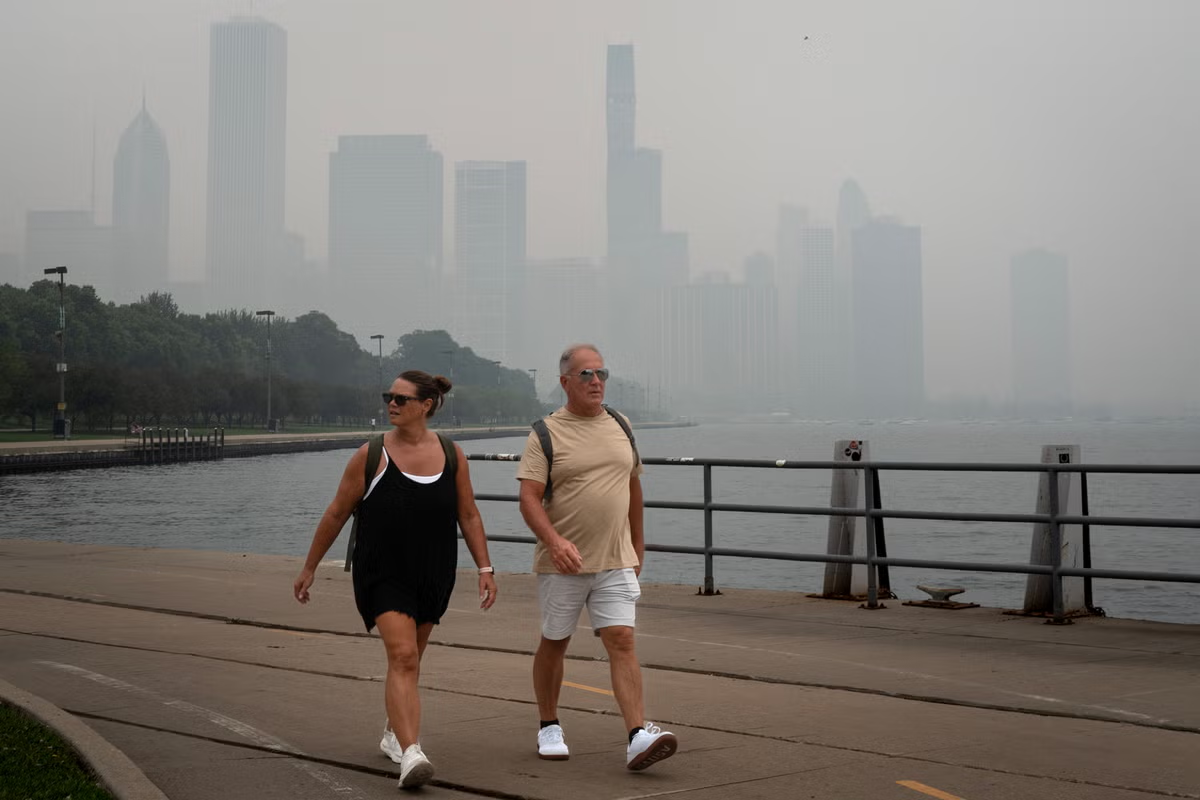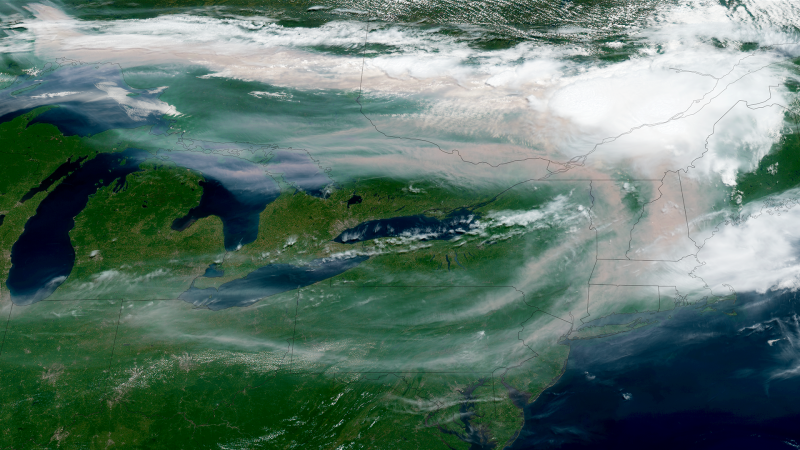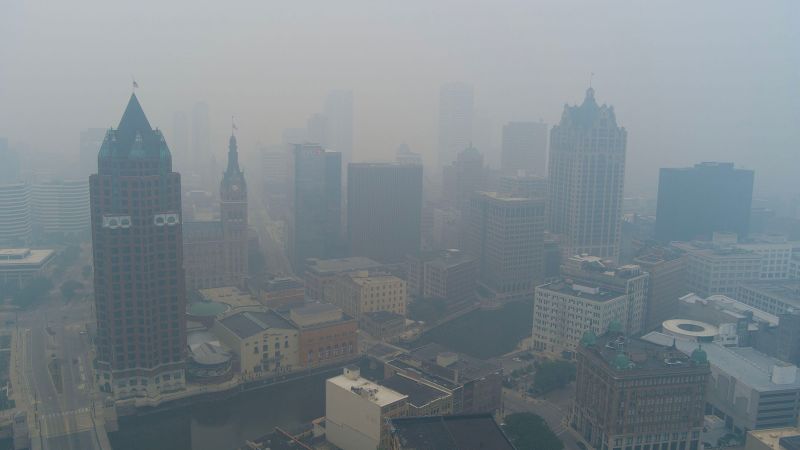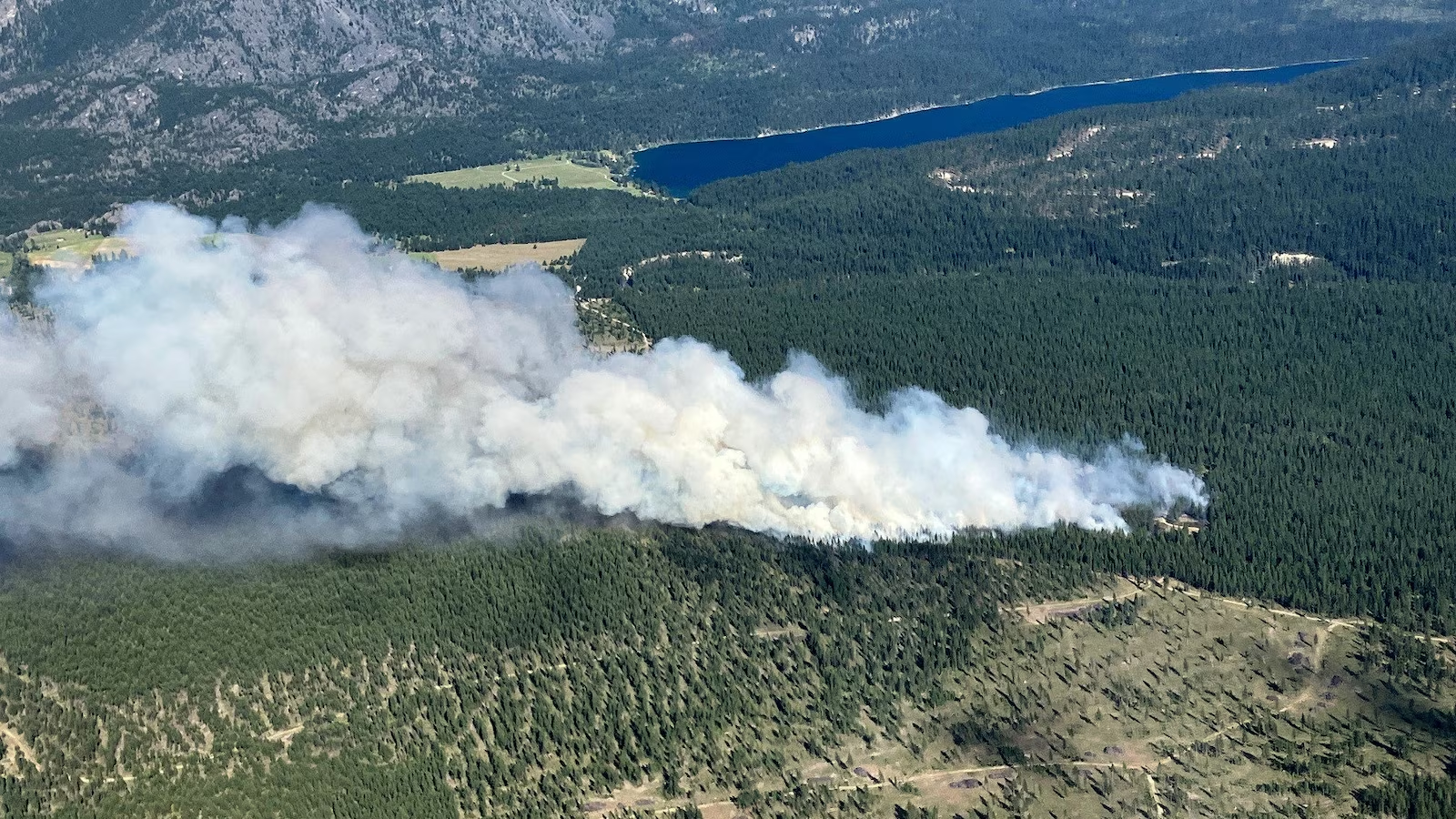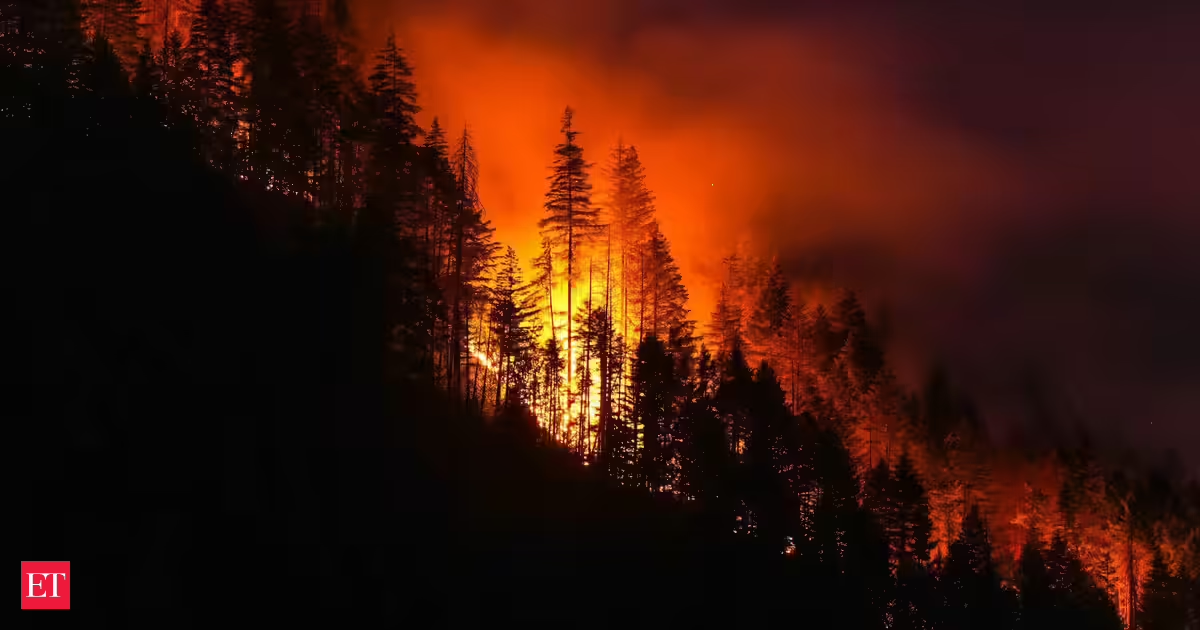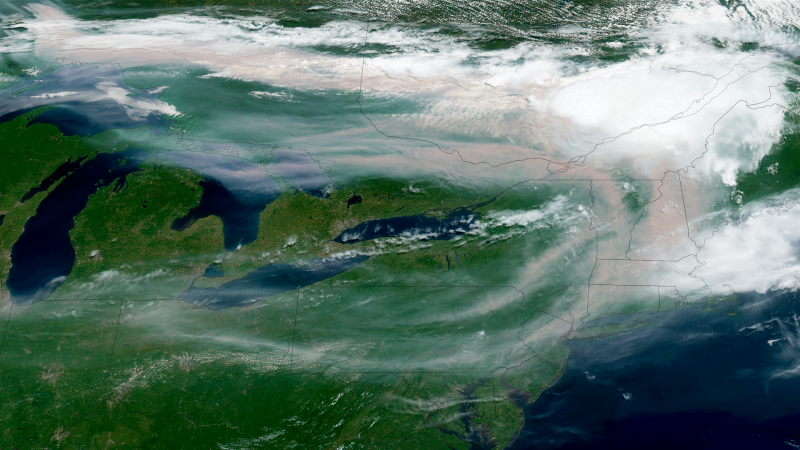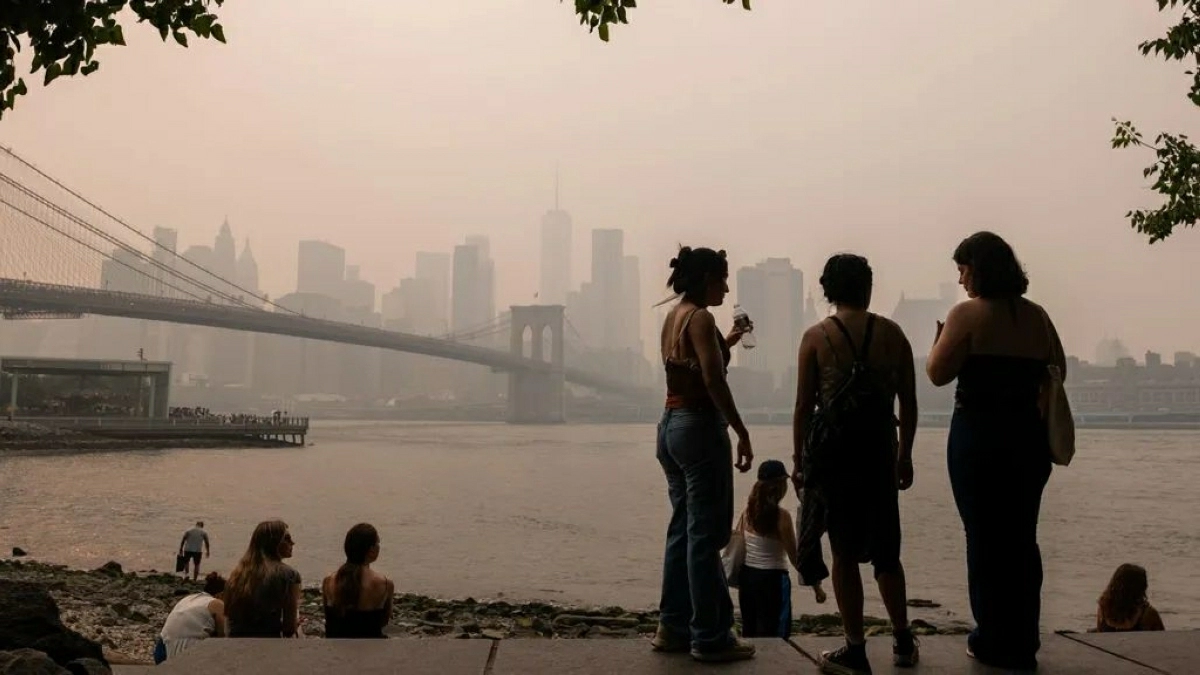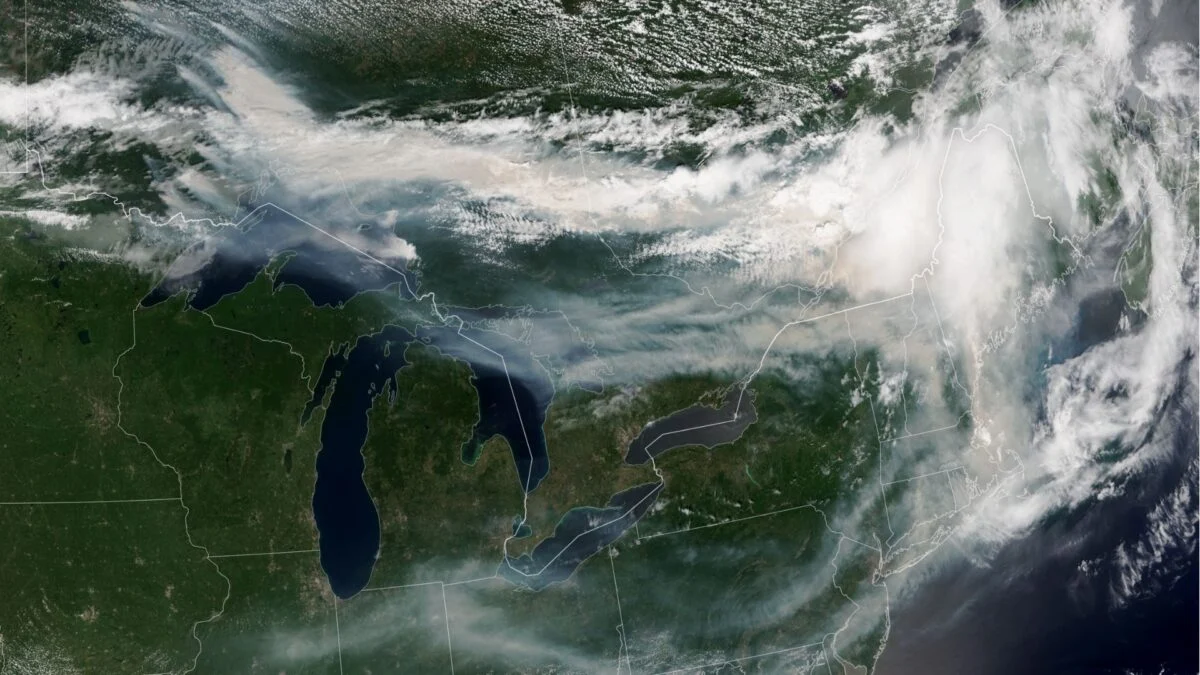
After a relatively slow start to Canada’s wildfire season, activity has exploded. Giant plumes of smoke are bringing diminished air quality to Ontario, Quebec, and parts of the U.S. Midwest and Northeast, and in some areas, it’s going to get worse before it gets better. As of Thursday morning, 858 fires were burning across Canada, with 725 considered “out of control,” according to the Canadian Interagency Forest Fire Center (CIFFC). Activity started ramping up at the end of June amid dry, warm conditions. Most of the fires are located in Quebec, the Northwest Territories, and Ontario, producing massive amounts of smoke that are blowing southeastward across Canada and into the United States. Detroit, Michigan, is suffering the worst air quality in the world today, followed by Toronto and Minneapolis, according to IQAir. All three cities are experiencing “hazardous” conditions, which means the entire population is at high risk of strong irritation and negative health effects that could trigger respiratory and cardiovascular illnesses. Across the Great Lakes, Northeast, and Midwest, the air quality index ranges from moderate to hazardous levels, primarily due to smoke billowing in from western Ontario. Multiple wildfires raging in northern Minnesota are also contributing to diminished air quality in the Great Lakes region.
Canadian Wildfire Smoke Is Pouring Into the US. Here's What to Expect
Hundreds of fires are burning out of control, and several factors could help bring more smoke to the U.S. for days or even weeks to come.
639 words~3 min read