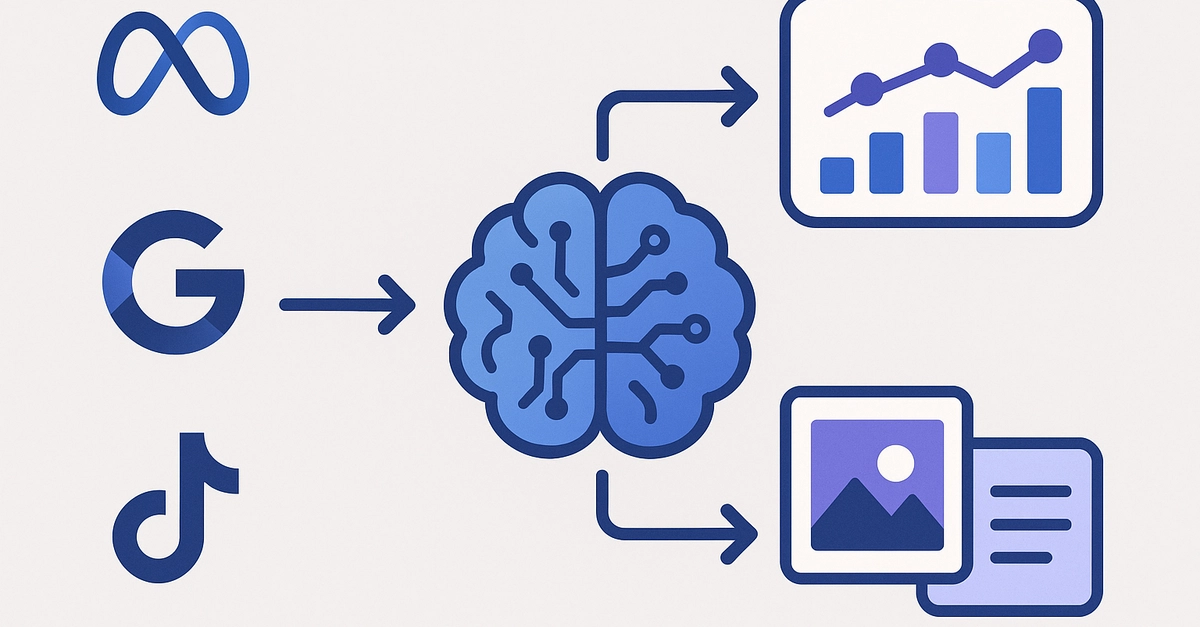
Sourabh Pateriya, CEO of Soundverse, Product Leader building ethical and controllable AI music creation platform.gettyThe Interactive Advertising Bureau projects that nearly 40% of all video advertising will be generated or substantially enhanced by AI in 2026. McKinsey estimates that generative AI could capture 5% to 15% of total marketing spend in productivity gains. Two different research lenses pointing at the same shift, yet neither stat captures what is actually happening inside content production budgets right now. The Three Waves Of Consumer-Facing GenAIThere have been three waves of consumer-facing generative AI, and only one of them has fully arrived.The first was image-first. Midjourney, DALL-E and Stable Diffusion built products around a single modality, a single prompt, a single output. They opened a category and proved that generation could compete with human craft on quality. The second wave was modality-first across audio and video. Suno, Udio and Soundverse brought generated music into the mainstream. Runway and Sora put cinematic video within reach of a text box. ElevenLabs made voice cloning routine. Each tool was extraordinary, but each tool still mostly produced one kind of thing.The third wave is workflow-first. It is being built now, and it is what may reshape content budgets.A workflow-first product does not generate a song, an image or a video. It generates an outcome. A marketing team that needs a 30-second campaign reel used to assemble a chain: a stock music license from one vendor, a video editor on contract, an AI voice tool or voice-over artist, a translator for the regional cut, a sound designer for the SFX layer. Each link in that chain had its own software, its own line item and its own delay. Workflow-first AI can collapse that chain into a single orchestrated pipeline where audio, video, voice and language move together.You can see the shape of this third wave in products already on the market. Google Flow merged what used to be three separate Google products, Whisk for images, Veo for video and Gemini for direction, into a single creative studio where assets move between modalities without a handoff. OpenClaw takes a more horizontal approach, building an open-source agent layer that chains together 50 or more third-party tools to execute multistep workflows. Soundverse has similarly expanded beyond AI music generation to incorporate broader audio production and workflow capabilities. Different categories, but the underlying trend is similar: Orchestration, not individual modalities, is becoming a key area of innovation.Several categories are visibly shrinking as a result. Royalty-free music libraries, which built billion-dollar businesses on licensable beds for video content, are seeing creators bypass them entirely for on-demand generation. Small-format video editing, the cut-down, the social variant, the regional remix, is moving out of dedicated editing suites and into multimodal platforms that can regenerate the audio when the visuals change. Localization, historically a high-margin services category dominated by agencies and dubbing studios, is being absorbed into the same pipeline that produced the original asset. None of this means the underlying craft disappears. It means the way organizations allocate those budgets may change.The numbers are already moving. According to the IAB’s 2025 Digital Video Ad Spend Report, 86% of ad buyers are using or planning to use generative AI for video creative, with small and mid-tier brands adopting fastest. The single biggest line item in most content production budgets, labor for assembly, editing and adaptation, is exactly where workflow-first products are most aggressive.The most striking version of this is the one-person studio. A solo creator can now produce a music-scored, voiced, subtitled, regionally adapted piece of video content in an afternoon. Five years ago, that same work would have needed a small agency. Two years ago, it would have needed a dozen separate tools and an operator who knew how to thread them together. Today, it may require one platform or a tightly integrated tool set, combined with clear taste. The taste is still scarce. Everything else is becoming more abundant.This is not a story about full replacement. A January 2026 IAB and Sonata Insights study found that the gap between how advertising executives believe consumers feel about AI-generated content and how those consumers actually feel widened to 37 percentage points, with the consumer side notably more skeptical. Workflow-first does not mean human-out. It means human-on-top, orchestrating a stack rather than operating it. The products that are likely to succeed in this wave will be the ones that compress pipelines without flattening judgment.3 Implications For Anything Building In This Space• Ask which workflow your category lives inside, not which product. The defensible position is owning the orchestration, not just the modality.• Design for the team, not just the user. The shift from individual producer to small content team is the shift that creates real budget capture.• Accept that some categories you may have planned to compete in will be absorbed by pipelines from adjacent categories. The cleanest defense is to be the pipeline.The first two waves of generative AI showed what was possible inside a single modality. The third wave is showing what is possible when the modalities stop being separate categories at all. The companies that adapt most effectively over the next five years may not necessarily be the ones with the most impressive single outputs. They may instead be the ones who absorbed five line items from someone else’s budget into integrated workflow.Forbes Technology Council is an invitation-only community for world-class CIOs, CTOs and technology executives. Do I qualify?
The Quiet Third Wave Of Multimodal AI
As generative AI matures, workflow-first platforms are changing how teams create, adapt and manage content across modalities.
904 words~4 min read