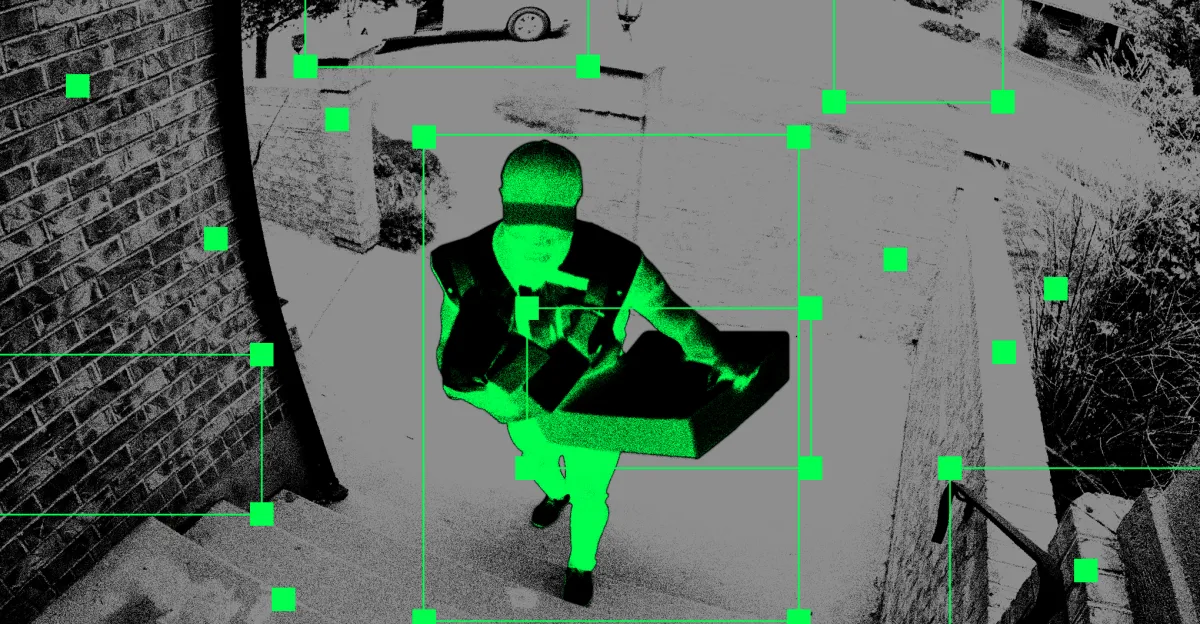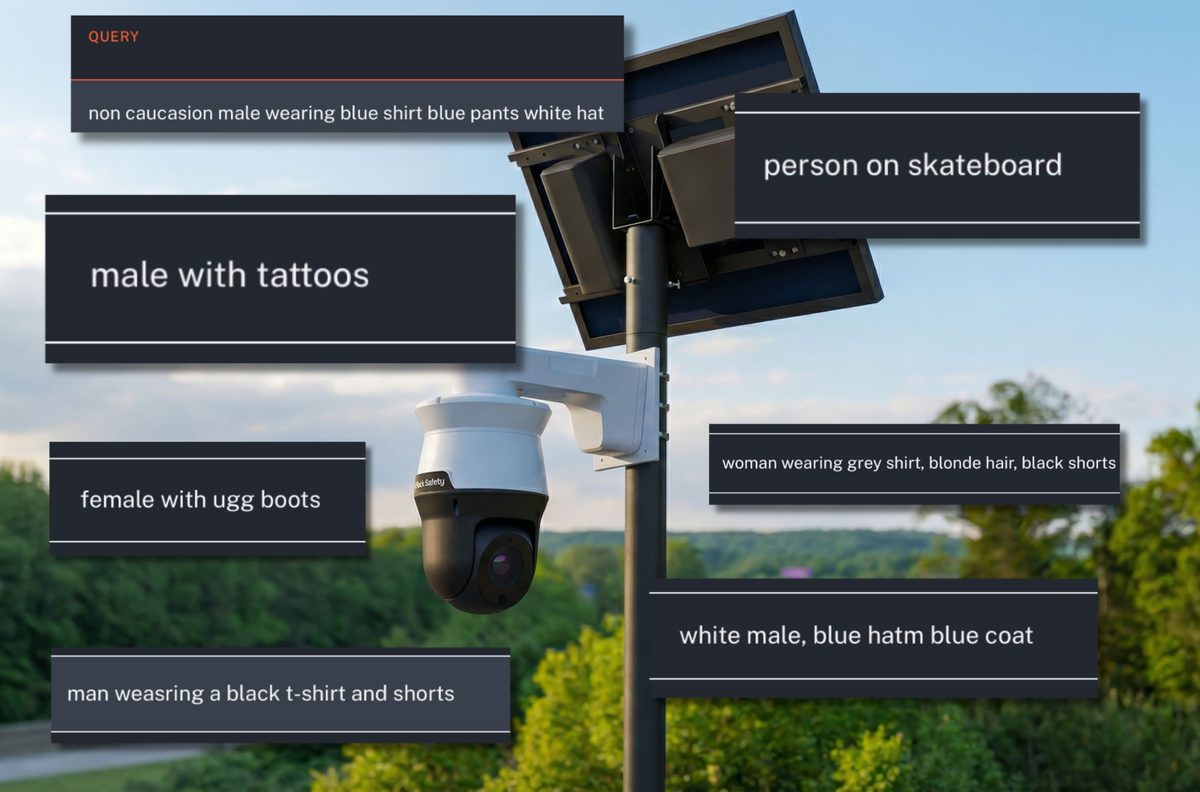
Police departments around the country have used Flock cameras at least hundreds of times to search for specific people, not cars, using searches such as “heavy-set male with a black and white hat,” “person on skateboard,” and “person wearing orange vest and construction hat,” according to data reviewed by 404 Media. Sometimes searches reference a target’s race or signs of their political affiliation.The searches highlight that while most people associate Flock cameras with scanning license plates and tracking vehicles, some of the cameras are also capable of following the movements of particular people or groups of people. Flock’s nationwide network of cameras lets police officers in one state search for a vehicle across many other states at once; the people searches do a similar thing, typically on a smaller scale, sometimes querying many hundreds of cameras at once. These are called “FreeForm” searches, and allow cops to use Flock’s system as though they would use a search engine, with Flock’s AI and image recognition interpreting what footage and which people are relevant to a police officer’s search.“Much of the world hasn’t quite caught up yet to how much more powerful a surveillance camera is today compared to a few years ago. AI video analytics means that giant oceans of video data can now be searched the same way big text files can be, including for sensitive content such as t-shirts, tattoos, and bumper stickers. Even without face recognition, that’s a significant increase in surveillance capability,” Jay Stanley, senior policy analyst for the American Civil Liberties Union’s (ACLU) Speech, Privacy, and Technology Project, told 404 Media in an email.“This is a classic bait-and-switch. Your town was pitched a tool to catch stolen cars and find missing kids,” Tom Bowman, policy counsel, security & surveillance, at the Center for Democracy & Technology, told 404 Media in a statement. Instead, cops now have the capability to search for a specific person or description of a person across a wealth of camera networks at once. “It's like being sold a smoke detector and only later finding out it's been recording every conversation in your house.”💡Do you know anything else about Flock? I would love to hear from you. Using a non-work device, you can message me securely on Signal at joseph.404 or send me an email at joseph@404media.co.The searches sometimes stretch across dozens or even nearly a hundred networks of Flock cameras at once. Sometimes the searches are so vague that they can pull up images of innocent or unrelated people. Other examples in the data reviewed by 404 Media include:Dunwoody GA PD looking for someone wearing a “backpack,” and later “person walking” and “black sweatshirt.” The latter two searches were across nine networks of cameras eachPocatello ID PD searching for “a male on foot” across 38 cameras. Another search was “atlanta falcons,” referencing the NFL teamCorona CA PD searching for “american flag shirt” and “dodger shirt.”Milford CT PD looking for “male with tattoos,” “male with brown hair,” and “woman blue shirt,” across more than a hundred camerasThe California Highway Patrol looking for someone wearing a “gray shirt” across 274 camerasThe Texas Department of Public Safety searching 96 networks of cameras for “man weasring [sic] a black t-shirt and shorts.”Florence SC PD looking for “person with gun” across 61 camerasChamblee GA PD searching 85 camera networks for “white woman wearing grey shirt, blonde hair, black shorts with blue and white shoes.” The agency also searched for “female with ugg boots.”Brookhaven GA PD looking for “tall man.”Some searches referenced the race of the person authorities were looking for. The California Highway Patrol was “Looking for a white male about 6ft 1in tall, longer brown hair almost to his shoulders, slender build, will have been wearing blue jeans, boots with white paint stains on the toes and possibly carrying a black helmet.” Atlanta GA PD searched for “non caucasion [sic] male wearing blue shirt blue pants white hat.”Some searches are part of an “investigation,” according to the “reason” field in the data. Others are part of a missing persons case. In some it is not clear what the reason for the search was because it is redacted.“Unfortunately, this ability to search cameras as though doing a search engine inquiry is increasingly common for surveillance cameras,” Beryl Lipton, senior investigative researcher at the Electronic Frontier Foundation, told 404 Media. “AI-enabled video analysis across reams of footage exacerbates the risk that law-abiding people minding their own business end up with police observing them without their knowledge and opens them to possibly being implicated in a crime or being treated as a criminal. Imagine how many people at any given moment may be walking on foot, wearing a backpack, or existing with brown hair. It wasn’t that long ago that Trayvon Martin was murdered by someone who could argue that wearing a hoodie justified suspicion and a claim of self-defense.”
How Cops Use Flock to Track People, Not Cars
Cops have used Flock's FreeForm search feature to look for people with tattoos and wearing specific sport shirts, and searches sometimes include the target's race, according to data reviewed by 404 Media.
1,549 words~7 min read