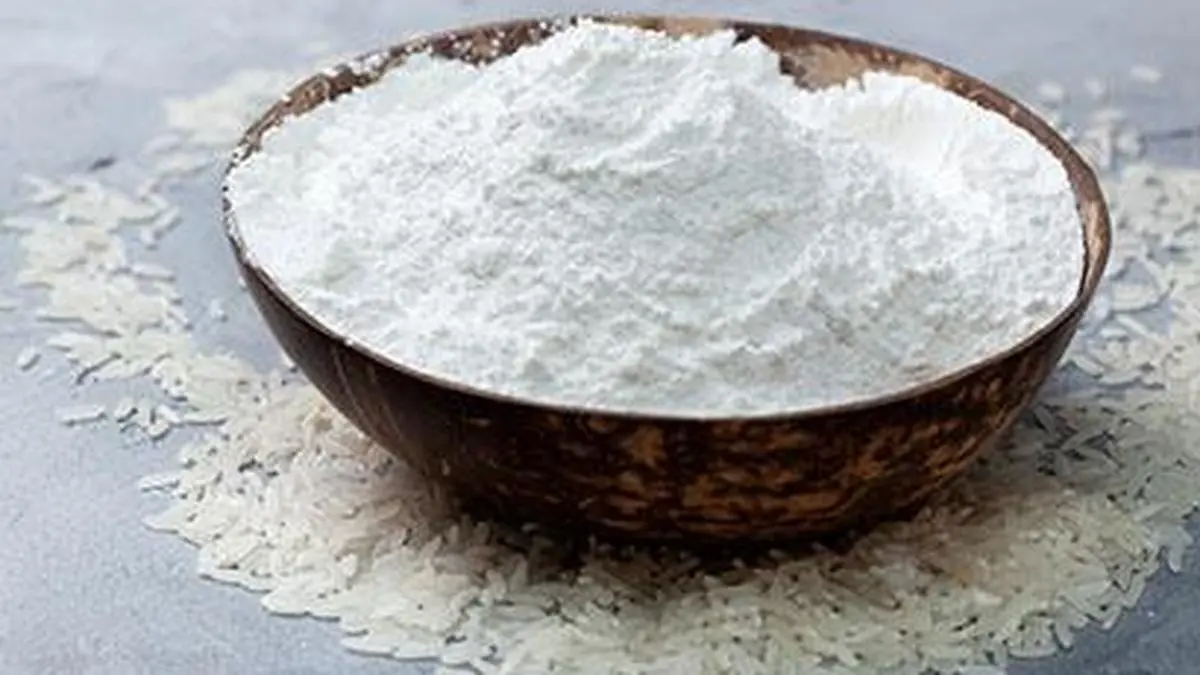
rice flour in a wooden bowl, rice on a gray concrete background. copy space
| Photo Credit:
natashamam
The European Union (EU) rejected a rice flour consignment from China this week for the presence of genetically modified organisms (GMOs), a notification by the EU’s Rapid Alert System for Food and Feed (RASFF) said.This comes at a time when Beijing has been rejecting Indian non-basmati rice cargoes, claiming they contain GMOs when GM rice is not grown in the country. The EU notification issued on Monday said the Netherlands had found the presence of GMOs in hydrolysed rice flour, which was shipped to Europe under cereals and bakery products.35S, T-Nos presenceThe Netherlands reported a potential risk in the presence of the 35S promoter and T-Nos in the consignment. The 35S promoter is from the Cauliflower Mosaic Virus. It is an active constitutive promoter used in plant biotechnology to drive the continuous, high-level expression of inserted genes across almost all plant tissues. It is the most widely used regulatory element in genetically modified crops T-Nos (Nopaline synthase terminator) is a short genetic sequence derived from the soil bacterium, Agrobacterium tumifaciens.Earlier this year, China rejected nearly 70 non-basmati rice cargoes from India, citing the alleged presence of GMOs. The rejection was despite the shipments being cleared by a Chinese agency in India. This has led to fears that Beijing is waging a trade war against New Delhi. Nanjing varsity studyAccording to a team of six Chinese scholars from the School of Business, Nanjing University of Information Science and Technology, the EU has rejected even rice noodles and black rice flour earlier. The team, led by Qi Zhang, in a study “Exploring the inhibitory effect of RASFF on China-EU trade of rice-based products” said rice-based products exported from China to Europe have repeatedly encountered technical trade barriers. During 2001-2017, RASFF had a serious inhibitory effect on the trade of Chinese traditional rice-based products due to the presence of GM ingredients. It said that, though China’s total value of exports of rice-based products increased at an average growth rate of 10.77 per cent, the total export value of rice-based products to the EU has declined since 2008. The trade value of Chinese exported rice-based products dropped from $6.16 million in 2001 to $4.77 million in 2017, with the average annual growth rate being a negative 1.49 per cent. Technical barrierThe study said that since 2006, RASFF has detected unlicensed genetically modified ingredients in China’s exports of rice-based products. However, it has become the main technical barrier to trade in rice-based products exported from China to Europe, it said. Trade experts said that when Chinese products were found to have GMOs presence, it should not be targeting India when it does not grow any GM crop.Published on July 16, 2026