Author(s): David Pradeep
Originally published on Towards AI.
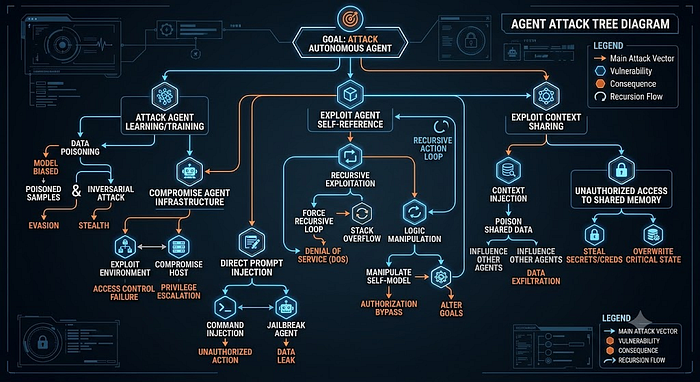
The first time I tried to migrate a legacy order-processing service to an agent-first model, the biggest surprise wasn’t the refactoring effort, it was how many hidden security gaps opened up the moment autonomous agents started calling external APIs. The stakes of securing agent-first migrations become obvious when you realize that every new decision point is a potential attack surface, and the existing RBAC model no longer applies.
What kept me moving forward was the realization that security could be baked into the migration rather than bolted on later. By redesigning permission boundaries, introducing prompt-injection safeguards, and preserving auditability, we were able to shift from a monolith to a swarm of agents without sacrificing compliance or user trust. The journey forced us to rethink everything from threat modeling to data flow, and the lessons are still shaping how we approach future autonomous systems.
We’ve spent the last six months building and securing agent-driven platforms at a mid-size fintech. Those experiences give me a realistic view of what works, what fails, and why most teams underestimate the operational overhead of securing agent-first systems.