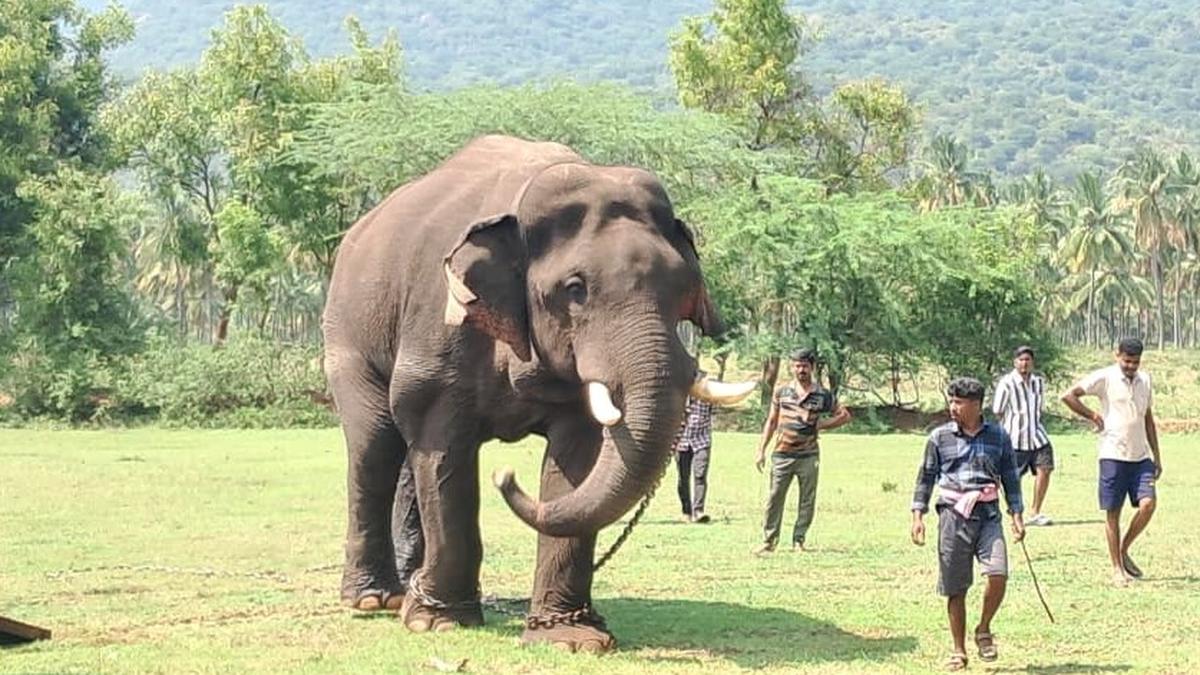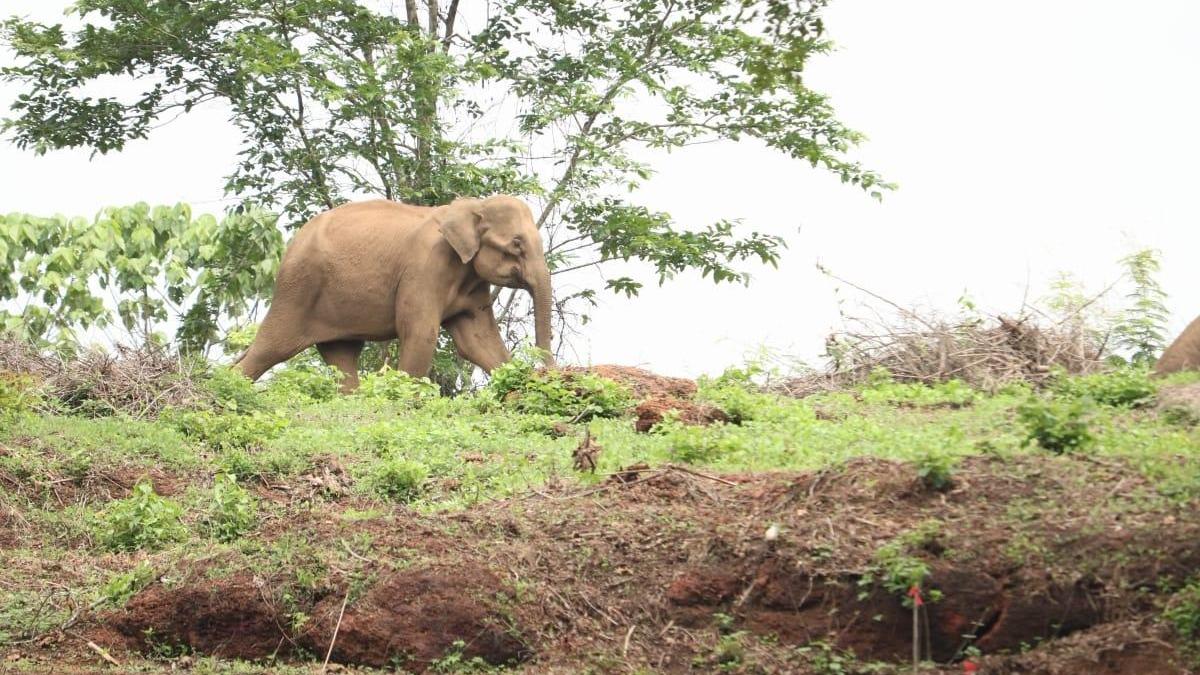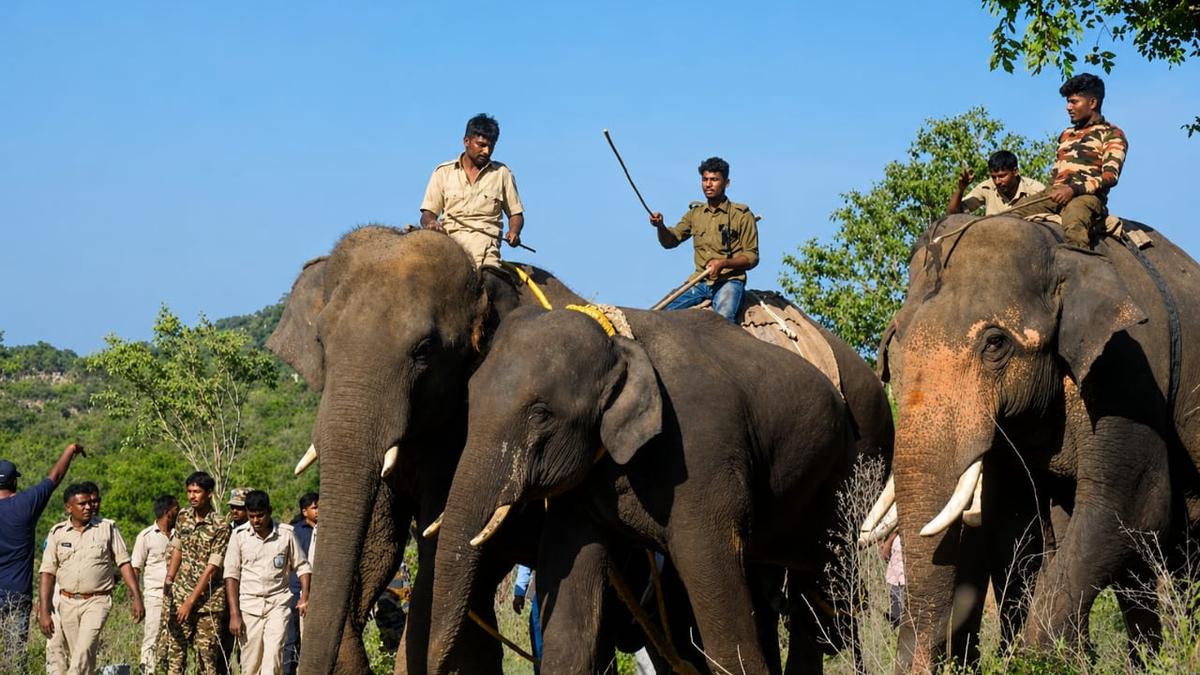
The solitary sub-adult tusker (centre), flanked by kumkis, being captured near Palamaner in Chittoor district on Wednesday.
| Photo Credit: Special Arrangement
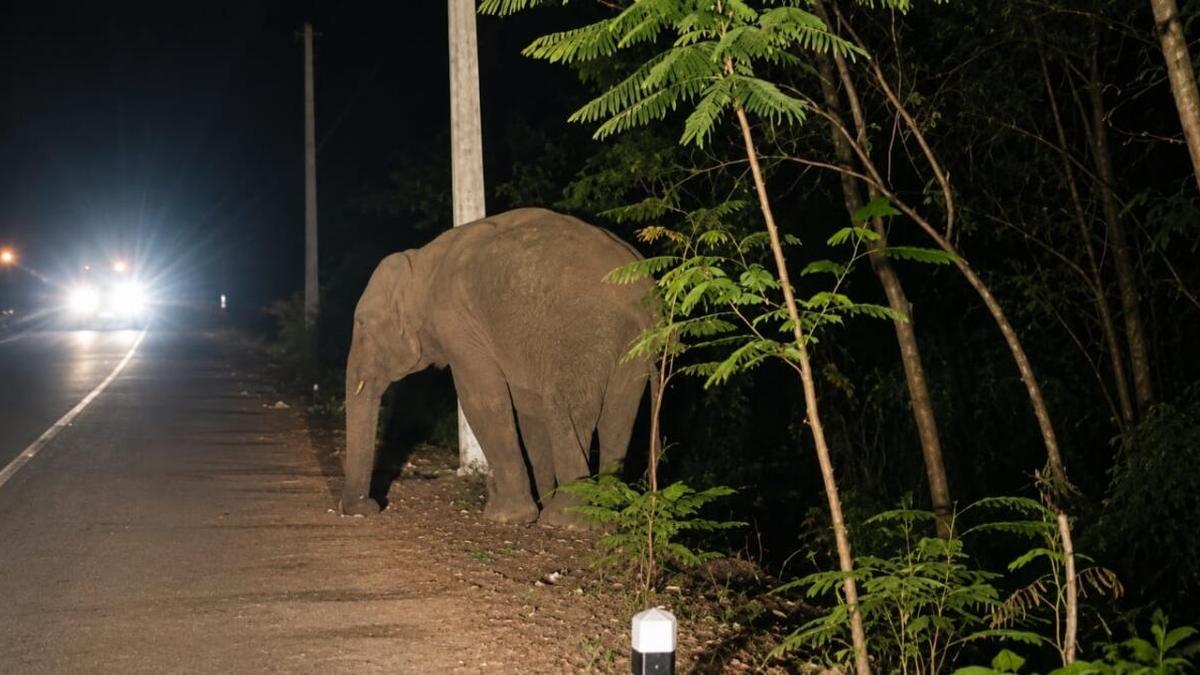
A wild sub-adult tusker that terrorised several villages under Palamaner, Bangarupalem, Gudipala and Chittoor mandals on the Chittoor-Tamil Nadu border was captured on Wednesday (July 15, 2026) evening, after a day-long operation involving five kumkis (trained elephants) and about 50 forest personnel, apart from veterinary experts.The solitary elephant had strayed into human habitations for nearly a year, particularly in the villages of Gantavuru, Pengaragunta and Gobbillakotur, ravaging agricultural and horticultural crops, attacking cattle, and frequently crossing the Moghili Ghat road, a busy Palamaner-Chittoor stretch of the National Highway 4.Speaking to The Hindu on Thursday (July 16, 2026), District Forest Officer G. Subburaj said the animal’s unpredictable movements posed a serious threat to both residents and motorists, prompting the Forest Department to launch the kumki operation to capture the lone tusker.“The situation escalated in recent months as the tusker repeatedly returned to revenue lands despite efforts by forest personnel to drive it back into the reserve forest. Tensions peaked recently when the elephant entered the town of Palamaner, drawing a crowd of nearly 3,000 people and raising concerns about public safety. A Forest Section Officer also sustained serious injuries after being attacked by the animal,” the DFO said.Following repeated incidents and a detailed assessment of the threat, the Forest Department obtained permission from the Chief Wildlife Warden under the provisions of the Wildlife (Protection) Act, 1972, to capture the elephant.“The operation was planned in accordance with national guidelines issued under Project Elephant and involved extensive monitoring, risk assessment, mock drills, and inter-departmental coordination. It’s a milestone in efforts to mitigate human-elephant conflict at this tri-state junction,” Mr. Subburaj said. The kumkis from the SV Zoo Park, Palamaner and Kuppam camps, elephant trackers and veterinarians played a crucial role in the operation, he added.Mahouts from the Palamaner camp said that though the wild tusker initially remained aggressive during the operation, soon “our kumkis surrounded it and brought it under control”.The tusker was shifted to the Musalimadugu Elephant Camp on Thursday night. “It will remain under complete veterinary supervision and behavioural assessment. Future management of the animal would be decided in accordance with wildlife conservation protocols and expert recommendations,” the DFO said. Published - July 16, 2026 06:09 pm IST