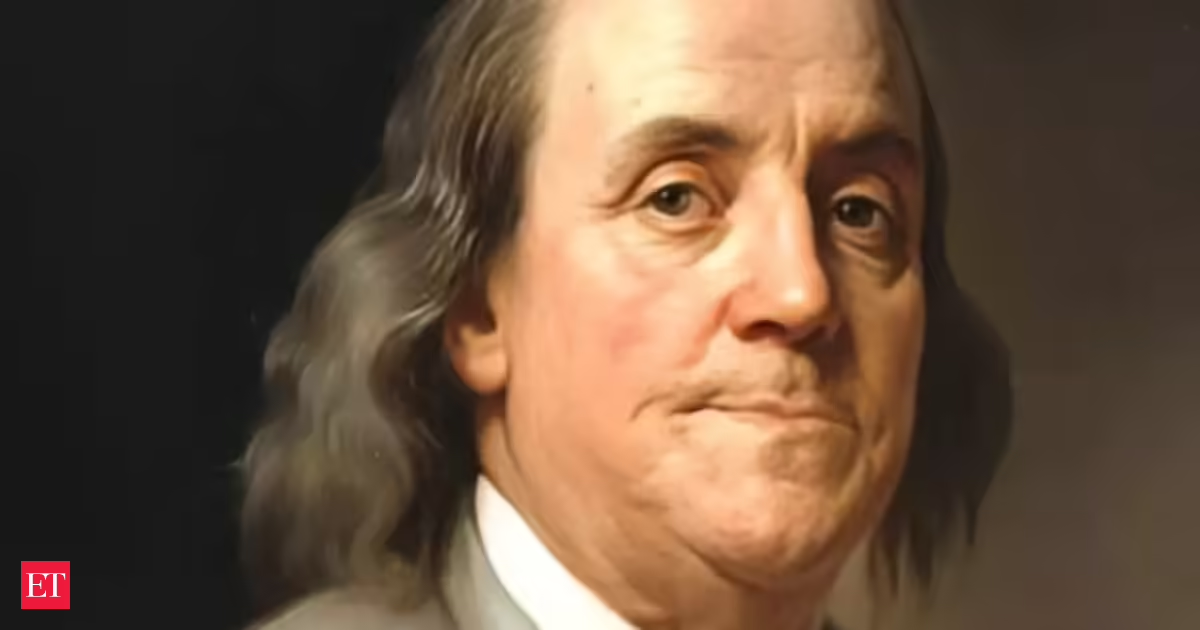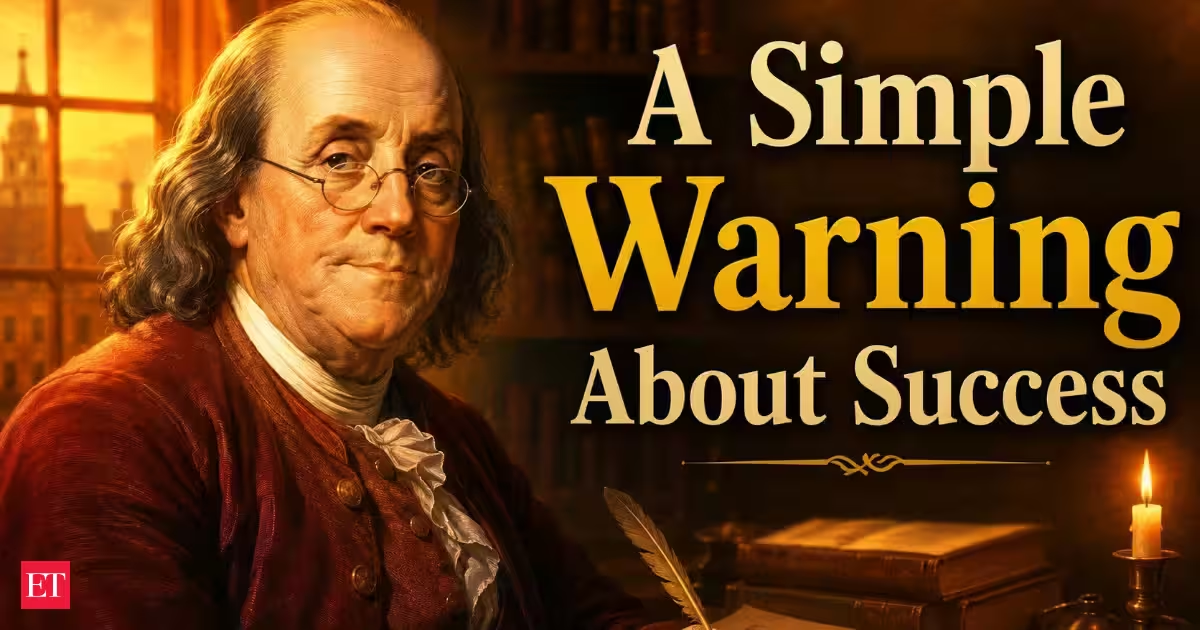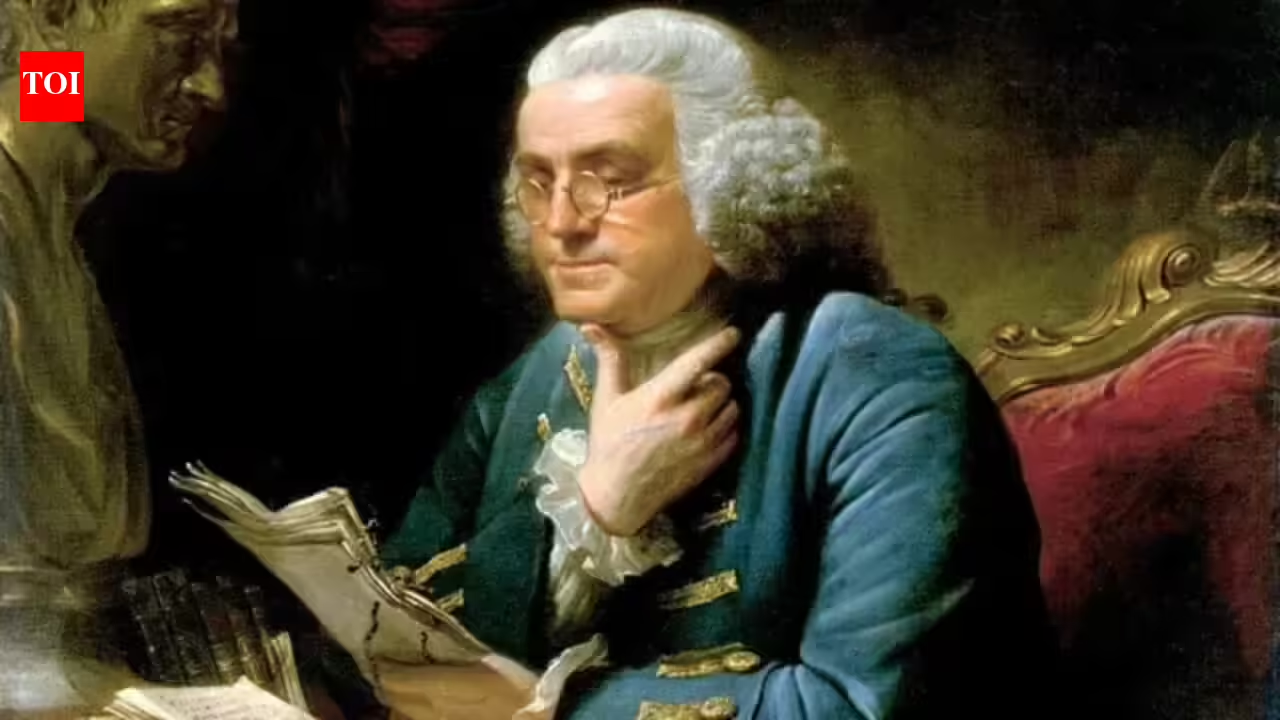
Benjamin FranklinMany opportunities arrive unexpectedly. A job interview, a business meeting, a competition or a moment to prove oneself can appear within a short window, leaving little time to build the skills required to succeed. In such moments, preparation becomes the difference between being ready to seize an opportunity and watching it pass.Benjamin Franklin captured this idea in one of his most widely remembered sayings: ‘By failing to prepare, you are preparing to fail.”The quote is a reminder that success is rarely created at the moment when the world notices it. The visible achievement is usually the result of invisible work carried out long before the opportunity appears. For Franklin, preparation was not simply about avoiding mistakes. It was about creating the conditions where effort, knowledge and opportunity could come together.What did Benjamin Franklin mean?Franklin's words highlight a simple principle: outcomes are often shaped before the final moment arrives. A student who begins studying weeks before an examination is not relying only on memory during the test. A sportsperson training daily is not trying to build skill on the day of a competition. A professional preparing for a presentation is not only hoping for confidence when standing before an audience.Preparation creates readiness. The quote does not suggest that planning can eliminate every failure. Unexpected challenges, changing circumstances and mistakes are part of every journey. Instead, it argues that preparation gives people the ability to respond when those challenges appear.Without preparation, even a good opportunity can become overwhelming. A person may have talent, ambition or potential, but without the groundwork needed to support them, those qualities remain unrealised.Franklin's life was built on preparationBenjamin Franklin's own life reflected the discipline behind this quote. Born in Boston in 1706, Franklin had limited formal education but became one of the most influential figures of his time through constant self-improvement. As a young man, he created a personal system for learning, focusing on virtues, reading and practical knowledge. He established the Junto, a discussion group where members exchanged ideas and improved their understanding of science, business and public affairs.Franklin's curiosity eventually led him to become a printer, inventor, scientist, writer and statesman. His experiments with electricity, including his famous kite experiment, were not acts of sudden inspiration alone. They were supported by years of observation, study and experimentation.His role in shaping American public life also required preparation. As a diplomat during the American Revolution, Franklin used years of political understanding, communication skills and relationship-building to negotiate support for the American cause in France.His achievements were built through accumulated effort rather than sudden moments of success.Why preparation creates opportunitiesPeople often describe success as a matter of being in the right place at the right time. While timing does matter, preparation determines what happens when that moment arrives. Two people can encounter the same opportunity and experience completely different outcomes. One may recognise it as a chance to move forward because they have developed the necessary skills and knowledge. The other may struggle because they were waiting for the opportunity before preparing for it.This pattern appears across professions and everyday life. A writer who regularly practises is better equipped when a major assignment arrives. A researcher who studies consistently can make discoveries when the right question appears. An entrepreneur who understands their market is more prepared when a business opportunity emerges. Preparation does not guarantee success, but it increases the chances of making the most of the circumstances.Much of preparation happens away from public attention. It involves repetition, patience and work that may not produce immediate recognition. Because the results are delayed, preparation can sometimes feel unnecessary. However, many failures blamed on bad luck are actually moments when readiness was missing.A missed opportunity is rarely only about the opportunity itself. It is also about whether a person has developed the ability to use it. Preparation turns uncertainty into possibility because it allows people to act with confidence when circumstances demand action.This is why Franklin's quote has remained relevant for centuries. It applies to classrooms, workplaces, relationships and personal goals because the principle is universal: important moments are rarely improved by last-minute effort alone.Success may appear sudden from the outside, but behind most achievements are countless hours of preparation that happened long before anyone noticed. Benjamin Franklin's words remind us that the future is often shaped in advance — through the choices we make before the moment arrives.
Quote of the Day by Benjamin Franklin: ‘By failing to prepare, you are preparing to fail’ and why preparation separates opportunity from disappointment
Many opportunities arrive unexpectedly. A job interview, a business meeting, a competition or a moment to prove oneself can appear within a short window, leaving little time to build the skills required to succeed.
730 words~3 min read