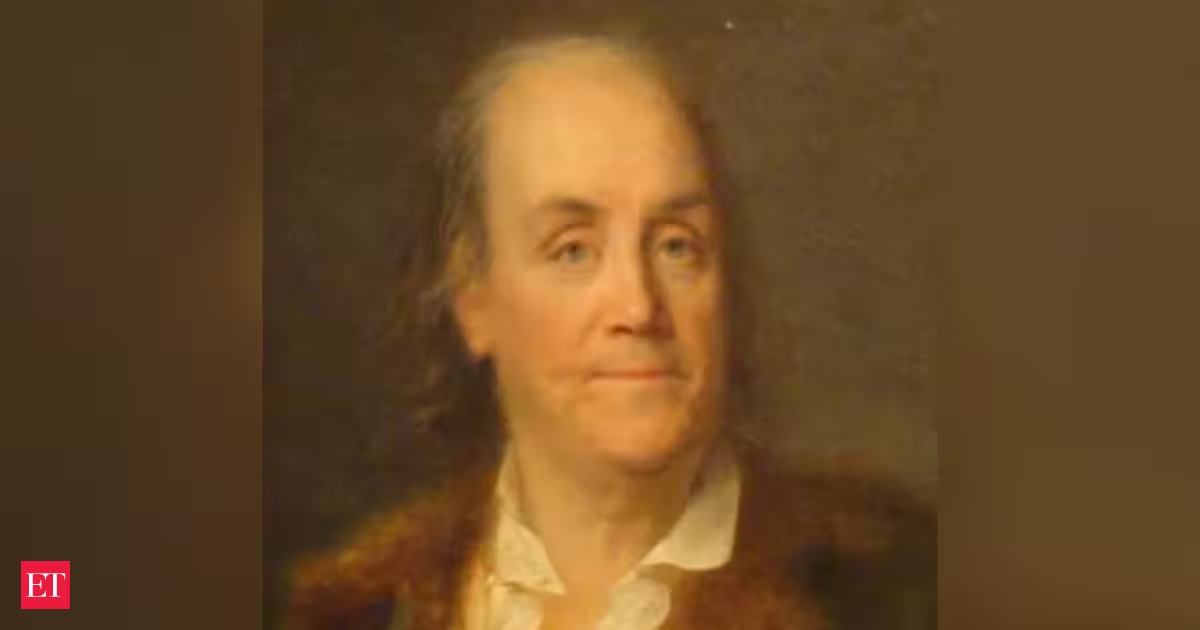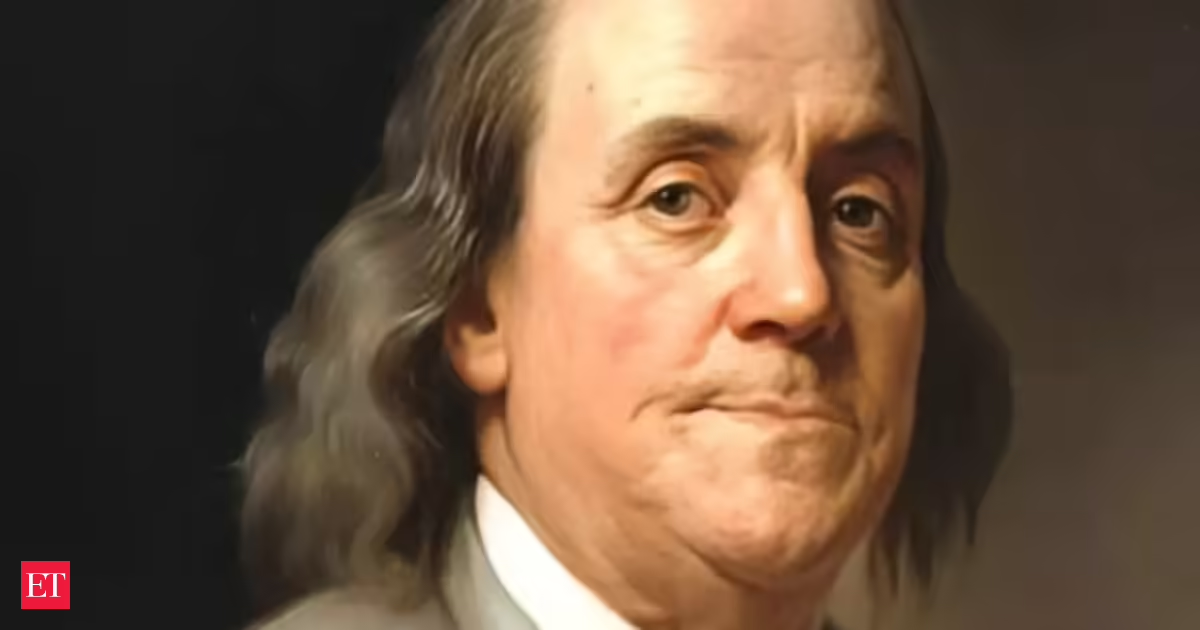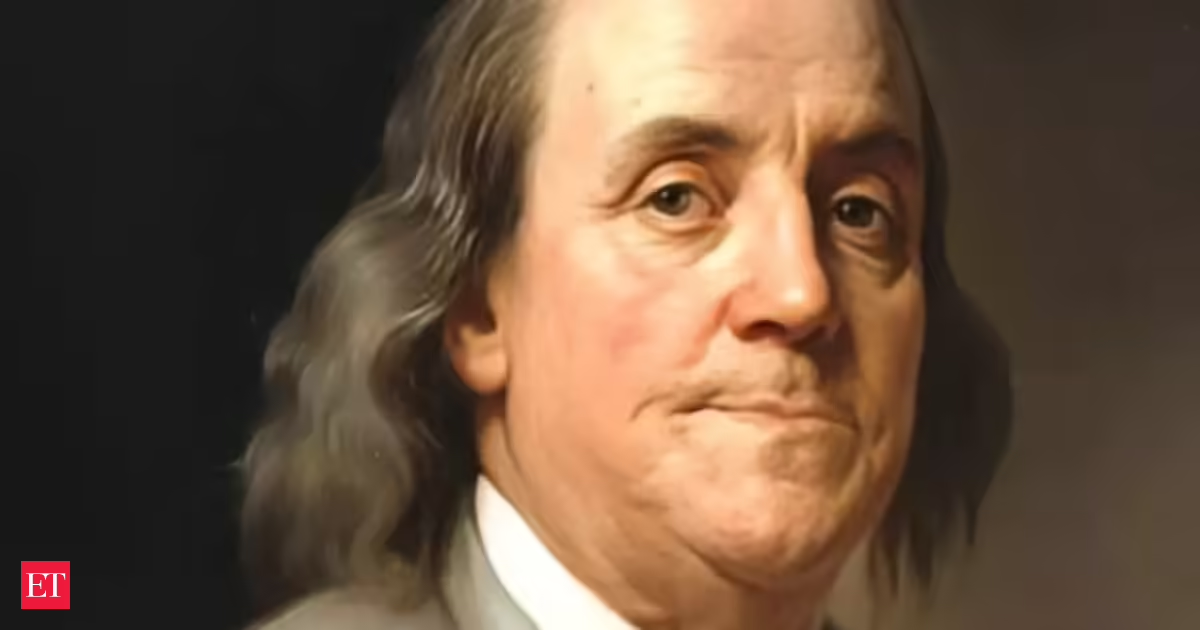
Quote of the day by Benjamin Franklin continues to inspire people with a message that remains relevant across generations. The quote, "The only thing that is more expensive than education is ignorance," reminds people that learning is an investment that delivers benefits throughout life. Education may require time, effort, and financial resources, but a lack of knowledge can result in costly mistakes, poor financial decisions, health risks, career setbacks, and missed opportunities. Benjamin Franklin believed that learning should never stop, regardless of age or profession. His own life reflected this belief, as he became a successful writer, printer, inventor, scientist, diplomat, and one of the Founding Fathers of the United States despite receiving only limited formal education.The quote is, "The only thing that is more expensive than education is ignorance." Education has always been considered one of the strongest tools for personal growth. Quote of the day by Benjamin Franklin brings attention to this idea through this simple sentence. Although learning requires time, effort, and money, Franklin believed that the cost of remaining unaware is much greater. Poor decisions, repeated mistakes, and missed opportunities often become far more expensive than the investment needed to gain knowledge. The quote continues to guide students, professionals, families, and anyone who wants to make informed choices in daily life.What does today's quote mean?The quote teaches that education should never be seen as a burden. Whether a person studies in a school, learns through books, develops skills at work, or gains experience in everyday life, every lesson adds value. Ignorance may appear to save time or money in the short term. However, people who refuse to learn often make mistakes that could have been avoided.You Might Also Like:The quote explains that knowledge helps people:Make informed decisions.Solve problems with confidence.Avoid repeating mistakes.Understand changing situations.Improve personal and professional growth.Benjamin Franklin believed learning was a lifelong process rather than something limited to classrooms.Quote by Benjamin Franklin: Why the message remains relevant?The quote remains meaningful because modern life requires people to make decisions almost every day.For example:You Might Also Like:Learning about money management can help people avoid financial losses.Understanding health information can help people make better medical choices.Developing new skills can improve career opportunities.Staying informed about technology can help people adapt to changing workplaces.The quote reminds people that refusing to learn often leads to larger problems later.Life lessons from the quoteBenjamin Franklin's words continue to offer several important lessons.Mistakes often cost more than learningMany people hesitate to spend time or money on education. However, mistakes caused by a lack of knowledge can become much more expensive.Examples include:Poor financial decisions.Career setbacks.Business failures.Health-related mistakes.Legal problems caused by lack of awareness.The quote encourages people to invest in learning before facing these consequences.Knowledge creates long-term valueFranklin believed that learning should be viewed as an investment instead of an expense. Skills and knowledge often continue to benefit people throughout their lives. New learning can improve earning potential, strengthen confidence, and open new opportunities. Unlike many purchases, knowledge continues to grow when it is used regularly.Learning never stopsThe quote also teaches that education is not limited to childhood or college.People continue learning through:Reading books.Training programs.Work experience.Conversations.Research.Everyday experiences.Franklin believed curiosity helps people continue growing throughout life.Ignorance is more than lack of informationThe quote suggests that ignorance is not simply having limited knowledge. It can also mean refusing to learn, ignoring facts, or avoiding improvement. People who remain open to learning are often better prepared for changes in life.Benjamin Franklin's own life reflected this beliefBenjamin Franklin lived according to the principles expressed in this quote. Although he received only about two years of formal schooling, he never stopped educating himself. He read extensively, improved his writing, learned different subjects independently, and continued expanding his knowledge throughout his life. His achievements demonstrate how continuous learning can shape a person's future.Who was Benjamin Franklin?Benjamin Franklin was born on January 17, 1706, in Boston, Massachusetts. He died on April 17, 1790, in Philadelphia, Pennsylvania, at the age of 84.Franklin became known as:PrinterPublisherAuthorInventorScientistDiplomatHe was also one of the Founding Fathers of the United States. Franklin helped draft the Declaration of Independence, signed the document, represented the United States in France during the American Revolution, and served as a delegate to the Constitutional Convention. His scientific work, especially on electricity, earned worldwide recognition. His writings also became known for their practical wisdom.Early life shaped his interest in learningBenjamin Franklin was born into a large family. He was the tenth son among seventeen children. His father made soap and candles. Franklin attended grammar school for only one year and later studied under a private teacher for another year. His formal education ended when he was only ten years old.At age twelve, he became an apprentice to his older brother James, who worked as a printer. Between 1718 and 1723, Franklin mastered the printing trade while teaching himself through constant reading.Learning through books and writingFranklin first became interested in poetry but later focused on prose writing. He studied essays published in The Spectator, written by Joseph Addison and Sir Richard Steele. To improve his writing, Franklin repeatedly read the essays, copied them, rewrote them from memory, converted them into poetry, and then changed them back into prose. This method helped him become a stronger writer. Franklin later wrote in his autobiography that good writing became one of the main reasons for his success.His first published writingsIn 1721, James Franklin started the New-England Courant newspaper. Benjamin secretly submitted essays under the pen name "Silence Dogood." He wrote fourteen essays that discussed many social topics.Readers believed the essays had been written by an experienced and educated writer rather than a sixteen-year-old apprentice. These writings became one of Franklin's earliest literary successes.Leaving Boston for PhiladelphiaAfter disagreements with his brother, Franklin secretly left Boston. At the age of seventeen, he travelled to Philadelphia. One famous story from his autobiography describes his arrival carrying three large bread rolls while walking through Market Street.During this visit, Deborah Read, who later became his wife, first saw him. Franklin soon found work as a printer and continued building relationships with people who enjoyed reading and learning.Journey to LondonPennsylvania Governor Sir William Keith encouraged Franklin to start his own printing business. Franklin travelled to London in 1724 expecting financial support. However, Keith failed to provide the promised letters of credit. Franklin found work as a printer in London instead.During this period, he also wrote A Dissertation on Liberty and Necessity, Pleasure and Pain in 1725. Later in life, Franklin rejected many ideas presented in the pamphlet and destroyed nearly all copies.Return to PhiladelphiaBy 1726, Franklin decided to leave London. Merchant Thomas Denham offered him work in Philadelphia. Franklin accepted the opportunity and returned home. His career continued to expand in publishing, science, public service, diplomacy, and writing. His life became an example of continuous learning and self-improvement.Why this quote still inspires people today?Benjamin Franklin's message continues to apply across generations. Technology, careers, education, finance, and health continue to change rapidly. People who remain willing to learn are often better prepared for these changes.The quote reminds everyone that investing in knowledge today can prevent larger losses tomorrow. Education may require effort and resources, but ignorance often carries a much higher price.
Quote of the day by Benjamin Franklin: 'The only thing that is more expensive than education is...' Life lessons from inspiring quote on profound truth, learning, costlier mistakes, missed opportunities and poor decisions
Quote of the day by Benjamin Franklin reminds people that learning is always a better investment than remaining uninformed. The famous saying explains how education helps people avoid costly mistakes, improve decision-making, and create better opportunities in life. Benjamin Franklin's own journey from limited formal schooling to becoming a writer, inventor, scientist, and statesman reflects the message behind this quote. The lesson continues to remain relevant in education, careers, health, and finance.
1,197 words~5 min read