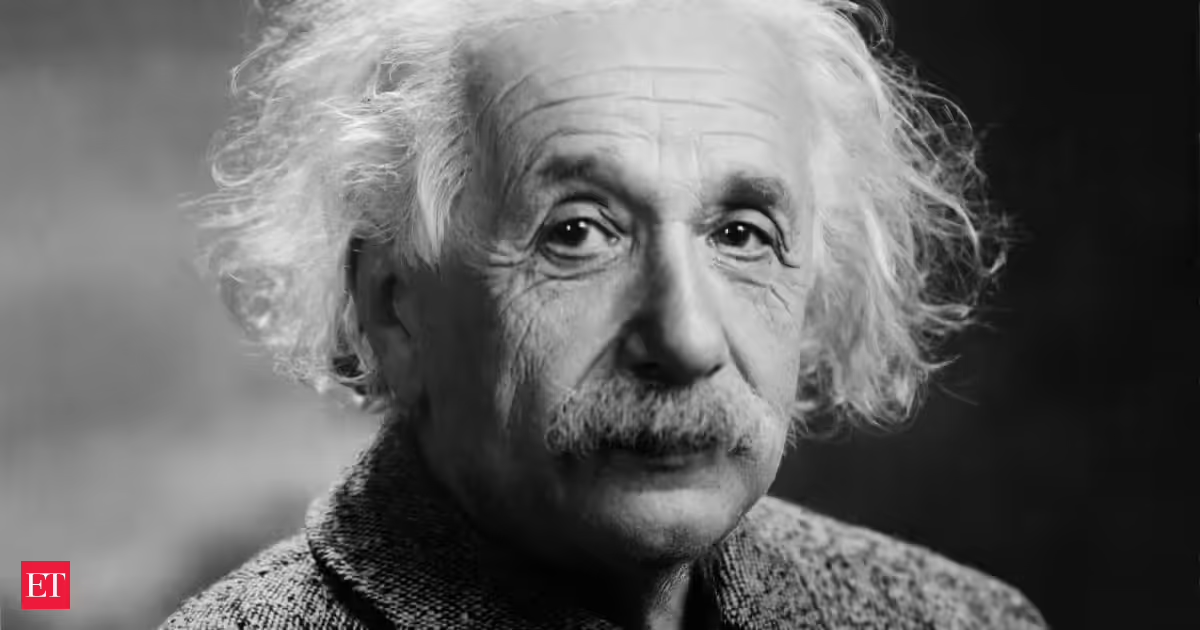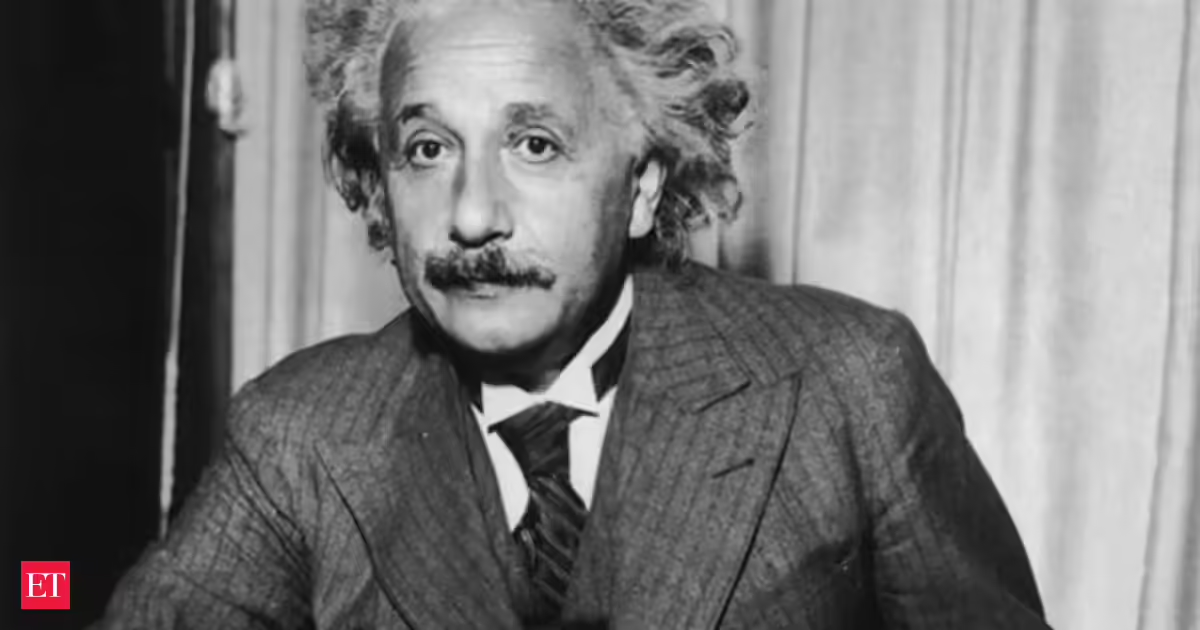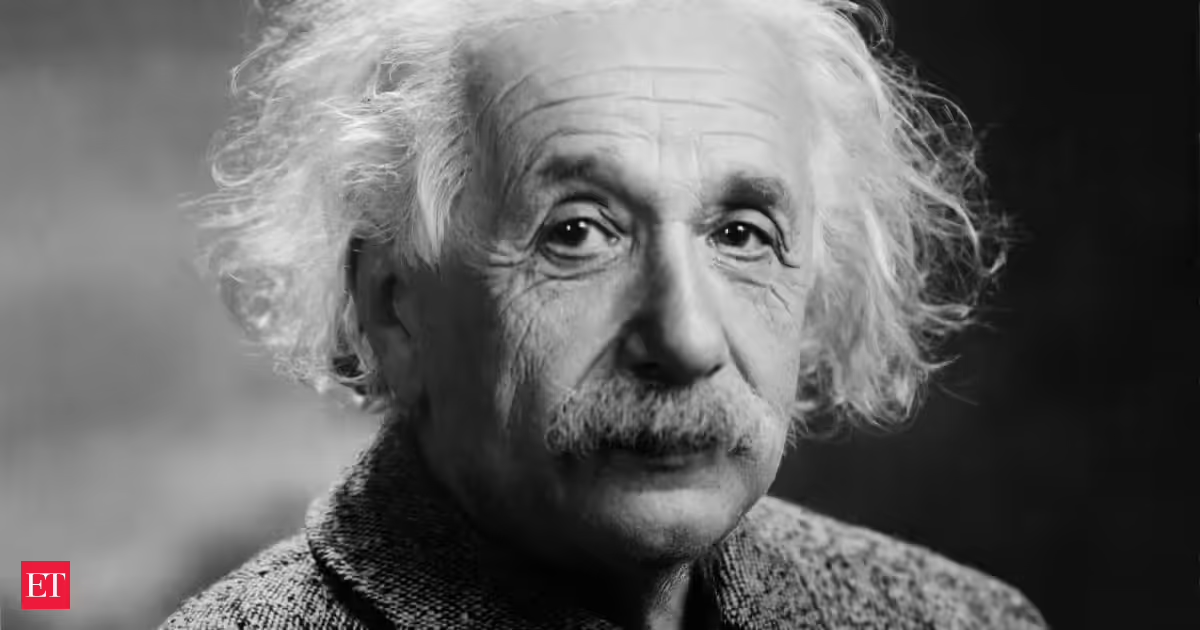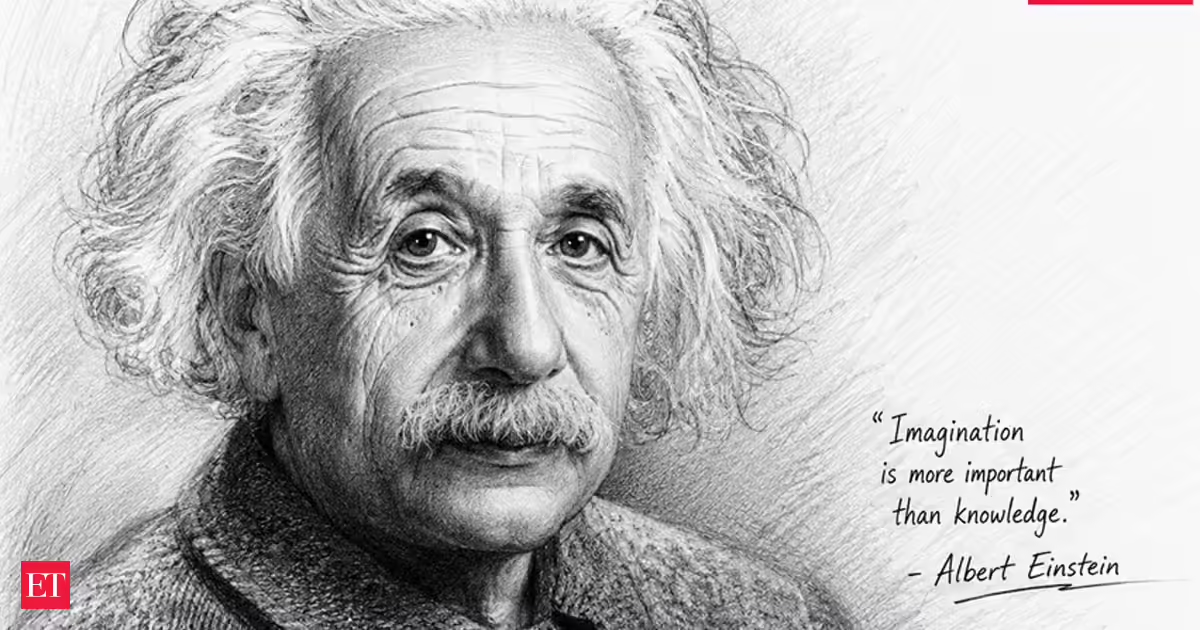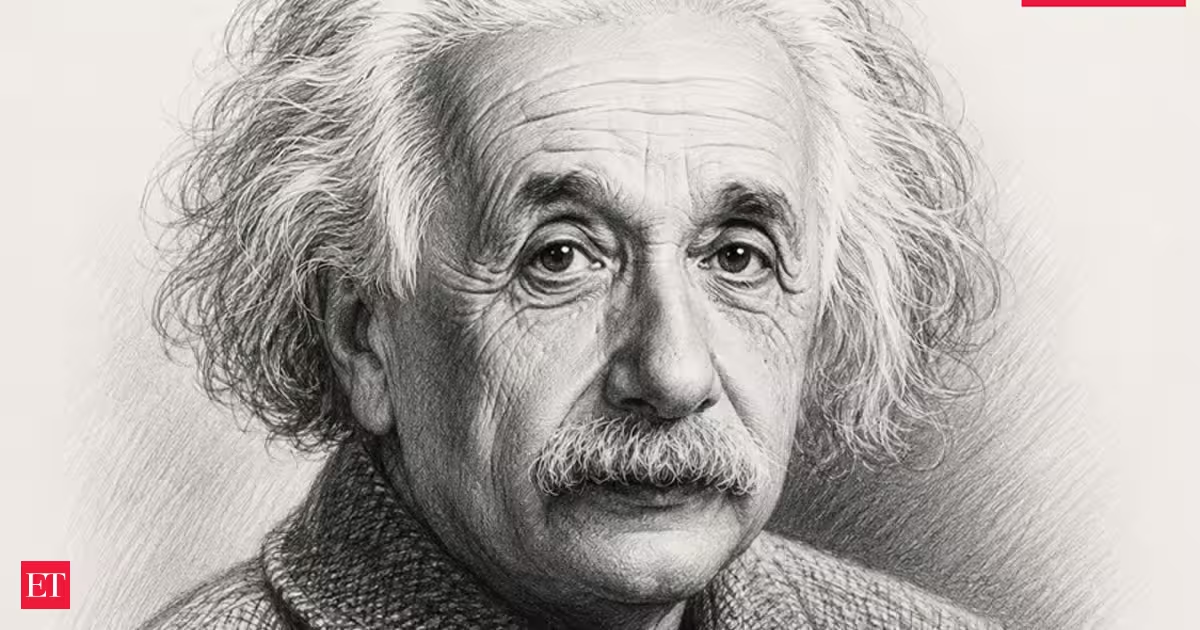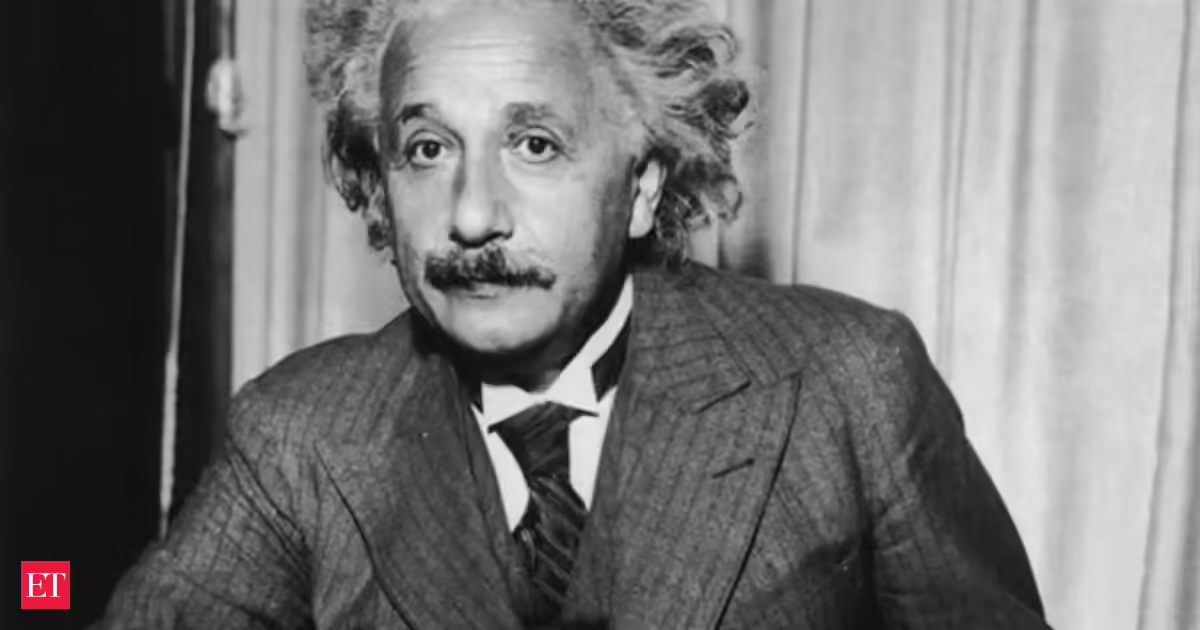
Quote of the day by Albert Einstein brings attention to one of the physicist’s most discussed ideas about human thinking and decision-making. Einstein once said, “The only real valuable thing is intuition.” The statement connects with education, science, creativity and personal growth. Einstein believed that logic and facts are important, but intuition often guides discovery and understanding. His own life reflected this belief. From childhood curiosity to the theory of relativity, Einstein used imagination and deep thought to solve scientific problems. The quote continues to influence students, teachers, researchers and professionals who look for meaning in success, learning and innovation.The quote is, “The only real valuable thing is intuition.” Understanding the meaning behind the quoteAlbert Einstein’s quote, “The only real valuable thing is intuition,” explains the importance of inner understanding and independent thinking. The statement does not reject knowledge or education. Instead, it suggests that intuition helps people connect ideas that are not immediately visible through facts alone.Einstein believed that intuition allowed people to ask new questions. He often relied on thought experiments instead of laboratory equipment. As a teenager, he imagined running beside a beam of light. That question later became the basis of the theory of special relativity.You Might Also Like:The quote also reflects Einstein’s approach toward education. During his school years in Germany, he struggled with a rigid system that focused on memorization and discipline. Teachers often viewed him as different because he questioned authority and preferred independent learning. Einstein later argued that creativity and curiosity mattered more than repetition.For many people today, the quote connects with decision-making in work, education and personal life. Intuition can help individuals recognize patterns, solve problems and make choices when complete information is unavailable.Quote by Albert Einstein and lessons about educationThe quote by Albert Einstein also highlights problems that can exist in traditional education systems. Einstein’s early school experience shaped many of his beliefs about learning.You Might Also Like:As a child, Einstein showed interest in science and geometry. At age five, he became fascinated with a compass because he could not understand the invisible force moving the needle. At age 12, he discovered a geometry book that he later called his “sacred little geometry book.”Even though he excelled in mathematics and physics, Einstein disliked systems that discouraged creativity. One teacher reportedly told him that he would never achieve success. Despite criticism, Einstein continued exploring science through books, discussions and self-study.His academic journey was not easy. He failed parts of the entrance examination for the Swiss Federal Polytechnic School in Zürich. However, his high mathematics scores allowed him to continue his education after completing additional schooling in Switzerland.Einstein’s life lesson for students is clear. Academic setbacks do not always define future success. Curiosity, persistence and original thinking can play a major role in achievement.You Might Also Like:How intuition shaped Einstein’s scientific discoveries?Einstein’s scientific career provides several examples of intuition guiding major discoveries. In 1905, often called his “miracle year,” Einstein published four papers that changed modern physics. These papers explained the photoelectric effect, Brownian motion, special relativity and the equation E = mc².Einstein developed these ideas while working as a clerk at the Swiss patent office in Bern. The job gave him time to think deeply about scientific problems. His approach differed from many scientists of the time. Instead of relying only on experiments, Einstein often imagined situations in his mind. He used thought experiments to understand how space, time and light behaved.His intuition also helped him develop general relativity between 1907 and 1915. Einstein realized that gravity could be explained as the bending of space-time rather than as a force alone.Einstein’s theories later influenced research on black holes, gravitational waves and cosmology. Many scientific discoveries in later decades were connected to ideas he first imagined through intuition and reasoning.Life lessons on human behavior and successEinstein’s quote also offers lessons about human behavior and personal success.One lesson is the importance of curiosity. Einstein remained curious throughout his life. He continued questioning scientific theories even after becoming world famous. He challenged existing ideas about physics and explored subjects like quantum mechanics and unified field theory.Another lesson is resilience. Einstein faced repeated difficulties in his personal and professional life. He struggled to find academic jobs after graduation. His father’s business failed, and he faced rejection from professors. Later, he escaped Nazi Germany because of threats against his life.Despite these challenges, Einstein continued working on science and humanitarian causes. He supported peace movements, civil rights and international cooperation.The quote also teaches people to trust independent thinking. Einstein often disagreed with accepted views when he believed evidence or reasoning pointed elsewhere. His willingness to think differently helped him create new scientific frameworks.For professionals and students today, intuition can support innovation and creativity. While knowledge provides structure, intuition often encourages exploration beyond existing methods.Einstein’s global influence beyond scienceAlbert Einstein became one of the most recognized scientists in history after experiments confirmed his theories in 1919. Reports about the bending of light during a solar eclipse brought him international fame.He later traveled across the world, including visits to the United States, England, Japan and France. In 1921, he received the Nobel Prize in Physics for explaining the photoelectric effect rather than for relativity.Einstein also influenced discussions outside science. He exchanged ideas with thinkers such as Sigmund Freud and Rabindranath Tagore. Their conversations explored war, consciousness and human society.During World War II, Einstein signed a letter urging U.S. President Franklin D. Roosevelt to study atomic weapons after scientists discovered nuclear fission. Although his equation E = mc² helped explain atomic energy, Einstein later supported international controls on nuclear weapons. Einstein spent his later years in Princeton, New Jersey, where he continued working on theoretical physics until his death in 1955.Why the quote remains relevant today?Einstein’s statement about intuition continues to connect with modern life because many people face situations where rules and data alone are not enough. Students use intuition while solving problems and choosing careers. Business leaders rely on intuition during uncertain decisions. Scientists and artists often combine technical knowledge with creative insight.The quote also reminds people that innovation usually begins with questions. Einstein’s success came not only from intelligence but also from curiosity, imagination and the courage to challenge accepted beliefs. Today, his words remain relevant in discussions about education, creativity, leadership and personal growth. The message encourages people to value independent thought while continuing to learn and explore new ideas.You Might Also Like:
Quote of the day by Albert Einstein: “The only real valuable thing is...” Life lessons on human behavior, education and success by popular German-born physicist
Quote of the day by Albert Einstein focuses on the meaning of intuition and how it shapes human behavior, education, learning and success. Albert Einstein believed that intuition helps people think beyond rules and routine methods. His life story, scientific work and personal struggles showed how curiosity and independent thinking guided his discoveries. The quote remains relevant for students, teachers, scientists and professionals who want to understand decision-making, creativity and problem-solving in daily life.
1,067 words~5 min read