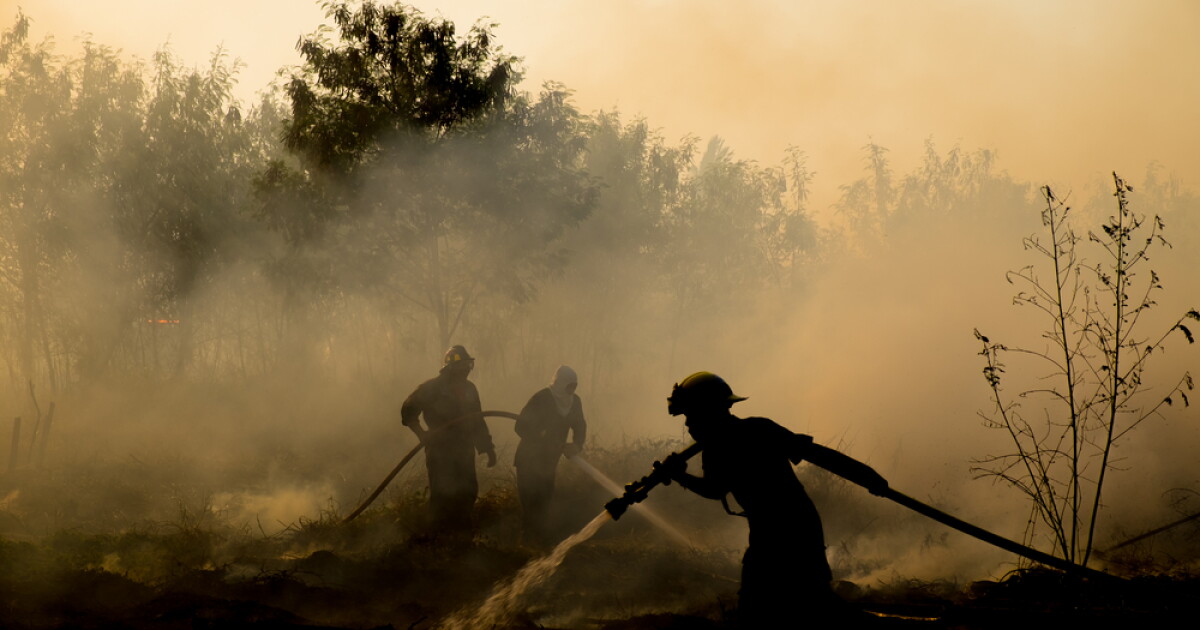
Wildfires have proven to be just as devastating to people, power supplies and the environment as hurricanes and rising seas on the other side of the continent. From heavy infrastructure hardening to disruptive operational shutoffs, utilities must balance competing strategies to combat their escalating threats. This calls for a portfolio-wide approach to asset investment planning that will enable utilities across the globe to accurately quantify risk, optimize spending and defend their wildfire mitigation plans to regulators, stakeholders and the public at large.Wildfires are having profound effects across the globe, whether it be in North America, Australia, Brazil or even parts of Europe such as Spain. As climate patterns shift, extended fire seasons and expanding high-risk zones have exponentially increased the social, financial and regulatory consequences of wildfire events. With citizen lives and often billions of dollars at stake, state and provincial regulators are putting mounting pressure on utilities to make risk-based investment decisions to halt the damage. Utilities must act with speed, transparency and unprecedented accuracy.The Complexity of Capital AllocationUltimately, modern wildfire mitigation is a profound capital allocation challenge amid the risk of extreme threat uncertainty. Traditional approaches to mitigate the effects of wildfire disruption on electricity grids using basic inspection cycles and static maintenance schedules are no match for the devastation that wildfires cause.Wildfire mitigation has evolved into a highly complex, capital-intensive investment decision that must be rigorously defensible to regulatory commissions and stakeholders at every level — not to mention make financial sense for the utilities themselves.Utilities are forced to choose between a diverse array of mitigation options, depending on regional priorities and localized threats. These range from heavy capital physical upgrades, such as system-wide undergrounding and installing covered conductors, to disruptive operational interventions, such as Public Safety Power Shutoffs (PSPS).Decisions must be made and justified to regulators, stakeholders and the public in general.The Scale of Mitigating Wildfire Risk in CaliforniaIn California, for example, as part of the utility’s mitigation plan, Pacific Gas and Electric (PG&E) intends to underground 1,900 miles (3,057 kilometers) of power lines by 2027 and 5,000 miles from 2028-37. Other fire mitigation efforts include clearing 4.4 million trees, as well as installing more than 1,600 weather stations and 700-plus high-definition cameras with artificial intelligence capability.During wildfire awareness month in California in May, PG&E unveiled a Continuous Monitoring Center in San Ramon. The center pulls data from more than 5.5 million sensors across the grid. Machine learning models scan that data continuously, looking for patterns that often show up before equipment fails, outages occur or fires start.Protecting Hawaii From Island Wildfire ThreatsMeanwhile, Hawaiian Electric is projecting nearly $500 million in wildfire mitigation spending over the next three years after state regulators approved its 2025-27 wildfire mitigation plan. Hawaiian Electric projects about $60 million to install covered conductors on roughly 56 miles of overhead lines on Oʻahu, Maui and Hawaii Island by the end of 2027, at an average cost of about $1.1 million per mile.Vegetation management and inspections account for another $41.5 million, while asset inspections and repairs total about $54.7 million over the three-year period. The company also forecasts $28 million for situational awareness tools, including weather stations, cameras and monitoring systems.Measuring Risk, Cost, Speed and PerformanceThe primary hurdle for utility leaders is not simply identifying where the highest ignition risk lies, but determining exactly how to allocate limited capital across these competing priorities to minimize total enterprise exposure. And of course, every intervention strategy carries vastly different implications for risk reduction, cost, deployment speed and long-term grid performance.But critical risk, asset and financial data often remain fragmented across different departments, severely limiting a utility's visibility into where a specific investment will actually reduce the most risk.Digital Tools to Transform Risk Into a Plan of AttackIt’s all about being able to understand risk, and the digital tools are now there to help guide senior leaders and tactical teams to ensure they avoid exposing their organizations to unacceptable risks. It requires a shift toward a portfolio-based planning approach, using asset investment planning tools that help organizations move away from evaluating mitigation on an isolated, single-project basis and toward comprehensive, asset-wide optimization.Instead of subjectively asking which individual line needs to be hardened first, all portfolio assets and mitigation options are assessed together so the investments delivering the greatest tangible risk reduction become mathematically clear.Here are four key areas where asset investment planning tools are helping utilities fight back against wildfire threats.1. Turn Wildfire Risk Data Into Investment PlansUtilities possess valuable wildfire risk data, but they often struggle to convert that intelligence into defensible, investment-grade decisions. They face the complex challenge of determining exactly where ignition risks are highest, understanding the financial and safety consequences, and deciding how to allocate limited capital for maximum impact. Asset investment planning tools resolve this by transforming vendor-agnostic risk data into a financially quantified expected loss. By integrating this intelligence with asset attributes, intervention costs and capital constraints, the platform optimizes investment decisions to deliver the greatest risk reduction per dollar spent, resulting in a transparent, regulator-ready mitigation program.2. Maximize Risk ReductionTo achieve the highest return on investment, utilities must navigate an overwhelming number of variables, balancing numerous intervention options against strict financial and regulatory constraints. Asset investment planning tools utilize an advanced optimization engine that carefully evaluates thousands of potential intervention combinations across different assets, budget scenarios and time horizons. This deep analytical capability generates a transparent, portfolio-level plan designed to explicitly maximize risk reduction while aligning with the utility's financial limits.3. Quantify the Cost of Action and InactionWildfire mitigation decisions are incredibly complex because they extend far beyond standard physical asset upgrades. Disruptive operational measures, such as PSPS, carry heavy financial, reputational and community impacts that must be weighed directly alongside infrastructure investments. Asset investment planning software enables utilities to carefully evaluate these complex trade-offs between heavy, capital-intensive mitigation strategies and immediate operational interventions, allowing organizations to mathematically quantify both the true cost of taking action and the cost of doing nothing.4. Put Risk Reduction and Investment Impact on the MapUtilities need an effective way to convey complex asset-level risks and investment impacts to a diverse group of stakeholders who require clear geographic context to understand the data. With two-way mapping and spatial data analytics technology embedded in asset investment planning software, stakeholders are able to visually explore asset-level risks and the impacts of specific investments directly within their geographic context. This spatial visualization drastically strengthens communication and alignment across technical teams, executives, regulatory bodies and local communities.Defensible, Data-Driven Wildfire Mitigation DecisionsA portfolio-based planning approach supports confident, defensible wildfire mitigation by evaluating every investment through a consistent, risk-driven framework so utilities can defend their decisions. Only then can they more confidently prioritize projects, justify expenditures and demonstrate that every investment contributes to reducing wildfire risk.Jeff Pauska is vice president of product management at IFS Copperleaf, a leading global enterprise software company. The views expressed in this article are those of the author.
From Wildfire Risk to Resilience for Power Grids
In this opinion piece, IFS Copperleaf’s Jeff Pauska examines how digital tools can help utilities meet the wildfire challenge.
1,153 words~5 min read