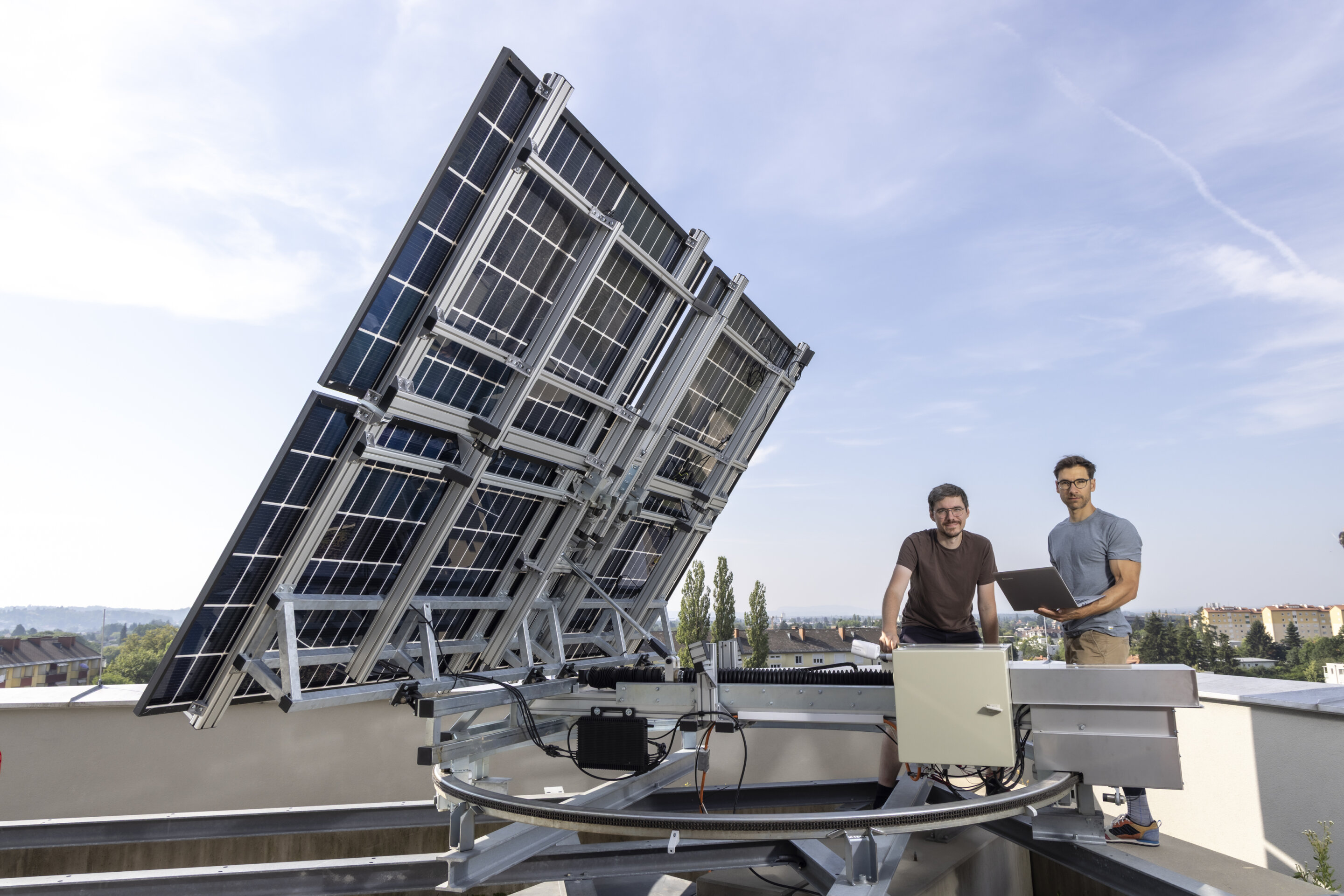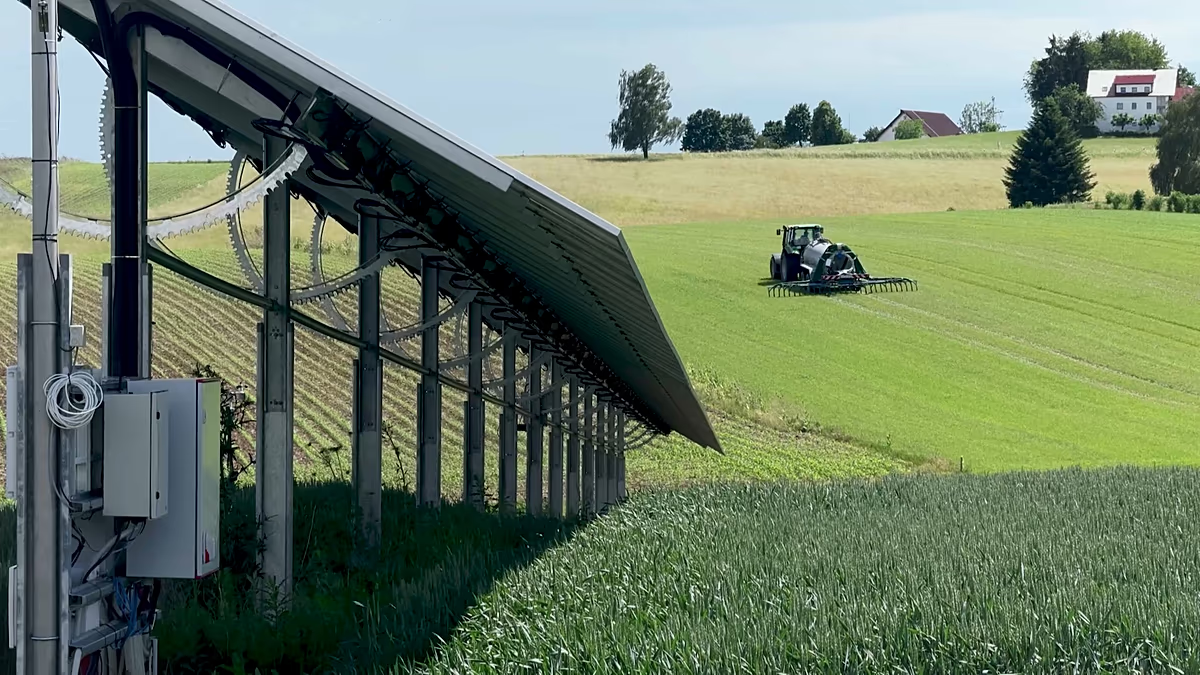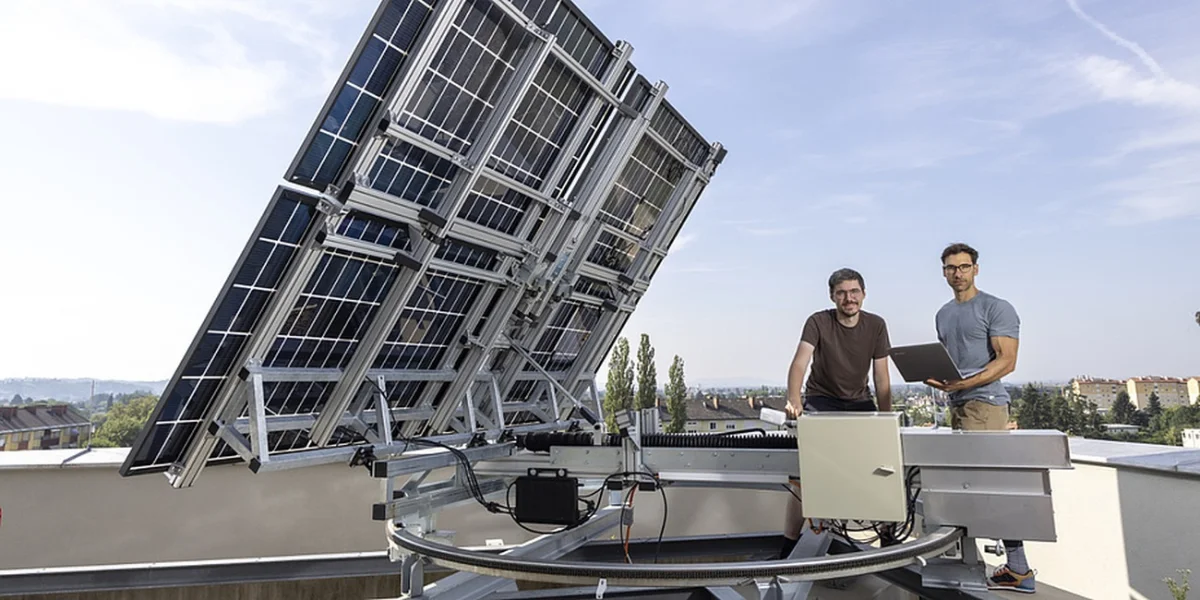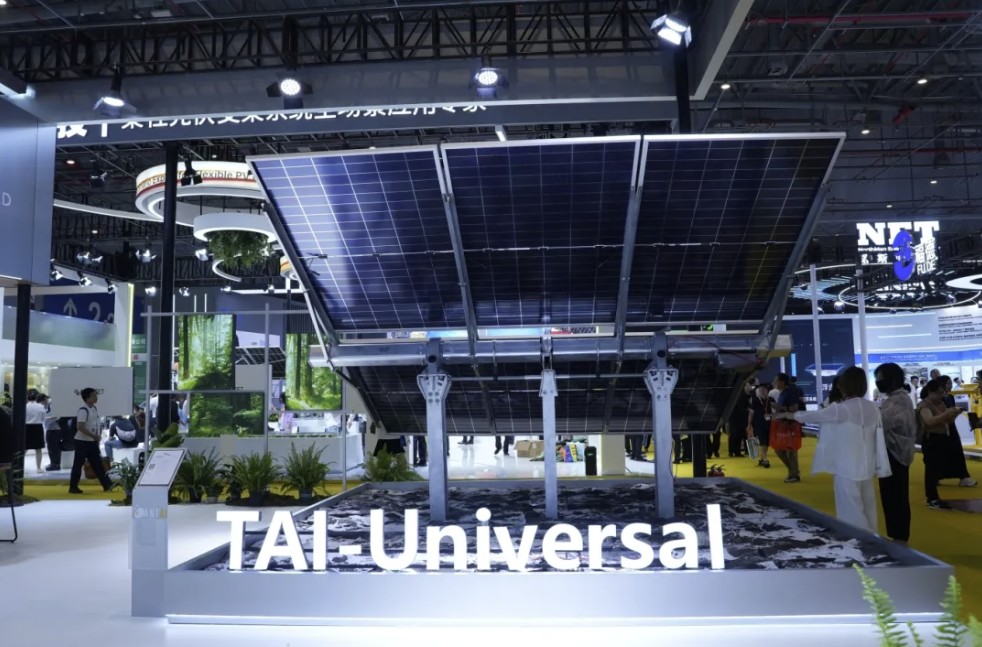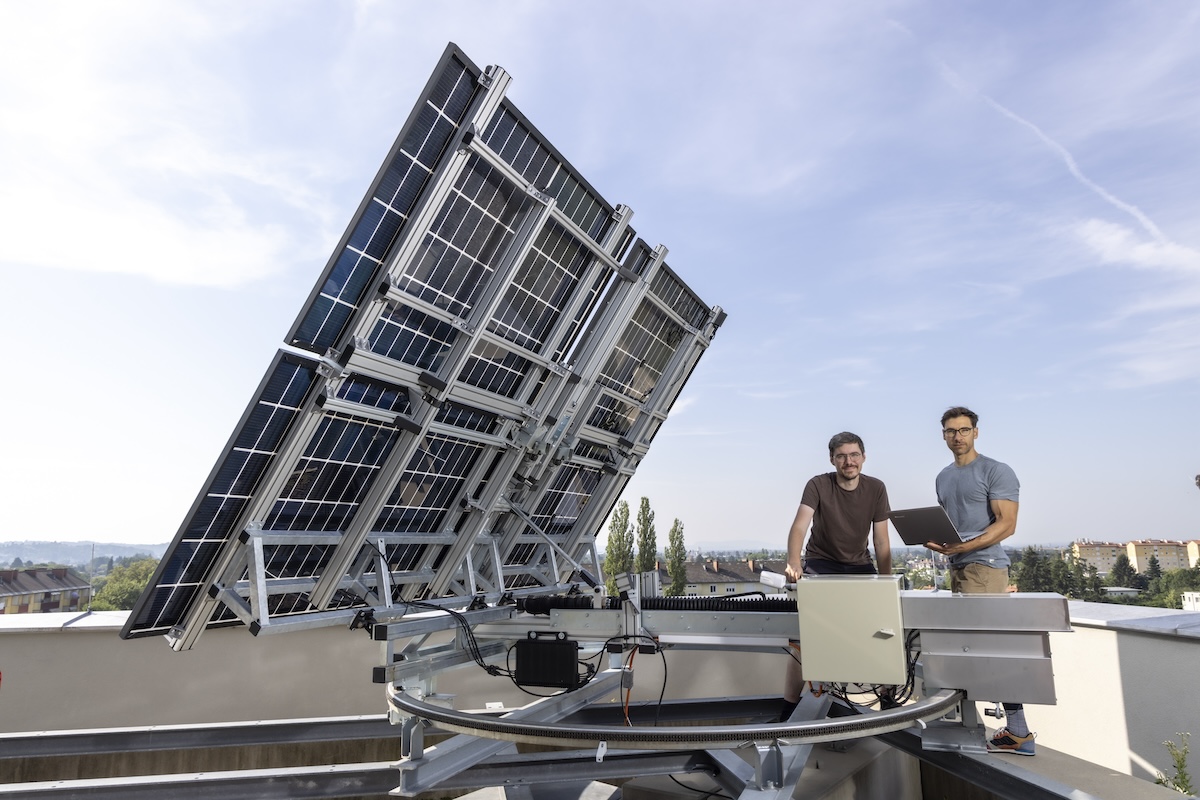
TU Graz researchers have developed FLAPTrack, a dual-axis solar tracker that combines higher PV yields with automated weather protection by folding modules flat during storms. The system aims to make dual-axis tracking economically viable again, with reported yield gains of up to 40% compared with fixed-mount installations.
A research group at TU Graz’s Institute of Electrical Measurement and Sensor Systems in Austria is seeking to revive a photovoltaic concept long considered obsolete: dual-axis solar tracking.
Due to significantly higher specific yields, dual-axis tracking was once a proven approach, including for large-scale ground-mounted PV arrays until the early 2000s, when module prices were considerably higher. However, as costs declined, the additional expense of wind-resistant mechanical structures became increasingly difficult to justify against the incremental energy gains. Today, single-axis trackers, which offer simpler and more robust designs, dominate the tracking market, while fixed-tilt mounting systems are used almost exclusively for smaller installations.
The system developed at TU Graz, called FLAPTrack, aims to challenge this trend. The acronym stands for “Face-to-Face Lay-Down Anti-Degradation Protection,” reflecting the system’s main features: higher energy yields combined with enhanced module protection.