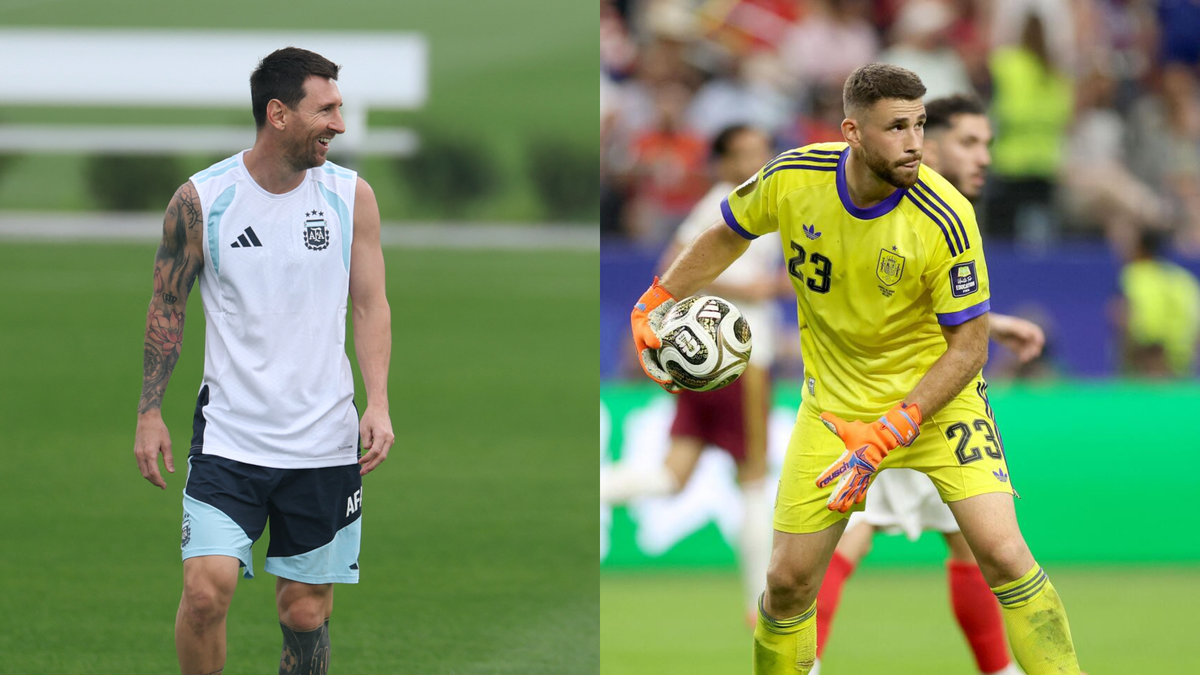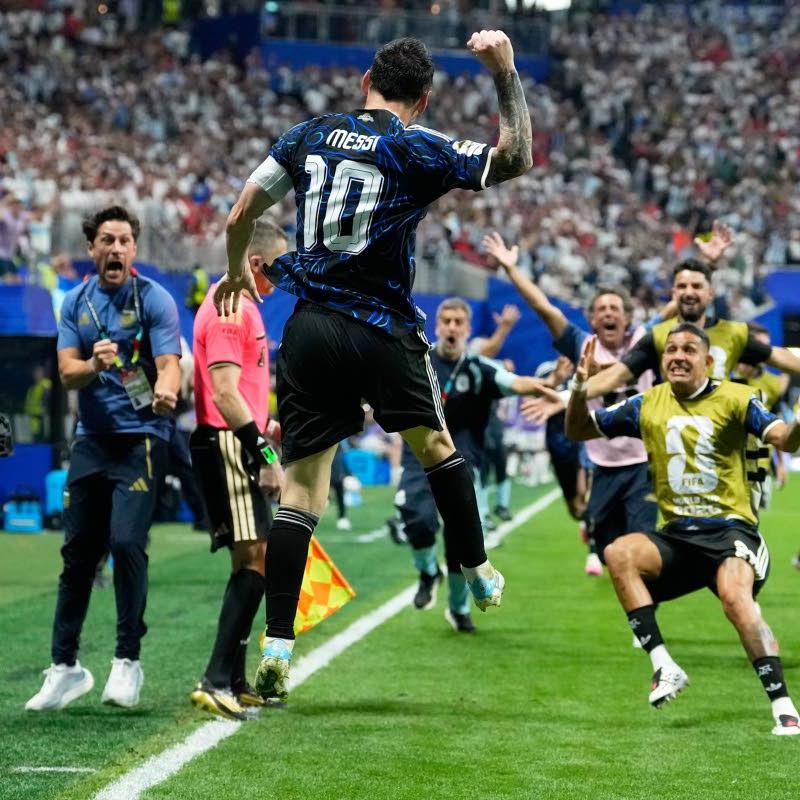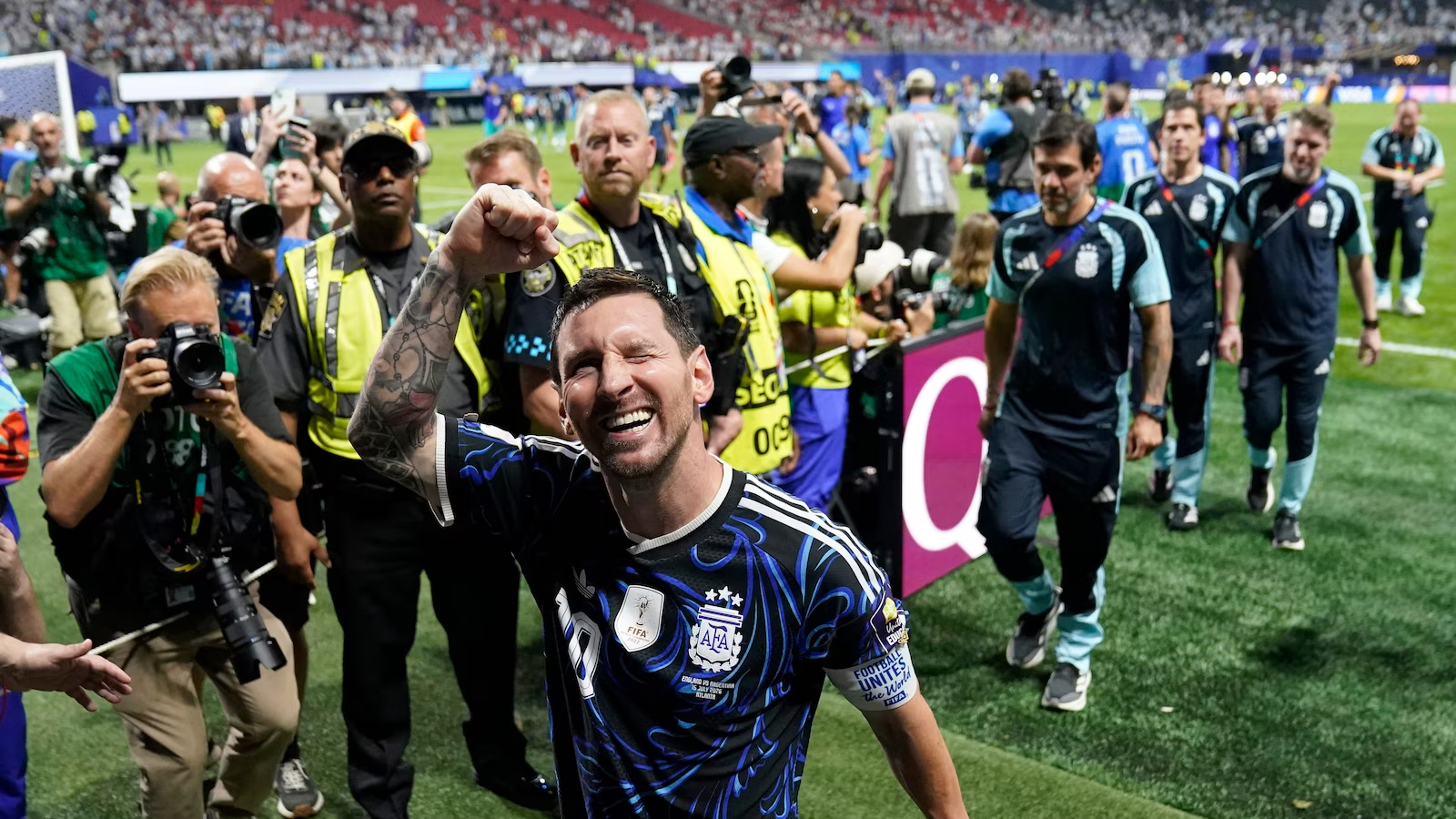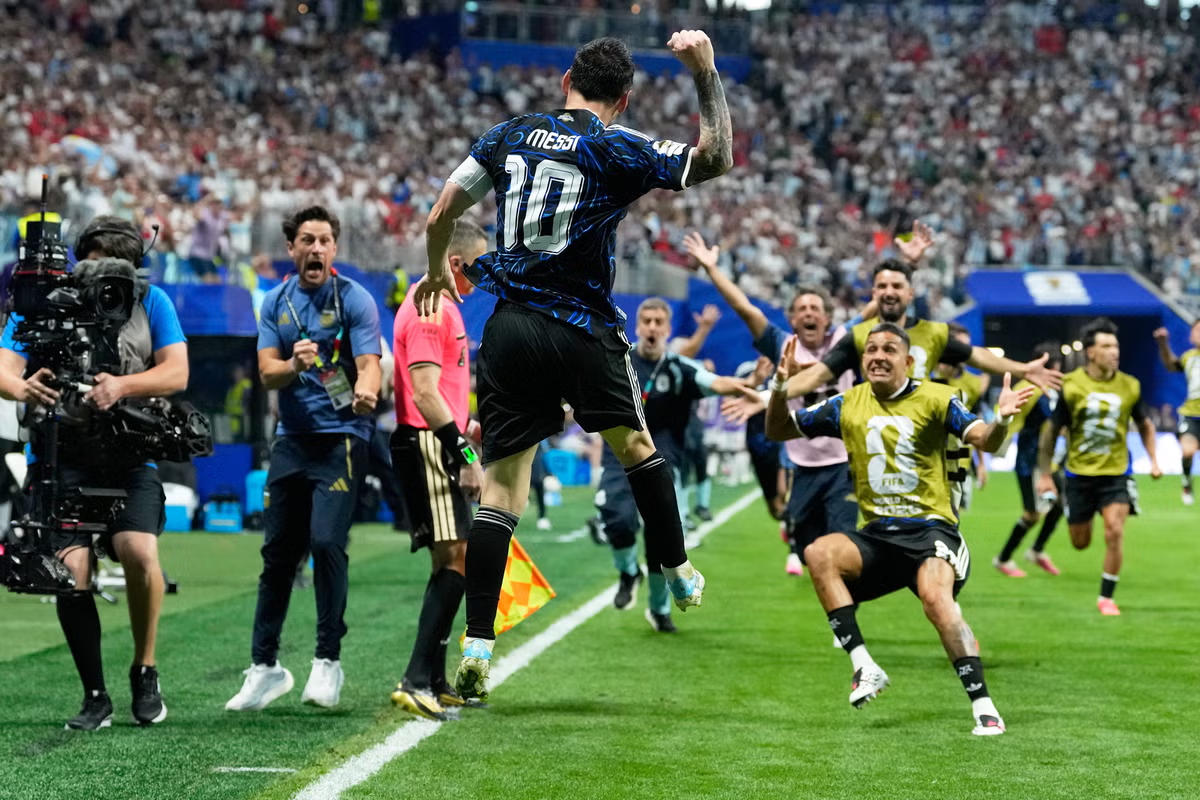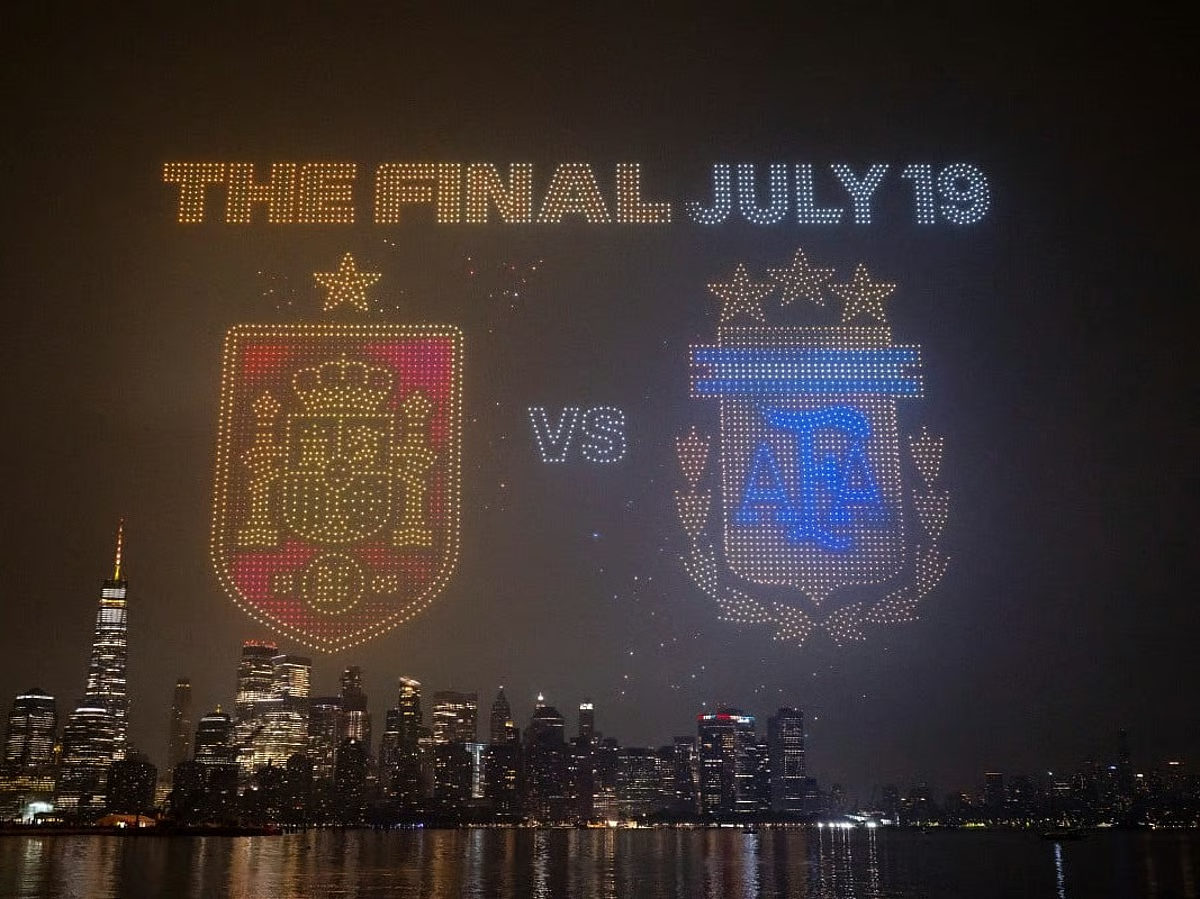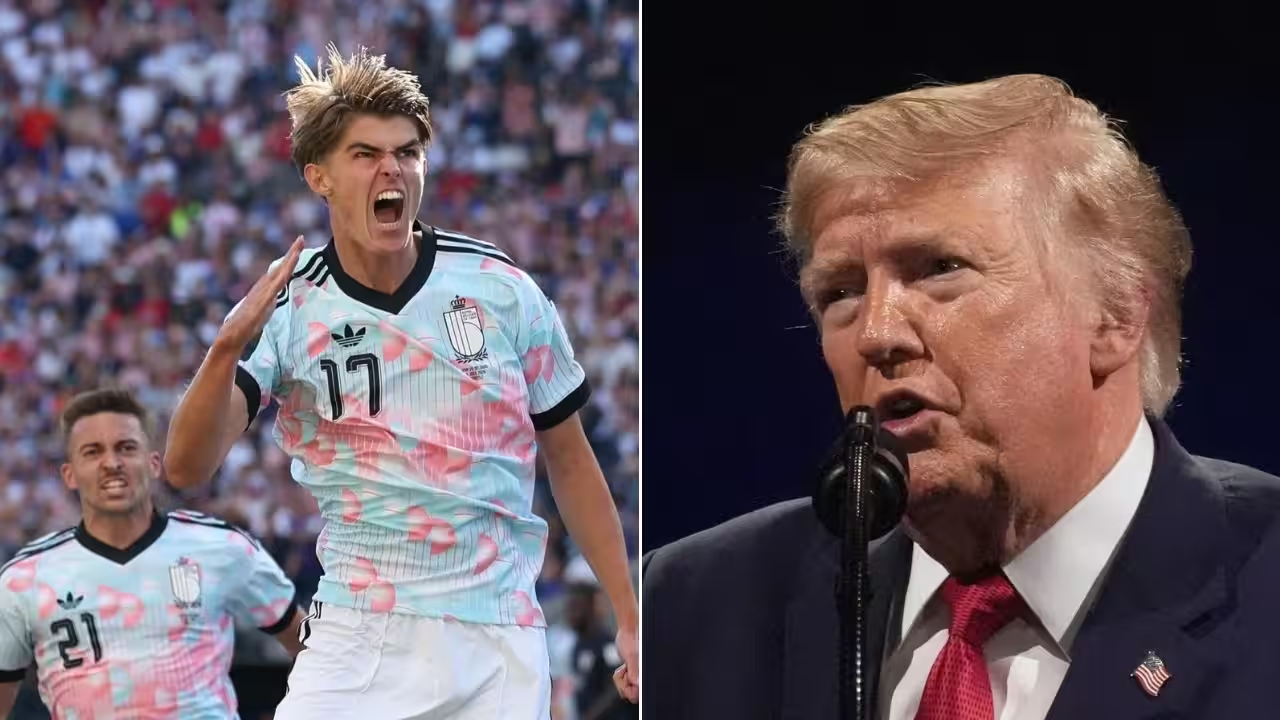
Photo/AgenciesThe best offense vs the best defense. The World Cup final is set, and fittingly, it will bring together two teams built in completely different ways. Lionel Messi and defending champions Argentina, the highest-scoring team in the tournament, will face Spain, whose defensive record has been the foundation of their run to Sunday's final in East Rutherford, New Jersey.Spain reached the title clash after beating France in Tuesday's semifinal, while Argentina came from behind, once again, to defeat England 2-1 on Wednesday and book their place in another World Cup final.Before the final kicks off, here is a look at five of the biggest controversies of the 2026 FIFA World Cup.Balogun freed to play for the USOne of the biggest controversies of the tournament came before the United States' round-of-16 clash against Belgium in Seattle.On the eve of the match, The Athletic reported that US striker Folarin Balogun had been cleared to play despite receiving a red card in the previous round against Bosnia and Herzegovina.FIFA's decision followed an intervention involving US President Donald Trump, government officials, US Soccer and a legal team, leading to accusations that political influence had affected a World Cup disciplinary decision.FIFA later said the ruling had been taken by an independent disciplinary committee, but it has not explained why Balogun's suspension was lifted or acknowledged any refereeing error.Belgium formally objected to the decision, saying it had "no alternative but to challenge (Balogun's) eligibility for the upcoming match."USA, the world cup co-host, at war with IranThe geopolitical situation between the United States and Iran cast a shadow over the tournament.The US is one of the World Cup co-hosts, while Iran were scheduled to play group-stage matches on American soil.Iran's campaign was affected by several logistical issues, including visa restrictions. The team based its training camp in Mexico and flew into the United States only for matches under strict travel arrangements.Frustrated by the situation, Iran coach Amir Ghalenoei described his squad as the "most oppressed team in the whole World Cup."VARVAR found itself at the centre of controversy during the tournament, with one of the biggest disputes coming after Egypt's dramatic 3-2 defeat to Argentina in the round of 16.Egypt looked on course for one of the tournament's biggest upsets after taking a 2-0 lead with 11 minutes remaining, only for Argentina to score three late goals.The controversy centred on a goal scored by Egypt's Mostafa Zico in the 62nd minute. The strike, which would have doubled Egypt's lead, was ruled out after a VAR review identified a foul by an Egyptian player during the build-up.Coach Hossam Hassan and captain Mohamed Salah both expressed disappointment after the match, while several former players and television pundits also questioned the officiating.Hydration breaksFor the first time in World Cup history, FIFA introduced mandatory three-minute hydration breaks in both halves of every match, effectively dividing games into four periods.The breaks allow coaches to speak to players during each half and give teams another opportunity to change momentum. They were also introduced to help players cope with high temperatures, particularly at open-air venues.FIFA president Gianni Infantino said the decision was "purely a sporting matter", insisting the governing body gains "absolutely nothing" financially from the change.However, the breaks were implemented in every stadium, including venues with climate control, allowing broadcasters to sell additional advertising slots during both halves.The move changed the traditional flow of football matches and drew criticism from several leading figures in the game.Uruguay coach Marcelo Bielsa said the idea of dividing football into quarters instead of halves "adds nothing and takes away a lot", while England manager Thomas Tuchel said the additional stoppages change the "identity" of the sport."For the neutral watchers on TV, it's not great," Netherlands defender Virgil van Dijk said. "So, if it's really hot, obviously it would be good to put them in, but I think you have to look at it in every game separately."Did a Skycam help England beat Norway?England's quarter-final win over Norway produced another unexpected controversy.Former Norway international Alf-Inge Haaland, father of Erling Haaland, questioned both Jude Bellingham's match-winning display and the officiating on social media.The debate centred on England's equaliser in the 2-1 victory.Television footage appeared to show Norway goalkeeper Orjan Nyland's goal kick striking the Skycam suspended above the pitch before dropping to England midfielder Elliot Anderson.Anderson quickly found Anthony Gordon, who set up Bellingham to score.Norway coach Stale Solbakken was visibly frustrated with referee Clement Turpin at half-time, while Nyland pointed towards the suspended camera in protest. Erling Haaland also gestured towards it."Just before the goal, the ball hits the cable with the camera on it, causing it to change direction and fall shorter than it should have," Norway assistant coach Kent Bergersen told TV2 at half-time. "The referee should have spotted that."There's nothing we can do about it now. We'll just have to grit our teeth and get on with it."FIFA later said the ball chip technology used throughout the tournament in the United States, Canada and Mexico did not detect any contact with the suspended camera system. According to its data, there was no sensor reading indicating the ball had struck anything while in flight.
Trump, VAR to Skycam: Before Argentina vs Spain final, a look at five biggest FIFA World Cup 2026 controversies
The best offense vs the best defense. The World Cup final is set, and fittingly, it will bring together two teams built in completely different ways.
858 words~4 min read