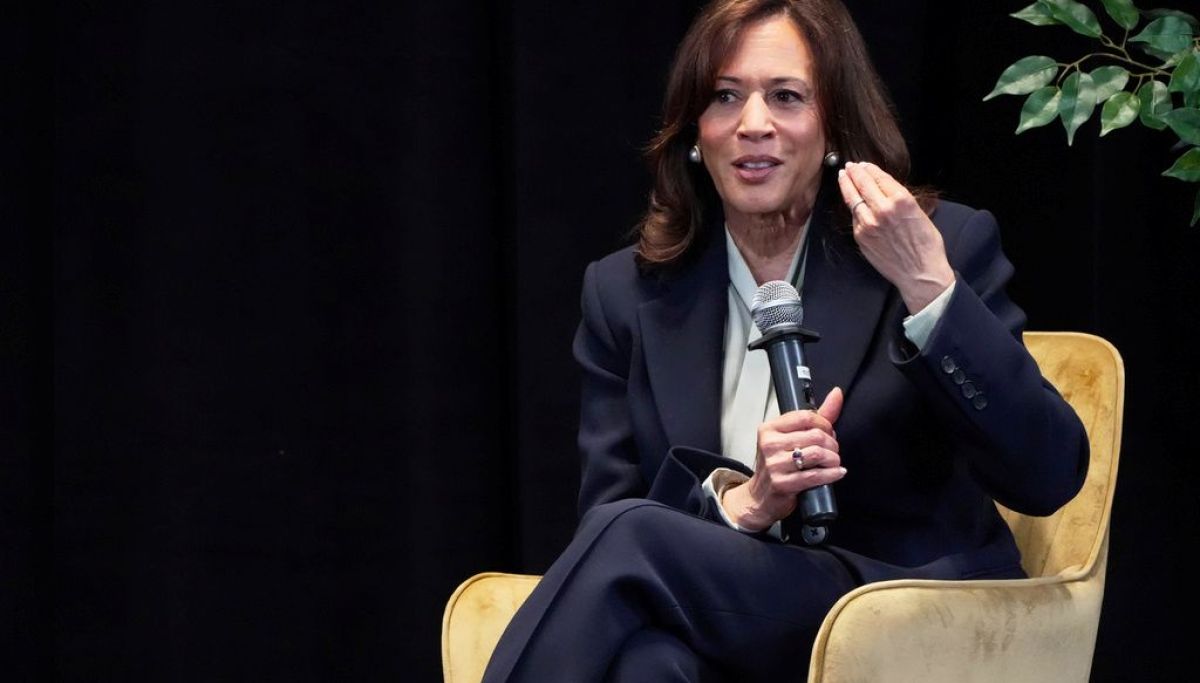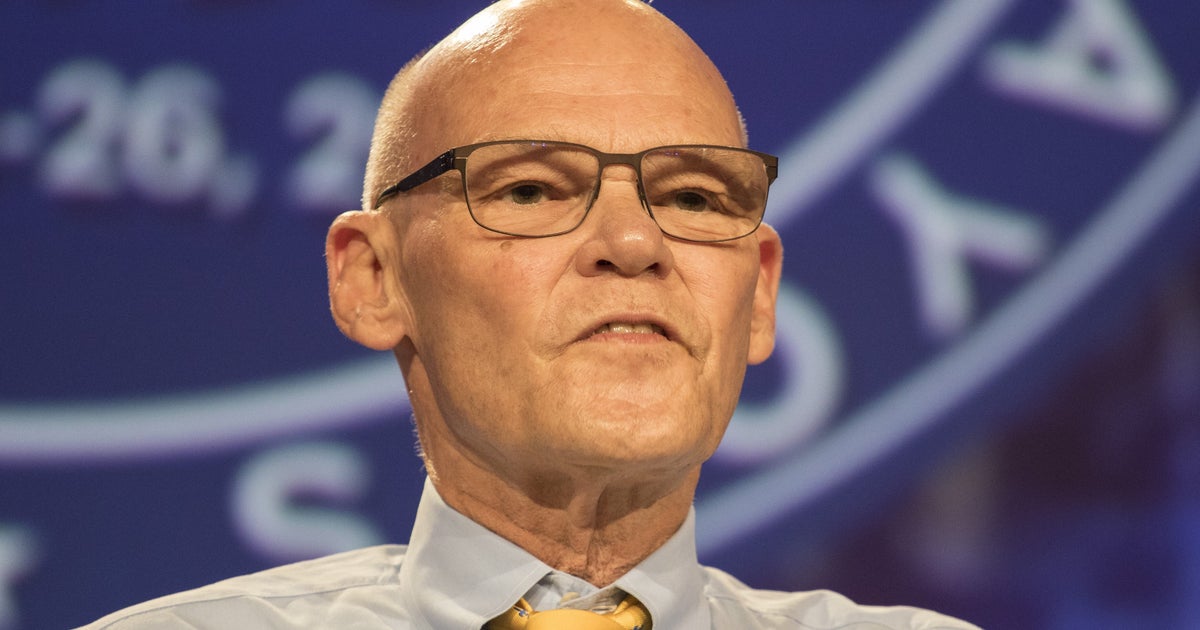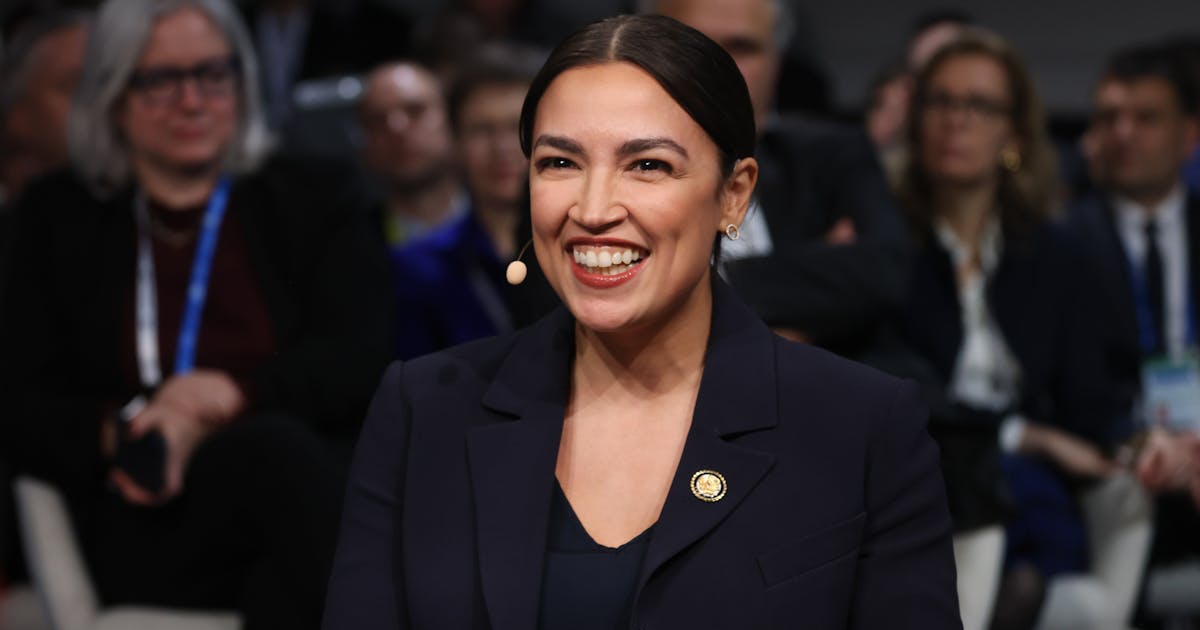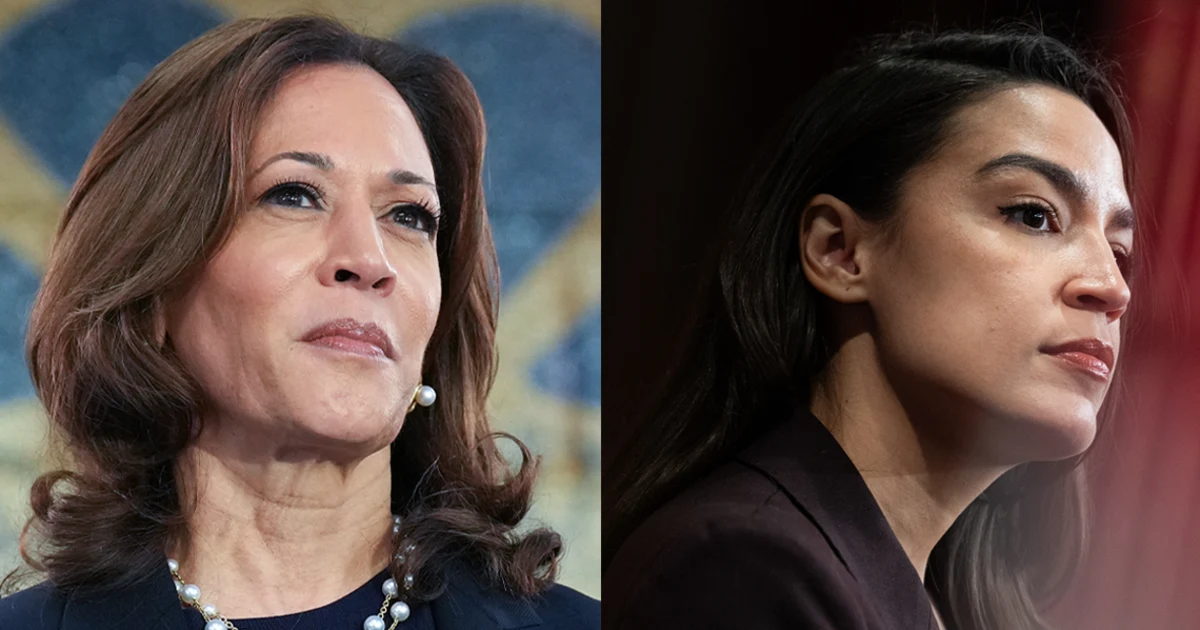
It’s an odd moment for the Democratic Party—and thus for those Americans who, stuck in a two-party system, are depending on it for a route out of the mess that is now Washington. New polling shows that the Democrats are ahead on the midterm “generic ballot,” and stand to do at least as well in the House of Representatives as they did in 2018, when they won back control of that chamber, gaining a net total of forty-one seats. (They need to be doing well, since partisan redistricting seems likely to set them back ten seats.) But, at the same time, polls show that Americans are even less satisfied with the Democrats than they are with the Republicans, and the Democratic Party itself is threatening to cleave. Following the recent win for Zohran Mamdani’s choice of democratic-socialist primary candidates in New York City, James Carville, Bill Clinton’s former campaign strategist, said, of one of the winners, that this is “not who we are,” and the former Democratic National Committee chair Jaime Harrison tweeted, “If you hate the Democratic Party, then please don’t run for our nomination. Don’t use our resources.” Third Way, a “centrist” advocacy group, is apparently planning a big campaign against the Democratic Socialists of America, the political home ground of Representative Alexandria Ocasio-Cortez, even though polling also shows that “socialism” is remarkably popular with Democratic voters—but perhaps not so surprisingly, given that America’s premier democratic socialist, Senator Bernie Sanders, is also its most popular politician currently in office. And then there’s Graham Platner, the progressive turned anchor dragging down the Democrats’ Senate hopes in Maine. All this kerfuffle may not prevent a win for the Democrats in the midterms—Trump’s historic unpopularity means that many people will turn out just to vote against him. But pulling the country from the authoritarian reflecting pool into which it has fallen will take at least the election after that, the Presidential election in 2028. And winning the reforms that matter (a non-weaponized Supreme Court, for instance) might take a number of years after that. Each will require a Democratic Party more or less at peace with itself, and one that recognizes its need for both some coherence and some flexibility.You can feel significant figures in the Party trying to guide it in this direction. In May, for instance, Maryland’s Chris Van Hollen, the former head of the Democratic Senatorial Campaign Committee, argued in an opinion piece for the Times that, on the divisive issue of American support for Israel, all Democratic Presidential candidates should make it clear that they will recognize a Palestinian state. “Primary voters won’t trust any Democratic presidential candidate who does not have a record of moral and strategic clarity on these issues,” he wrote.There are, however, limits to the impact of particular policy positions—who knows what firestorm will flare up during the next campaign? So it’s also worth imagining whether there are some structural ways that the Democrats could signal their seriousness about uniting, and their commitment to an alliance in the long term. Here’s one idea: candidates for President should consider naming, and campaigning with, their Vice-Presidential pick from Day One.Imagine this scenario (and feel free to substitute in other names). Say that, a few months after the midterms, Governor J. B. Pritzker, of Illinois, strides to a lectern in Springfield to announce a run for the White House, with the usual bunting and copious references to Abraham Lincoln, but standing with him is Alexandria Ocasio-Cortez. He says that, since he would turn sixty-eight by the end of his first term, and since there is a clear desire among Americans for younger leaders, it makes sense for him to plan on serving just one term, and then to support the Vice-President for a run in 2032. She says that, since she’s short on executive experience, as opposed to legislative experience, it would be a logical step to spend four years as Vice-President—and that she’ll still only be forty-three on Inauguration Day in January, 2033.This plan seems as if it could accomplish any number of useful things. It signals that the candidates’ primary campaign would center on broad areas of agreement that unite centrists and progressives, rather than on the things they might contest: both are against authoritarianism and for action to broaden access to health care; both support more affordable homes and lower electric bills; both are eager for a transition to clean energy; and both are keenly focussed on community college as a key part of building a workforce for the future. In truth, the divisions between the various factions in the Party are not as deep as sometimes imagined—if you look closely, Joe Biden was a very Bernie President, determined to use large-scale government action to transform the economy. But there are also real differences in both style and emphasis, and this would be a way to bridge them—to announce, in short, that these views are not too disparate to animate the same Administration. Call it a government of Democratic unity.At the same time, if it worked, it would signal that the Party would be behind these goals for the long haul, that it understands it will take time to get them done, but that it is committed to keeping up the effort—and that would project a kind of maturity that’s been lacking from our personality-driven politics. It’s a little closer to the European model, in which the parties themselves stand for very specific platforms that extend beyond election periods. American politics has been much too ego-driven in recent years: it’s been Bill or Barack or Joe—and now, of course, it’s Donald Donald Donald. Making the Democratic Party vision driven, instead, and making that vision both sharp and broad, might stop the pendulum swinging as crazily as it has of late. Americans might be open to the idea of a more coöperative, less chaotic politics after the Trump years.Vice-Presidential candidates have tended to be afterthoughts in past elections, added to the ticket at the last minute to bring a boost in enthusiasm (and, actually, a fairly minimal one, the polling would indicate); this change in strategy could produce the opposite effect. And, by campaigning together longer, the candidates could bring each other real advantages. To return to our example: Pritzker is a fairly logical candidate for President—he’s been an effective and well-liked governor of a Midwestern state, someone who has resolutely stood up to Trump while attending to the needs of his constituents. (I follow Pritzker’s Bluesky feed, and there are lots of pictures of him with shovels breaking ground on things. He’s also won a ban on assault weapons, protected reproductive rights, and passed on-time budgets that have raised Illinois’s credit rating.) However, he’s a billionaire, which is enough to set him back with some portions of the Democratic base, and he’s a longtime supporter of Israel, though he broke with AIPAC some years ago and has been consistent in his criticism of the Netanyahu government.A.O.C. takes the tarnish off those potential electoral weak spots; no one is going to jeer at Pritzker for his wealth if she vouches that he’s committed to the needs of the working people that she’s descended from. Meanwhile, A.O.C. is popular with the base and beyond; she increasingly reads as politically savvy. But, in America, her ideology (self-professedly socialist), gender, and ethnicity might make some Democrats nervous to nominate her straight up, and it would be a potent line of attack to point out that she’s never actually run anything—that she went to Congress before she was thirty. Pritzker—a white guy currently cruising to reëlection with high marks for handling infrastructure and education—smooths those wrinkles. There are trade-offs, of course—there will doubtless be a certain number of people who like Pritzker but can’t abide Ocasio-Cortez, and vice versa. And as for their own individual ambitions, who knows—maybe A.O.C. thinks she can win it out of the gate this time around and doesn’t want to take a chance on Pritzker cratering in the primary (or in office, for that matter, dooming his appointed successor). Maybe Pritzker wouldn’t want to be a lame duck from the jump. We’re used to the system we have; there will always be doubts about even small shifts like this.But this is the year to try something new: as best as I can tell, most Democrats, as opposed to Democratic pundits, are in a malleable mood, understanding that the priority is to take power and use it to make change: A.O.C. has said straight up in recent weeks that she’s more interested in winning on issues than in winning office, so she and her followers might well subordinate their immediate hopes for the top office. Of course, Pritzker and Ocasio-Cortez would actually have to like each other for such a thing to work, and I have no idea if they do. And their staffs would have to like each other, too, and to learn to work together on the trail (which would lead to actually working together in office). And everyone would have to temper their ambitions. But tempered ambitions, ideological coherence, some sense of programmatic consistency over time—the attractions seem to outweigh the disadvantages. Now’s the time for the Party to think about it—potential pairings have a little time to court one another—and to start talking themselves into the idea that this could be rewarding and even kind of fun.The idea is to build a party that manages to unite (and to do so more than grudgingly) across its various wings, much as the opposition in Hungary did to defeat Viktor Orbán and now, hopefully, to stamp out Orbánism. But the primary process as currently constituted simply exacerbates the strains between the progressive and the establishment wings of the party—candidates position themselves in debates to see who occupies the various ideological “lanes,” and contests come down to a test of strength. Can the Bernieites beat the Clintonites and the Bidenites? Not quite, it seems, in large part because enough voters intuit that a progressive might win the nomination only to lose the general election—and yet the energy of the Party is probably more concentrated in its younger, lefter wing. This ongoing divide is a recipe for frustration at best and unthinkable defeat at worst. There doesn’t seem to be any structural barrier to telling the American people in advance whom your Vice-President might be, and it would open the door to the idea that change is afoot—but change in the direction of a new and welcome stability. ♦
A Radical Proposal for the Democrats in 2028
Presidential candidates could consider naming, and campaigning with, their Vice-Presidential pick from Day One, Bill McKibben suggests.
1,755 words~8 min read