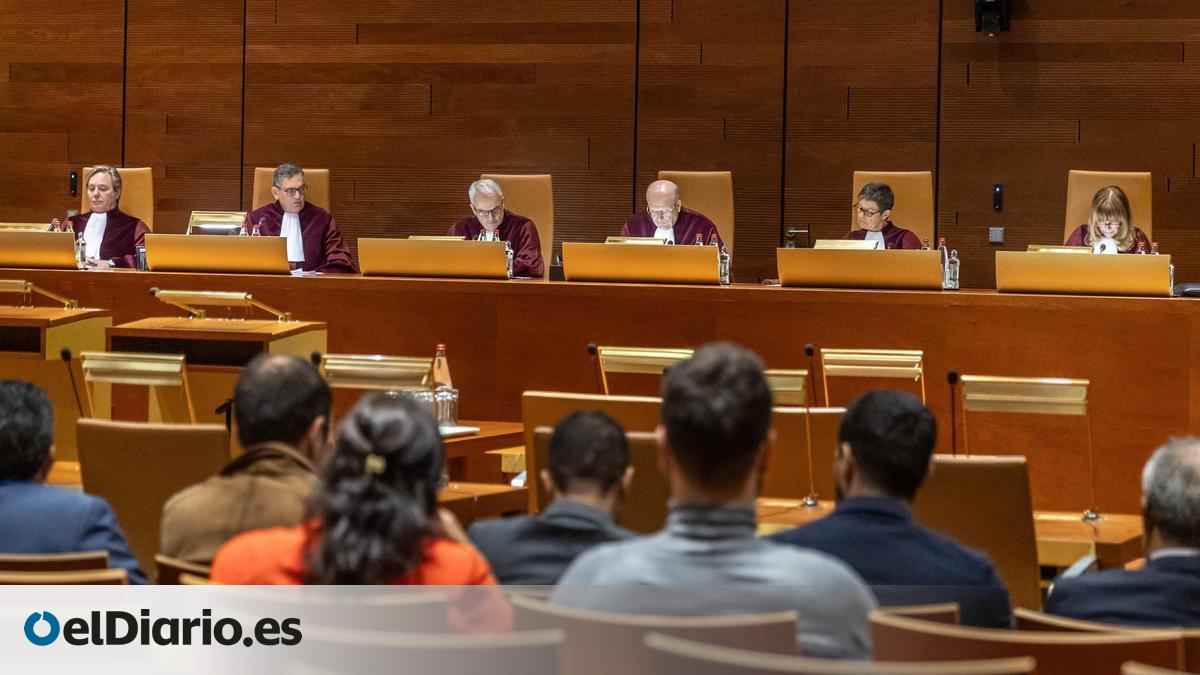
The Court of Justice of the EU (CJEU) has given broad backing to Spain's amnesty law as regards EU law, a decision that has a direct impact on the case of Carles Puigdemont, who is still waiting on a ruling by the Supreme Court.
The Luxembourg judges consider the legislation neither to conflict with the European Union’s financial interests nor to run counter to the EU directive on terrorism**.**
In response to two separate requests sent by Spain's Court of Audit and the National High Court for a preliminary ruling, the latter tied to the case in which Puigdemont is under investigation for terrorism, the Luxembourg judges have confirmed the view (source in Spanish) already set out by the institution's Advocate General last November.
Even though the law was passed under very particular circumstances, as a condition imposed by the ERC and Junts parties for backing Pedro Sánchez's investiture, and without consulting European courts, Advocate Dean Spielmann already gave the text the green light at the time, arguing it had been approved "in a genuine context of political and social reconciliation" and ruling out that it amounted to a "self-amnesty".
However, the CJEU will not rule on the specific application of the amnesty to Puigdemont or on whether the domestic arrest warrant remains in force. That decision lies with the Spanish courts, which must interpret and apply the European judgment in the cases that remain open.