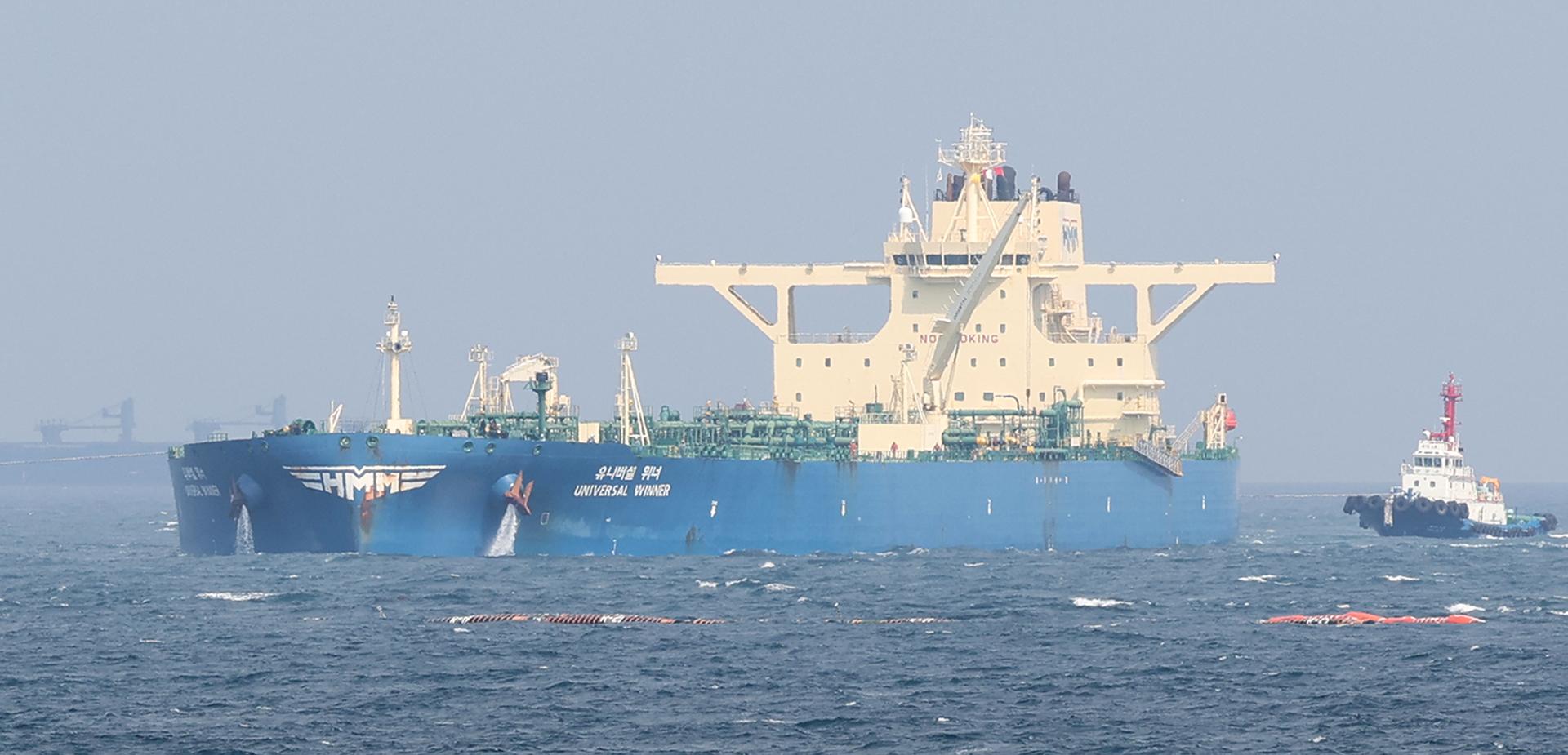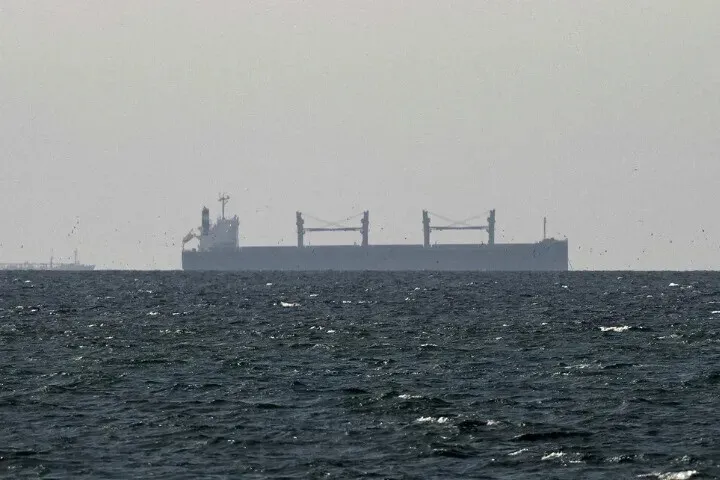
A ship can be seen in the Gulf region near the Strait of Hormuz. (Reuters/Yonhap)
With 26 Korean-flagged ships trapped in the Strait of Hormuz by the US and Israel’s war against Iran, Korean President Lee Jae Myung ordered the government to explore whether providing humanitarian aid to Iran could be a way to extricate Korean ships from the strait, the Hankyoreh learned on Sunday.Lee reportedly gave the orders in an urgent closed-door meeting last week with Blue House aides and the heads of relevant ministries. During the meeting, the president expressed concern about Korean ships that have been stuck in the strait for over a month now.“Lee gave orders to the effect of looking into ways to provide Iran with humanitarian aid and persuade it to allow Korean-flagged ships to leave the strait,” one participant in the meeting told the Hankyoreh on Sunday.“President Lee suggested working actively on a humanitarian level to free our 26 ships,” another participant said.“The government is also exploring its options,” a high-ranking government official told the Hankyoreh.Lee’s comment can be understood as a directive to explore a humanitarian workaround that respects the freedom of navigation guaranteed by international law. Keeping in line with his longstanding commitment to prioritizing the lives and safety of the Korean people, the president is now urging his administration to mobilize every possible means at its disposal. The Lee administration has maintained that it will not engage one-on-one with Iran to secure the safe passage of Korean ships. Currently, 26 Korean vessels and 180 Korean seamen have been stranded in the Strait of Hormuz for over a month. As the war drags on and shortages deepen, Iran has become more receptive to allowing certain ships with humanitarian goods to transit the Strait of Hormuz. Tasnim News Agency, an outlet associated with the Islamic Revolutionary Guard Corps, reported Saturday (local time) that the deputy minister of agriculture sent a letter approving passage through the strait to ships carrying humanitarian goods — such as essential goods or livestock feed — either heading to Iranian ports or currently in the Gulf of Oman.