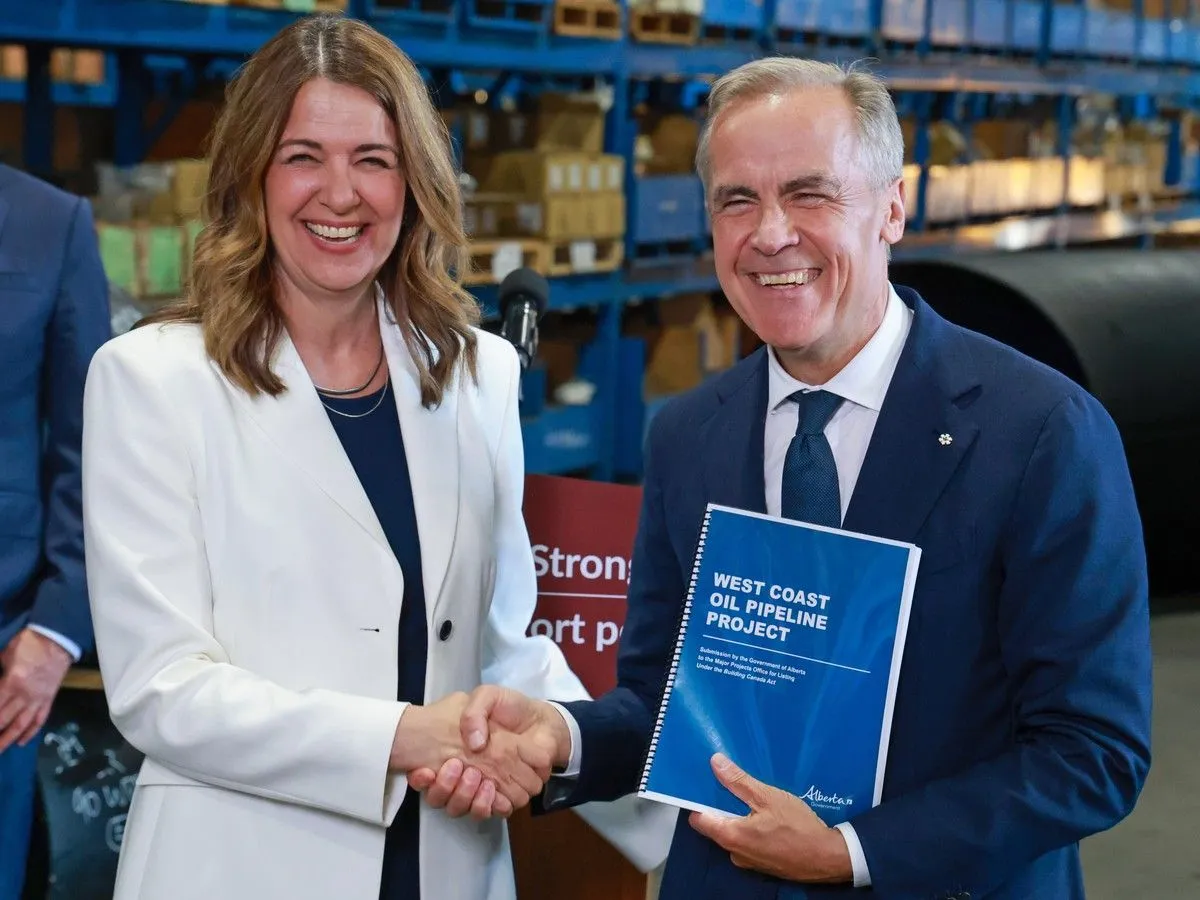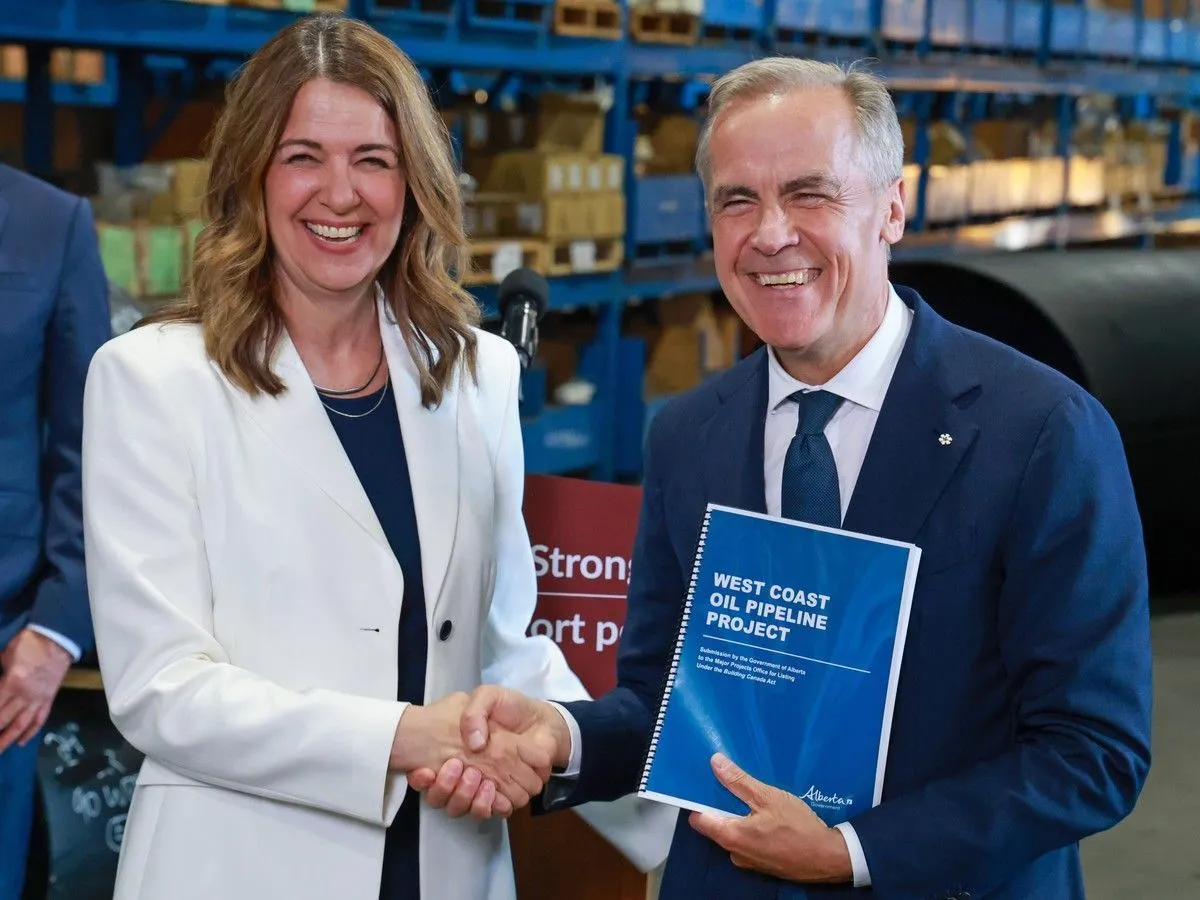
Skip to Content Subscribe Our Offers My Account Manage My Subscriptions FAQ Newsletters Canada Canadian True Crime Canadian Politics Health World Israel & Middle East Financial Post NP Comment Longreads Puzzmo Diversions Comics NP News Quiz New York Times Crossword Horoscopes Life Eating & Drinking Style Sponsored Play for Ontario Travel Travel Canada Travel USA Travel International Cruises Travel Essentials Culture Books Celebrity Movies Music Theatre Television Business Essentials Advice Lives Told Tails Told Shopping Buy Canadian Home Living Outdoor Living Kitchen & Dining Tech Style & Beauty Personal Care Entertainment & Hobbies Gift Guide Travel Guide Amazon Prime Day Deals Savings National Post Store More Sports Hockey Baseball Basketball Football Soccer Golf Tennis Driving Vehicle Research Reviews News Gear Guide Obituaries Place an Obituary Place an In Memoriam Classifieds Place an Ad Celebrations Working Business Ads Archives Healthing Epaper Manage Print Subscription Profile Settings My Subscriptions Saved Articles My Offers Newsletters Customer Service FAQ Newsletters Canada World Financial Post NP Comment Longreads Puzzmo Diversions Life Shopping Epaper Manage Print Subscription HomeNewsCanadaCanadian PoliticsCarney was iffy on a pipeline. Now his government's building one itself. Here's what changed his mindResponding to a confluence of political and economic headwinds, the prime minister brought new urgency to Ottawa's negotiations with Alberta over the $40 billion projectLast updated 17 minutes ago You can save this article by registering for free here. Or sign-in if you have an account.Prime Minister Mark Carney and Alberta Premier Danielle Smith announced the submission of the West Coast Pipeline Project at Trans Am Piping Products in Calgary on Thursday, July 2, 2026. Photo by Gavin Young/PostmediaWhen Prime Minister Mark Carney stood alongside Alberta’s premier earlier this month to herald a plan for a new oil export pipeline, the news came with a massive taxpayer-funded caveat.Enjoy the latest local, national and international news.Exclusive articles by Conrad Black, Barbara Kay and others. Plus, special edition NP Platformed and First Reading newsletters and virtual events.Unlimited online access to National Post.National Post ePaper, an electronic replica of the print edition to view on any device, share and comment on.Daily puzzles including the New York Times Crossword.Support local journalism.Enjoy the latest local, national and international news.Exclusive articles by Conrad Black, Barbara Kay and others. Plus, special edition NP Platformed and First Reading newsletters and virtual events.Unlimited online access to National Post.National Post ePaper, an electronic replica of the print edition to view on any device, share and comment on.Daily puzzles including the New York Times Crossword.Support local journalism.Create an account or sign in to continue with your reading experience.Access articles from across Canada with one account.Share your thoughts and join the conversation in the comments.Enjoy additional articles per month.Get email updates from your favourite authors.Create an account or sign in to continue with your reading experience.Access articles from across Canada with one accountShare your thoughts and join the conversation in the commentsEnjoy additional articles per monthGet email updates from your favourite authorsSign In or Create an AccountorIn the absence of a private firm to build the proposed oil corridor, the pair confirmed, the federally owned Trans Mountain Corp. would lead the roughly $40-billion project.For Carney, the announcement marked a sharp pivot in strategy for getting the proposal over the finish line, with Ottawa letting go of its insistence just five months earlier that the pipeline be funded by private capital.“The tone had changed quite a bit,” said a senior Alberta government official who spoke about the negotiations on the condition of not being named. “This wasn’t a ‘nice to have’ anymore. This was: ‘let’s get this done; this is important to the economy in a pretty profound way.'”Observers told National Post that a confluence of factors, from U.S. tariffs to Iran’s seizure of the Strait of Hormuz in early 2026, had sharply exposed fragilities in global trade and energy security, prompting the Carney government to recalibrate its thinking toward the potential new pipeline. At the same time, there was worry about growing anger in Alberta, fuelled largely by years of seeing Ottawa as antagonistic to its oil industry that saw support for separatism in the province reach its highest level in decades early this year.In a matter of months, the pipeline proposal had shifted from a mere economic priority to a highly political one. That brought a new level of urgency to negotiations between Alberta and Ottawa starting in May, according to one person familiar with the talks, with government officials on both sides clocking 15-hour days as they rushed to finalize a deal ahead of the July announcement.Under the Alberta and federal governments’ pipeline proposal, Trans Mountain will assume responsibility for the planning and construction of the pipeline from Bruderheim, Alta., to a proposed large-tanker port in Roberts Bank, B.C., just south of Vancouver, in hopes of expanding oil exports to Asia. Calgary-based Pembina Pipeline has so far agreed to take a minority 10 per cent private stake in the development, while the publicly owned Alberta Petroleum Marketing Commission is also a proponent.The proposed development is a substantial undertaking for the Crown corporation. According to its project description, Trans Mountain will be tasked with connecting 1,200 kilometres of pipeline, as well as installing 11 pump stations along the route that would draw more than 440 megawatts of power. It will have to reinforce a 260-hectare site at the Roberts Bank terminal capable of housing 6.5-million barrels of oil storage and build a power substation, pipe racks and an emergency fire system, among other things. Perhaps most complex of all, Trans Mountain and government representatives will have to consult with 23 First Nations in Alberta and another 85 in B.C. in order to secure the pipeline’s right-of-way.It’s a far cry from Carney’s comments in April 2025, when he told a Quebec talk show that he wasn’t even sure Canada should prioritize an oil pipeline as a major project of national interest. “We have to choose a few major projects, not necessarily pipelines, but maybe pipelines: we’ll see,” he said on the popular show Tout le monde en parle.In November he signed a memorandum of understanding with Alberta Premier Danielle Smith agreeing to work towards a pipeline to diversity exports to Asia. But, as he told a Calgary Chamber of Commerce event that month, “the Asian pipeline will be a private sector project.” In order to attract private capital, the prime minister at the time said he favoured “de-risking” the pipeline by, for example, removing regulatory burdens such as the proposed oil and gas emissions cap, or helping First Nations take direct financial stakes in the project through loan guarantees.What prompted such a dramatic over such a short period included the outbreak of a Persian Gulf war in February 2026, which eventually led to Iran blockading the Strait of Hormuz, a major shipping channel for Saudi Arabia and other major Middle East producers, stranding oil exports and driving up prices.As the first U.S. and Israeli strikes on Iran hit in February, Carney was arriving in India as part of a major diplomatic reset, which included high-level meetings between his government and Indian industry executives who said that they wanted Canada to supply them with more energy, including oil. On the prime minister’s next stop in Japan in early March, he heard much the same message, as officials representing the island nation said they wanted to diversify their energy supplies through greater imports from Canada.In January, Carney had been in China, embarking on another high-stakes diplomatic reset with Chinese President Xi Jinping, where energy trade was a central theme. Days after that, he declared Canada an “energy superpower” at the World Economic Forum.This is important to the economy in a pretty profound waySuch pronouncements shifted the onus for building new energy infrastructure from Canadian oil producers onto government, said Heather Exner-Pirot, a senior fellow at the Macdonald-Laurier Institute.Major Canadian oilsands companies like Suncor Energy, Canadian Natural Resources and Cenovus Energy long ago adapted to an unwelcoming environment where the industry was unable to build major new export pipelines because of roadblocks from regulators and some First Nations groups and anti-oil activists. That led them to focus instead over the last decade on improving the efficiency and profitability of their existing production, delivering growth to shareholders without additional pipelines.“Ottawa needs this pipeline more than industry,” she said.Indeed, as Financial Post reported this week, Alberta has even promised “financial supports” to oilsands producers as incentives to expand oil production to fill the proposed pipeline as part of the federal-provincial proposal.Canadian producers are also less motivated than Ottawa is to shift their exports away from the U.S., said George Vegh, former chair of the Canada Energy Regulator. While U.S. President Donald Trump’s tariffs on some Canadian products have created broader trade uncertainty, the two countries’ energy sectors remain highly integrated and deeply co-dependent.“If you’re a government, (diversifying trade) may be an important political objective,” Vegh said. “But if you’re in the private sector, that’s not really your mandate. Your mandate is to provide shareholder returns.”Finding a company willing to sign onto Alberta’s pipeline push became the key challenge faced by Smith, its most prominent champion, and by Ottawa. Leads had gone cold after nearly a decade of policies under former prime minister Justin Trudeau that exuded hostility to Alberta’s resources. Among them: the cancellation of the previously approved Northern Gateway pipeline plan at a massive loss for Enbridge Inc.; onerous new approvals processes for major pipelines; a tanker moratorium off the northwest Pacific Coast; and resistance to the proposed Energy East pipeline to New Brunswick.In fact, the government had ended up buying Trans Mountain in 2018 after the private owners had said they were abandoning their TMX pipeline expansion project after enduring years of political and legal challenges.“That’s the environment we’re finding ourselves in,” Smith said in defence of the public sector taking such an oversized role in the proposal in July. Canadian producers are also less motivated than Ottawa is to shift their exports away from the U.S., says one oil industry insider. Photo by Ian Kucerak/Postmedia/FileNeither Carney nor Smith had previously showed any indication, at least in public, that a government-led option was on the table. During a parliamentary committee testimony in April, Natural Resources and Energy Minister Tim Hodgson only said that “there could be scenarios” where taxpayer money would flow to fund Indigenous ownership in a pipeline through its loan guarantee program. But ministers had long avoided committing to directly fund such a project.Internally, however, federal officials came to acknowledge that deploying Trans Mountain on yet another government-backed project — following roughly the same route as TMX — was the fastest way to get another million barrels per day of crude to tidewater.Provincial officials were seemingly less convinced: Around the same time as Hodgson’s comments, former Alberta energy minister Sonya Savage predicted governments would need to provide some form of “backstop” to attract a private sector proponent to the project, suggesting that removing some regulatory hurdles would not have been enough.The project still needs to clear a long list of regulatory and permitting approvals before construction can begin. And officials in both Ottawa and Alberta have not provided a breakdown for who will pay what in the estimated $35 billion to $43 billion the new pipeline will cost.Smith, for her part, said she hopes to attract more private sector interest for getting involved as the path to getting it built becomes more certain.It’s not clear industry will answer the call. Last week, Enbridge CEO Greg Ebel, who advised Alberta on its pipeline proposal, suggested there is no rush on the part of the private sector to make any decisions, particularly given that construction is not slated to be finished by 2032 even under the most optimistic timelines.“There will be plenty of time for the private sector to get into this,” he recently told the podcast, In the Money.His company, for its part, has some $40 billion worth of projects already in the works, he said, and is particularly focused on expanding its investments in the U.S. Gulf Coast, where new developments face far fewer regulatory or political hurdles.The Carney-Smith pipeline announcement exemplifies how differently the Canadian scene has evolved after a decade of Trudeau’s policies.Traditionally, oil producers are the ones who drive demand for a new pipeline so they can expand their output, Ebel pointed out. But the incentives in this country have been turned on their heads.“There’s been a lot of focus on the pipes, and that’s kind of ass-backwards.”National Postjsnyder@postmedia.comOur website is the place for the latest breaking news, exclusive scoops, longreads and provocative commentary. Please bookmark nationalpost.com and sign up for our newsletters here. Join the Conversation This website uses cookies to personalize your content (including ads), and allows us to analyze our traffic. Read more about cookies here. By continuing to use our site, you agree to our Terms of Use and Privacy Policy.
Carney was iffy on a pipeline. Now his government's building one itself. Here's what changed his mind
Private proponents had given up on building just as Asian buyers were pressing Carney for oil and a new Gulf crisis exposed global fragility
2,143 words~10 min read