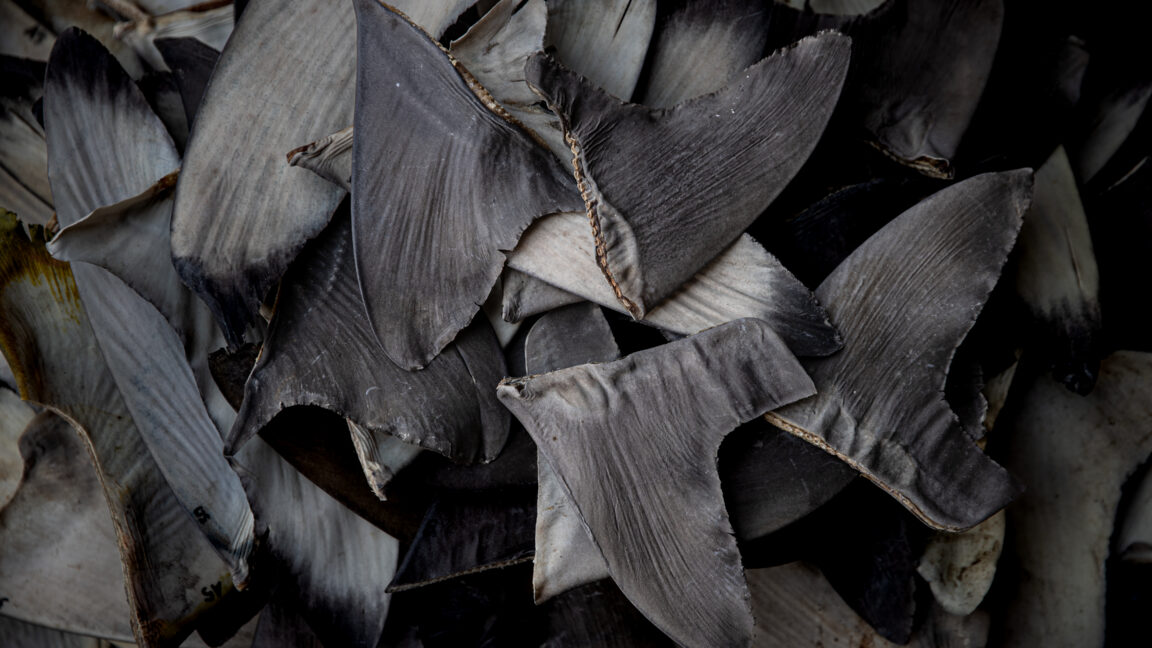
Dakar (AFP) – In the high seas off west Africa, a fisherman on a Chinese longline tuna vessel cuts the fins off a live shark before throwing it back in the water to suffocate and drown.
Its lucrative appendages will be landed at the port of Dakar before being shipped onward to Asia for use in shark fin soup, a delicacy in certain countries, or traditional medicine.Finning, the practice of removing fins and casting the rest of the shark overboard, often alive, is largely prohibited across a variety of regulatory zones, countries and international conventions, even if fishing certain shark species is generally allowed.Yet in recent years, illegal shark fins have been repeatedly landed in Dakar, one of Africa's busiest fishing ports, by dozens of Chinese and Taiwanese longline tuna vessels, according to a report released Thursday by the London-based Environmental Justice Foundation NGO.Rapid population declineFinning increases vessels' profitability, but also incentivises catching sharks, whether directly or as bycatch.The practice is inherently cruel and wasteful, conservationists say, likening it to killing a rhinoceros for its horn. But brutality is not the only problem.Global shark populations have been in rapid decline due to industrial fishing, with a study published in the journal Nature showing their population has plummeted, alongside that of their close relatives rays, 71 percent since 1970.Not only does finning further deplete shark populations, but it often occurs in tandem with other types of illegal, unreported and unregulated (IUU) fishing and human rights abuses.