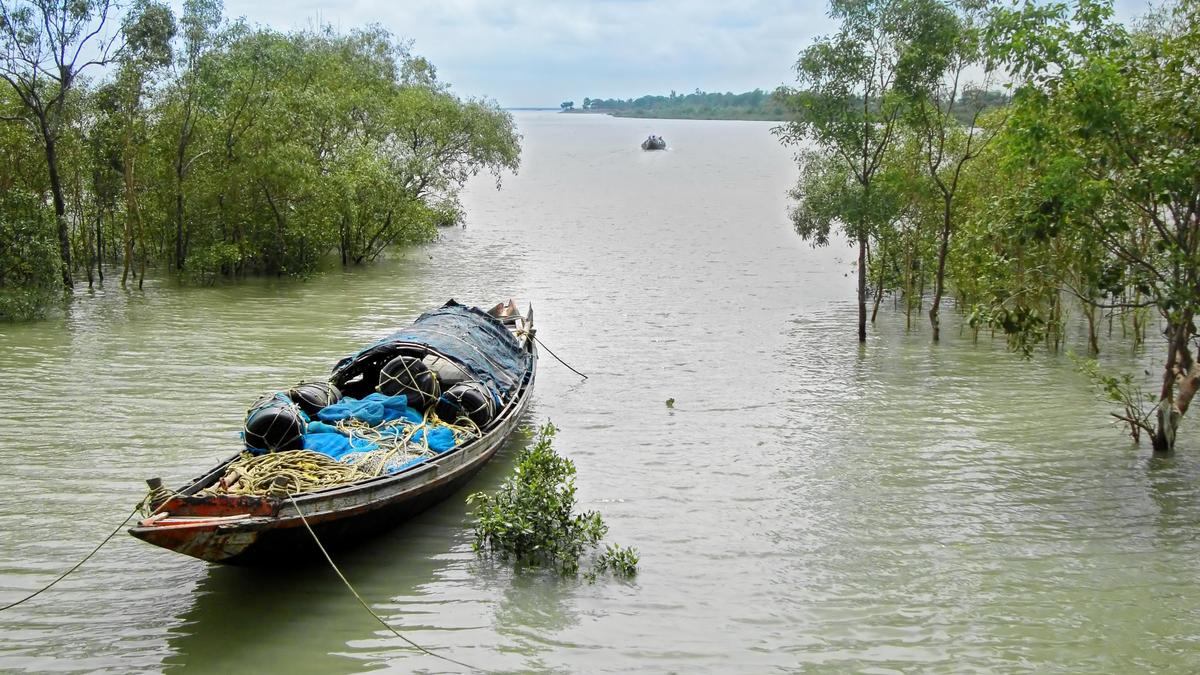
Flowing towards the sea at the Sunderbans, West Bengal
| Photo Credit: The Hindu Archives
What if the water at home suddenly turns salty for three months of the year? What if even the bottled water that you want to buy is salty? How will you survive this sudden transformation? Aquatic creatures face a similar situation when a river finally meets the ocean. But they have learnt to adapt and, in many cases, to even take advantage of this sudden shift in the environment.Place of transitionAt the estuary, where the river ends in the sea, there is a sudden transition from fresh to salty water. The low-density river water tends to float on the denser and cooler seawater, forming swirling currents of a new ecosystem called brackish water. This dynamic ecosystem is rich in nutrients and supports unique animal and plant life.Some rivers tend to slow down, as they reach the ocean and split up into several branches or distributaries that deposit sediment in a pretty fan shape called a delta. A delta or estuary is rich in nutrients: minerals brought by the river and organic matter deposited by the ocean. They nurture one of the healthiest habitats on the planet, form safe nurseries for fish, shellfish and aquatic birds, and support biodiversity-rich ecosystems such as salt marshes and mangroves.