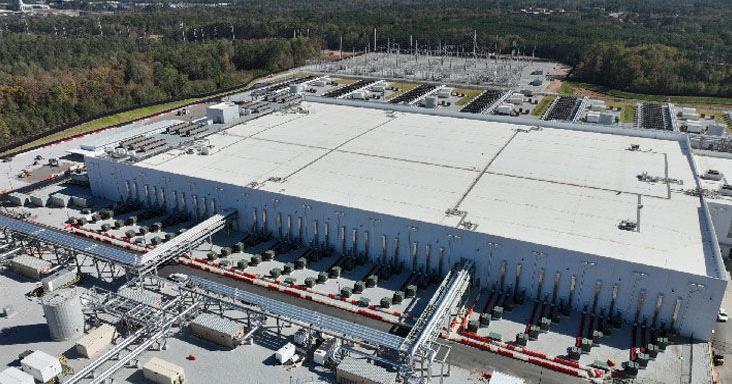
Artificial intelligence (AI) has become one of the world’s fastest-growing industries, and countries everywhere are competing to attract hyperscale data centres that will power the next generation of AI applications. Trinidad and Tobago has an opportunity to participate in this digital transformation, but ambition alone cannot replace experience when projects involve billions of dollars and national infrastructure.The proposed Hummingbird AI Holdings LLC project envisions an initial 150 MW AI data centre, with plans to expand to 500 MW. If completed, it would rank among the largest digital infrastructure projects ever undertaken in the Caribbean and require investments estimated between US$7.5 billion and US$10 billion, excluding AI hardware and supporting infrastructure.Projects of this magnitude are not ordinary commercial developments. They require expertise in high-voltage electrical systems, natural gas infrastructure, mechanical engineering, telecommunications, cybersecurity, cooling technologies, environmental management, and large-scale construction. Developers must also secure billions in financing, coordinate thousands of contractors, negotiate long-term utility agreements, and operate facilities demanding near-continuous uptime.Around the world, these projects are typically delivered by companies with decades of experience or through partnerships involving internationally recognised engineering firms, utility providers, infrastructure investors, and technology companies. Experience is fundamental to reducing execution risk.This is why the publicly available information surrounding Hummingbird AI Holdings LLC deserves careful scrutiny. Based on publicly available information, there is no published record showing that the company has previously designed, financed, constructed, or operated a hyperscale data centre or a project of similar size and complexity. Likewise, there is no publicly documented portfolio demonstrating successful delivery of facilities approaching the proposed 150 MW initial phase or the planned 500 MW expansion.That fact alone does not prove the project is not legitimate. Every successful company began somewhere, and innovation often comes from new entrants. However, when proposals involve strategic national infrastructure and could consume a significant share of the country’s electricity and natural gas resources, a much higher standard of due diligence is both reasonable and necessary.The questions that naturally arise are the same ones governments, lenders, and institutional investors ask before approving any major infrastructure project: Where is the evidence of completed projects? Who are the engineering, procurement, and construction partners? Who is providing the billions of dollars required for financing? Which companies will design and build the electrical systems, cooling infrastructure, and AI computing facilities? What experience does the management team possess in delivering projects of this scale? These are standard commercial questions asked every day in global infrastructure markets.The proposed facility also carries significant national implications. At full build-out, a 500 MW AI data centre would require dedicated power generation, substantial natural gas allocations, new transmission infrastructure, extensive environmental approvals, and long-term operational commitments. Any failure to deliver could leave Trinidad and Tobago with stranded infrastructure, lost opportunities, and significant financial exposure.Transparency therefore becomes essential. Projects promoted as transformational national investments should be accompanied by clear information regarding ownership, financing, technical partners, project governance, implementation schedules, and operational responsibilities. Public confidence is strengthened when developers openly demonstrate their qualifications and capability.The Government also has a responsibility to conduct rigorous independent due diligence before committing strategic national resources. This should include verification of the company’s financial capacity, executive experience, technical partnerships, funding commitments, and previous project delivery.Artificial intelligence represents an exciting opportunity for Trinidad and Tobago. However, success will ultimately depend on choosing partners with the proven experience, technical expertise, financial strength, and operational capability necessary to deliver projects of unprecedented scale. Until independently verifiable evidence is publicly presented, questions about the project’s feasibility and legitimacy are not only reasonable; they are an essential part of responsible governance.
Scrutiny must match our AI ambitions
Artificial intelligence (AI) has become one of the world’s fastest-growing industries, and countries everywhere are competing to attract hyperscale data centres that will power the next generation of AI applications.
595 words~3 min read