Jonathan Sumption
Thomas Smith
Yale University Press, pp. 304, £25
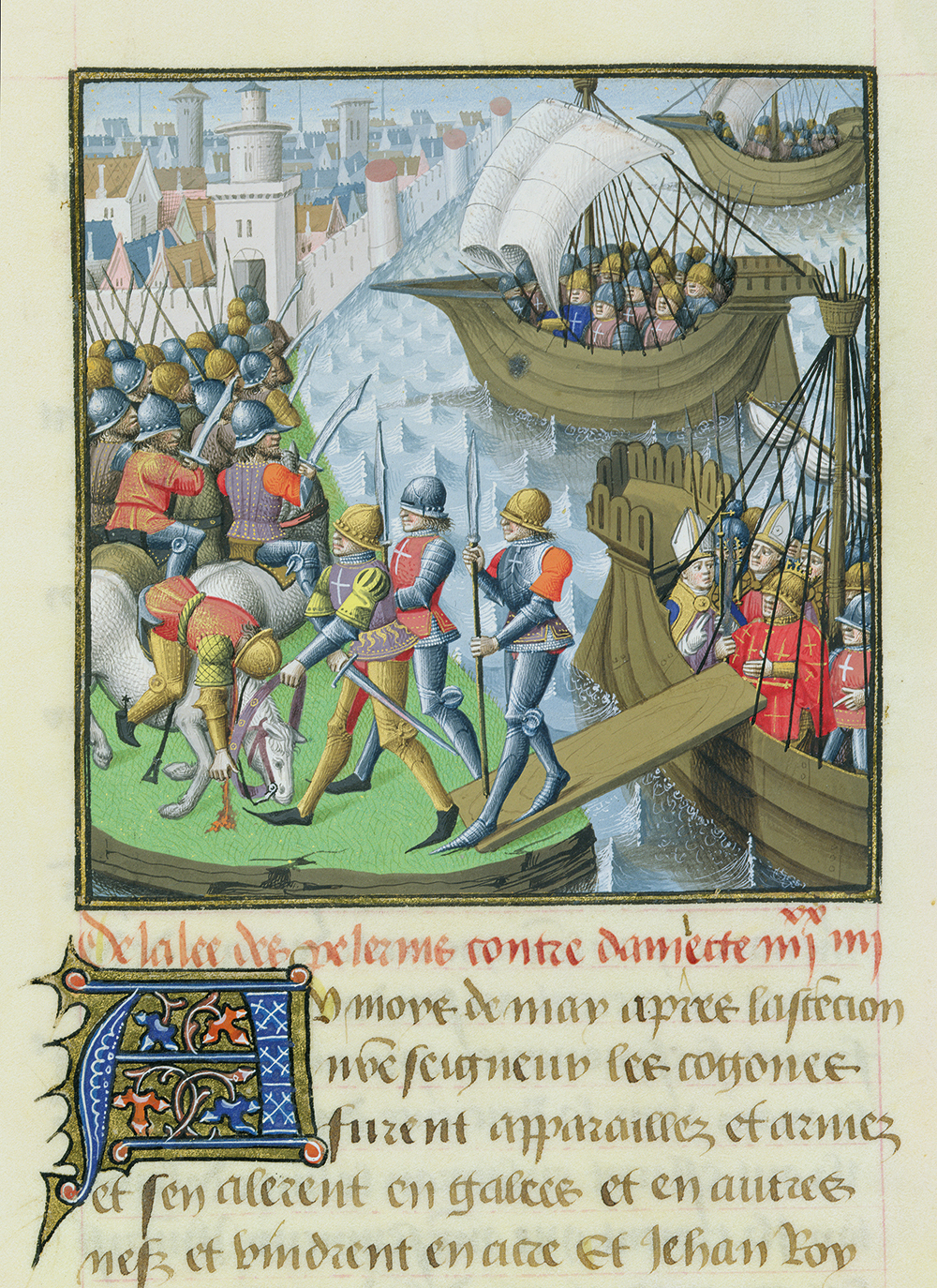
The Fifth Crusade, which was fought between 1217 and 1221, marked a new direction for the crusading movement of the Middle Ages. Instead of invading Palestine, as the first three crusades had done, and the Fourth Crusade might have done, the crusaders decided to attack Egypt. That was not the original idea. The formidable Pope Innocent III, who launched the Fifth Crusade, had envisaged a repeat of the old strategy of marching on Jerusalem from the sea. The invasion of Egypt was decided by the initial wave of forces after they had reached the Levant.
There was a sort of logic behind the decision. The crusading kingdom of Jerusalem had been destroyed in 1187, when its army had suffered a crushing defeat at the hands of Saladin at the Horns of Hattin above the Sea of Galilee. Jerusalem was occupied. Thirteenth-century Palestine became part of the empire of the Ayyubids, a Kurdish dynasty with its capital at Cairo. By 1217, the Christians were reduced to the principality of Antioch in northern Syria and three small coastal enclaves around the cities of Acre, Tyre and Tripoli. None of these territories could sustain a large army for very long.