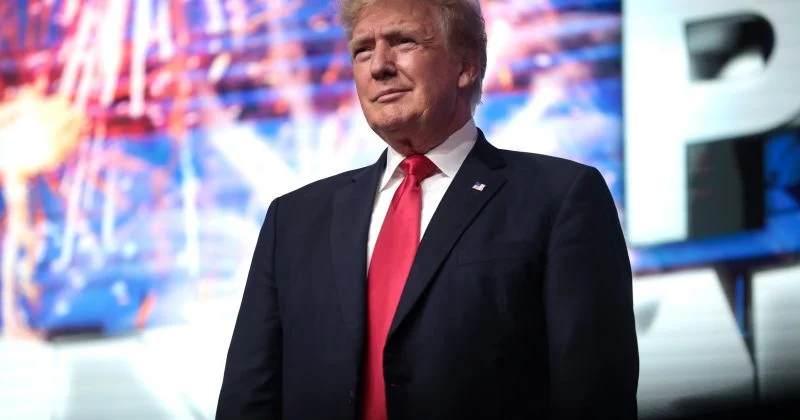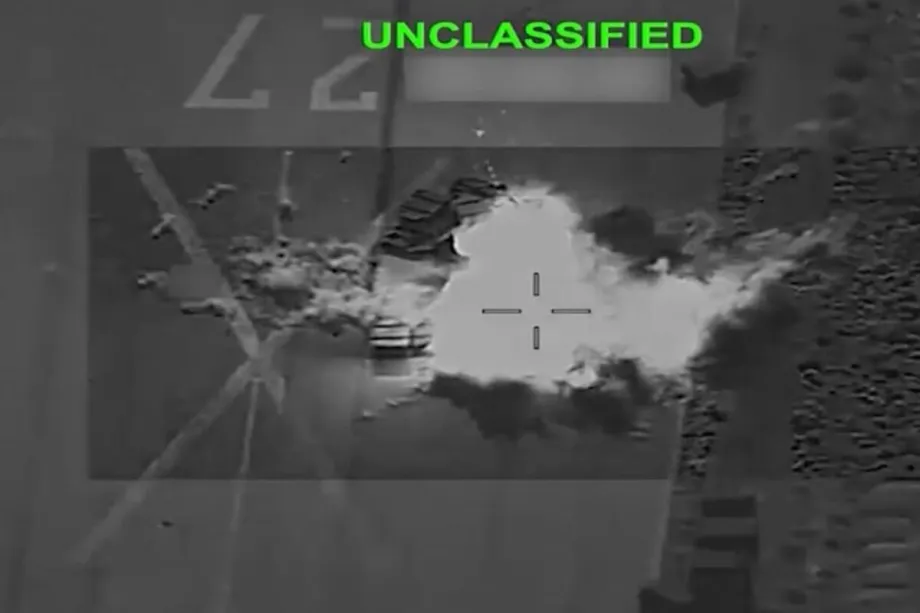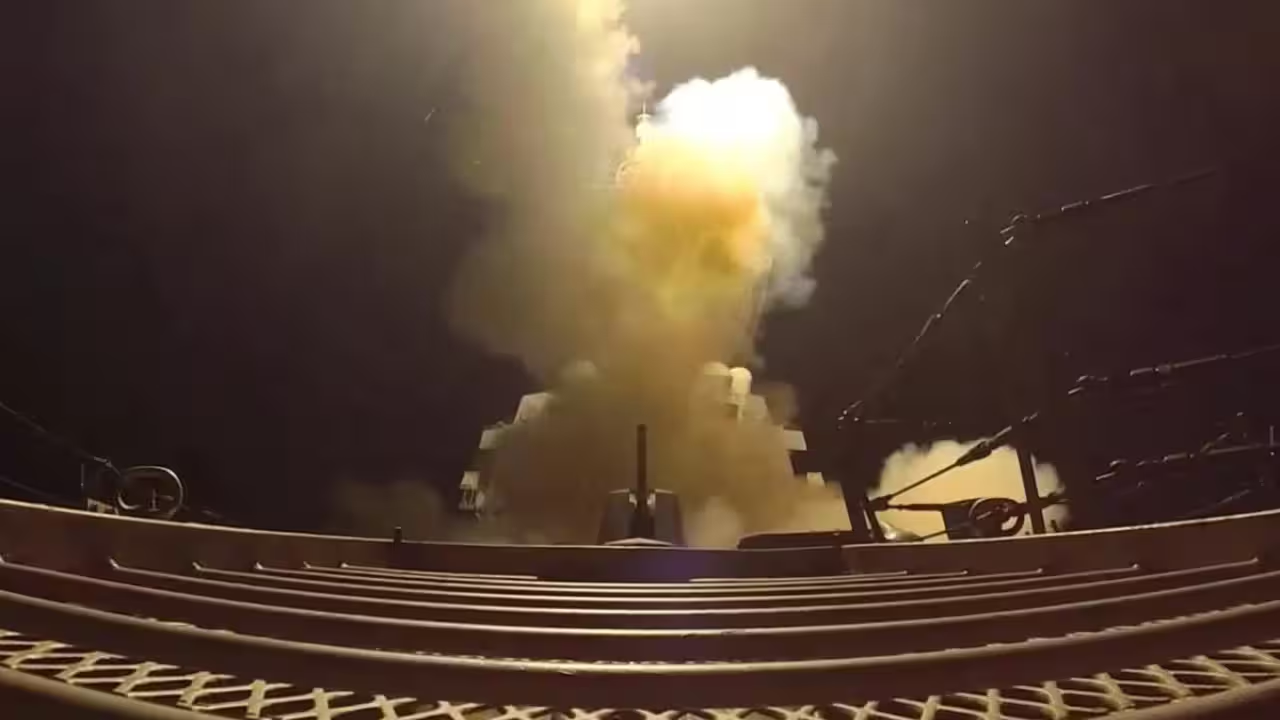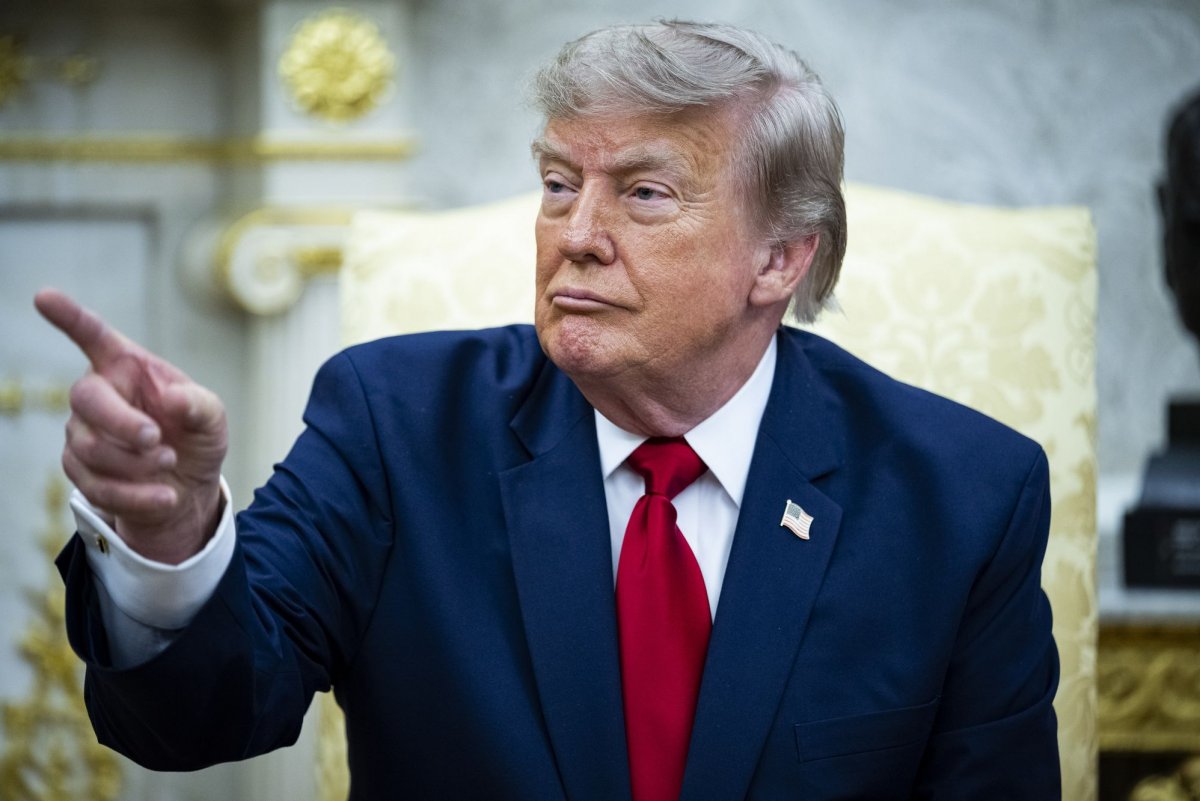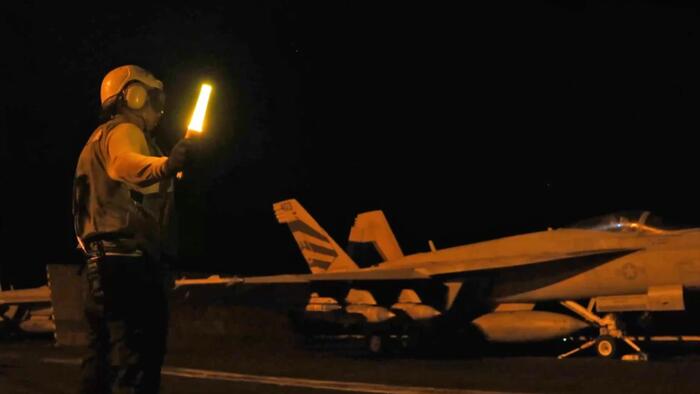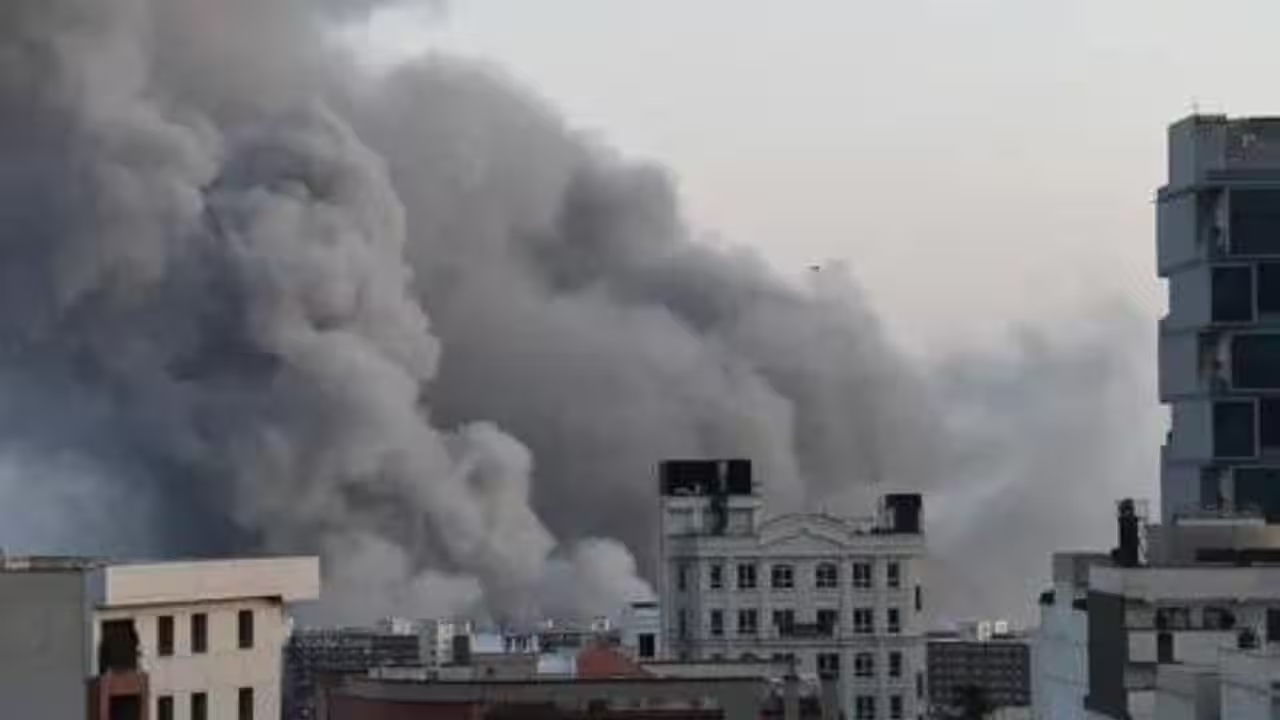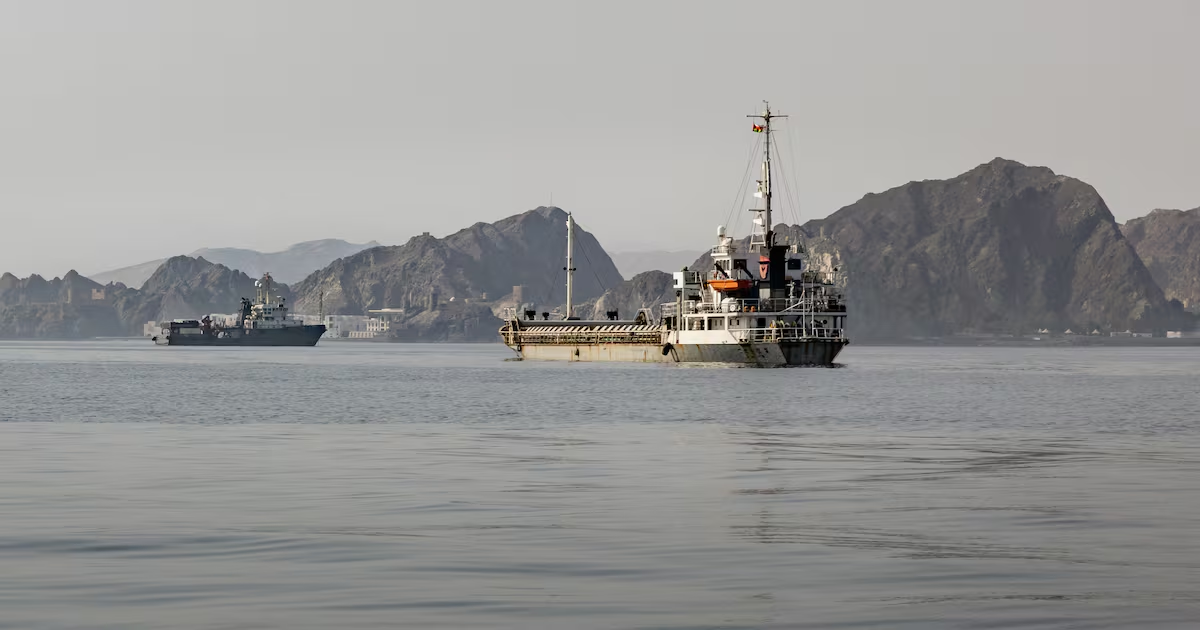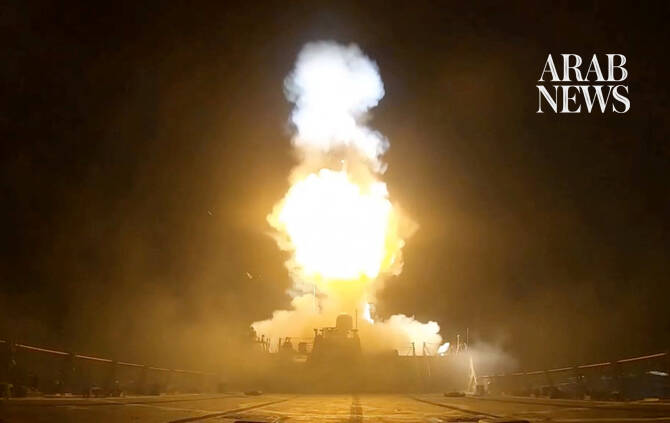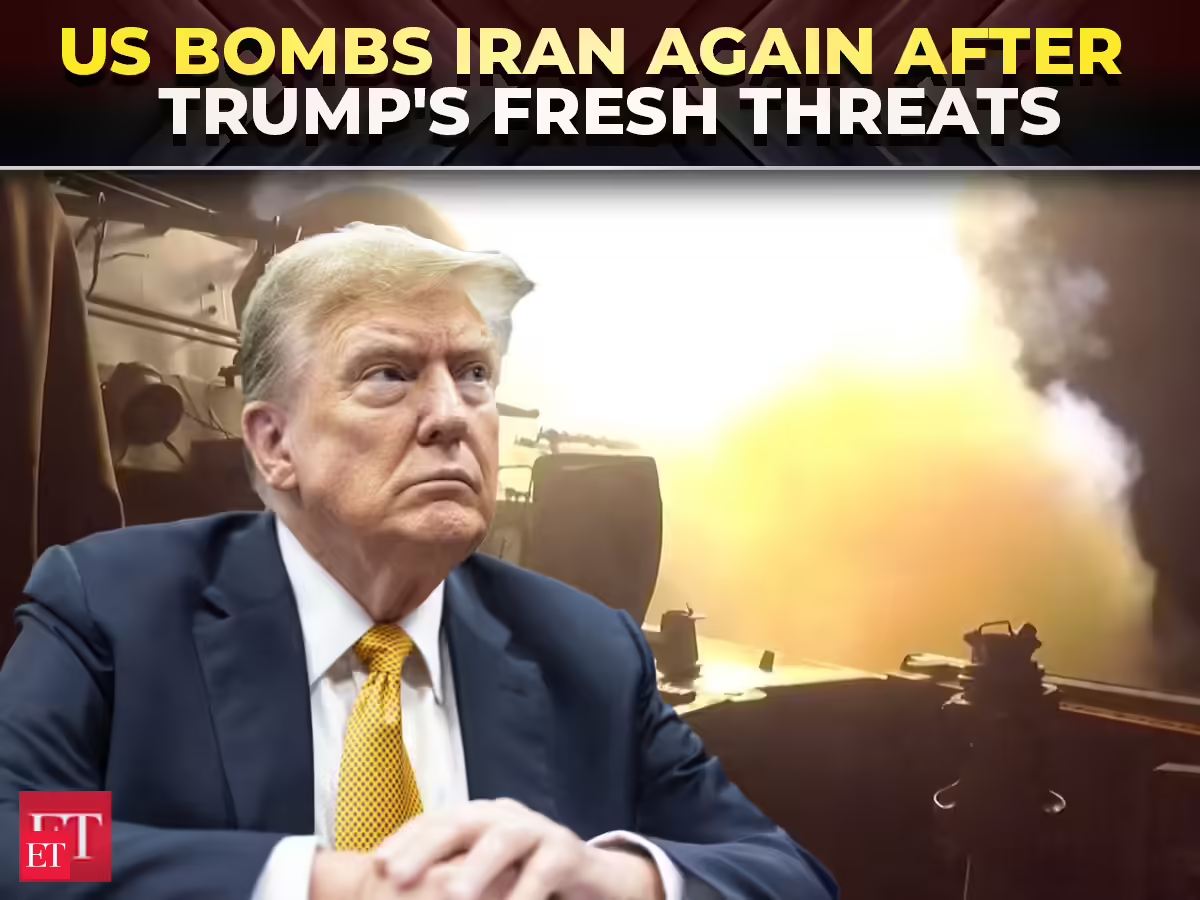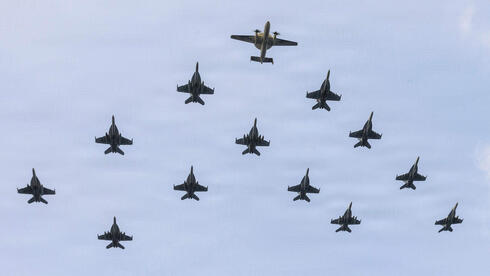
Trump is weighing expanded operations as U.S. strikes seek to degrade Iran’s ability to threaten ships in the Strait of Hormuz, while officials say he remains hesitant to risk American casualties in a ground operationThe US military announced Wednesday night that it had launched another wave of strikes in Iran — the fifth consecutive night it has bombed targets in the country. As in previous rounds of strikes, officials said the objective was to degrade Iran’s military capabilities to threaten ships in the Strait of Hormuz.Iran reported explosions in several locations, including the port city of Bandar Abbas, which lies on the Strait of Hormuz, Ahvaz in the country’s southwest and Chabahar in the southeast. Just half an hour after the U.S. announced the start of the strikes, the Iranian response came, with sirens sounding in Bahrain.Iranian propaganda presents: 'Where to kill Trump'At the same time, amid the U.S. strikes, Iranian threats against President Donald Trump’s life have continued. Iranian propaganda on Wednesday published a video titled “Where to Kill Trump?” that purportedly describes his security arrangements in detail.“Iran wants to meet,” he said in an interview with Fox News. “They want to make a deal. We’ll see if we can make a deal with them,” he added. Later, at an event in Pennsylvania, Trump claimed: “Iran will be defeated very soon.”GalleryUS military fighter jets in the Arabian Sea in a photo from June 30 amid tensions with Iran (Photo: AFP/US NAVY / NAVCENT PUBLIC AFFAIRS)(Photo: AFP/ US NAVY / NAVCENT PUBLIC AFFAIRS)His remarks came shortly after a speech by Iranian Parliament Speaker Mohammad Bagher Ghalibaf, who said Iran is in an “existential war” with the United States, and that “we must always be prepared to fight and stand until death to defend our security and our national interests.” But, he added: “We must also use the tools of diplomacy and negotiations to achieve and consolidate national interests.”Ghalibaf is considered part of the more pragmatic wing of the ayatollahs’ regime, and there have been many reports in the past of disagreements between that camp and the more hardline factions and the Revolutionary Guards, whose power has only grown during the war.Trump, at a conference in Pennsylvania: 'Iran will be defeated very soon' (Photo: Matt Rourke/AP)Iranian Parliament Speaker Mohammad Bagher Ghalibaf cries in front of Ali Khamenei's coffin. He also talks about negotiationsJust before the renewed wave of strikes, Reuters reported Wednesday night that the U.S. attacks in recent days were being carried out in preparation for a possible American escalation — with the aim of giving Trump additional options later, should he choose that path. One U.S. official who spoke to Reuters described the strikes as “preparatory actions” that are wearing down Iran’s defense systems in case the U.S. military is ordered to carry out more intensive operations in the future.“It helps prepare the ground, if necessary,” the official said.In that context, Reuters noted Trump’s renewed threats to seize Kharg Island, Iran’s “oil island,” where the country’s main oil export terminal is located. Such a ground operation would involve considerable risk because Iran could rain missiles and drones on the island from its mainland.“If we wear them down hard enough and deep enough, I’ll do it,” Trump said the day before when asked about capturing Kharg.US military attacks Chabahar, IranAt the same time, The Wall Street Journal reported, citing U.S. administration officials, that Trump is “inclined” to expand American operations and escalate attacks against Iran. But the paper stressed that he has not yet made a decision, and that the very talk of escalation may be intended to frighten the Iranians and push them to compromise in negotiations.According to the Journal, Trump convened a meeting Tuesday evening, U.S. time, in the White House Situation Room to discuss options including seizing Kharg Island or other areas around the Strait of Hormuz using U.S. ground forces. Also discussed was the option Trump has raised publicly: bombing the secret nuclear facility deep inside “Pickaxe Mountain” near Natanz. A strike on energy facilities is also “still an option,” according to the report, though Trump himself said he would save such a move for “the end.”According to the report, the Situation Room meeting was only one of several formal and informal discussions Trump has held in recent days with senior officials in his administration, including Vice President JD Vance, Defense Secretary Pete Hegseth, Secretary of State Marco Rubio and Joint Chiefs of Staff Chairman Gen. Dan Caine.Kharg Island, Iran’s 'oil island'(צילום: soar)Trump, who as part of the escalation also renewed the blockade on Iranian ports Wednesday, asked his advisers for “escalation options” that could force Iran to surrender, or at the very least stop attacking commercial vessels in the strait, according to the report. But the Journal stressed that Trump has not yet made a decision, and several U.S. officials said he is hesitant to approve sending ground forces — a move that could very likely lead to American casualties.The paper also noted the possibility that the threats of escalation are merely a way to force Iran back to the negotiating table. In an interview released Wednesday on Joe Rogan’s podcast, Vice President JD Vance signaled that the administration does indeed view the military force it is now using as a tool intended to compel Iran to return to talks.“We’re not going to bomb, bomb, bomb,” he said. “We’re going to try to use our military power as one of the many tools we have to solve the problem.”
US attacks Iran for 5th consecutive night, but Trump not ready to send in ground troops
Trump is weighing expanded operations as U.S. strikes seek to degrade Iran’s ability to threaten ships in the Strait of Hormuz, while officials say he remains hesitant to risk American casualties in a ground operation
914 words~4 min read