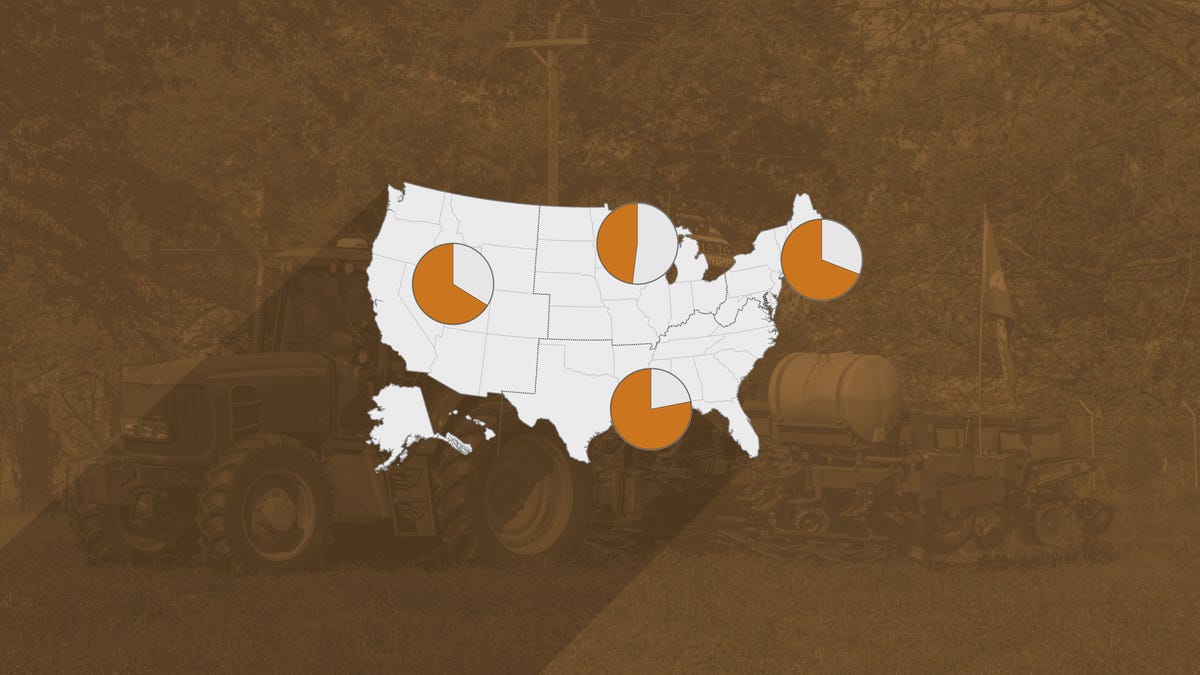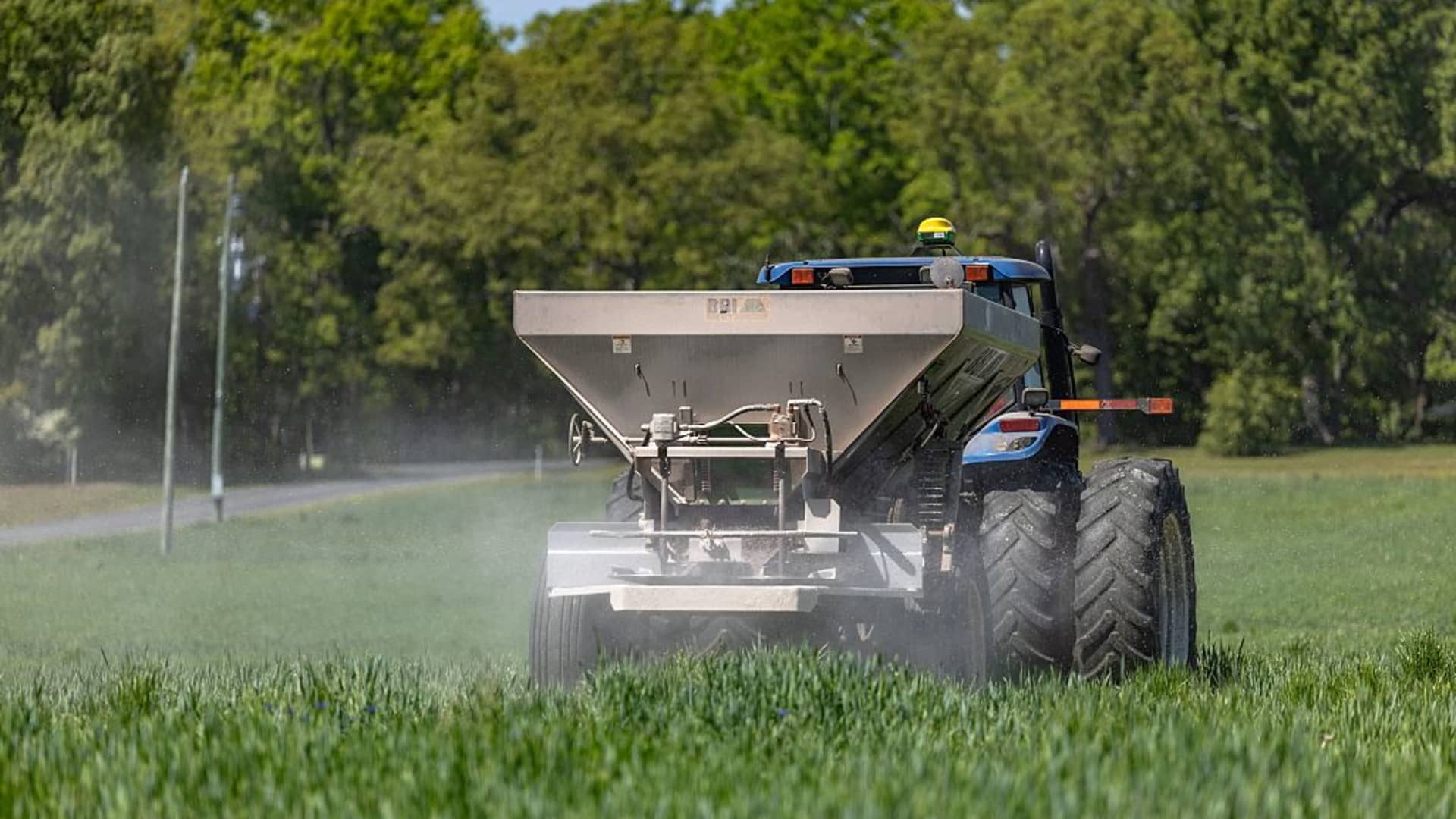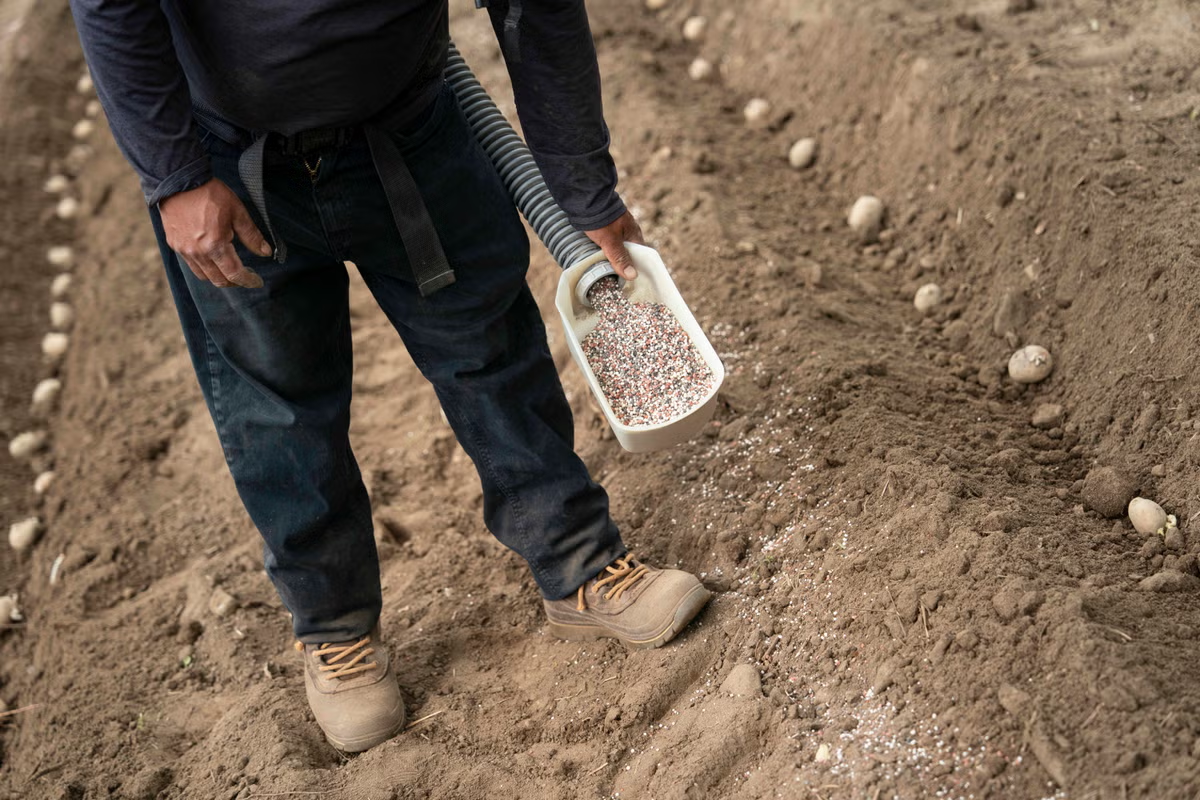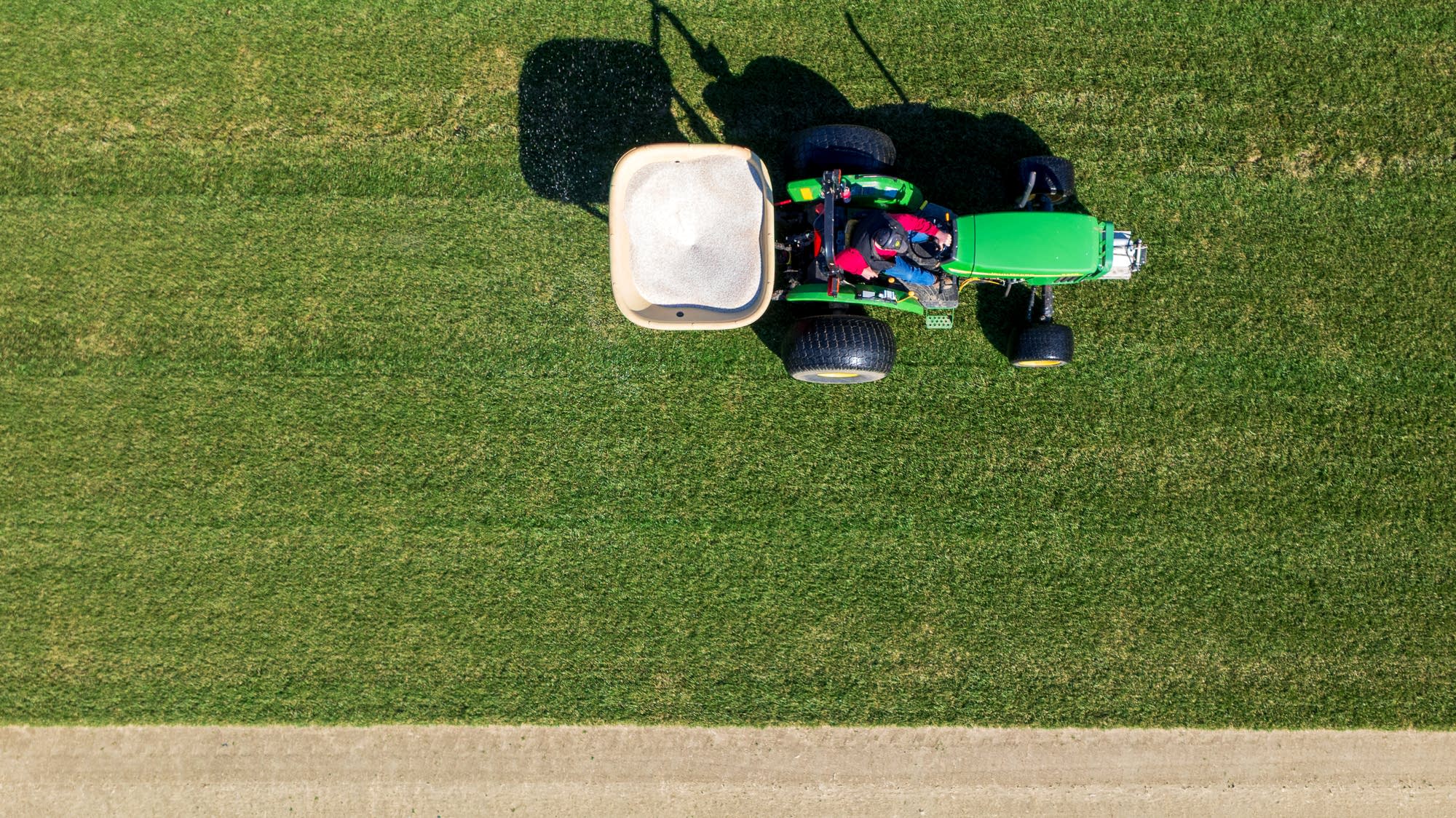
When Lorenda Overman first started growing corn, soybeans, and wheat some 40 years ago in North Carolina, success depended mostly on one thing. ”We watched the weather 9, 10, 15 times a day, honestly,” she said. At some point, she got used to making big financial bets on rain. But these days, there are new variables to keep track of. Like the price of fertilizer. “We’re in constant communications with our suppliers to see what the costs would be even when we’re not planting,” she said. Depending on the crop, plants are fertilized two or three times a year. One of those occasions is coming up: wheat is planted in the fall. How much Overman puts in the ground may be determined by what fertilizer prices look like towards the end of summer. “You know, every year you sit down, and you work out a budget, and you pencil in whether that crop will be a profit or a loss,” she said. “And you also want to make sure you have accurate input prices.”Farmers who are gearing up for fall planting, like Overman, are paying close attention to the price of fertilizer. In some cases, how much farmers are able to plant and how much money they'll make or lose depends on what they're gonna have to pay to feed their crops. It’s been harder to do that math since the war in Iran sent diesel and fertilizer prices swinging.“Fertilizer is very geographically concentrated, the resources that you need to produce most major fertilizers,” said Veronica Nigh, chief economist at The Fertilizer Institute, which represents fertilizer companies.Those resources include nitrogen, phosphorus, and potassium. The U.S. produces about two-thirds of what farmers here use. Nigh said the rest is imported — mostly from Canada, Russia, Southeast Asia, and the Middle East. The USDA recently committed $500 million to expand domestic fertilizer production.Allison Joyce/Getty Images“And when there are shocks to those regions where those resources are located, it is felt globally,” she said. This past spring, the price of urea — a widely used type of nitrogen fertilizer — nearly doubled from the year before. Experts worry that fertilizer costs could rise again, as an Iran peace deal seems further away. In the meantime, there aren’t any quick fixes. The USDA recently committed $500 million to expand domestic fertilizer production.But Nigh warned that building new plants can take five years, and building new mines can take 10. “That’s if you can get the permits and the land. All of the stars have to align.”In the meantime, farmers who grow fertilizer-intensive crops like feed corn and wheat will foot the bill.“It cost me an extra $100,000 this spring over what was budgeted for,” said Todd Littleton, a row crop farmer in Tennessee.He said ordering his fall fertilizer supply early to avoid price hikes isn’t an option. Fertilizer is hard to store and sometimes dangerous. Plus, he doesn’t have the money. “The problems being our margins have been so tight that we just haven’t been able to do that due to a lack of cash for operating,” Littleton said. So, he’s going to keep on with the plan — maybe plant more soybeans (which require less fertilizer), lean more on his poultry, and hope for better luck in 2027. “A farmer’s kind of an eternal optimist. It’s always going to be better next year. You know, we kind of have to be to do what we do.”Littleton added that it’s been a tough few years for farmers. They need a win.
Fertilizer costs worry farmers as Iran conflict continues
The U.S. imports about a third of its fertilizer.
587 words~3 min read