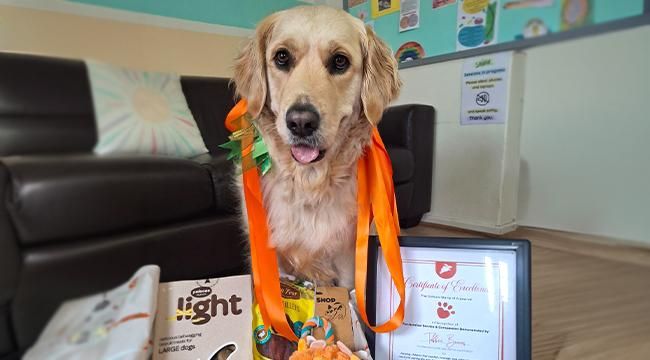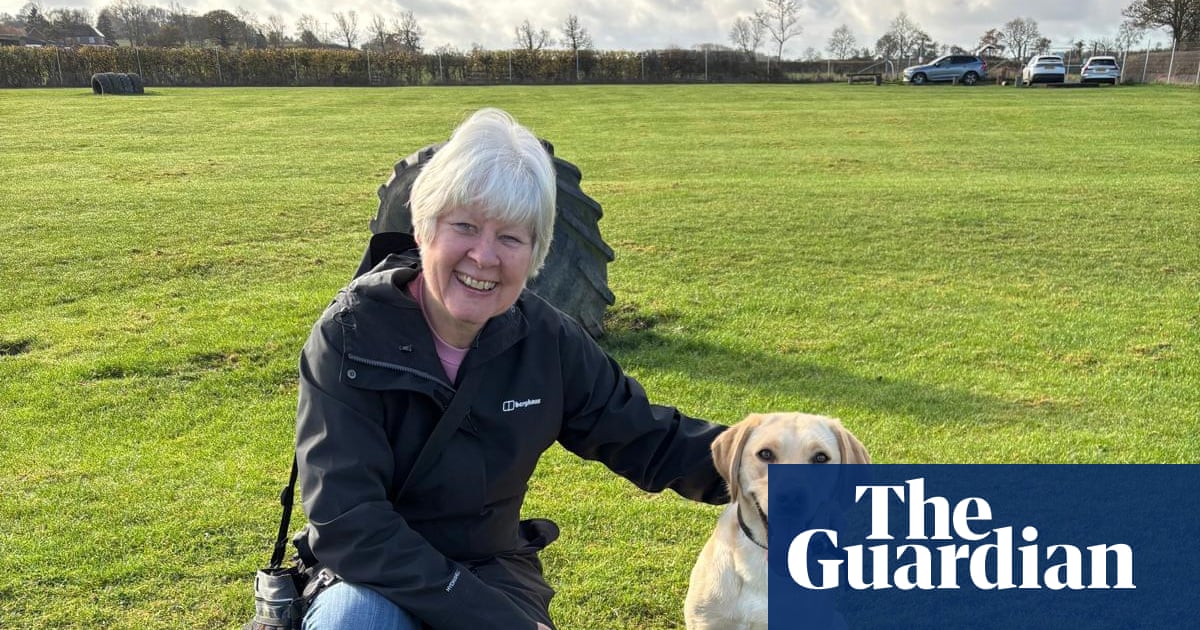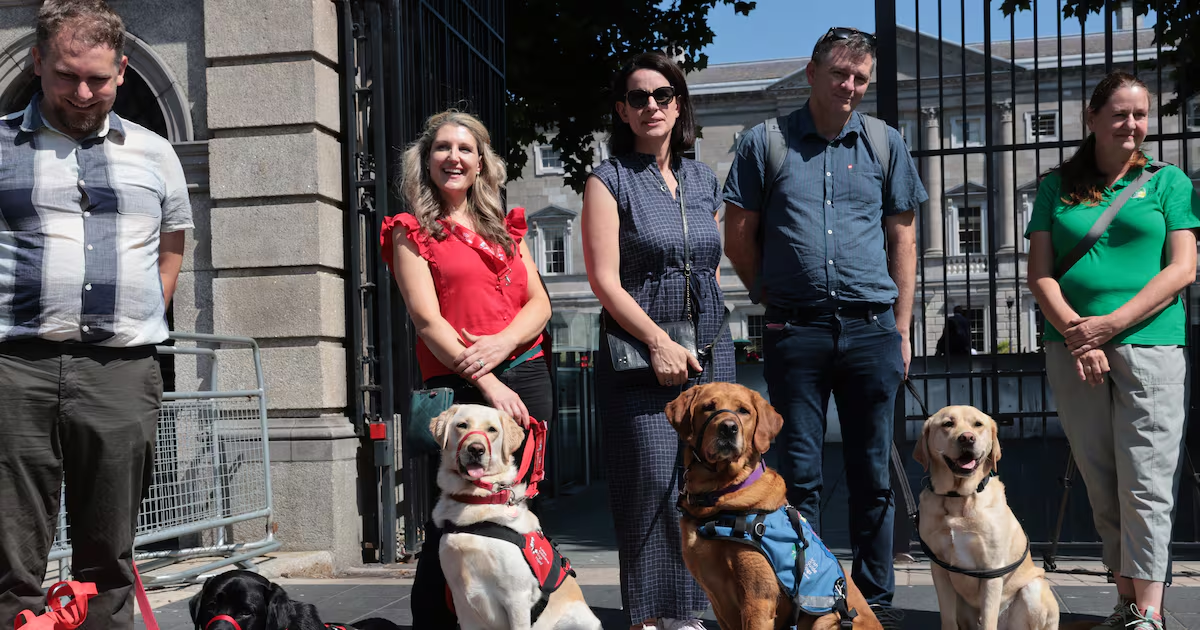
Catherine Ardagh used to identify as a “cat person” until she saw her six-year-old son walk safely to the shop for the first time with the assistance of her family’s new service dog Shadow. The Minister of State is calling for Government funding for charities that provide such dogs, after Shadow gave her son the ability to leave the house without needing a disability buggy. Ardagh and her husband, Darragh McShea, have twin boys, Seán and Darragh Óg. When her Darragh was three he was diagnosed with severe level three autism. He is non-verbal and prone to self-injurious behaviour such as banging his head. “Before we got Shadow, things that we now take for granted, and most people take for granted, were very difficult for us,” Ardagh said on Wednesday, explaining that Darragh could get overwhelmed, try to run away or injure himself whenever they left the house. Charities raised awareness on how to interact with support dogs and sought more funding at an event in Leinster House. Photograph: Collins “Going for a walk for us, something that’s really simple, was just impossible. We couldn’t do it. And so we often just stayed at home in our kitchen. We didn’t really get out, and when we did get out, we used an oversized disability bubbly for Darragh.” [ Study shows benefits to children of assistance dogsOpens in new window ]Ardagh said that Shadow, who joined their family before Easter, has changed their life. Shadow, who is a flat-coated retriever, came from the charity Dogs for the Disabled. “When she’s not tethered to Darragh, she’s an absolute live wire,” Ardagh said. “And when she’s tethered to Darragh, she turns into a different dog completely, she’s quite conscientious, a lot calmer, and she keeps Darragh grounded.” “It’s a game changer for our lives,” Ardagh said, adding that she did not like to speak publicly about her family. “[But] I feel like sometimes you have to speak about your own lived experiences because it gets more attention, unfortunately. But that’s where we are at, and I think if people don’t speak out, then disability services don’t get the priority they need.”Charities such as Dogs for the Disabled, Autism Assistance Dogs Ireland and My Canine Companion do not receive any State funding. Irish Guide Dogs receives some to offer guide dogs for people who are blind, but none for assistance dogs for those with other disabilities. Assistance dogs are also placed in schools, where they support children with additional needs. Photograph: Collins The cost of training each dog ranges from €15,000 to €25,000. Dogs for the Disabled varies between 30 and 35 dogs a year, but receives 30 enquiries a week from families. Each year, Autism Assistance Dogs Ireland turns away 700 families. My Canine Companion runs a lottery system, where around 2,000 families compete for 100 places each year.Assistance dogs are also placed in schools, where they support children with additional needs. Fergus O’Flaherty is the deputy principal at Adamstown Community College in Dublin, where a service dog called Quattro has been credited for improving attendance and retention of students. O’Flaherty said the “first student Quattro worked with” was a girl who was planning to drop out at the start of third year. “She had multiple professionals involved in her life and education through primary and secondary schools, all of whom were trying everything to engage with her and keep her in education, but to no avail. And along came our friend Quattro,” he said. Within a short space of time the young student began to attend school just to look after him. “We built on this, but Quattro remained the only reason she stayed in school,” O’Flaherty said. “She completed not just her Junior Cert, but decided to stay on for her Leaving Cert, and is now studying animal care.”
‘Going out was impossible’ – assistance dogs change children’s lives but need funding
Sheer demand mean Autism Assistance Dogs Ireland turns away 700 families. My Canine Companion runs a lottery system, where around 2,000 families compete for 100 places each year.
638 words~3 min read