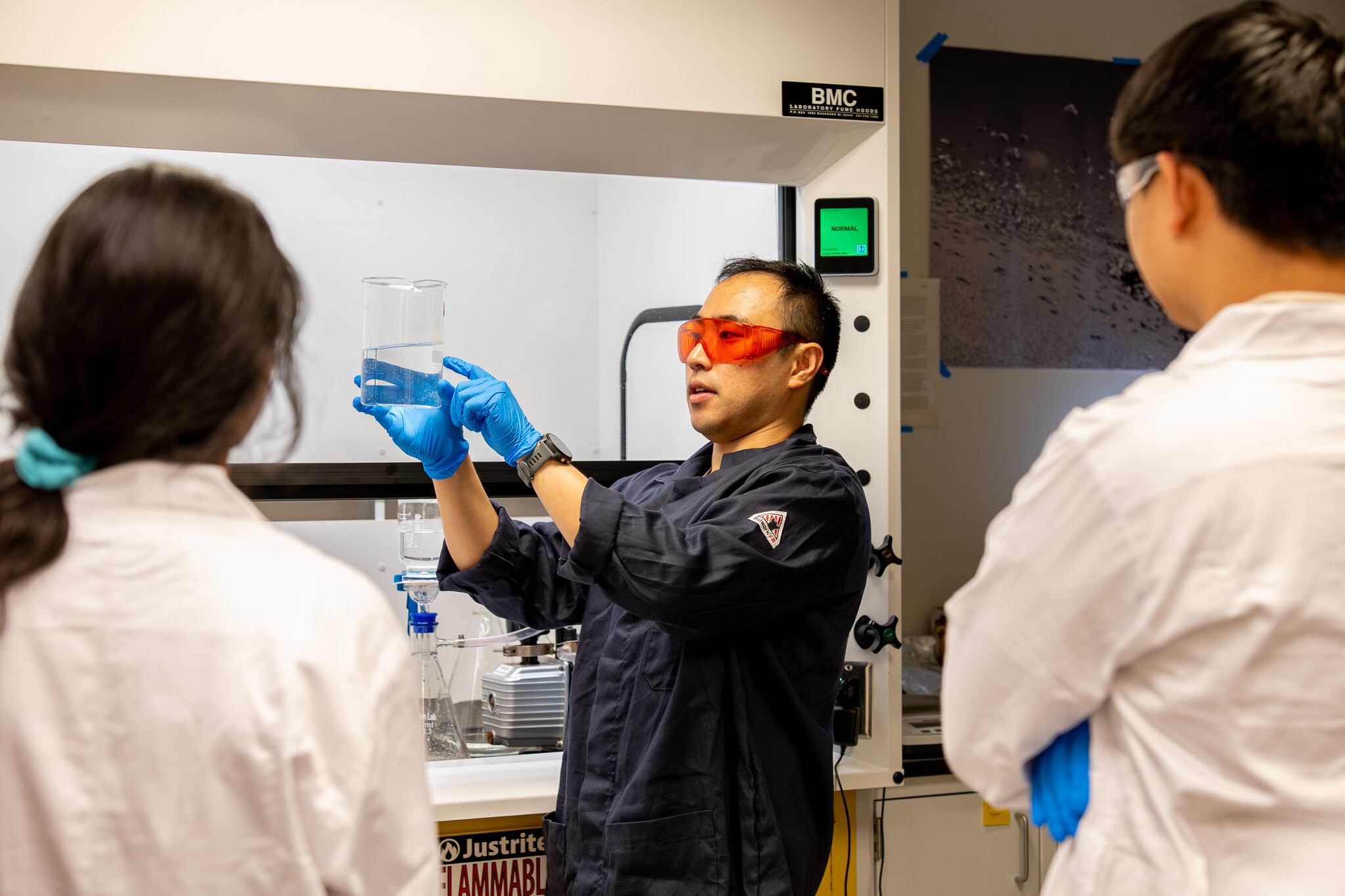
Microplastics researchers Samantha McBride and Derek Ho of Penn Engineering and Vijay Bhatia of the Philadelphia Water Department discuss how microplastics get into ecosystems and human bodies, offering practical ways to minimize exposure.
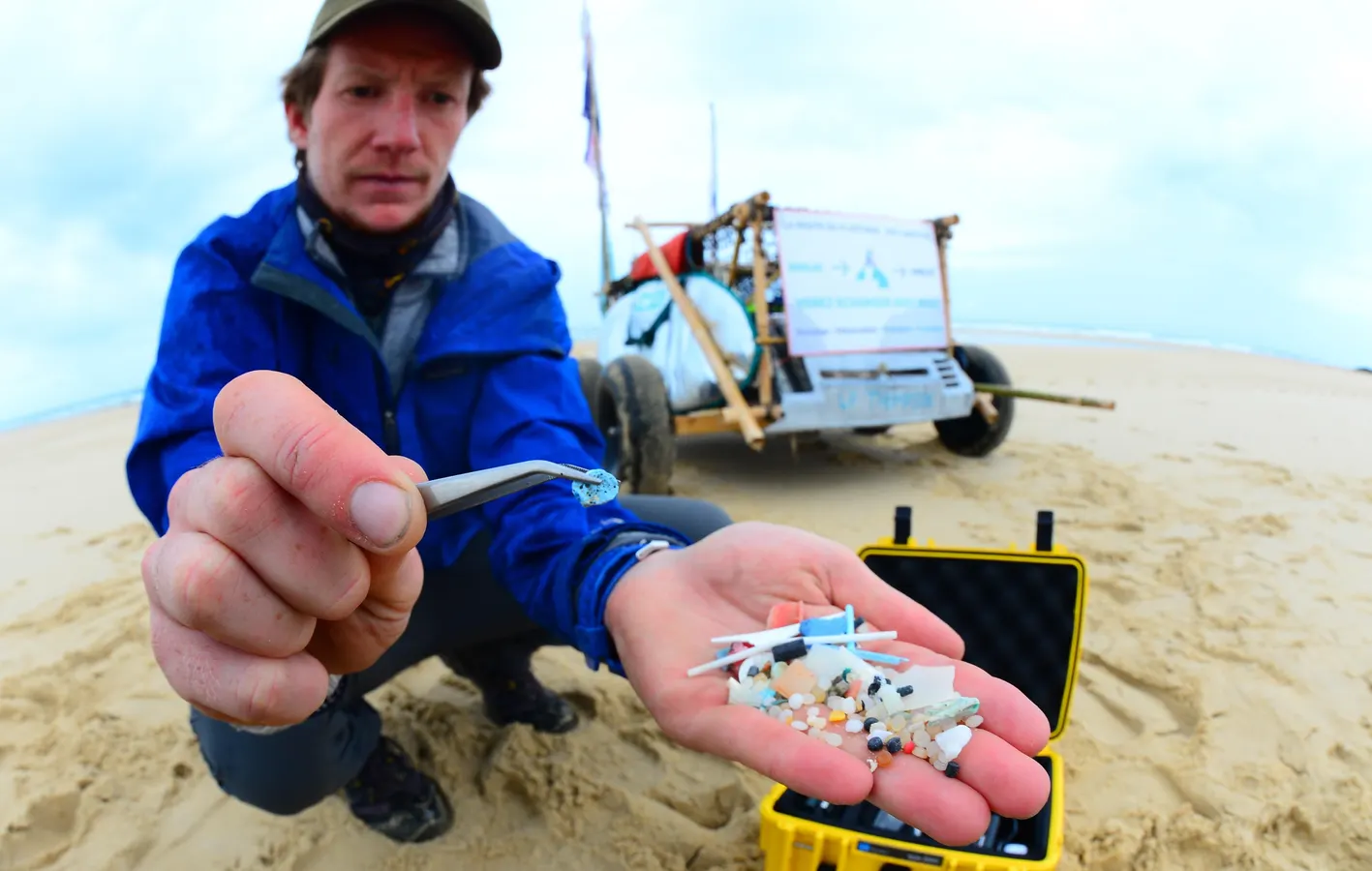
Sun, sand, and surf are the mainstays of a beach day. But something else now lingers along the coast and other outdoor spaces: bits of plastic broken down so small that scientists need special tools to see them.
These microplastics have been building up for decades. In some coastal sediments, plastic deposition has doubled roughly every 15 years since 1945. Microplastics end up in human blood, lungs, and placentas, and researchers are starting to tie them to real harm. One study linked plastics in artery plaque to a more than fourfold higher risk of heart attack, stroke, or death.
To better understand how these particles get into the environment and the human body and what can be done to reduce their impact, Penn Today spoke with Samantha McBride, the William K. Gemmill Term Assistant Professor of Mechanical Engineering in the School of Engineering and Applied Science; postdoctoral fellow Derek Ho, who studies microplastics in the McBride lab; and Vijay Bhatia, a microplastics researcher in the Philadelphia Water Department who has partnered with McBride’s lab to bring microplastics education to local high schools.