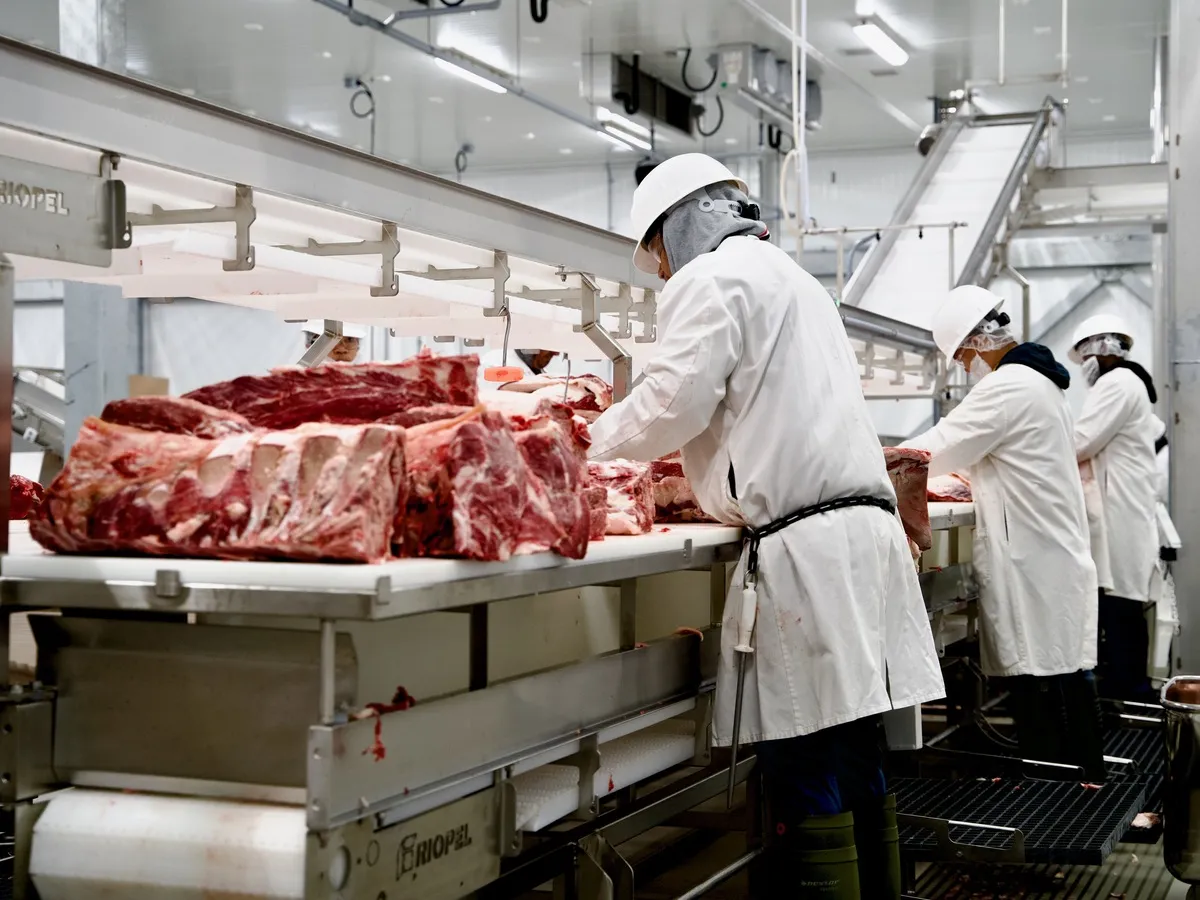
Skip to Content News Archives Economy Energy Oil & Gas Renewables Electric Vehicles Mining Commodities Agriculture Real Estate Mortgages Mortgage Rates Finance Banking Insurance Fintech Cryptocurrency Work Wealth Smart Money Wealth Management Investor Personal Finance Family Finance Retirement Taxes High Net Worth FP Comment Executive Women Puzzmo Newsletters Financial Times Business Essentials More Innovation Information Technology FP500 Podcasts Small Business Lives Told Tails Told Shopping Financial Post Store Obituaries Place a Notice Advertising Advertising With Us Advertising Solutions Postmedia Ad Manager Sponsorship Requests Classifieds Place a Classifieds ad Working Profile Settings My Subscriptions Saved Articles My Offers Newsletters Customer Service FAQ News Economy Energy Mining Real Estate Finance Work Wealth Investor FP Comment Executive Women Puzzmo Newsletters Financial Times Business Essentials HomeCommoditiesAgricultureNewsOntario’s first new federally inspected meat plant in 20 years opensThe new facility targets growing demand for halal meat across Canada and international marketsLast updated Jul 15, 2026 You can save this article by registering for free here. Or sign-in if you have an account.Butchers work at Blue Lakes Premium Meats in Parkhill, Ontario, on July 15. The facility has the capacity to process about 350 cattle and 500 lambs a week. Photo by Jonathan Juha/The London Free PressYaser Alqayem has been looking to capitalize on what he calls the “significant growth” in demand for halal meat in Canada for the better part of five years.Subscribe now to read the latest news in your city and across Canada.Exclusive articles from Barbara Shecter, Joe O'Connor, Gabriel Friedman, and others.Daily content from Financial Times, the world's leading global business publication.Unlimited online access to read articles from Financial Post, National Post and 15 news sites across Canada with one account.National Post ePaper, an electronic replica of the print edition to view on any device, share and comment on.Daily puzzles, including the New York Times Crossword.Subscribe now to read the latest news in your city and across Canada.Exclusive articles from Barbara Shecter, Joe O'Connor, Gabriel Friedman and others.Daily content from Financial Times, the world's leading global business publication.Unlimited online access to read articles from Financial Post, National Post and 15 news sites across Canada with one account.National Post ePaper, an electronic replica of the print edition to view on any device, share and comment on.Daily puzzles, including the New York Times Crossword.Create an account or sign in to continue with your reading experience.Access articles from across Canada with one account.Share your thoughts and join the conversation in the comments.Enjoy additional articles per month.Get email updates from your favourite authors.Create an account or sign in to continue with your reading experience.Access articles from across Canada with one accountShare your thoughts and join the conversation in the commentsEnjoy additional articles per monthGet email updates from your favourite authorsSign In or Create an AccountorThose plans came to fruition Wednesday as the chief executive of Parkhill-based Blue Lakes Premium Meats said the company became the first federally inspected meat-processing plant to open in Ontario in nearly two decades. The designation allows it to sell meat products to other provinces and international markets.The $30-million, state-of-the-art facility will be able to process about 350 cattle and 500 lambs a week, helping increase Ontario’s meat-processing capacity. But don’t expect it to bring major relief to meat prices.Breaking business news, incisive views, must-reads and market signals. Weekdays by 9 a.m.By signing up you consent to receive the above newsletter from Postmedia Network Inc.A welcome email is on its way. If you don't see it, please check your junk folder.The next issue of Posthaste will soon be in your inbox.We encountered an issue signing you up. Please try again“Ontario has the most halal customer population, but in other provinces within Canada, there is increasing demand for halal as well,” Alqayem, Blue Lakes’ chief executive and a former IT director at Canada Life Assurance Co., said.“(The federal licence) opens the door for us to go beyond Ontario and also to other international markets, especially in the Middle East, where they are looking for halal-certified, but also corn-fed beef products, which are recognized internationally as the highest quality.” Yaser Alqayem, chief executive of Blue Lakes Premium Meats in Parkhill, stands outside the company’s new $30-million facility on Wednesday, July 15. (Jonathan Juha/The London Free Press)For consumers, however, increased processing capacity will do little to reduce meat prices in the short term. Prices have risen about 60 per cent over the past five years, said Kevin Grier, a livestock market analyst based in Guelph.The biggest issue for consumers remains that cattle supply across North America remains “at record lows” at a time when demand for meat products is high, he said.“There’s no more cattle being created because there’s a new plant,” Grier said.Grier said Canadians should expect upward pressure on beef prices to continue into 2028 as farmers try to grow their herds. The only way to increase cattle supplies is to send fewer cows for processing while herd numbers recover.“The supply is going to get worse before it gets better,” he said. “The only question in terms of declining prices is whether or not demand starts to weaken, and that has shown no signs of weakening in the last few years. There’s no reason to expect lower beef prices for the foreseeable future.”Nevertheless, trade tensions between Canada and the United States, which decided on July 1 not to renew the Canada-U.S.-Mexico Agreement, have made provinces and the federal government more interested in simplifying rules to allow for more interprovincial trading of products, including meat.Alqayem said Blue Lakes, formerly Parkhill Meats, worked with federal regulators from the planning stages of the new facility to make the process as smooth as possible.“After COVID-19, with the interruption of the food supply chain, the government recognized the need for maintaining local supply chains in the food sector, especially in the meat industry, so we were also successful in getting a grant that helped us in establishing the new federal plant,” he said.Franco Naccarato, chief executive of Meat and Poultry Ontario, a provincial umbrella group for butchers, meat processors and their suppliers, said businesses in the sector are impacted in two ways.One is meat processing capacity, which is often cited by Ontario cattle, chicken and sheep farmers as one of their biggest barriers to growth, he said. The other is selling across borders.“It’s quite well known in the sector that we need to ramp up our processing capacity,” he said. “The ability for provincial plants to sell interprovincially is a big item, a big challenge. It’s being addressed, and we’re trying to see where it could go, but we need more support to help these businesses that have that market potential to grow.”Mike von Massow, a food economist at the University of Guelph in Ontario, said the lack of packing capacity could be constraining growth among farmers and meat packers.“Particularly within Canada and within North America, our beef supply chain is quite resilient,” he said. “The lack of packing capacity . . . doesn’t necessarily hurt food security or food sovereignty in Canada, but it can hurt economic security because we’re not using our production base for the highest possible value outputs.” Join the Conversation This website uses cookies to personalize your content (including ads), and allows us to analyze our traffic. Read more about cookies here. By continuing to use our site, you agree to our Terms of Use and Privacy Policy.
Ontario’s first new federally inspected meat plant in 20 years opens
The new facility targets growing demand for halal meat across Canada and international markets.
1,224 words~6 min read