Originally published on tamiz.pro.
A new contender, misa77, has emerged in the highly optimized world of data compression, promising a remarkable leap in performance over established codecs like LZ4. Developed by Andreas Hentschel, misa77 aims to deliver an unprecedented combination of decoding speed and compression efficiency, claiming to decode twice as fast as LZ4 while offering better compression ratios. This article takes a deep dive into the technical mechanisms that enable misa77 to achieve such impressive benchmarks.
The Compression Landscape: Speed vs. Ratio
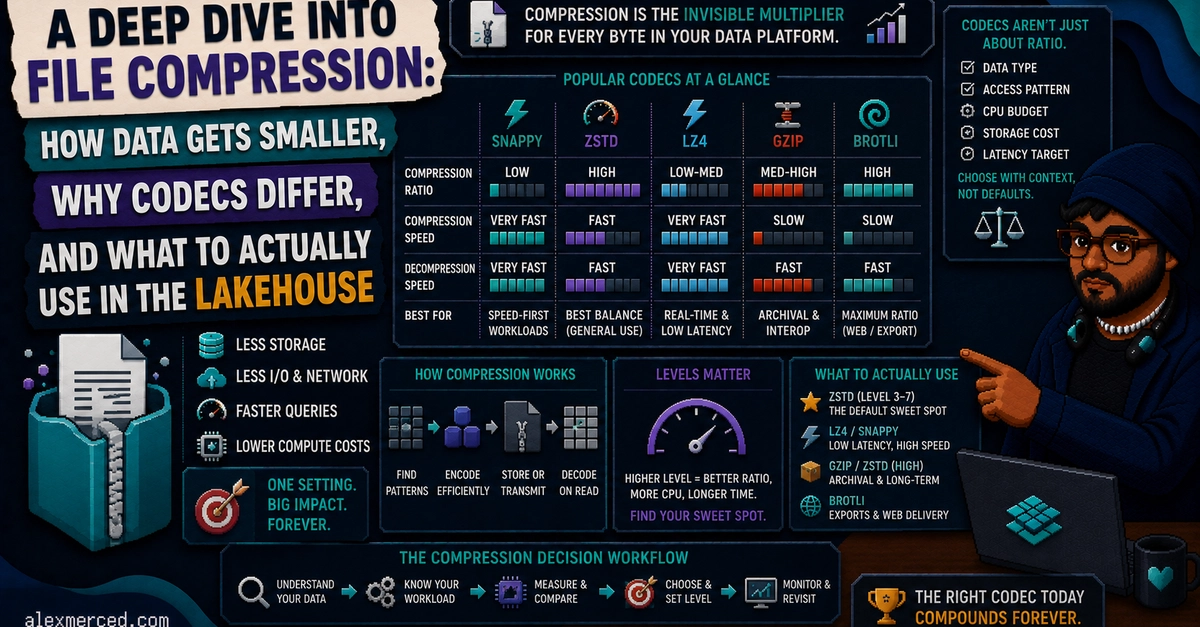
Data compression codecs typically operate on a spectrum where speed and compression ratio are inversely related. High compression ratios often come at the cost of slower encoding and decoding, while very fast codecs tend to sacrifice some compression efficiency. LZ4, a widely adopted algorithm, sits firmly on the 'speed' end of this spectrum, known for its extreme decoding velocity, making it ideal for scenarios where rapid decompression is critical, such as network packets, game assets, or log files. misa77's claim to outperform LZ4 in both aspects is significant and challenges conventional wisdom.
Core Principles of misa77's Design