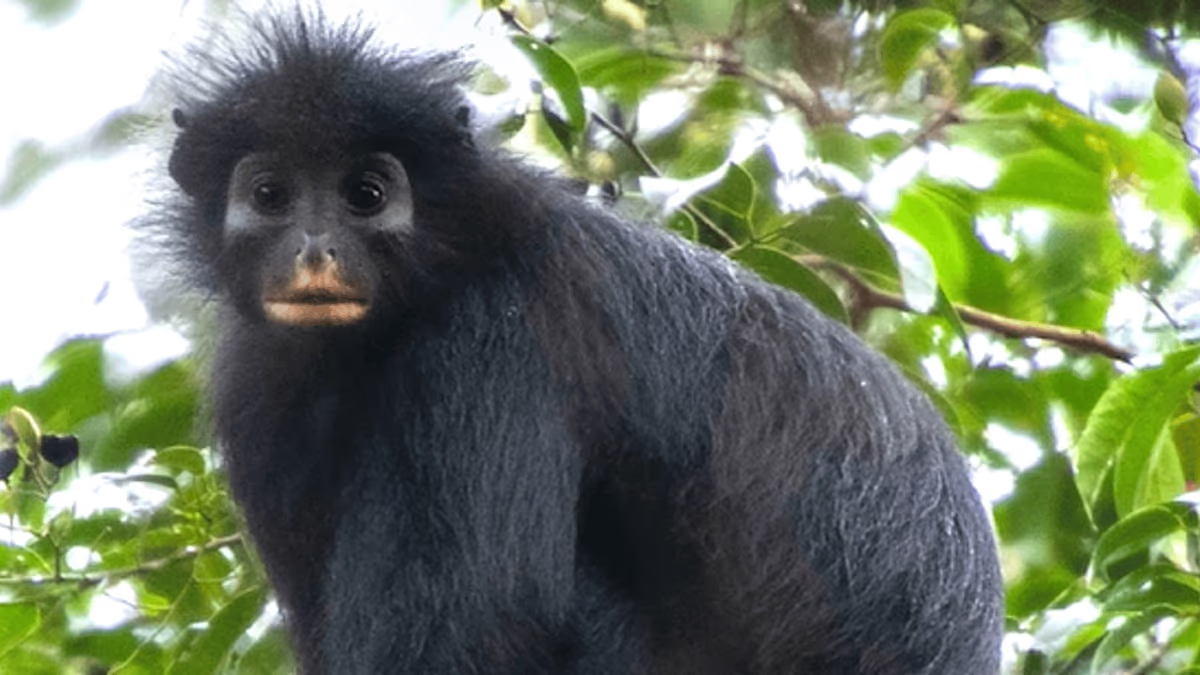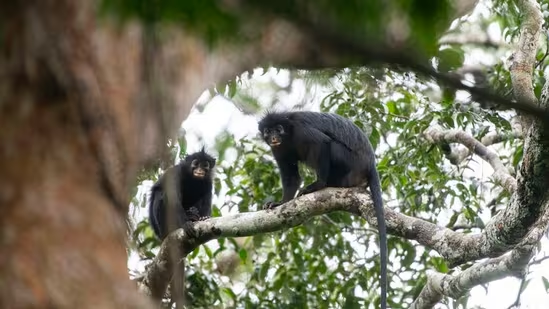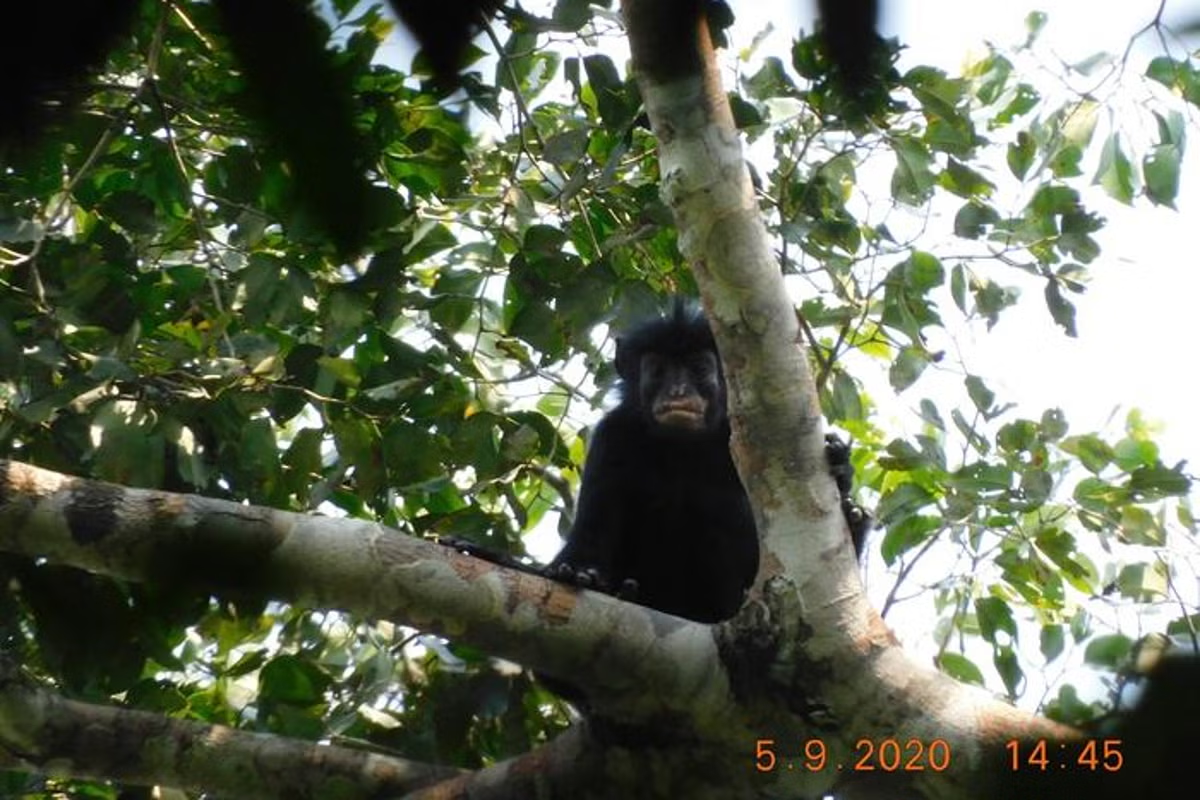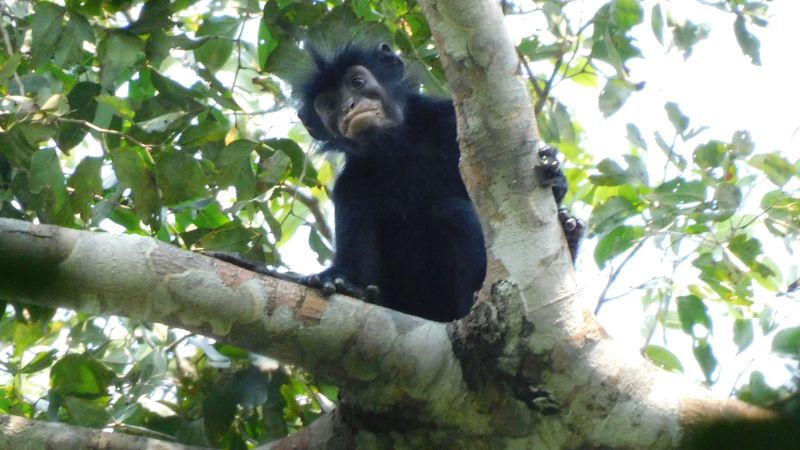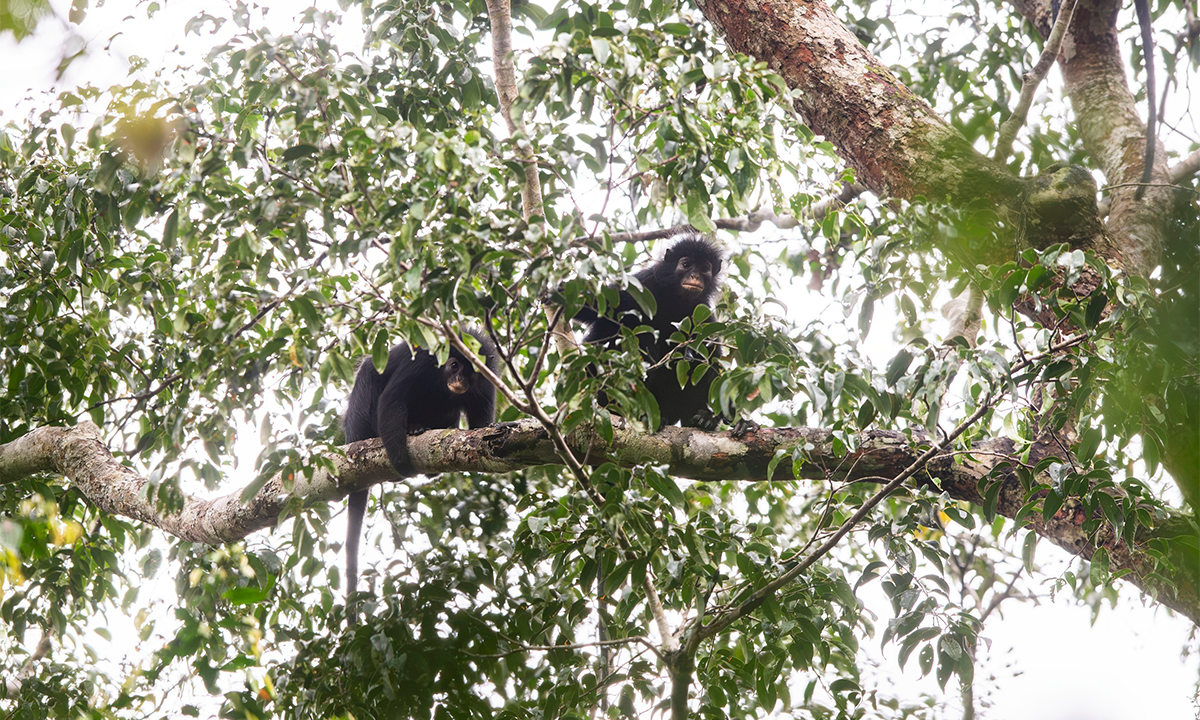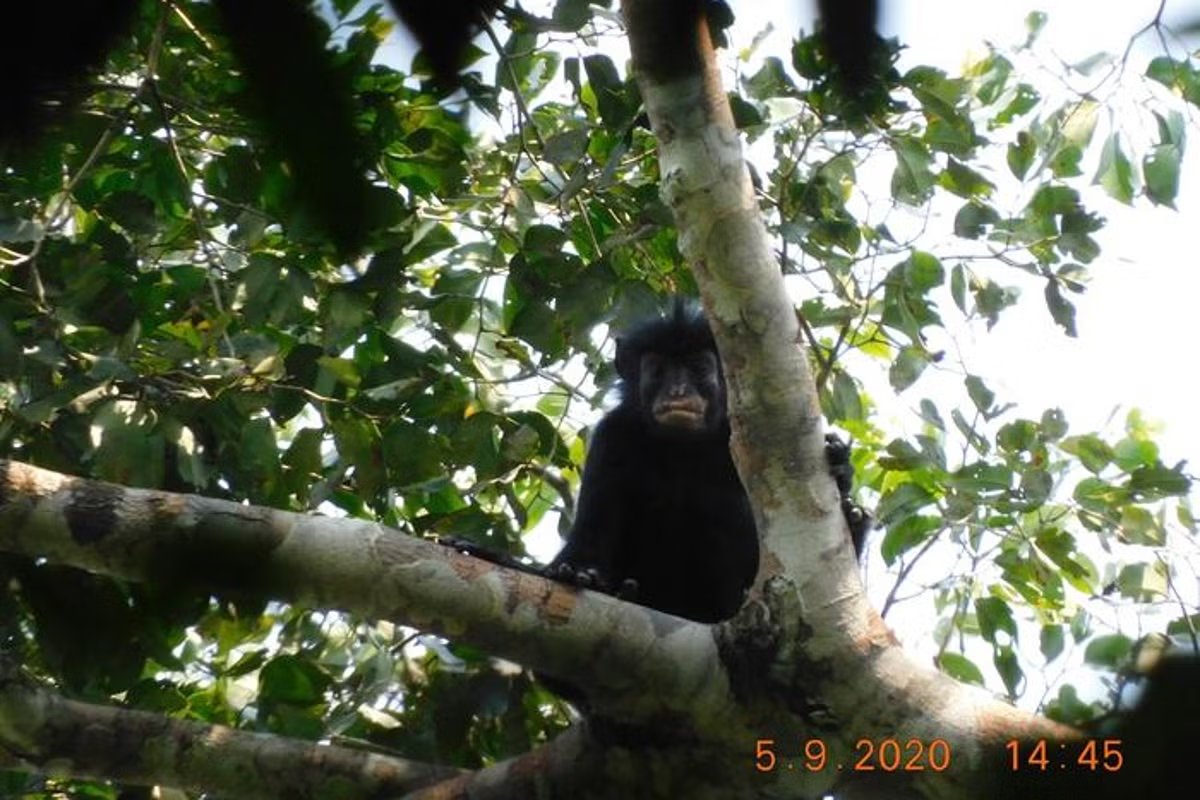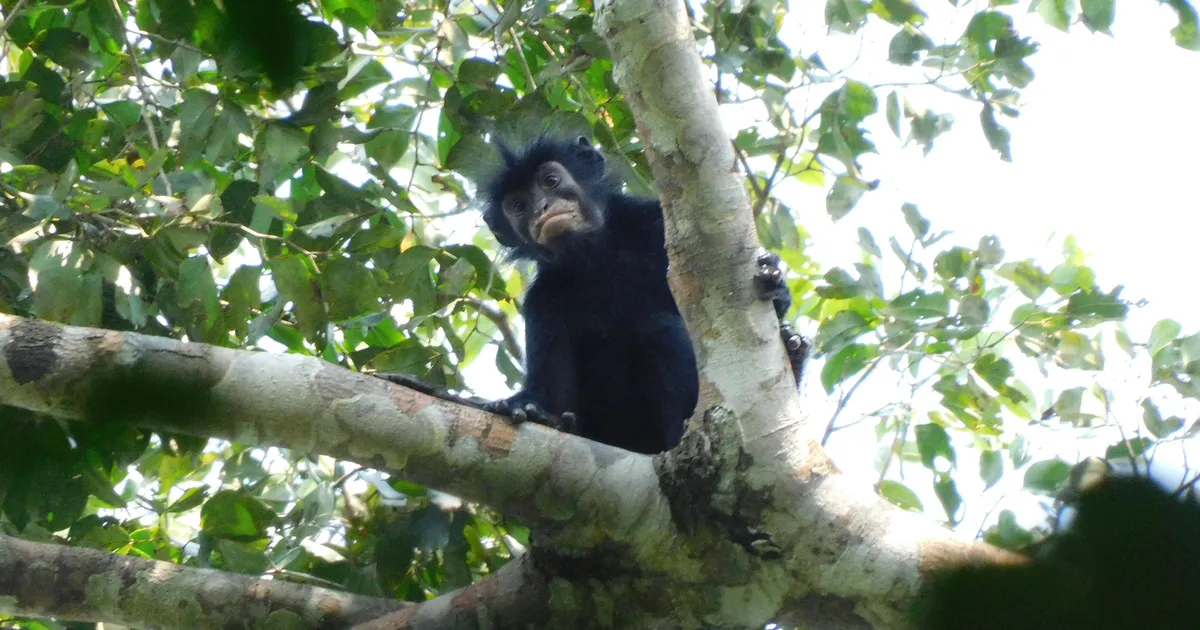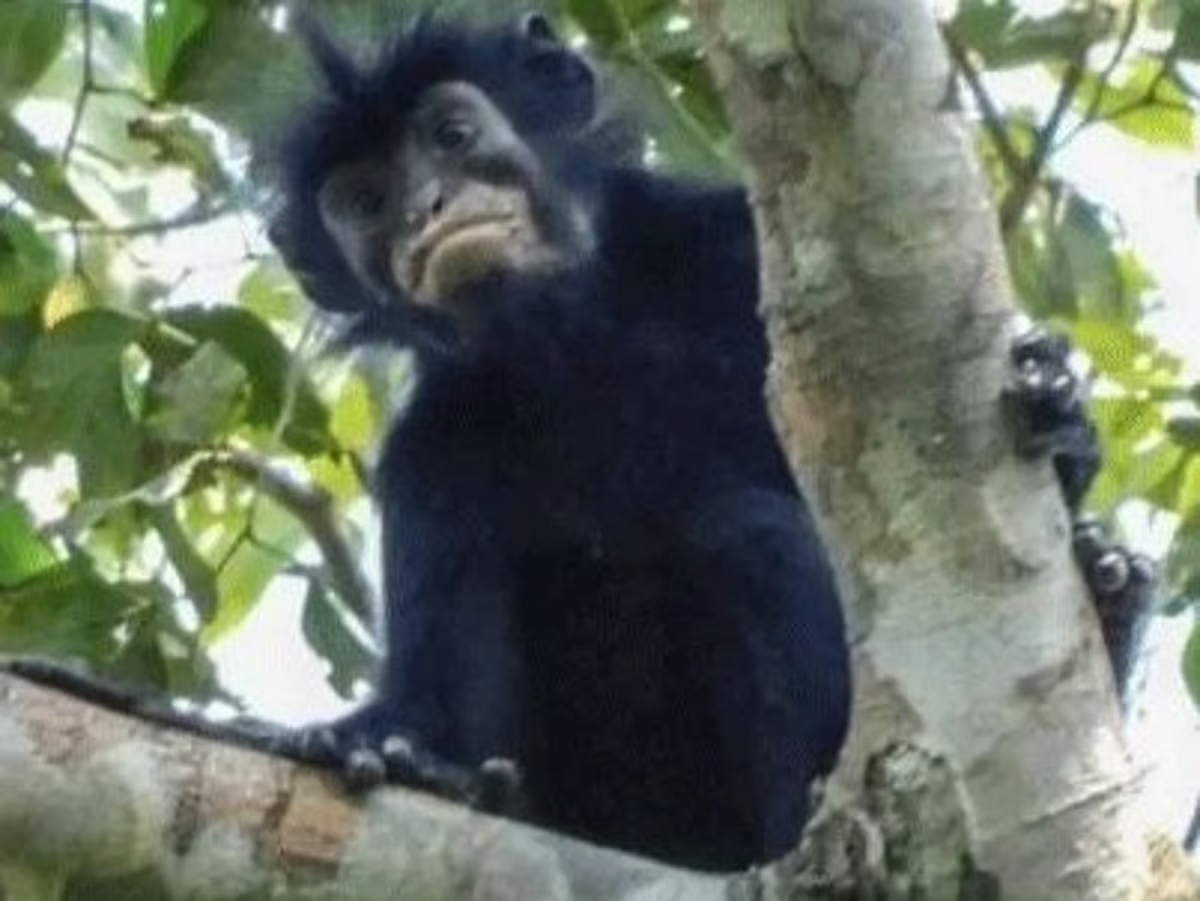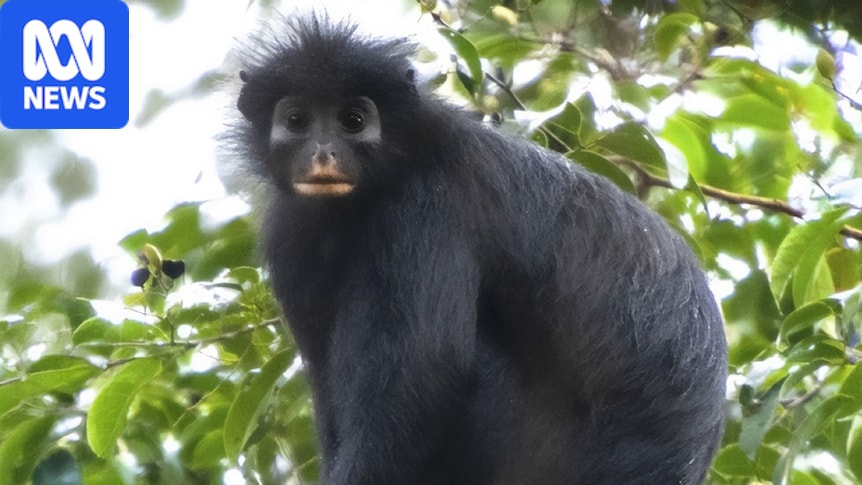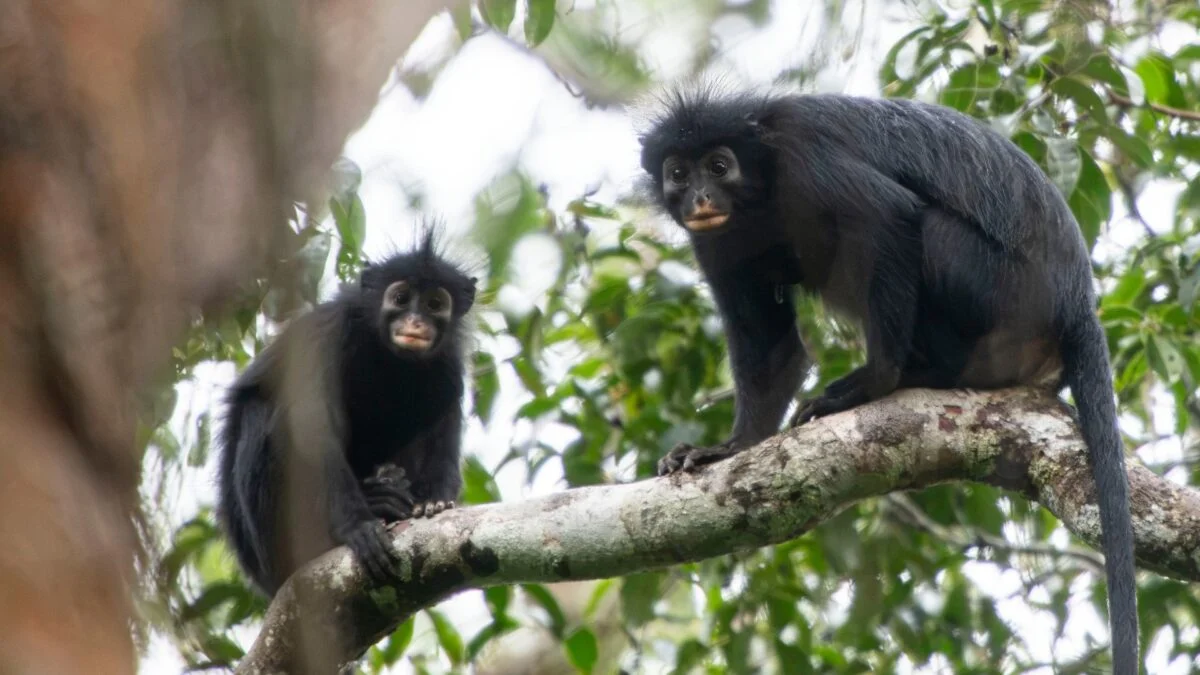
In 2008, a team of researchers working in the Congo Basin snapped a blurry picture of a funny-looking monkey. While it resembled monkeys of the genus Colobus, its small size, glossy black fur, dramatic facial features, and white rear-end markings set it apart from any known species. Then, it disappeared. Without additional observations, scientists gave up on trying to identify this peculiar primate and turned their attention to other species. It wasn’t until 2018 that researchers working near the location of the 2008 sighting spotted the monkey again. This time, they got much clearer photos. “We were able to tell that it was something unusual,” Junior Amboko, a field conservationist from the Democratic Republic of the Congo and a PhD student at Florida Atlantic University, told Gizmodo. At the time, he was overseeing field researchers in Lomami National Park, located in the heart of the Congo Basin.
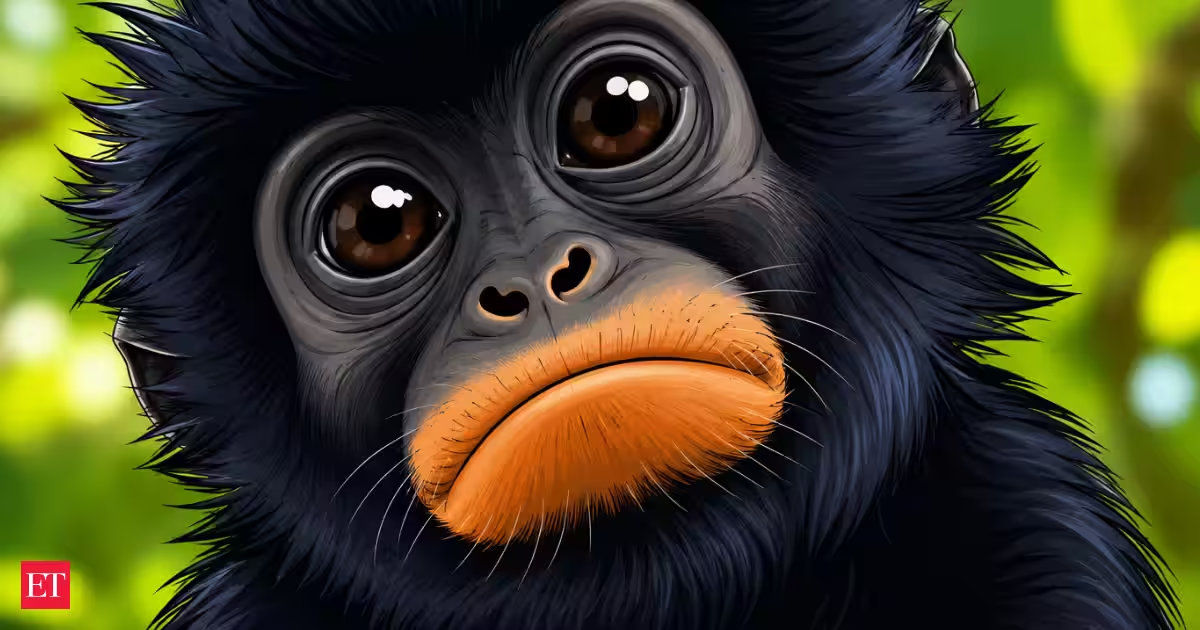
The photos revealed that the monkey did not have thumbs, confirming that it belonged to the genus Colobus, but its bizarre features—particularly the pinkish-orange patch around its mouth and nose—were a clear sign to Amboko that it belonged to an unknown species or subspecies. In 2020, he launched the first official study of this mysterious monkey. The findings, published today in the Public Library of Science (PLOS) One, confirm that it is, indeed, a newly discovered species of Colobus, now officially named Colobus congoensis.