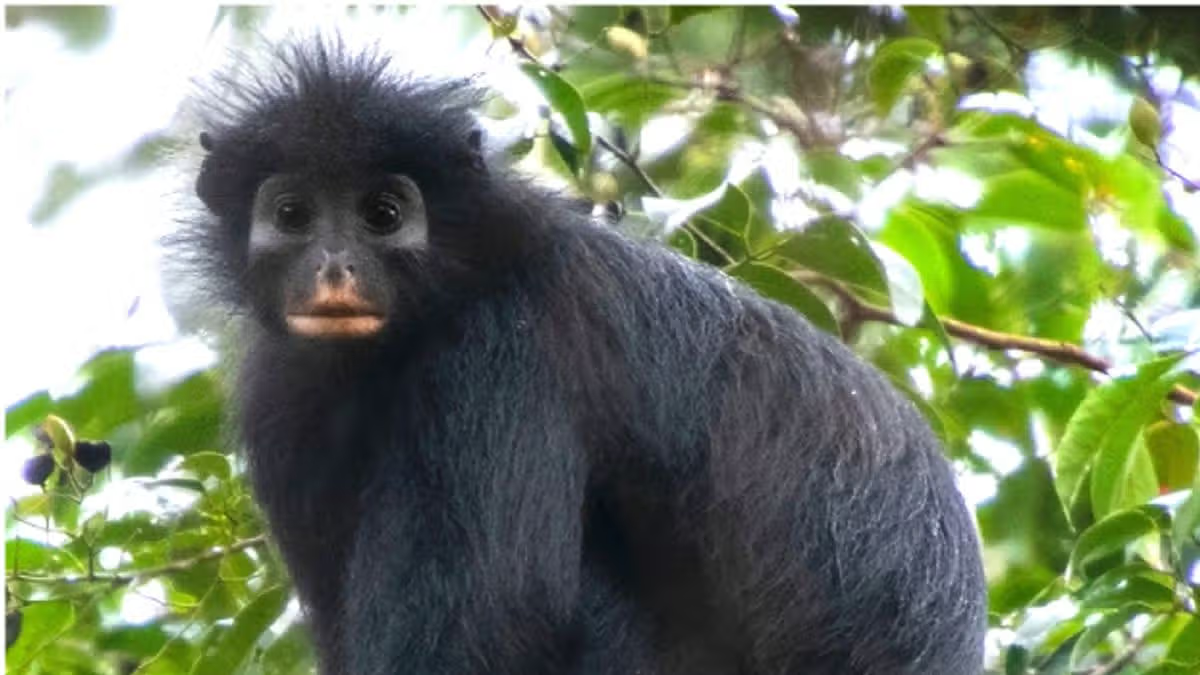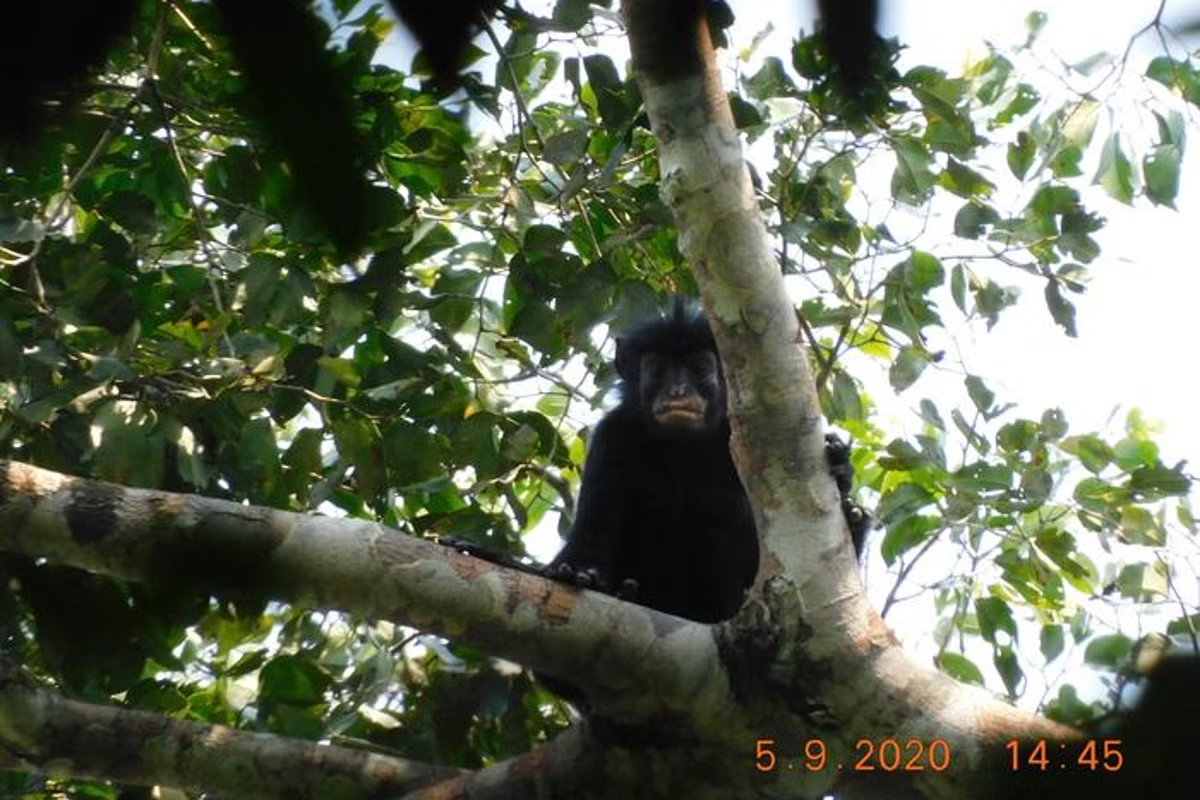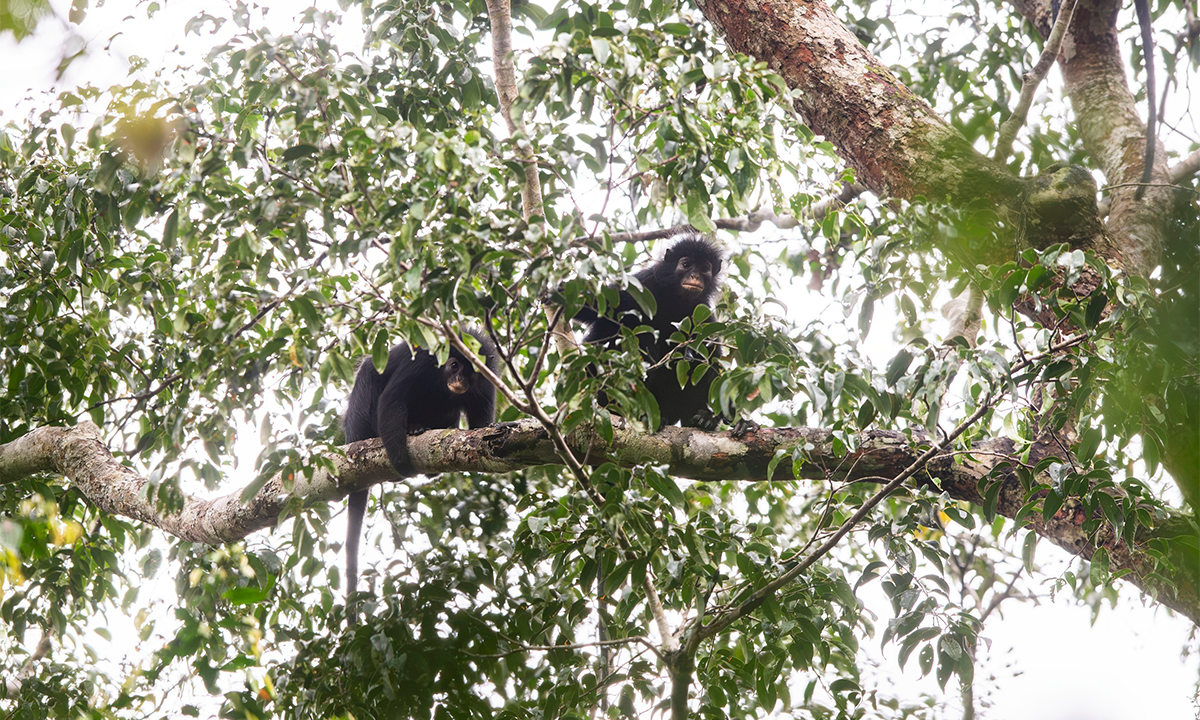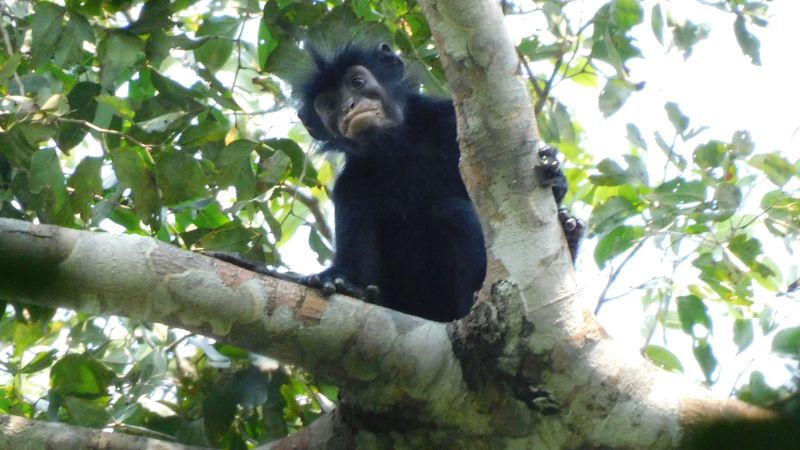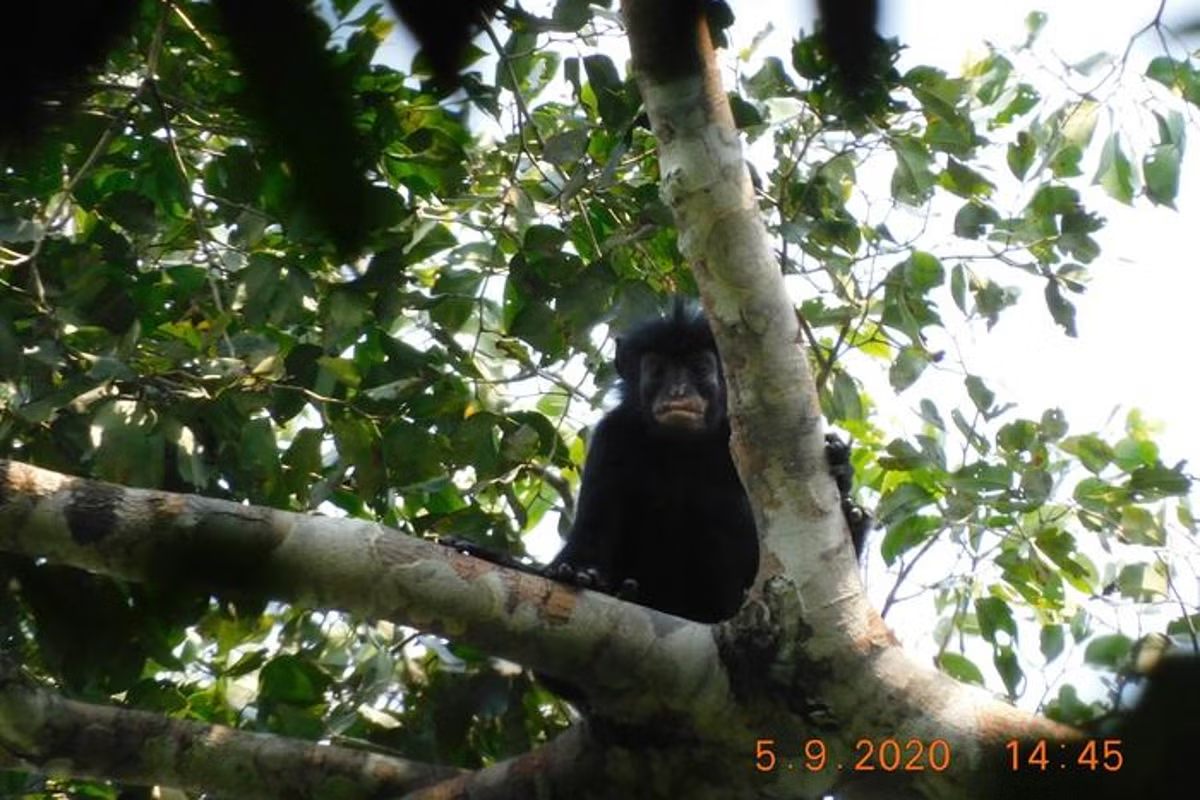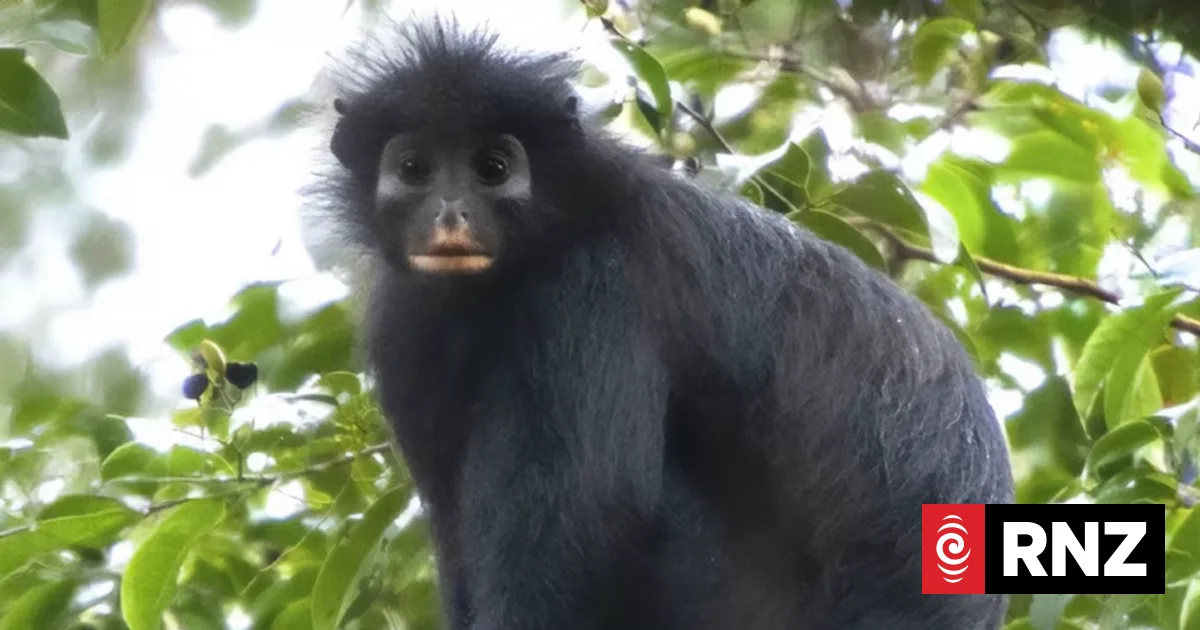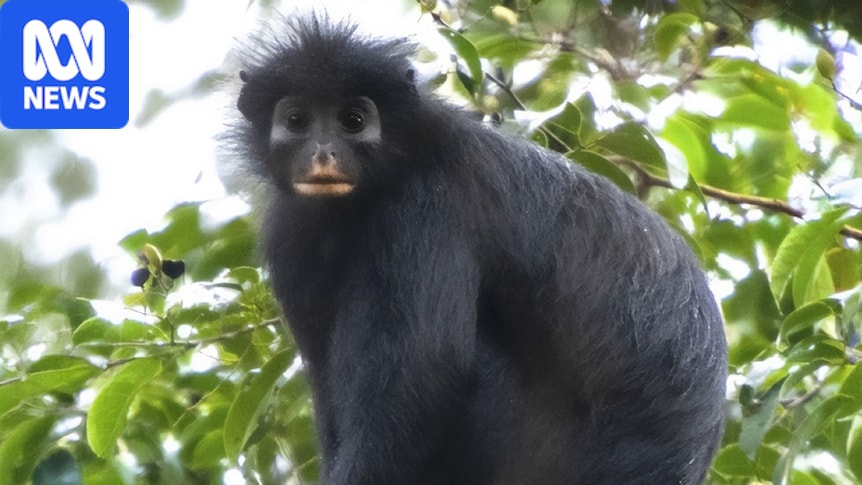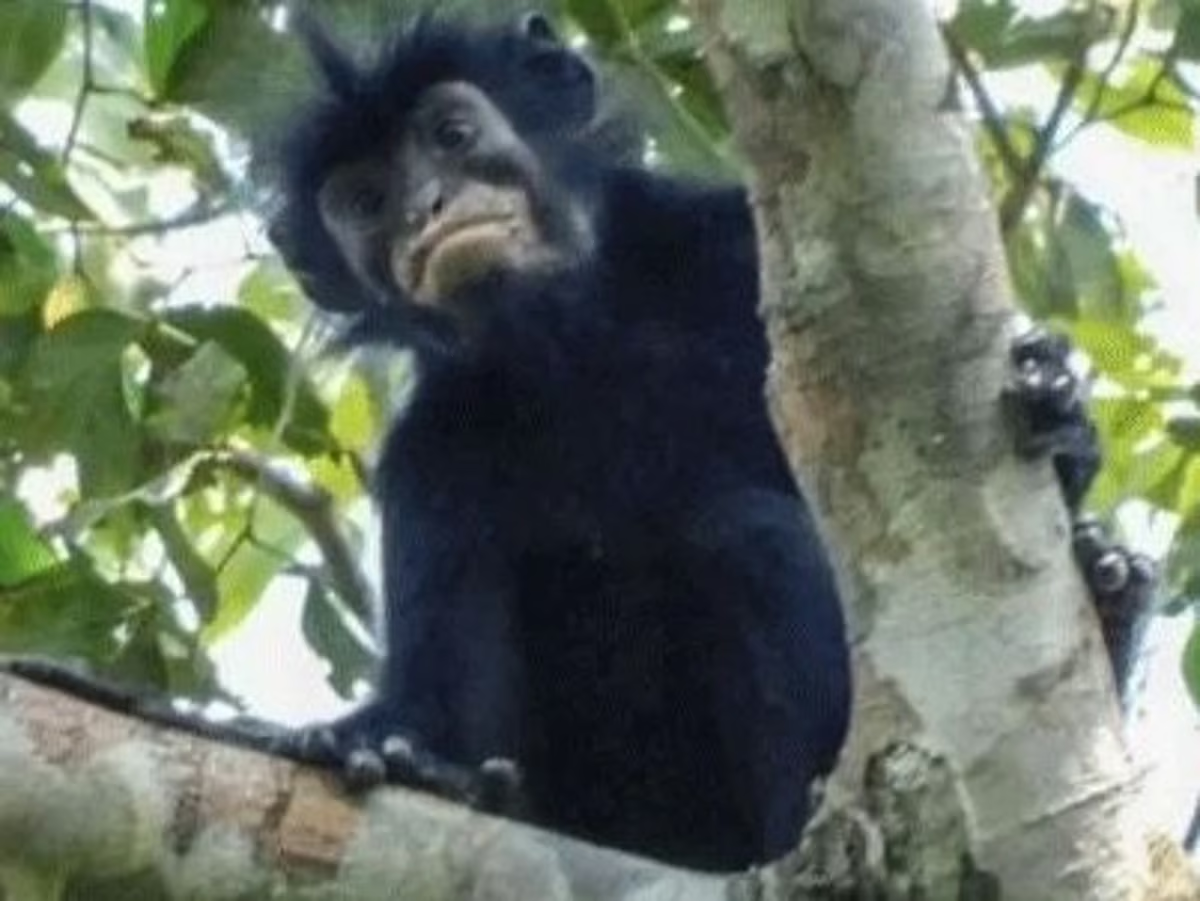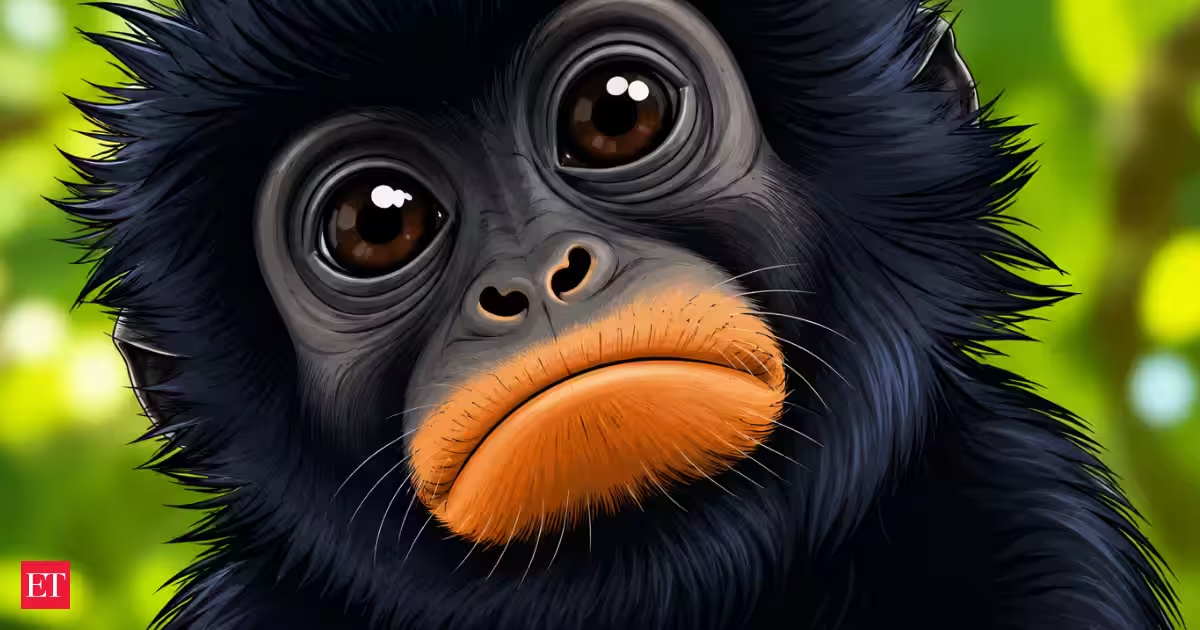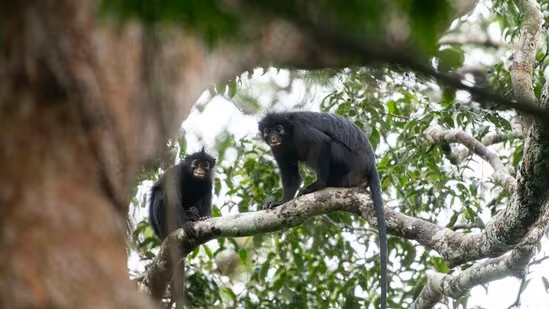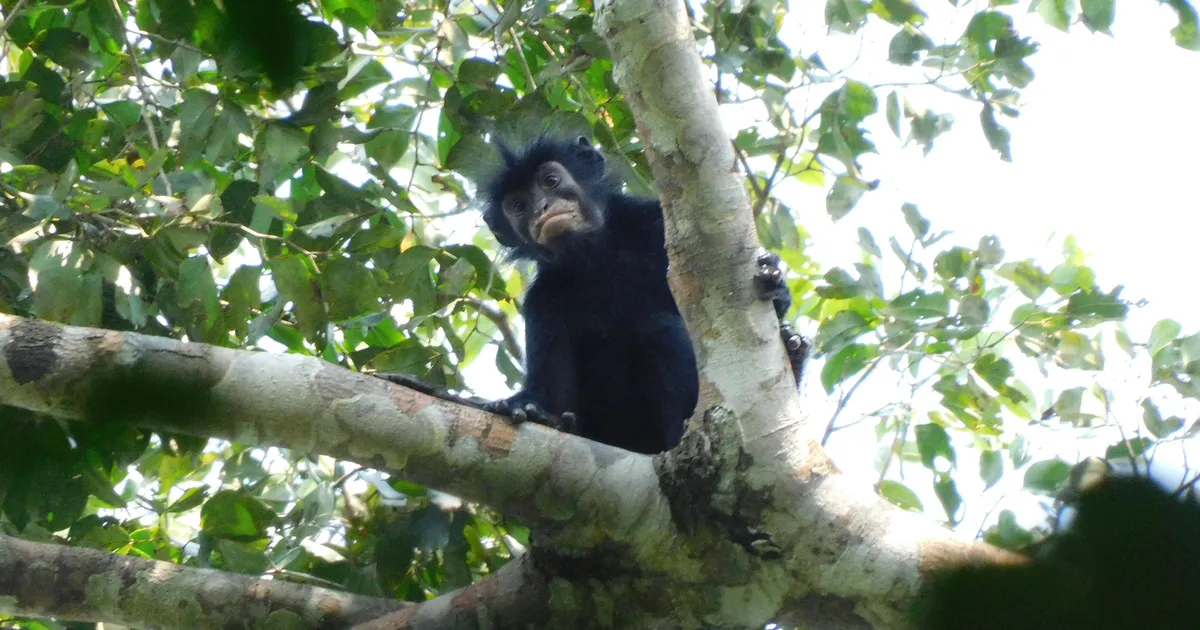
Current sectionScience & HealthNature & EnvironmentThe petite 'Likweli' colobus was discovered in the treetops of the Congo rainforest, surviving in a relict range between riversShare to FacebookShare to XArticle printing is available to subscribers onlyPrint in a simple, ad-free formatSubscribeComments: Zen reading is available to subscribers onlyAd-free and in a comfortable reading formatSubscribeColobus congensis, known locally as "likweli," has a dramatic black face with pinkish-orange lips. Credit: Junior Amboko, CC-BY 4.0Colobus congensis, known locally as "likweli," has a dramatic black face with pinkish-orange lips. Credit: Junior Amboko, CC-BY 4.003:08 PM • July 16 2026 IDTA new species of colobus has been discovered in the remote forest east of the Lomami River in the Democratic Republic of Congo. Named Colobus congoensis sp. nov., the monkey is black all over except for a cream-to-orange patch surrounding its mouth, and white fur around its anus. Like other colobuses, it has silky fur and a long tail, but weighs only about 7 kilograms (15 pounds).The newly described monkey, first spotted in 2008, is small relative to other colobus species. It is also so rare and likely so evasive, living in the rainforest canopy, that it is little-known even to communities bordering its range – and they do know all about other primates in the area. Those who do know it call it Likweli, John Hart of Yale Peabody Museum, Junior Amboko of Florida Atlantic University and colleagues reported in PLOS One on Wednesday.The perianal region of Colobus congensis, featuring white fur. Even though you might think you're seeing testicles, left is a male and right is a female. Credit: Hart et al., PLOS One 2026 HartThe perianal region of Colobus congensis, featuring white fur. Even though you might think you're seeing testicles, left is a male and right is a female. Credit: Hart et al., PLOS One 2026 HartAmong the few who did know of it, one hunter reported that it reeked. The scientists did not weigh in on its body odor, but note that observations suggest it to be relatively quiet and "watchful." This may help explain why so few people have ever seen it.Not often spotted, here is the Congo colobus YoutubeIts identification as a colobus is based on mitochondrial DNA analysis and its looks, which is like other colobuses except for the mouth fur and perianal display, the team says. The genetics suggest that Likweli is one of the deepest evolutionary branches within the colobus lineage, the team adds.Little Likweli lives in groups averaging six monkeys, which is in keeping with other colobus species living further north in Africa – the black-and-white colobus, for example, typically has six-to-10 members in a troop, of which one is male and several juvenile. Genetics show Likweli to be a sister species to Colobus satanas, though the two are separated by no less than 1,200 kilometers (745 miles), the team points out. A and B are the newly discovered Colobus congoensis, side-by-side with their relative and Colobus satanas (C and D). Credit: Hart et al., 2026, PLOS OneA and B are the newly discovered Colobus congoensis, side-by-side with their relative and Colobus satanas (C and D). Credit: Hart et al., 2026, PLOS OneAlso, the vocalizations of C. congoensis and C. satanas have structural similarities, Hart and the team say based on recording and analyzing "roaring events." They could not achieve resolution to the level of deducing the sex of the vocalizing simians, but they note that in other colobus species, it's more common in males. While congoensis lives in the DRC, satanas survives only in west-central Africa and Bioko Island in the Gulf of Guinea. The relationship of the monkeys shores up the thesis that in the distant past, colobuses were more widely dispersed. Now Likweli lives in a relict range in the Lomami-Lualaba interfluve. For some reason, it seems to prefer living in trees growing in gray clay and to avoid forests growing in white sand, the team says. They cannot parse the monkey's tastes but note that the vegetation in the clayey areas is more diverse. And yes, the newly described colobus is considered endangered. On the downside, monkeys are still hunted in the DRC, and the extremely confined range renders the monkeys vulnerable to climate change. On the upside, what remains of this tiny monkey's tiny relict range is within Lomami National Park and is therefore protected.In the NewsShin Bet Chief Agrees to Give Sara Netanyahu Lifelong SecurityHow a Secret Mossad Operation in Dubai Ended Up in Israel's Design WeekNetanyahu Government Plans to Use Shin Bet for Law Enforcement in Arab CommunityIsrael Isn't Attacking Iran, but It's Deeply Involved in This WarResigning Likud MK: 'One Third' of Party Tried to Oust Netanyahu After Oct. 7Remembering and rebuilding two years laterICYMIInside the Mossad Plot to Install Ahmadinejad as Iran's LeaderThe Original Tradwives of Ancient RomeEgypt Lost the World Cup. But Was the Referee Really Jewish?Eisenkot Is Quietly Gaining Ground in Likud Territory. Enough to Beat Netanyahu?Ro Khanna, U.S. Lawmaker & Israel Critic, Says West Bank Settlers 'Detained' HimI Joined Rep. Ro Khanna on His West Bank Visit. Here's What I Saw
Monkey see, monkey new? • Unknown species of monkey with orange lips reported in central Africa
The petite 'Likweli' colobus was discovered in the treetops of the Congo rainforest, surviving in a relict range between rivers
848 words~4 min read