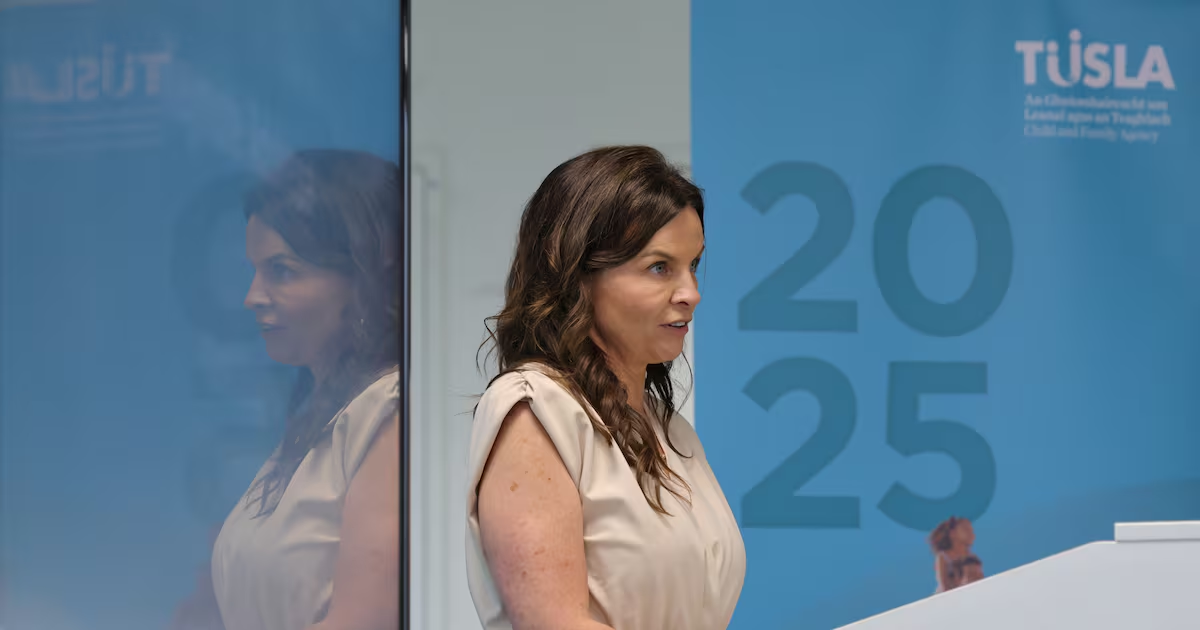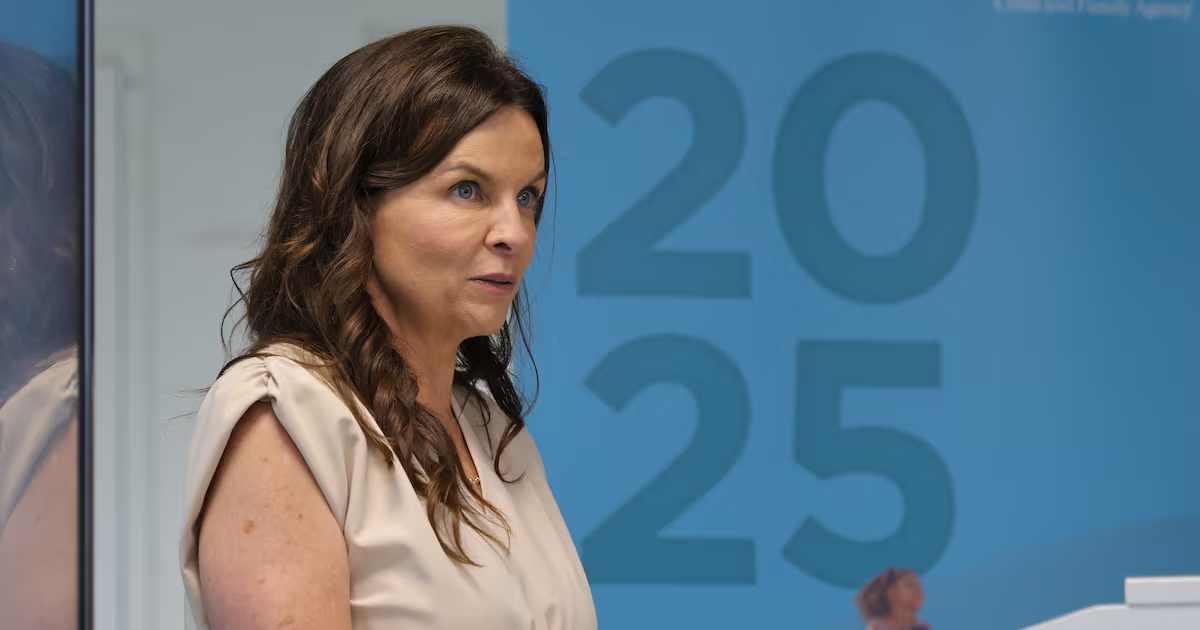
The line Tusla must tread, between arguing for sufficient resources to protect children and not antagonising its main funding source, is wafer thin.Chief executive Kate Duggan, speaking at the publication of the agency’s 2025 annual report on Wednesday walked the line carefully. She detailed surging demands on the agency, with child protection and welfare referrals surpassing 100,000 for the first time last year, reaching 106,444. A decade earlier, in 2015, it had received just 43,596. She outlined progresses, for example, in reducing reliance on unregulated care placements known as special emergency arrangements, overhaul of Tusla’s digital systems and the success of its new social work apprenticeship programme. But she noted: “We were not able to meet the scale of demand in a timely way for all children and families. “There was a cohort of children and families who required access to special care services, who required access to an appropriate and stable placements ... within their communities and we were unable to provide that.”Rather than speak of inadequate funding, she referred to “capacity” issues. “Where a child needs an immediate response, an immediate place of safety, those of highest priority do receive a service. But we do then recognise that where you have increased demand compared to the capacity available, other children or families may have to wait longer.”[ Tusla reports ‘unprecedented demand’ as referrals pass 100,000 for first timeOpens in new window ]Although not wholly about money, attractive pay, working conditions and career prospects to entice people into Tusla’s workforce, as well as adequate funding to provide quality placements, all cost. Duggan and Tusla chairwoman Madeleine Clarke carefully praised Minister for Children Norma Foley for securing from the Department of Public Expenditure a 14 per cent increase in funding for 2026, compared with 2025, bringing its allocation this year to almost €1.4 billion.“We did receive a good increase last year,” said Clarke, without saying it was inadequate. She added: “It’s completely clear that the demand and the pressure is so high that we definitely need as much resourcing as possible.” Others can be less circumspect. Ombudsman for Children Niall Muldoon has identified “chronic underfunding” of Tusla as a significant threat to children’s rights. [ An underfunded Tusla will not be able to meet surging demand, ombudsman warnsOpens in new window ]In correspondence to Foley in April he called for a review of Tusla’s funding. It had an “essential” role in ensuring the protection and welfare of children, “the importance of which cannot be overstated”.He said the agency had received just 48 per cent of what it asked for in pre-budget estimates between 2021 and 2026.On Wednesday, Siobhán O’Dwyer, chief executive of Youth Advocate Programmes, which works with young people at risk, noted “poverty and deprivation is still the key factor in referrals”. Ultimately, as Budget 2027 negotiations get under way, it is the Department of Public Expenditure Foley must be convince that these children’s welfare is worth protecting.
Tusla treads fine line as it stresses need for resources without antagonising main funder
As budget negotiations begin, Foley must convince the Department of Public Expenditure that these children’s welfare is worth protecting
489 words~2 min read