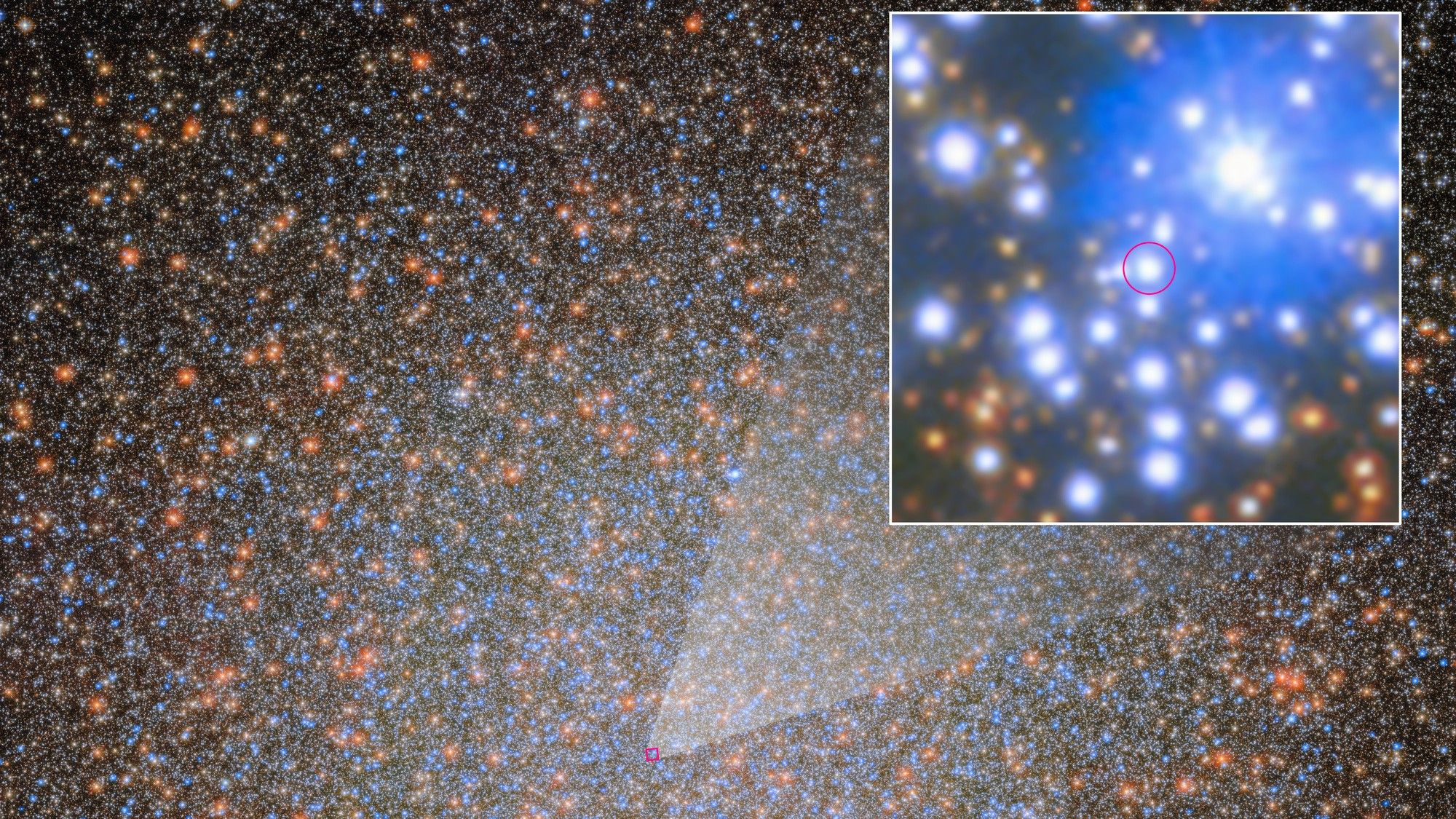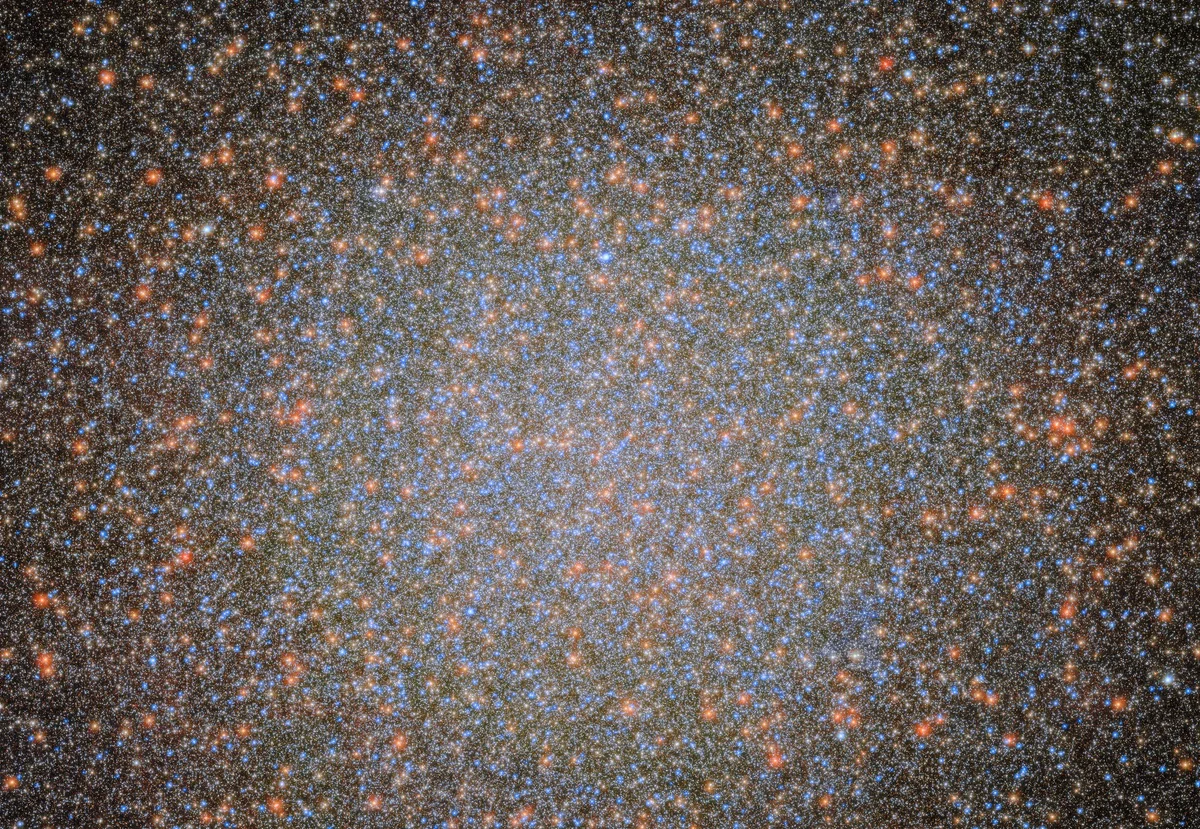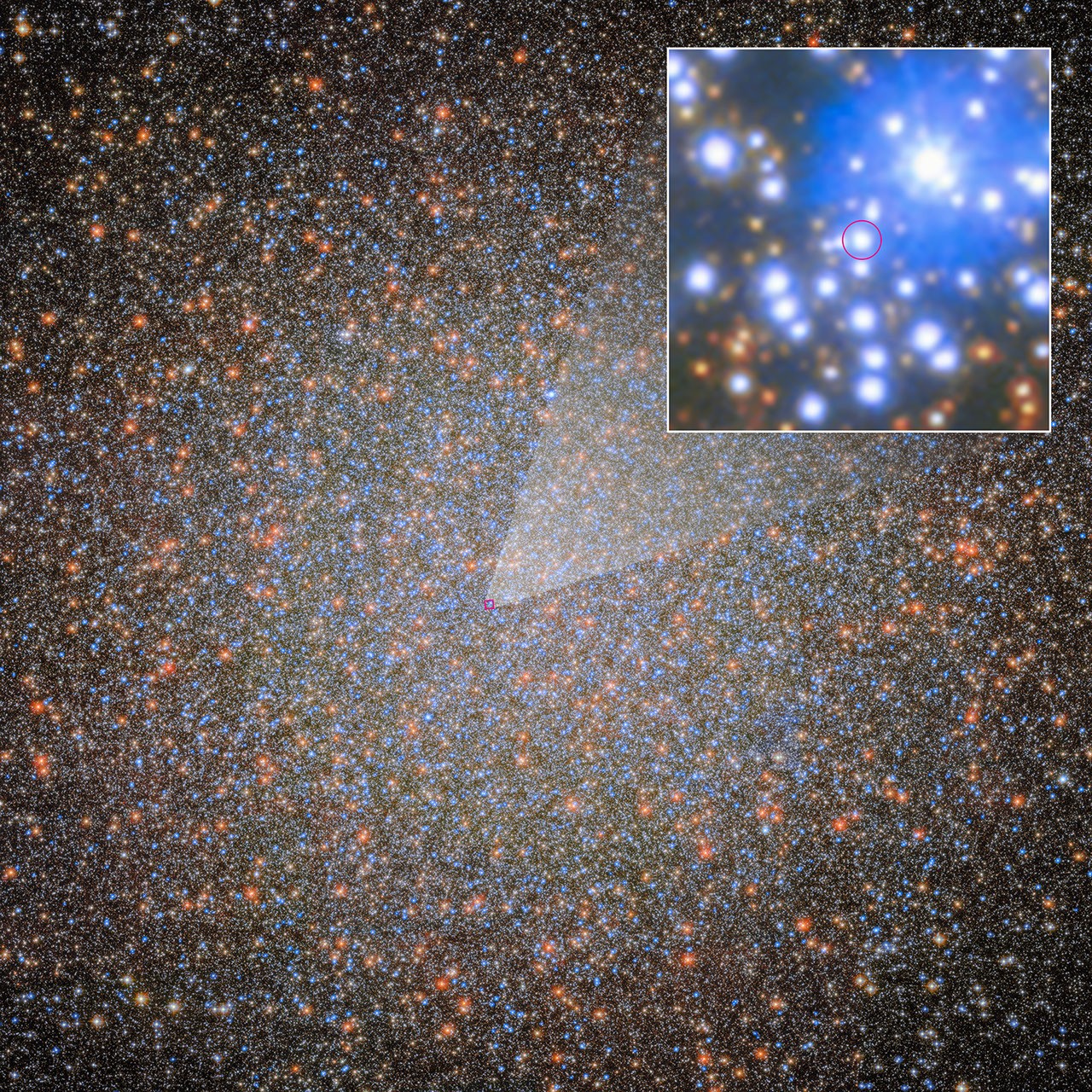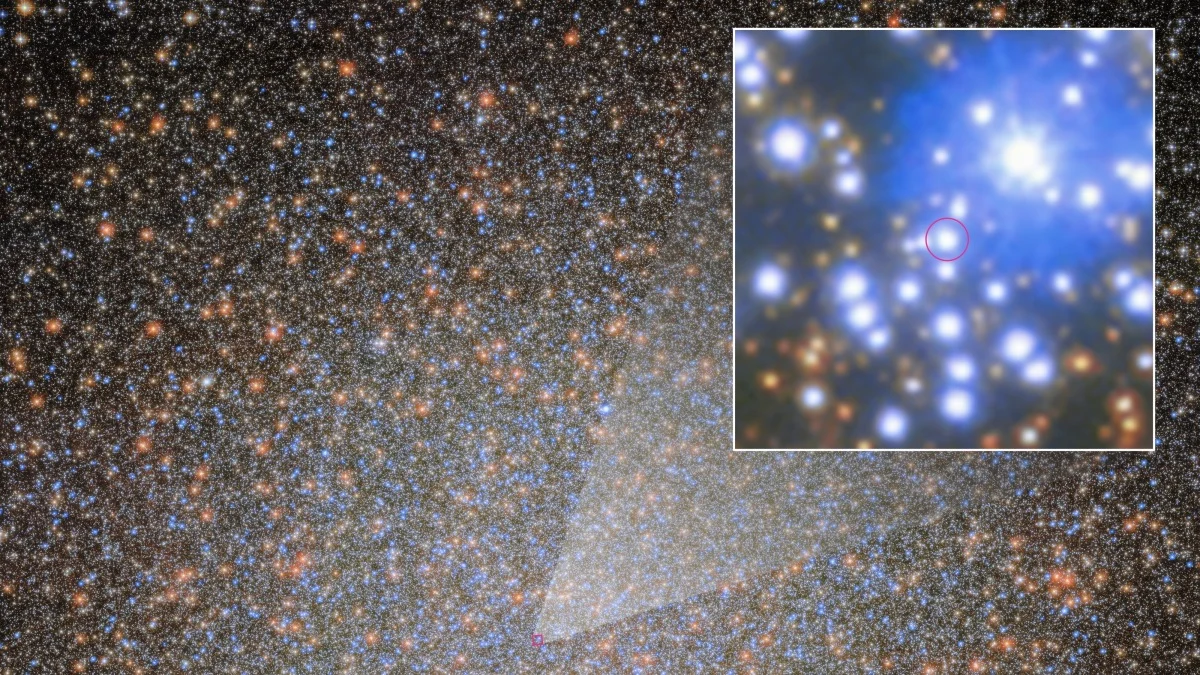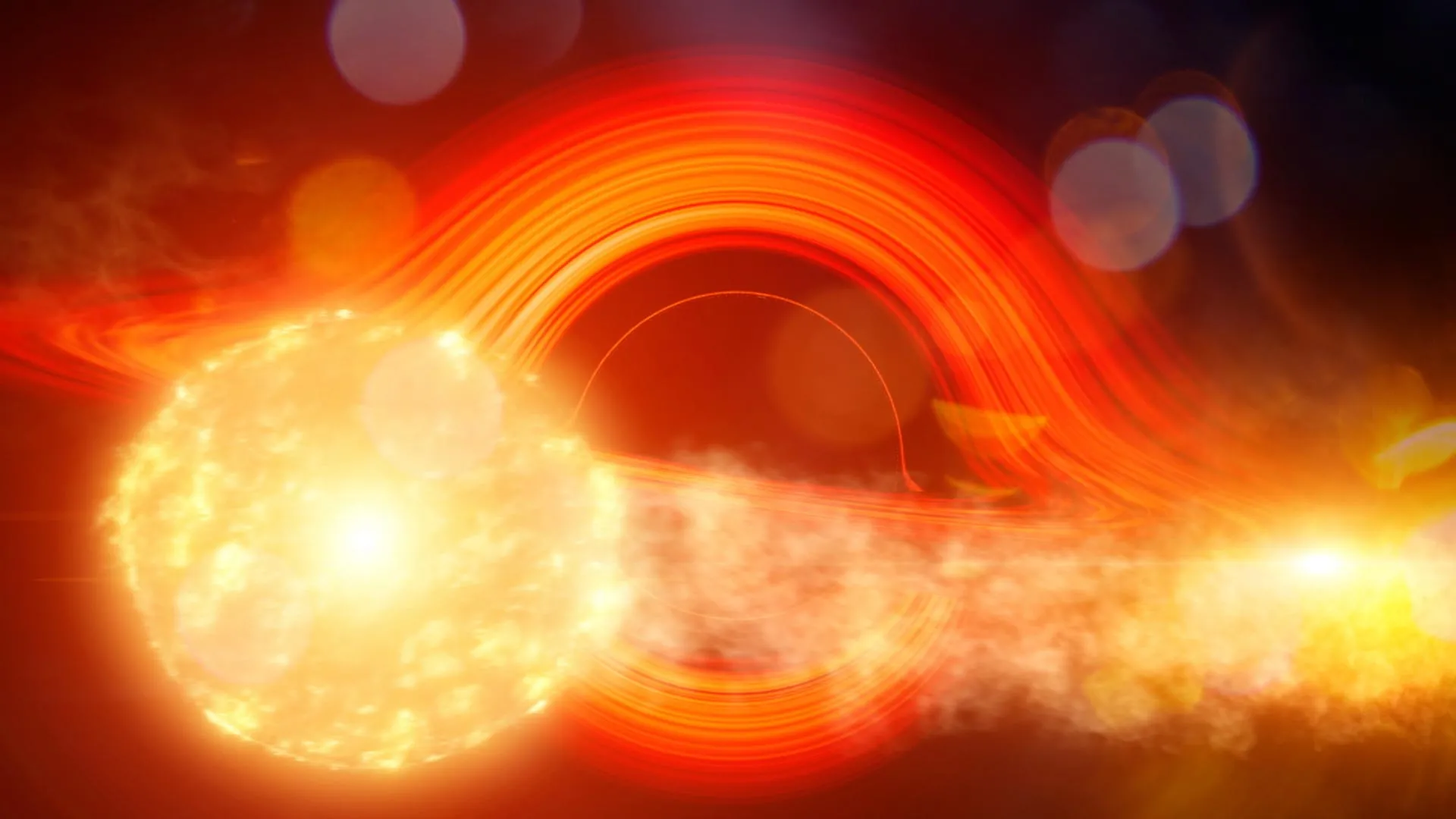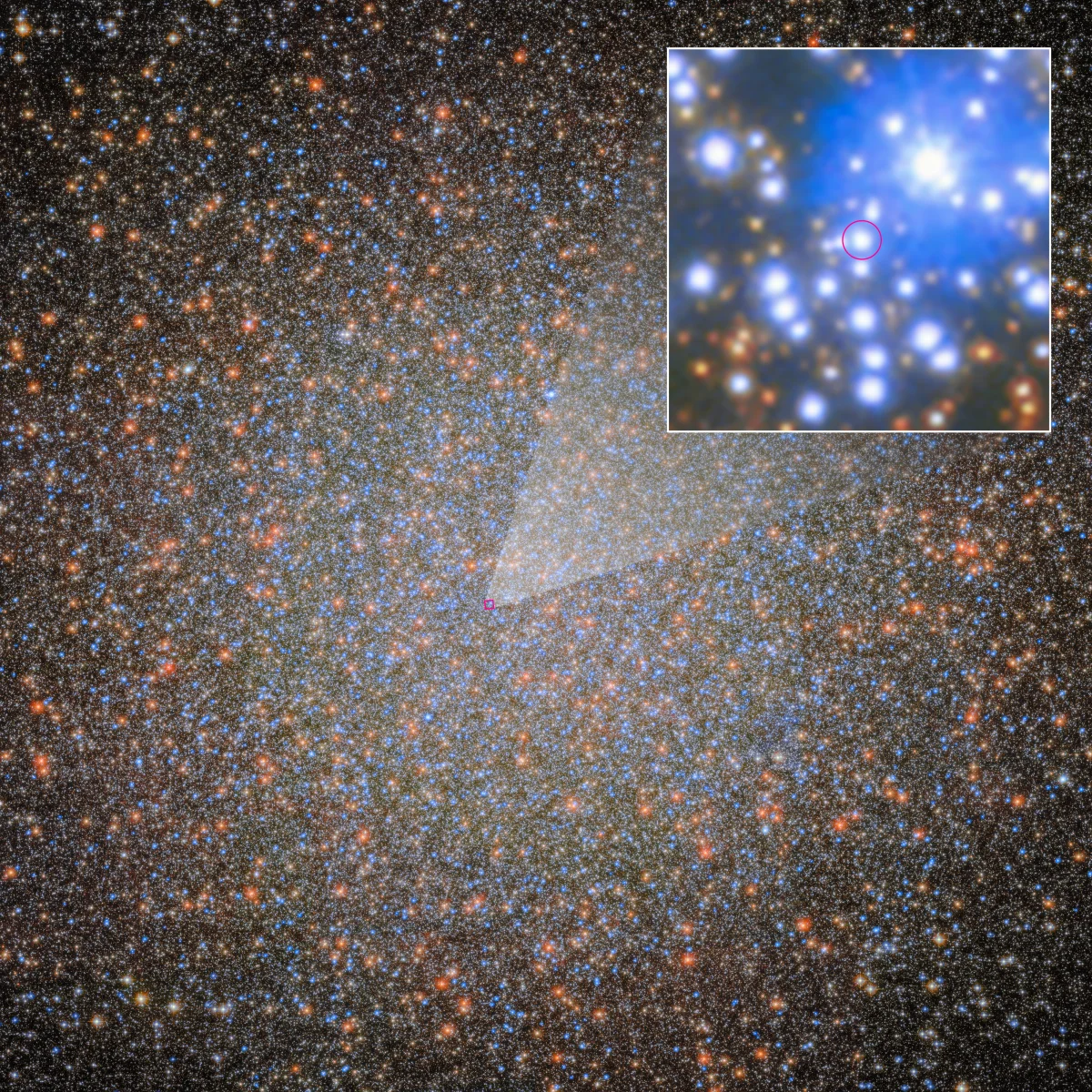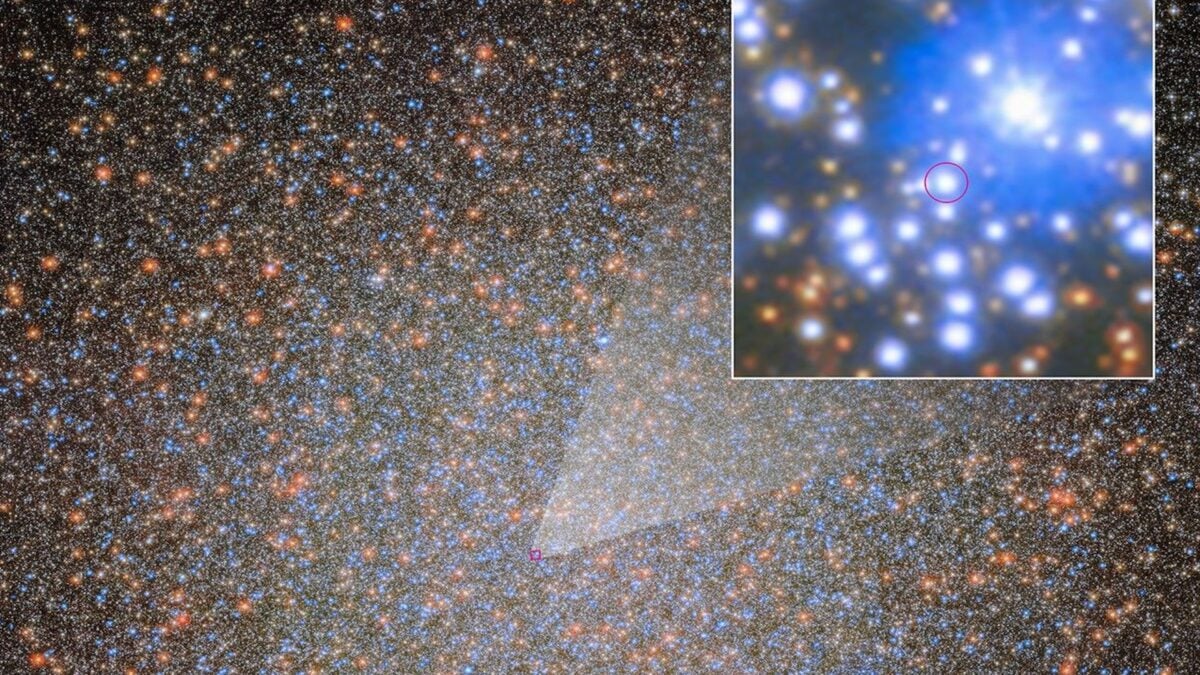
Astronomers charted a star’s path over 20 years as it circled an invisible object that was rather hefty. The mysterious object was found to be a stellar-mass black hole, one of 10,000 that may be lurking within a crowded cluster of stars. Located around 18,000 light-years from Earth, Omega Centauri is a massive globular cluster filled with 10 million gravitationally bound stars. The cluster should have a large population of black holes born in the aftermath of exploding stars, and yet astronomers have found little to no evidence for them. The case has puzzled astronomers for decades, but now they may finally have their first clue to Omega Centauri’s missing black holes. In a new study published in The Astrophysical Journal Letters, scientists say they’ve found the first of thousands of black holes in Omega Centauri.
Missing in action To help solve the mystery of the missing black holes, a team of astronomers scoured through archival data collected by the Hubble space telescope that spanned from 2002 to 2023. The astronomers also pulled in Webb near-infrared data to improve precision of their measurements.
In doing so, the team located a star orbiting around an object that appeared to be a black hole. The object was dubbed oMEGACat BH-2, a tiny black hole that’s just 4.5 times the mass of the Sun. By constraining the mass of the object, the astronomers were able to determine that it is too heavy to be a neutron star. “Its mass is much lower than would be expected in a metal-poor environment like Omega Centauri. This is surprising and exciting,” Anil Seth, a researcher at the University of Utah and co-author of the study, said in a statement. “We now know that a metal-poor star is able to form a black hole like this, and we need to figure out how that happens.”