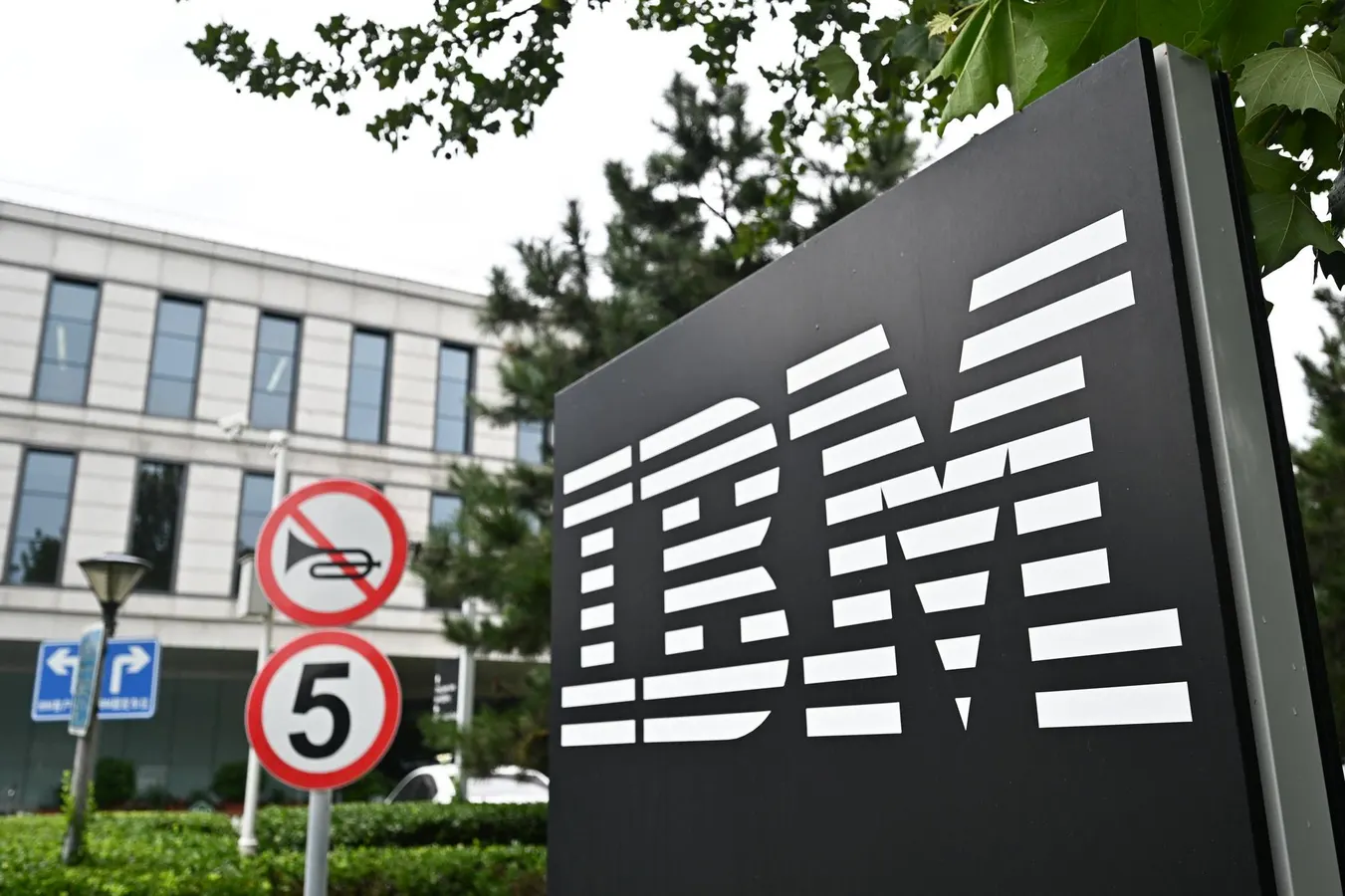
The IBM logo is seen at the entrance to its China System Center building in Beijing on August 26, 2024. US computer giant IBM will eliminate over a thousand jobs in its research and development arm in China, multiple employees told AFP on August 26. (Photo by Pedro PARDO / AFP) (Photo by PEDRO PARDO/AFP via Getty Images)AFP via Getty ImagesIBM’s $67 billion wipeout is more than a historic one-day selloff — it’s a warning that enterprise tech spending is shifting faster than the company anticipated. The company’s extraordinary pre-announcement, issued a week before its scheduled earnings report, revealed disappointing results driven by an abrupt change in where customers are allocating their IT budgets.In June, businesses responded rapidly to the worsening memory chip shortage — which is forecast to send prices up as much as 355% this year — by prioritizing spending on servers, storage and memory.ForbesMicron Extends Its Trillion Dollar Run As AI Memory Demand SurgesBy Peter CohanAs a result, customers deferred purchases of software, consulting and mainframes. IBM blamed itself for not adapting quickly enough — which caused “numerous large deals [to] fail to close on the timelines we expected, driving the majority of our shortfall,” noted IBM’s pre-announcement.If IBM’s July 22 second-quarter report forecasts better-than-expected software growth, the stock could quickly recover. If investors are disappointed with that report, the stock could lose significantly more value.MORE FOR YOUIBM’s Historic SelloffOn Tuesday, IBM shares fell more than at any time in its 115-year history — dropping 25.2% to close at $217.07. Trading volume of 64 million was 551% above its three-month average. IBM stock surpassed its previous worst day — Black Monday in 1987 — which sent the stock down 23.7%.The catalyst was IBM’s extraordinary filing, which disclosed a 1% increase in revenue to $17.2 billion — $660 million short of consensus — and operating earnings of $2.93, which was 8 cents below estimates. To his credit, CEO Arvind Krishna took responsibility for the miss — however, it remains to be seen whether he can make the IBM elephant dance, with apologies to former CEO Louis Gerstner’s 2003 book.Why IBM Missed ExpectationsIBM fell short of expectations — with Infrastructure revenue down 7% due to weak mainframe sales, software revenue up a mere 5% (well short of the double-digit target), and consulting revenue flat — because IBM did not anticipate or react to how its customers responded to the AI memory shortage.This situation has been clear for months as AI data center demand motivated memory makers to divert wafer capacity to more profitable high-bandwidth memory. As a result, Dynamic Random Access Memory prices rose between 100% and 116% in the first quarter of 2026. Supply is expected to stay tight through at least 2027 SK Hynix said its DRAM and NAND capacity is "essentially sold out" for 2026, and Intel's CEO warned "there's no relief until 2028." While IBM appears to have been caught flat-footed by the resulting enterprise IT shift to hardware and away from software and services, it remains unclear what it could have done differently or how the company will prevent a recurrence of this outcome.What IBM Must Do NowTo restore confidence, IBM would need to do the following:Provide clear, better-than-expected guidance. The preliminary numbers deferred full-year guidance. Investors will likely be disappointed unless software is forecast to grow faster than 10% — an outcome that Bank of America expects to be out of reach.Prove the slipped deals will happen in 2026. IBM must provide a forecast of when the slipped deals will close.Demonstrate that software and Red Hat can grow despite a slower mainframe cycle. This could work only if IBM’s software can outperform lower-cost AI coding tools that allow enterprises to spend less on IBM software.Is IBM’s Drop A Buying Opportunity?IBM stock has significant upside potential if analysts are right. The average price target from 17 Wall Street analysts of $299.31 implies 39% upside. Those analysts may revise their targets downward. While Morgan Stanley analyst Erik Woodring raised his target 10% to $293, prediction market Polymarket priced only a 25.5% probability that IBM beats consensus on July 22.My hunch is that IBM cannot change the memory chip shortage — which could continue for a year or two. Enterprises will likely spend their limited IT budgets on AI hardware and may use AI coding tools to reduce spending on IBM software for quite some time.Income-oriented investors who care about IBM dividends — the company has increased dividends for 31 straight years — may decide to hold the stock.However, IBM’s July 22 report may not deliver a significant upside surprise.
IBM Stock Plunges After Surprise Warning As Investors Brace For July 22
IBM’s stock plunged $67 billion after a surprise earnings warning revealed a sharp shift in enterprise tech spending. Investors now await IBM’s July 22 report.
764 words~3 min read